OpenAI Opens ChatGPT Ads Manager Beta: How Conversational Advertising Works
OpenAI has opened Ads Manager Beta , giving eligible businesses a dedicated platform for creating, launching, and measuring advertising campaigns that appear within ChatGPT.
OpenAI Opens ChatGPT Ads Manager Beta: How Conversational Advertising Works
Introduction
OpenAI has opened Ads Manager Beta, giving eligible businesses a dedicated platform for creating, launching, and measuring advertising campaigns that appear within ChatGPT.
The move marks a significant expansion of OpenAI’s advertising test. Instead of working only with a small group through a closed process, advertisers in supported countries can now apply for an account, complete business verification, create campaigns, upload ad creative, set budgets and objectives, and review performance data through a self-service interface.
Early advertisers highlighted by OpenAI include Best Buy, Lowe’s, and VistaPrint.
OpenAI is positioning the format as AI-native advertising rather than a direct copy of conventional search ads. ChatGPT users often describe a goal, constraints, preferences, trade-offs, and follow-up questions within one conversation. That context can help the advertising system identify moments when a sponsored product or service may be relevant.
At the same time, OpenAI says ads remain separate from ChatGPT’s answers, clearly labeled as sponsored, and governed by user privacy and personalization controls.
The launch should be understood accurately:
- Ads Manager is still labeled Beta.
- Advertiser availability currently covers a limited group of countries.
- Ads shown to users are being introduced through a phased test.
- Ads may appear on Free and Go plans, not on Plus, Pro, Business, Enterprise, or Edu.
- The current system does not give advertisers access to users’ conversations or personal information.
From a Closed Test to Ads Manager Beta
OpenAI first described its advertising principles in January 2026 and began testing ads with eligible U.S. users in February.
The initial user-side test focused on logged-in adults using ChatGPT’s Free and Go plans. Sponsored placements appeared below relevant answers and were visually separated from the assistant’s response.
Ads Manager Beta adds the advertiser-facing infrastructure required to operate campaigns at greater scale.
The platform supports:
- Advertiser account creation.
- Business and identity verification.
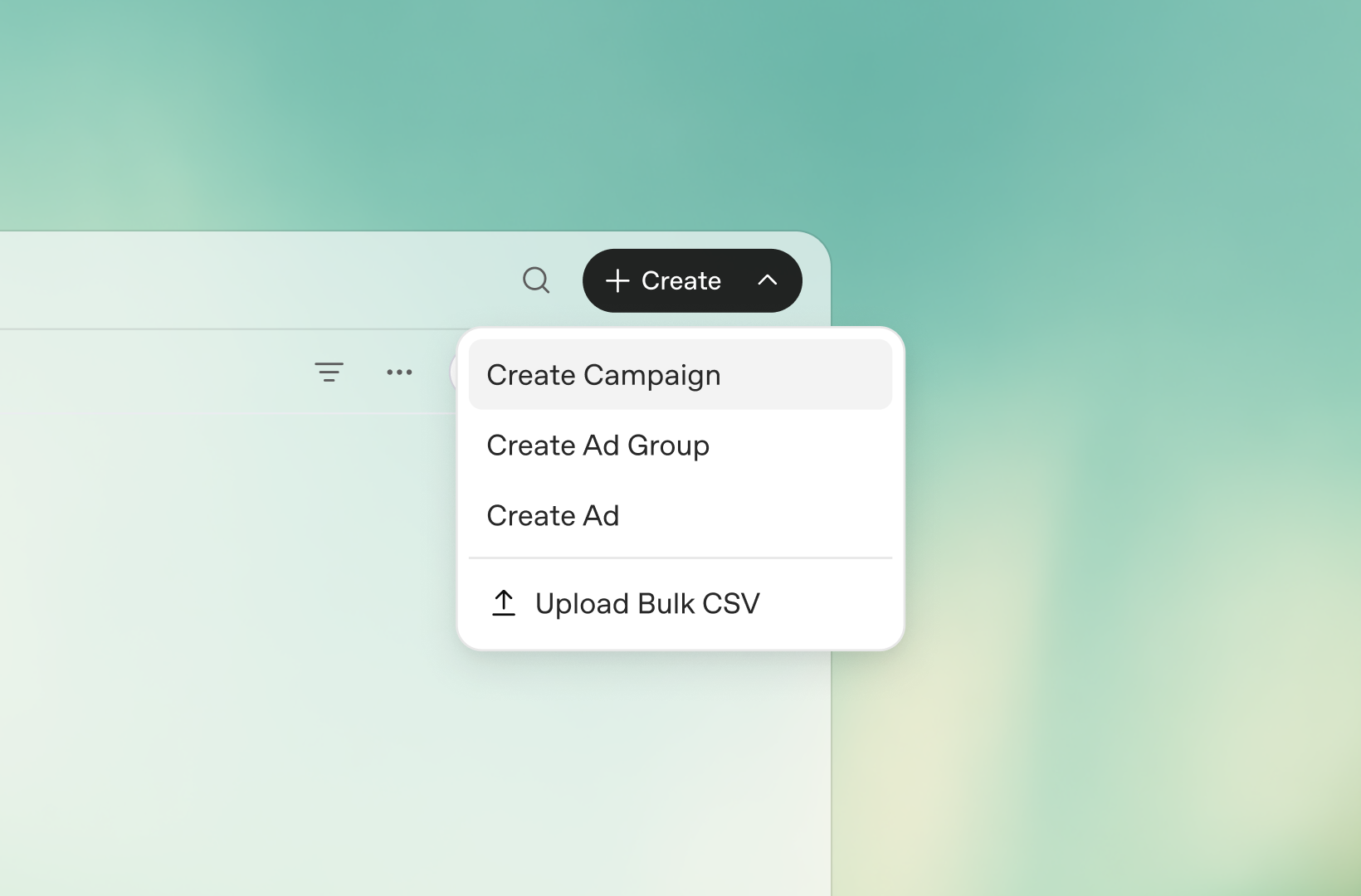
- Campaign, ad-group, and ad creation.
- Guided campaign setup.
- Bulk campaign upload.
- Budget and objective controls.
- Context hints for conversational relevance.
- Creative review.
- Billing and payment setup.
- Team access and permissions.
- Reporting, charts, and CSV exports.
- Conversion measurement.
- Campaign editing and optimization.
OpenAI says the platform will continue to evolve, so current capabilities, country availability, formats, and policies may change as the test expands.
Where Ads Manager Is Available
As of July 2026, OpenAI lists Ads Manager as available to eligible advertisers in:
| Country | Ads Manager availability |
|---|---|
| Australia | Available |
| Canada | Available |
| Japan | Available |
| Korea | Available |
| New Zealand | Available |
| United Kingdom | Available |
| United States | Available |
Businesses outside these countries can register their interest for future availability.
This advertiser list should not be confused with the user-side ad rollout. OpenAI’s ChatGPT advertising FAQ says the user test began in the United States and is expanding gradually.
An advertiser may therefore be eligible to create an account without every ChatGPT user in that advertiser’s country necessarily seeing ads.
Why ChatGPT Advertising Is Different from Keyword Search
Traditional search advertising often begins with a short query.
A user might search for:
best laptop for college
An advertising system can match that phrase to a list of keywords and eligible bids.
A ChatGPT conversation may contain much richer intent:
- The user is studying architecture.
- They need a laptop that can run a specific application.
- Battery life matters more than gaming performance.
- The device must fit within a fixed budget.
- They are deciding between two models.
- They need delivery before a certain date.
- They have already rejected one option because of weight.
That context creates a different advertising opportunity.
The advertiser is not only trying to appear beside a keyword. The ad may appear while the user is:
- Exploring possible solutions.
- Comparing alternatives.
- Clarifying constraints.
- Evaluating trade-offs.
- Preparing to make a decision.
OpenAI says its ads system can consider the context and intent of the current conversation, the advertiser’s landing page, headline, description, creative, and advertiser-provided context hints.
When ad personalization is enabled, selected signals from a user’s broader ChatGPT experience may also contribute to relevance.
Context Hints Are Not Exact-Match Keywords
At the ad-group level, advertisers can add context hints describing the types of conversations, topics, or intent areas where the product may be useful.
A context hint could describe situations such as:
- People planning a home renovation.
- Users comparing business-printing services.
- Shoppers researching consumer electronics.
- Travelers choosing accommodation.
- Small businesses evaluating productivity software.
These hints guide matching, but OpenAI says they are not conventional exact-match keywords.
Providing a context hint does not guarantee that an ad will appear whenever a specific phrase is used.
The system also evaluates the full creative and landing-page context, expected relevance, auction outcome, eligibility, policy compliance, and the suitability of the conversation.
This makes campaign structure and message clarity especially important.
A vague ad group with a generic landing page may provide the system with less useful context than a tightly organized ad group connected to a specific customer need.
What a ChatGPT Ad Contains
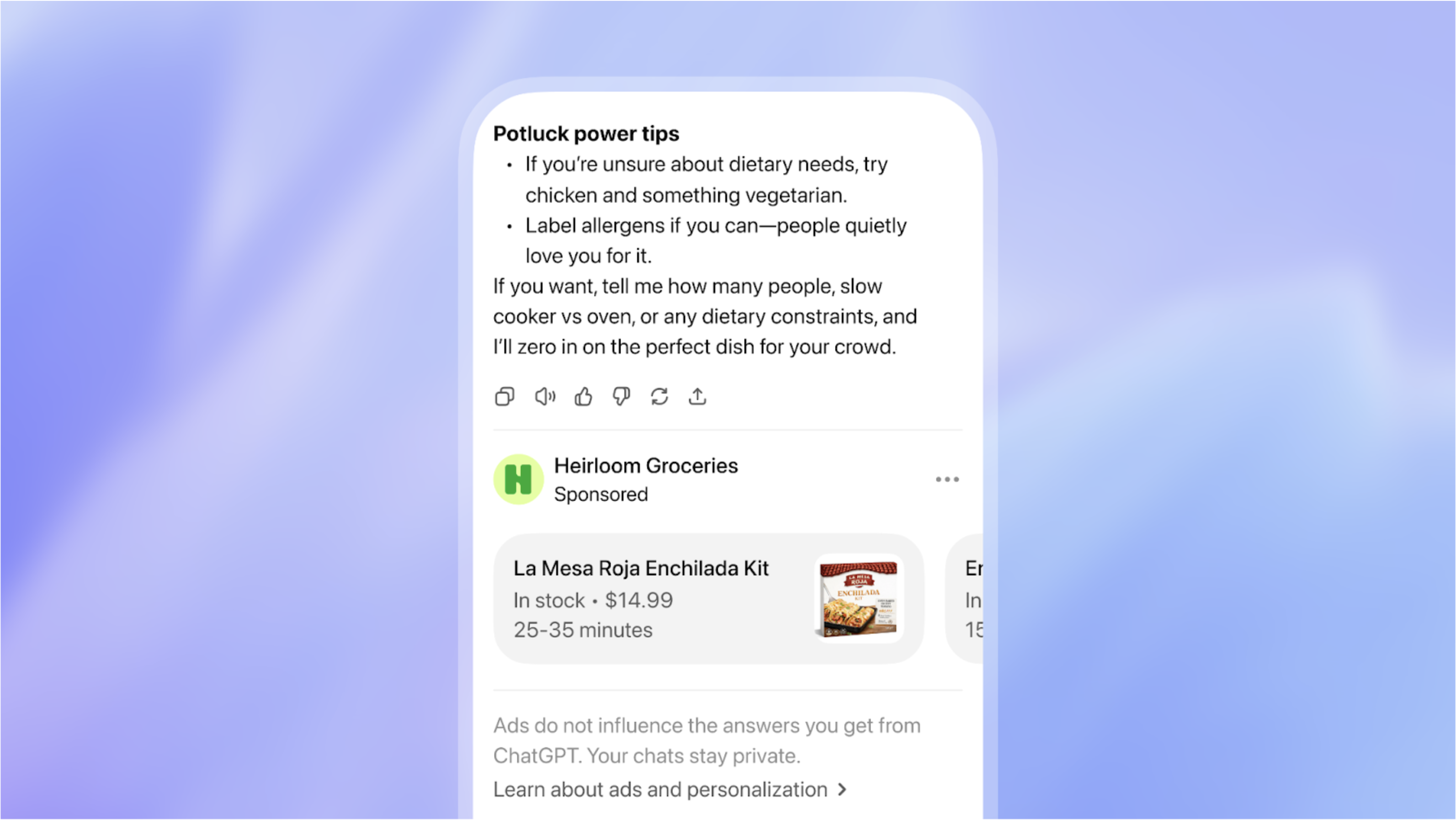
The current ad format appears below a relevant ChatGPT response.
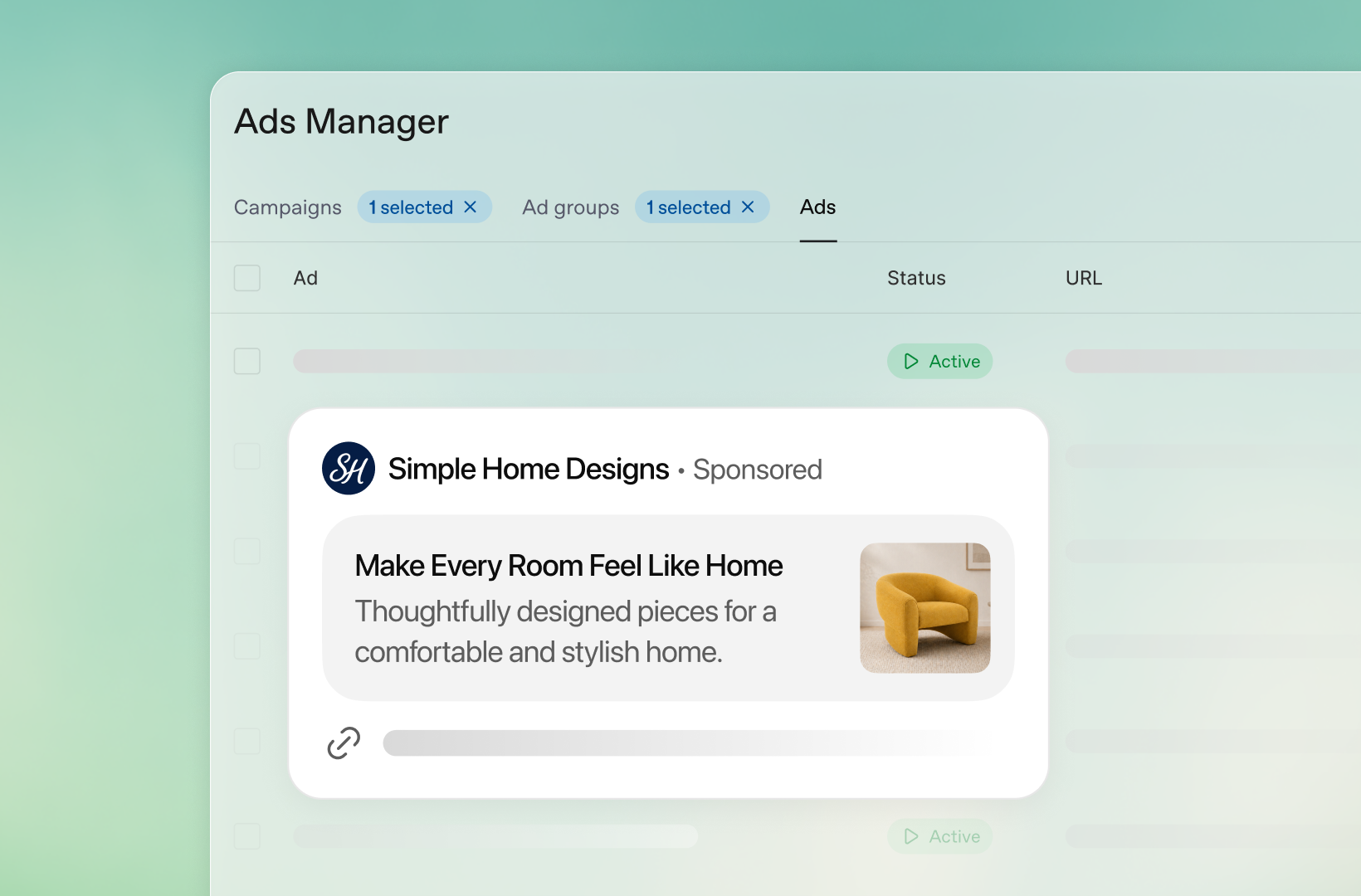
OpenAI’s advertiser documentation says an ad includes:
- Advertiser name.
- Advertiser favicon or logo.
- Headline.
- Description.
- Landing page.
- Image creative.
- A clear sponsored label.

OpenAI’s current creative guidance encourages concise copy. The example guidance suggests aiming for a headline of roughly 16 characters and a description of roughly 32 characters, although advertisers should follow the live requirements shown in Ads Manager.
The creative should support the message rather than simply repeat the brand logo as the main visual.
Ads are paid placements. Their appearance does not mean that OpenAI or ChatGPT endorses the advertiser, product, or service.
The Three-Step Campaign Process
OpenAI presents the advertiser workflow in three broad stages:
- Create the campaign.
- Add the ad details.
- Launch, measure, and optimize.
The complete setup requires a few additional account-verification and billing steps.
Step 1: Create and Verify the Advertiser Account
All campaign management takes place at:
https://ads.openai.com/
The account owner signs in with an OpenAI account connected to a work email or creates a new account.
The setup process includes:
- Creating the advertiser account.
- Entering business information.
- Selecting country, currency, and time zone.
- Uploading the business logo.
- Completing verification through OpenAI’s verification provider.
- Waiting for account review.
- Creating a billing profile.
- Adding a payment method.
- Inviting additional team members where needed.
OpenAI advises businesses to have one account owner create the advertiser account first. Additional users can be invited later.
Some account-level settings require careful review because the selected country, billing currency, and time zone cannot currently be changed after account creation.
Campaigns will not deliver until verification, account information, and billing requirements are complete.
Step 2: Build the Campaign
Advertisers can create campaigns through a guided workflow or a bulk-upload process.
The platform uses a three-level structure:
| Level | Main purpose |
|---|---|
| Campaign | Defines objective, budget, dates, and targeting |
| Ad group | Organizes ads around a theme or intent area and contains context hints |
| Ad | Contains the sponsored creative, headline, description, image, and landing page |
Choose an Objective
OpenAI currently documents two primary buying objectives:
- Reach: Optimize for impressions and pay using CPM.
- Clicks: Optimize for valid clicks and pay using CPC.
The objective affects bidding, optimization, and the performance metrics the advertiser should prioritize.
Set the Budget and Schedule
The campaign contains the budget and active dates.
Advertisers should begin with a controlled test budget rather than assuming that performance patterns from search or social platforms will transfer directly to conversational ads.
Useful early tests may compare:
- Different customer-intent areas.
- Broad and narrow context hints.
- Product-led and problem-led headlines.
- Different image styles.
- Category pages versus specific product landing pages.
- Reach and click objectives.
Create Focused Ad Groups
An ad group should represent a clear conversational intent.
For example, a home-improvement retailer could separate:
- Kitchen-renovation planning.
- Backyard projects.
- Tool comparison.
- Paint and color selection.
- Appliance research.
Each ad group can have context hints, creative, and landing pages aligned with that topic.
Add the Ad Creative
An ad contains:
- The visible advertiser identity.
- A short headline.
- Supporting copy.
- An image.
- A destination URL.
The creative and landing page must be consistent with one another.
A broadly worded ad that leads to an unrelated page may reduce relevance and can create a policy problem.
Submit the Campaign for Review
Campaigns and ads must be reviewed before they can serve.
An ad may remain inactive or be rejected because of:
- Policy restrictions.
- Incomplete business verification.
- Billing problems.
- Missing account information.
- Creative or landing-page issues.
- Unsupported products or services.
- Misleading claims.
- Inconsistent destination content.
Ads Manager displays status information to help advertisers identify the reason a campaign is not serving.
Step 3: Launch, Measure, and Optimize
After approval, advertisers can monitor delivery through Ads Manager Beta.
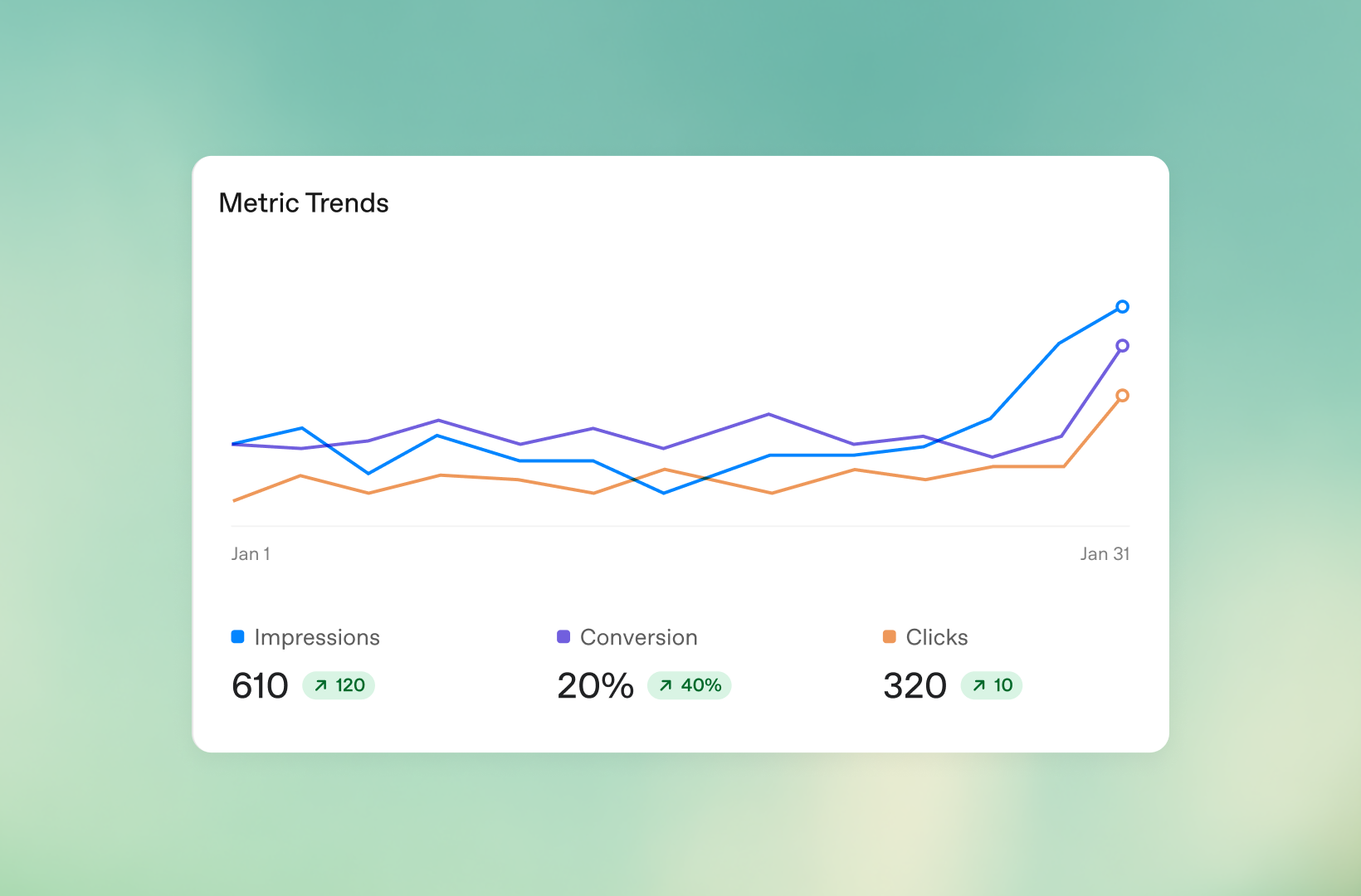
Current reporting includes:
- Impressions.
- Clicks.
- Spend.
- Click-through rate.
- Average CPC.
- Average CPM.
- Conversions, when conversion measurement is configured.
Performance can be reviewed through:
- Campaign, ad-group, and ad tables.
- Trend charts.
- Daily or cumulative CSV exports.
- Conversion reporting.
- Existing analytics tools using static tracking parameters such as UTMs.
Advertisers can make small changes through inline editing or use bulk workflows for larger updates.
Because the format is new, early optimization should focus on learning rather than drawing final conclusions from a small number of impressions.
Useful questions include:
- Which conversation contexts produce meaningful clicks?
- Which ad groups receive impressions but little engagement?
- Are landing pages aligned with the question users are trying to solve?
- Does a specific creative perform well only in one intent area?
- Are bids limiting delivery?
- Does the ad promise match the destination experience?
- Are conversions being measured correctly?
Pricing: CPC, CPM, and a Relevance-Weighted Auction
ChatGPT Ads currently supports both CPC and CPM buying.
CPM Campaigns
Reach campaigns optimize for impressions.
Advertisers set a maximum CPM bid and pay per thousand impressions.
CPC Campaigns
Clicks campaigns optimize for valid clicks.
Advertisers set a maximum CPC bid and pay per valid click.
OpenAI’s current advertiser guide recommends beginning CPC tests with a maximum bid of approximately $3 to $5 per click.
That is a starting recommendation, not a guaranteed clearing price.
Auction Logic
OpenAI says it uses a relevance-weighted second-price auction.
In simplified terms, the winning ad is not necessarily the advertiser with the highest bid alone.
The system attempts to balance:
- Bid.
- Expected relevance.
- Expected outcome.
- User value.
- Advertiser value.
- Conversation suitability.
- Policy and brand-safety eligibility.
A second-price auction generally means the winner pays an amount influenced by the next-best eligible competitor rather than automatically paying the full maximum bid.
Exact delivery and pricing will vary by competition, objective, creative quality, relevance, and available inventory.
Best Buy, Lowe’s, and VistaPrint Join the Early Advertiser Group
OpenAI highlights Best Buy, Lowe’s, and VistaPrint as early advertisers using ChatGPT Ads.
Best Buy’s media vice president, Amy Adams, said consumers increasingly use ChatGPT while researching products and making decisions. She described the early results as encouraging and said being present during those moments can help the retailer remain relevant during product discovery.
The company has not published a detailed public case study containing campaign spend, conversion rates, incremental sales, or a complete attribution methodology for the three brands.
The available evidence therefore supports a limited conclusion:
- Major consumer brands are actively testing the format.
- OpenAI considers the early advertiser feedback positive enough to feature publicly.
- Detailed independent performance data remains limited.
Advertisers should not assume that an early testimonial guarantees similar results for every category.
Who May See Ads in ChatGPT
OpenAI says ads may appear for users on the Free and Go plans in eligible test regions.
Ads do not appear for:
- Plus accounts.
- Pro accounts.
- Business accounts.
- Enterprise accounts.
- Edu accounts.
- Users who say they are under 18.
- Users OpenAI predicts are under 18.
- Temporary Chats.
- Sensitive or regulated conversations.
During the current test, an eligible conversation may show a single clearly labeled sponsored unit below a ChatGPT response.
That unit may contain one or more products from an advertiser or, in some cases, content involving multiple advertisers.
Ads do not appear inside ChatGPT’s generated answer.
Ads Are Separate from ChatGPT Answers
One of OpenAI’s central advertising principles is answer independence.
OpenAI says:
- Ads run on systems separate from the chat model.
- Advertisers cannot alter, rank, or shape ChatGPT’s answer.
- ChatGPT does not favor an advertiser because it paid for placement.
- Sponsored content is visually separated and labeled.
- The appearance of an ad is not an OpenAI endorsement.
This boundary is essential because users may ask ChatGPT for advice, comparisons, and recommendations before seeing a sponsored placement.
The organic answer and the paid ad must remain distinguishable.
Conversation Privacy and Advertiser Data
OpenAI says advertisers do not receive:
- User conversations.
- Chat history.
- Memories.
- Names.
- Email addresses.
- Precise location.
- IP addresses.
- Sensitive personal information.
Advertisers receive aggregated, non-identifying performance information, such as:
- Total views.
- Clicks.
- Spend.
- Click-through rate.
- Conversion measurements where configured.
If a user chooses to message an advertiser directly through an ad experience, the advertiser can see the messages the user intentionally sends to that advertiser.
This is different from receiving the original ChatGPT conversation.
OpenAI says it never sells user data to advertisers.
How Ad Personalization Works
The current chat thread can be used to identify a relevant sponsored placement.
If personalization is enabled, the system may also consider:
- Past chats.
- Memory.
- Ad interaction history.
- Topics inferred for ad relevance.
- Personalized context used by ChatGPT.
These signals remain inside ChatGPT’s advertising system and are not passed to the advertiser as a copy of the user’s data.
Users can turn personalization off.
When personalization is off, ads may still be selected using the current conversation, but past chats, memory, and broader ad history are not used in the same way.
Ad interactions such as hiding, reporting, viewing, or clicking an ad do not automatically become ChatGPT memories.
User Ad Controls
Eligible Free and Go users can manage ads through ChatGPT settings.
OpenAI’s current controls include:
- Turn ad personalization on or off.
- Control whether past chats and memory contribute to ad relevance.
- View advertising history and topics.
- Delete advertising data.
- Hide an irrelevant ad.
- Report an unsafe or misleading ad.
- See information about why an ad appeared.
- Share a specific ad with ChatGPT through “Ask ChatGPT.”
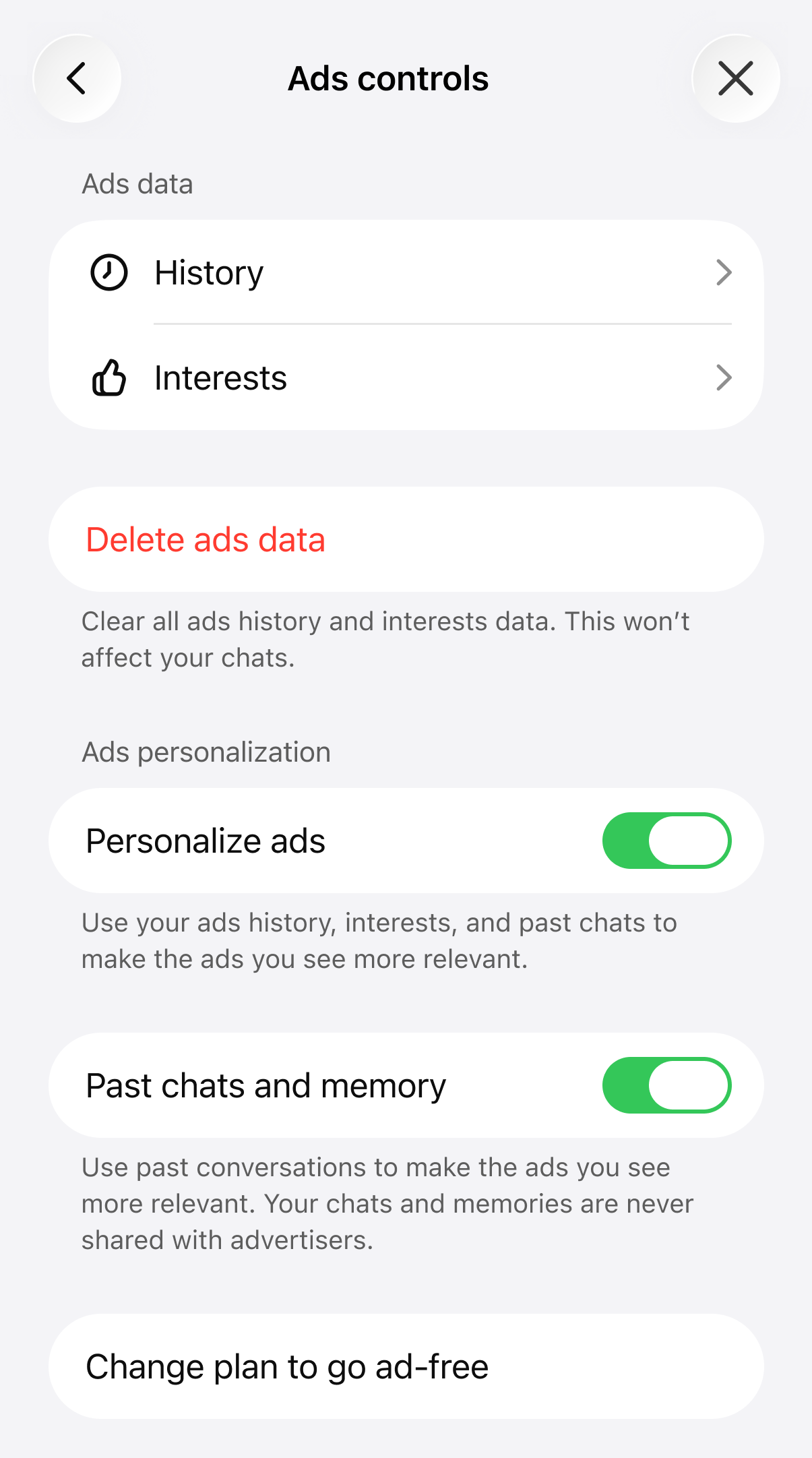
Deleting advertising data stops it from being used for ad selection. OpenAI says removal from its systems may take up to 30 days.
By default, ChatGPT cannot see the ad displayed in the interface. To ask ChatGPT about a particular ad, the user must choose “Ask ChatGPT” from that ad’s menu, which shares the specific ad into the conversation.
Ad-Free Options
OpenAI offers several ways to use ChatGPT without ads.
Paid Ad-Free Plans
Plus, Pro, Business, Enterprise, and Edu do not show ads.
Free Ads-Free Option
Eligible Free users may choose an ads-free version with additional limits.
OpenAI says this option may include:
- Fewer messages.
- Lower usage limits.
- No access to some tools, such as image generation or deep research.
- More frequent rate-limit interruptions.
This is different from turning off ad personalization.
- Turning off personalization changes how ads are selected.
- Choosing Ads-Free removes ads but reduces the Free plan’s access.
Availability may vary by region and over time.
Brand Safety and Restricted Topics
OpenAI says ads are not eligible to appear near sensitive user contexts.
Examples include conversations involving:
- Personal health.
- Mental health.
- Politics.
- Self-harm.
- Child safety.
- Cyber abuse.
- Dangerous activities.
- Fraud or deception.
- Graphic violence.
- Hate or harassment.
- Weapons.
- Terrorism.
- Vulnerable user–model interactions.
The advertising policy also restricts the products and services that may be promoted.
During the initial period, OpenAI says the supported categories are primarily consumer-oriented areas such as:
- Lifestyle and household products.
- Local services.
- Travel and experiences.
- Digital products.
- Education.
Some advertisers in financial services, healthcare, medicine, or legal services may be considered through stricter case-by-case approval.
Political advertising is currently not allowed.
All parts of the ad must comply:
- Headline.
- Description.
- Image or video.
- Advertiser identity.
- Landing page.
- Destination content.
An acceptable creative cannot link to a page dominated by prohibited products or claims.
What Advertisers Should Prepare Before Applying
A business interested in ChatGPT Ads should prepare:
- A verified company website.
- A clear legal business identity.
- A work email for the account owner.
- Country, currency, and time-zone information.
- A compliant business logo.
- A billing address and payment method.
- Landing pages that accurately represent the offer.
- Short creative copy.
- Relevant images.
- A campaign structure organized by conversational intent.
- A conversion-measurement plan.
- A process for reviewing policy compliance.
Advertisers should also decide how they will distinguish ChatGPT traffic in their analytics.
Static UTM parameters can be added to landing-page URLs, and OpenAI provides conversion-measurement documentation for deeper reporting.
A Practical First-Campaign Structure
A simple first campaign can be organized as follows.
Campaign
Objective: Clicks
Budget: Controlled pilot budget
Schedule: Two to four weeks
Primary conversion: Purchase, signup, booking, or qualified lead
Ad Group 1: Early Exploration
Context hints describe users researching the category or trying to understand available options.
The landing page should educate rather than assume the user is ready to buy immediately.
Ad Group 2: Comparison
Context hints describe users comparing alternatives, features, prices, or trade-offs.
The landing page should make comparison information easy to verify.
Ad Group 3: Decision
Context hints describe users close to taking action, such as checking availability, delivery, pricing, or final requirements.
The landing page should reduce friction and make the next step obvious.
Measurement
Track:
- Impressions.
- Clicks.
- CTR.
- Average CPC.
- Spend.
- Conversion rate.
- Cost per conversion.
- On-site engagement.
- Assisted conversions.
- Performance by ad group and intent stage.
This structure is an example, not an official OpenAI template. Each advertiser should adapt the campaign to its product and policies.
What ChatGPT Ads Mean for Digital Advertising
ChatGPT Ads introduce a format built around conversation rather than a list of search results or a social feed.
That may change several parts of advertising strategy.
Intent Becomes More Detailed
A conversation can reveal why a person needs something, which constraints matter, and which alternatives have already been considered.
The Ad Appears Later in the Reasoning Process
The sponsored placement may appear after ChatGPT has already helped the user define the problem.
This can place the advertiser closer to an informed decision, but it also raises the standard for relevance.
Landing-Page Quality Matters More
If the ad is matched to a highly specific conversation, a generic homepage may feel disconnected.
Advertisers may need pages designed around distinct customer questions and use cases.
Context Replaces Some Keyword Logic
Keywords still matter for understanding demand, but the platform’s context hints are not exact-match targeting.
Advertisers will need to think in terms of customer situations, not only search phrases.
Trust Becomes Part of Performance
A misleading, intrusive, or poorly matched ad can damage user trust in the format.
OpenAI’s policies, labeling, privacy controls, and separation from answers are therefore not only compliance mechanisms. They are part of the product’s long-term commercial viability.
Important Limitations
ChatGPT Ads is still an early platform.
Advertisers should account for several limitations:
- Ads Manager is in beta.
- Country availability is limited.
- User-side delivery remains a phased test.
- Public case-study data is limited.
- Formats may change.
- Reporting features are still evolving.
- Category eligibility is restricted.
- Account and ad reviews may take time.
- Conversion attribution may require additional setup.
- Performance patterns from search or social media may not transfer directly.
- OpenAI can change policies, controls, and inventory as the program develops.
The platform is significant, but it should be treated as a new advertising channel that still requires careful testing.
Frequently Asked Questions
What are ChatGPT Ads?
ChatGPT Ads are clearly labeled sponsored placements that can appear below relevant ChatGPT responses. They are separate from the assistant’s answer and are selected through a dedicated advertising system.
Can any business advertise in ChatGPT?
No. Ads Manager availability is limited by country, and every advertiser must complete account review and verification. Products, creative, landing pages, and conversation placement must also comply with OpenAI’s advertising policies.
Which countries currently have Ads Manager access?
OpenAI currently lists Australia, Canada, Japan, Korea, New Zealand, the United Kingdom, and the United States as available. Availability may expand, and businesses elsewhere can register their interest.
How are ChatGPT ads targeted?
The system considers the current conversation’s context and intent, the ad’s creative and landing page, advertiser-provided context hints, expected relevance, and auction factors. Personalized ads may also use selected signals from past chats, memory, and ad interactions when the user enables personalization.
Do advertisers receive users’ ChatGPT conversations?
No. OpenAI says advertisers do not receive chats, chat history, memories, personal details, precise location, or sensitive information. Advertisers receive aggregated, non-identifying campaign performance data.
How much do ChatGPT Ads cost?
OpenAI supports CPM bidding for Reach campaigns and CPC bidding for Clicks campaigns. The company currently suggests an initial maximum CPC bid of roughly $3–$5, but actual prices depend on the auction, relevance, competition, and campaign settings.
Do ChatGPT ads influence the answers?
No. OpenAI says advertisements run separately from the chat model and cannot change, rank, or shape ChatGPT’s response. Ads are displayed as sponsored placements below the answer.
Can users turn off ads?
Plus, Pro, Business, Enterprise, and Edu are ad-free. Eligible Free users may choose an ads-free option with reduced usage and feature access, while turning off personalization changes ad selection but does not remove ads.
Related Tools
- OpenAI Ads Manager Beta: The official platform for creating, launching, managing, and measuring ChatGPT ad campaigns.
- ChatGPT Ads Conversion Measurement: Official developer documentation for conversion tracking and advertising measurement.
- OpenAI Help Center: ChatGPT Ads: Official campaign setup, billing, creative, measurement, and troubleshooting documentation.
- ChatGPT Ad Controls: User settings for personalization, ad history, data deletion, and ads-free options where available.
- OpenAI Advertiser Interest Form: Registration page for businesses interested in future advertising access.
- UTM Campaign Parameters: Google’s documentation for tagging campaign URLs used in external analytics.
Related Links
- Advertise in ChatGPT: OpenAI’s official advertiser landing page and Ads Manager access point.
- Ads Manager Beta Overview: Official overview of campaign creation, reporting, account settings, and platform limitations.
- Quickstart: Launch Your First Campaign: OpenAI’s step-by-step guide to account setup, campaign creation, review, and monitoring.
- Ads in ChatGPT: The Basics: Official documentation for ad format, delivery, pricing, measurement, and brand safety.
- Ads in ChatGPT User FAQ: Official user guidance on eligibility, privacy, personalization, controls, and ads-free choices.
- Ads Manager Availability: Current official list of countries where advertiser access is available.
- OpenAI Ad Policies: Official placement, creative, category, and brand-safety requirements.
- OpenAI’s Advertising Principles: OpenAI’s explanation of answer independence, privacy, user control, and access.
Summary
OpenAI has expanded its ChatGPT advertising initiative by opening Ads Manager Beta to eligible businesses in seven countries. Advertisers can create campaigns, organize intent-based ad groups, upload creative, bid through CPC or CPM objectives, complete review, and monitor performance through a dedicated dashboard.
The format differs from conventional keyword advertising because it can use the richer intent expressed within a conversation. Context hints guide matching, but delivery also depends on relevance, creative, landing pages, auction results, policy eligibility, and user settings.
OpenAI says advertisements remain clearly labeled and separate from ChatGPT’s answers. Advertisers do not receive users’ chats or personal details, and eligible users can manage personalization, clear advertising data, hide or report ads, or choose an ad-free option where available.
ChatGPT Ads turns conversation into a new advertising surface, but its long-term value will depend on whether contextual relevance can grow without weakening user trust.