NVIDIA RTX Spark Laptop Debuts at Bilibili World: 120B Local AI, 128GB Unified Memory, and DGX Spark Compared
NVIDIA's RTX Spark superchip has moved from a conference announcement into a working consumer laptop. At Bilibili World in Shanghai, NVIDIA publicly demonstrated an RTX Spark-powered Lenovo Yoga Pro 15 running demanding local-AI, creative, and gaming workloads. The platform combines a Blackwell RTX GPU and a 20-core Grace CPU through NVIDIA's NVLink-C2C interconnect, with up to 128GB of unified memory shared by both processors. The design is aimed at a new category of Windows PC: a thin laptop o
NVIDIA RTX Spark Laptop Debuts at Bilibili World: Local 120B Models, AI Agents, and DGX Spark
Introduction
NVIDIA's RTX Spark superchip has moved from a conference announcement into a working consumer laptop.
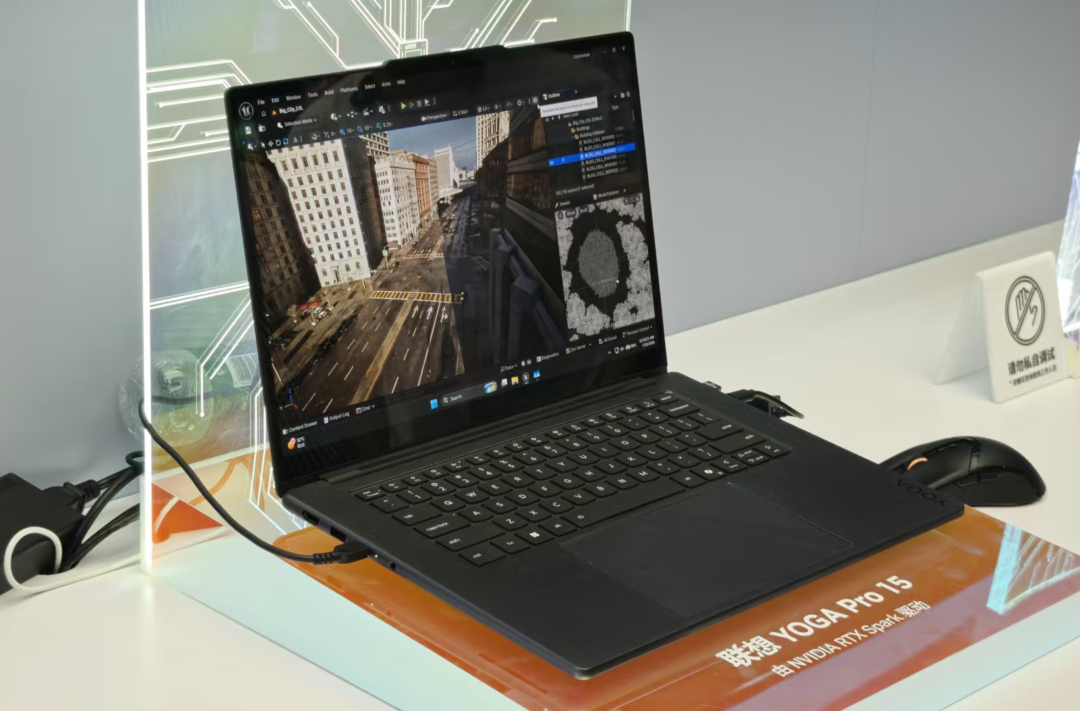
At Bilibili World in Shanghai, NVIDIA publicly demonstrated an RTX Spark-powered Lenovo Yoga Pro 15 running demanding local-AI, creative, and gaming workloads. The platform combines a Blackwell RTX GPU and a 20-core Grace CPU through NVIDIA's NVLink-C2C interconnect, with up to 128GB of unified memory shared by both processors.
The design is aimed at a new category of Windows PC: a thin laptop or compact desktop capable of running personal AI agents locally, handling large creative projects, and still delivering modern RTX gaming features.
NVIDIA also demonstrated DGX Spark, its Linux-based desktop AI supercomputer for developers. Although the two systems share a similar Grace Blackwell foundation, their software, networking, target users, and model-development roles are different.
Terminology note: The source describes the CPU and GPU as being "welded together." They are not literally welded. NVIDIA connects the two dies through the high-bandwidth NVLink-C2C chip-to-chip interconnect.
Gaming, Creation, and AI in One Platform
RTX Spark is built around three workloads that have usually required different types of computers:
- Local artificial intelligence
- Professional creative work
- High-end PC gaming
Traditional gaming laptops emphasize discrete GPU performance. AI development machines prioritize memory capacity and software tooling. Mobile workstations focus on professional applications, often at the cost of weight and battery life.
RTX Spark attempts to combine all three by using one tightly integrated processor package and a large unified-memory pool.
RTX Spark Core Specifications
| Component | RTX Spark specification |
|---|---|
| GPU | Blackwell RTX GPU |
| CUDA cores | Up to 6,144 |
| CPU | Up to 20-core NVIDIA Grace CPU |
| CPU architecture | Arm |
| Interconnect | NVIDIA NVLink-C2C |
| AI performance | Up to 1 petaFLOP at FP4 |
| Unified memory | Up to 128GB |
| Target systems | Thin Windows laptops and compact desktops |
| Primary workloads | Local agents, AI development, creation, and gaming |
MediaTek collaborated with NVIDIA on the custom Grace CPU design, contributing Arm-system expertise in power efficiency, connectivity, and CPU implementation.
Why NVLink-C2C and Unified
Memory Matters
In conventional laptops with discrete GPUs, the CPU and GPU typically maintain separate memory pools. Data must move between system RAM and GPU memory via an interconnect such as PCI Express.
This approach works well for ordinary gaming and productivity tasks, but it creates limitations for very large AI models and creative datasets:
- GPU memory capacity may be insufficient.
- Model weights may need to be split or offloaded.
- Data transfers introduce latency and consume power.
- A large project may exceed a single processor's available memory, even if the machine has enough total memory.
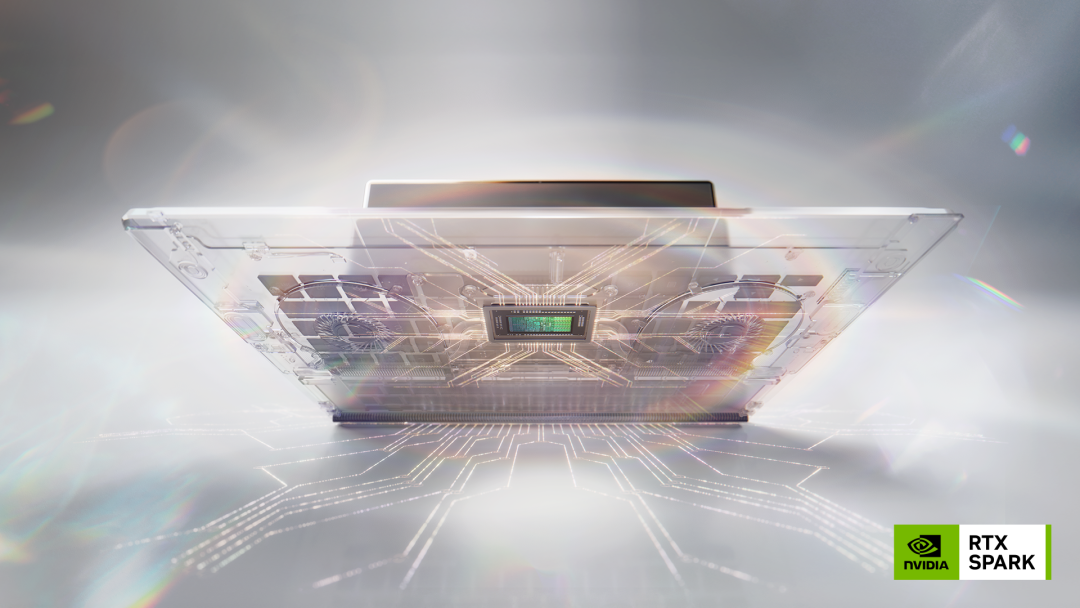
RTX Spark, instead, gives the CPU and GPU access to a shared pool of up to 128GB of unified memory. NVLink-C2C provides the high-bandwidth connection between the Grace CPU and Blackwell GPU.
The practical benefit is not that copying disappears in every workload—software must still manage data correctly. Rather, the advantage is that applications can work with a much larger coherent memory space without relying on a small, isolated GPU memory pool.
For local LLMs, 3D scenes, video timelines, and agent contexts, memory capacity can be just as important as raw compute power.
Running a 120B Model Locally
NVIDIA states that RTX Spark systems can run large language models with up to 120 billion parameters and support agent workflows with context lengths of up to one million tokens.
This does not mean every 120B model will run at full precision or with identical speed. Actual feasibility depends on:
- Model architecture
- Quantization format
- Active parameters
- KV-cache requirements
- Context length
- Inference engine
- Available memory after the operating system and applications
- Desired token generation speed
Even with these qualifications, a portable computer with 128GB of shared memory changes what can be tested locally.
Large documents, codebases, conversation histories, and retrieval results can remain on the machine rather than being divided into smaller cloud requests. Local execution may also reduce network latency and keep sensitive information under the user's control.
NVIDIA's official RTX Spark materials list several headline local capabilities:
- Running 120B-parameter LLMs
- Using up to one million tokens of context
- Generating 4K AI video
- Rendering 3D scenes exceeding 90GB
- Editing 12K 4:2:2 video
- Playing AAA games at over 100 FPS at 1440p
These are maximum platform claims rather than guarantees for every laptop configuration or software project.
Personal Agents Need More Than Fast Hardware
A locally running AI agent may read files, open applications, execute commands, search the web, send requests, and modify data.
This level of access creates a security problem. A capable model should not automatically receive unrestricted control over the user's computer.
NVIDIA and Microsoft are addressing this through new Windows security primitives and NVIDIA OpenShell.
OpenShell is designed to provide:
- Sandboxed execution
- Policy-based permissions
- Network controls
- Inference routing
- Privacy rules
- Boundaries around tool access
A user or administrator can define which operations an agent may perform. Requests can also be routed
According to privacy requirements—for example, keeping sensitive information with a local model while sending sanitized tasks to a cloud model.
NVIDIA says OpenClaw and Nous Research’s Hermes will integrate OpenShell and Microsoft’s agent-security primitives into their Windows applications.
This creates a hybrid model:
- Sensitive data is processed locally.
- Lower-risk requests may be sent to a cloud model.
- Tool access is limited by explicit policies.
- Agent processes run inside controlled environments.
- Long-running assistants remain available without receiving unrestricted system privileges.
The security layer is critical. Local AI improves privacy only when the agent runtime, file permissions, network behavior, and model routing are also controlled.
Local Creative Workflows
The 128GB unified-memory design is also intended for creators working with projects that are too large for ordinary laptop GPUs.
At the Bilibili World booth, NVIDIA demonstrated an Unreal Engine 5 project containing a detailed 3D Manhattan environment. The project files reportedly exceeded 90GB.

The source reports that the user could move through the scene smoothly both while the laptop was plugged in and while it was running from battery.
NVIDIA officially positions RTX Spark for 90GB-plus 3D projects, although actual editor responsiveness depends on scene complexity, asset streaming, storage speed, cooling, application optimization, and laptop power settings.
Video and Image Creation
RTX Spark’s Blackwell media engine includes hardware support for 4:2:2 encode and decode. NVIDIA says the platform can handle 12K 4:2:2 video workflows.
Adobe is rebuilding parts of Photoshop and Premiere to take advantage of RTX Spark’s unified memory, TensorRT acceleration, GPU compositing, and media pipeline.
The intended benefits include:
- More responsive large timelines
- Faster AI-assisted effects
- GPU-accelerated color correction
- More efficient rendering
- Larger media projects on portable systems
- Reduced need to move projects to a separate workstation
Adobe’s RTX Spark optimizations are expected to roll out alongside the hardware, so performance will depend partly on application support.
RTX Gaming on an Arm Processor
RTX Spark is based on Arm rather than the x86 architecture used by most Windows gaming PCs.
That raises an obvious compatibility question: will existing PC games and anti-cheat systems work correctly?
NVIDIA’s answer combines native Arm releases, Windows compatibility work, and support from major publishers.
The companies publicly supporting RTX Spark include:
- KRAFTON
- NetEase
- Remedy Entertainment
- Riot Games
- Xbox
At Bilibili World, NVIDIA demonstrated an Arm-native version of NetEase’s NARAKA: BLADEPOINT on an RTX
NVIDIA RTX Spark Laptop.
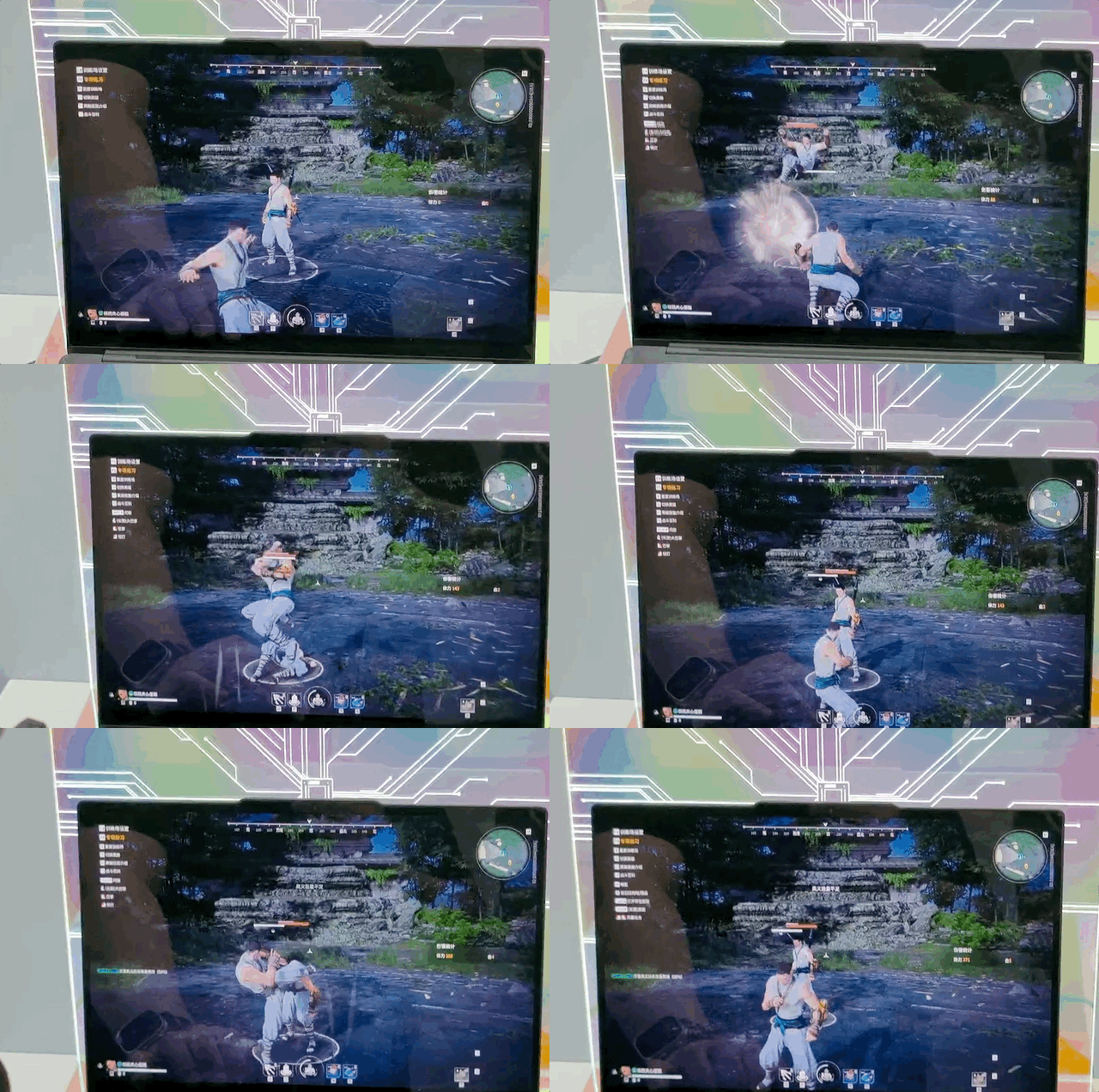
The demonstration reportedly used high visual settings, ray tracing, DLSS multi-frame generation, and other RTX features while maintaining smooth gameplay.
NVIDIA’s broader platform target is AAA gaming at 1440p and more than 100 frames per second. Results will vary substantially by game, laptop cooling, power limit, display resolution, DLSS mode, frame generation, and whether the title is native or translated.
RTX Features
RTX Spark supports the standard modern RTX technology stack:
- Hardware ray tracing
- DLSS
- Multi-frame generation
- NVIDIA Reflex
- G-SYNC
- RTX creative acceleration
- CUDA
- Fifth-generation Tensor Cores
The long-term gaming experience will depend on how quickly developers release native Arm builds and how well Windows handles legacy x86 games.
DGX Spark: A Desktop AI Supercomputer for Developers
RTX Spark is primarily a consumer and prosumer platform. DGX Spark is designed as a development system.
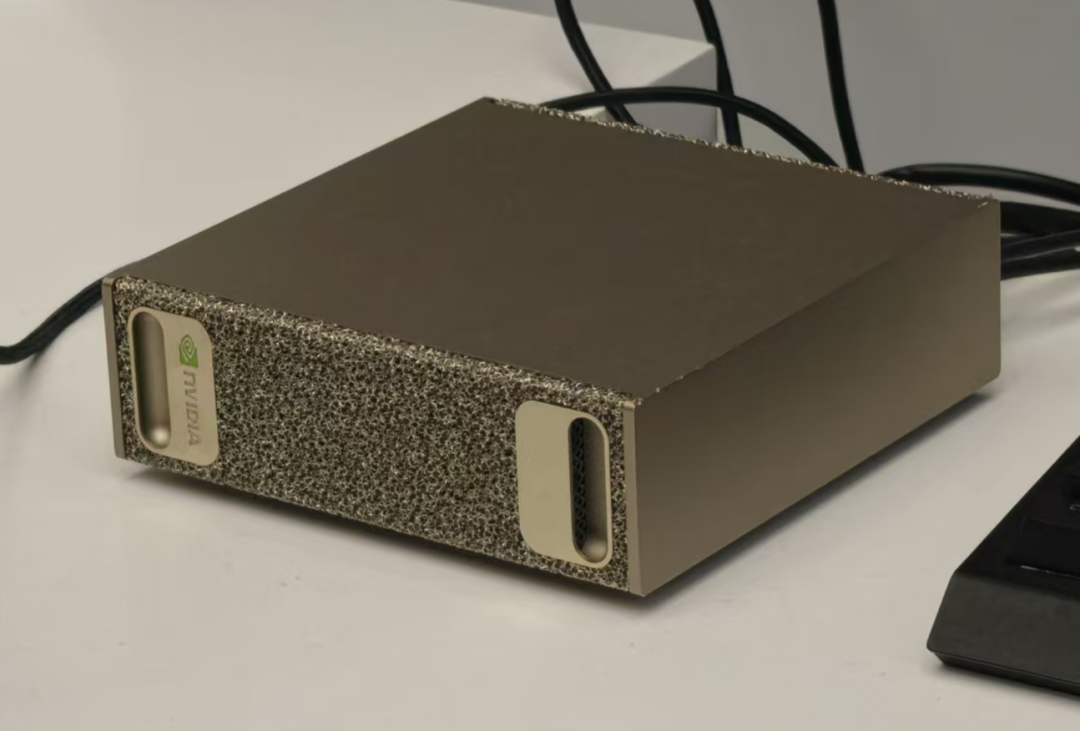
DGX Spark uses the NVIDIA GB10 Grace Blackwell Superchip, with a 20-core Arm CPU, up to 1 petaFLOP of FP4 AI performance, and 128GB of coherent unified system memory.
It ships with NVIDIA’s AI software stack and runs DGX OS, a Linux-based platform intended for AI development.
DGX Spark Official Capabilities
| Workload | DGX Spark capability |
|---|---|
| Local inference | Models up to 200B parameters |
| Fine-tuning | Models up to 70B parameters |
| Dual-system inference | Models up to 405B parameters |
| AI performance | Up to 1 petaFLOP FP4 |
| Memory | 128GB unified system memory |
| Networking | ConnectX-7, up to 200Gbps |
| Operating platform | DGX OS / Linux |
| Main audience | AI developers, researchers, data scientists |
Two DGX Spark systems can be connected through ConnectX networking to support larger models. This is an important distinction from the consumer-focused RTX Spark platform.
Developers can prototype, fine-tune, validate, and run models locally before moving workloads to NVIDIA DGX Cloud or data-center infrastructure.
RTX Spark vs. DGX Spark
The systems overlap in architecture and memory capacity, but they are not interchangeable.
| Category | RTX Spark | DGX Spark |
|---|---|---|
| Main form factors | Thin laptops and compact PCs | Compact desktop AI supercomputer |
| Operating system | Windows | DGX OS / Linux |
| Target users | Consumers, creators, gamers, agent users | Developers, researchers, data scientists |
| AI model target | Local models up to 120B in NVIDIA’s headline workflow | Inference up to 200B |
| Fine-tuning | Development and prototyping focus; configuration dependent | Officially supports fine-tuning up to 70B |
| Gaming |
| Full RTX gaming focus | Not positioned as a gaming system |
| Creative apps | Adobe, 3D, media, and Windows creative workflows | AI-development software stack |
| Scale-out networking | Consumer systems are not centered on ConnectX scale-out | ConnectX-7 can link two systems |
| Agent security | Windows security primitives and OpenShell | OpenShell, Agent Toolkit, and NemoClaw |
| Portability | Laptop and small-desktop options | Desktop system |
The simplest distinction is:
- RTX Spark is a personal Windows AI PC that can also create and play games.
- DGX Spark is a local AI-development computer that brings the NVIDIA software stack to a desk.
Building Safer Agents with NVIDIA Agent Toolkit
DGX Spark includes the NVIDIA AI software ecosystem and is positioned as a local platform for autonomous-agent development.
The NVIDIA Agent Toolkit helps developers connect agent systems to tools, data sources, models, and observability components.
OpenShell supplies isolation, policy enforcement, and inference controls. NemoClaw builds on that foundation to simplify safer deployment of always-on agents.
This division of responsibility is useful:
- Agent Toolkit helps construct and connect the agent workflow.
- OpenShell provides the sandbox and policy-controlled runtime.
- NemoClaw packages onboarding, lifecycle management, and guarded operation for supported autonomous-agent environments.
NemoClaw can be used with OpenClaw, Hermes, LangChain Deep Agents, local open models, cloud frontier models, or an inference router.
Turning a Hand-Drawn Sketch into a Web Page
At the Bilibili World demonstration, NVIDIA ran a personal agent on DGX Spark using a 35B Qwen multimodal model.
The presenter drew a simplified "five-layer AI cake" diagram on paper and showed it to a camera. The agent interpreted the sketch and produced a complete local web page within seconds.
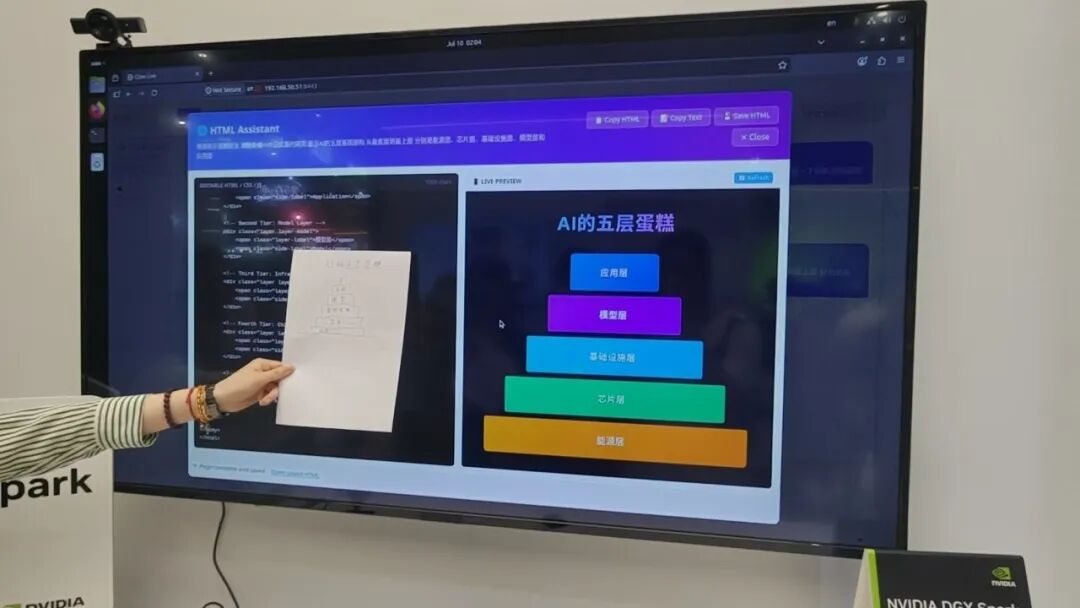
The result could then be refined through follow-up instructions.
This demonstration combines several capabilities:
- Camera input
- Multimodal visual understanding
- Structured interpretation
- HTML and CSS generation
- Local execution
- Iterative editing
Because the model and agent were running locally, the workflow did not depend on per-token cloud billing during the demonstration.
That does not make local execution free. Hardware acquisition, electricity, maintenance, storage, and engineering time remain real costs. It changes the cost model from metered remote inference toward owned local capacity.
NemoClaw for Always-On Private Assistants
NVIDIA has adapted NemoClaw to DGX Spark and its wider local-AI lineup.
NemoClaw is an open-source reference stack for running always-on agents inside OpenShell sandboxes. It adds:
- Agent onboarding
- Lifecycle management
- Sandboxed execution
- Network policies
- Privacy controls
- Inference routing
- Support for local and cloud models
For DGX Spark users, the key appeal is the ability to keep an agent running locally for long periods while reducing the need to upload sensitive data to a cloud service.
The official installation options currently include OpenClaw, Hermes, and LangChain Deep Agents.