Seedance 2.5 API Is Live on Volcano Engine: 30-Second Video, 50 Multimodal References, and Better Editing
Seedance 2.5 API Is Live on Volcano Engine: 30-Second Video, 50 Multimodal References, and Better Editing
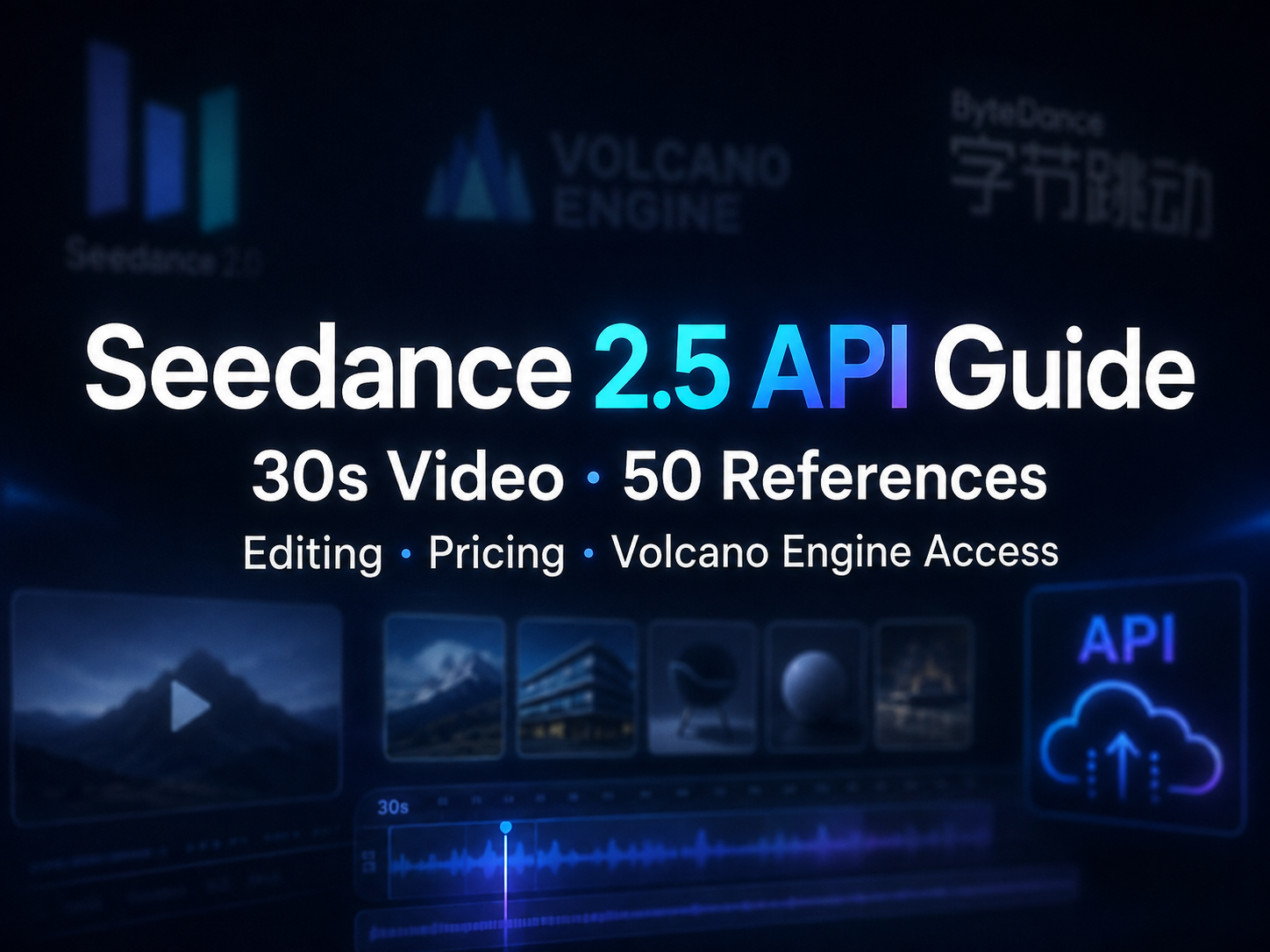
Seedance 2.5 API Is Live on Volcano Engine: 30-Second Video, 50 Multimodal References, and Better Editing
Introduction
Volcano Engine has officially opened API access to Seedance 2.5, ByteDance’s latest professional multimodal video-generation model.
Compared with Seedance 2.0, the new version focuses on several areas that matter directly in production workflows:
- Stronger instruction following.
- Longer narrative continuity.
- More realistic human subjects.
- Better synchronization and quality across audio and video.
- Improved lighting, camera movement, texture, and overall visual quality.
- More stable and controllable video editing.
The biggest practical change is duration.
Seedance 2.5 can natively generate a single video of up to 30 seconds, doubling the single-generation ceiling commonly associated with the previous generation.
It also expands multimodal reference input substantially. Volcano Engine’s current documentation says one request can include as many as 50 image, video, and audio references in total.
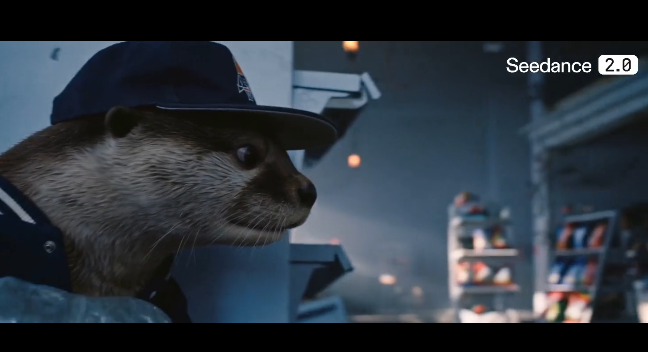
The model is now available through Volcano Engine Ark, giving developers and enterprises a direct API route instead of relying only on consumer-facing creative tools.
Seedance 2.5 API Is Officially Available
AIBase reported on August 7, 2026 that Volcano Engine had formally launched the Seedance 2.5 API service.
Volcano Engine’s current documentation confirms that Seedance 2.5 is fully available for:
- API calls.
- Online testing in Volcano Engine Ark.
- Text-to-video generation.
- First-frame image-to-video.
- First-and-last-frame video generation.
- Multimodal reference video generation.
- Video editing.
- Video extension.
The current official model identifier is:
doubao-seedance-2-5-260628
Developers should use the live Volcano Engine model list rather than hard-coding assumptions about future version suffixes, because Model IDs can change when a new dated model version replaces the current one.
What Changed From Seedance 2.0
The source article highlights four major areas of improvement.
1. Stronger Instruction Following
Video-generation prompts often contain more than a visual description.
A production prompt may specify:
- Character behavior.
- Camera movement.
- Shot order.
- Lighting.
- Timing.
- Dialogue.
- Sound.
- Scene transitions.
- Object interactions.
Seedance 2.5 is designed to follow these more complex instructions more reliably.
That matters most when a creator is trying to produce a specific sequence rather than simply generate an attractive clip.
A model can produce beautiful footage while still failing the task if:
- The camera moves in the wrong direction.
- A character performs the wrong action.
- The scene changes too early.
- The subject identity drifts.
- A required object disappears.
- The timing does not match the script.
The upgrade therefore targets control, not only visual quality.
2. Longer Narrative Continuity
Seedance 2.5 increases native single-generation duration to as much as:
30 seconds
Volcano Engine also documents multi-round video extension.
Longer clips give the model more room to maintain:
- A narrative arc.
- Character continuity.
- Spatial relationships.
- Camera logic.
- Lighting continuity.
- Audio continuity.
- Sequential actions.
For advertising, short films, educational content, product demos, and simulations, this can reduce the amount of manual stitching required after generation.
A 30-second clip is still not a complete film.
But it is long enough to support a meaningful sequence rather than only a short visual moment.
3. More Realistic Human Subjects and Better Audiovisual Quality
AIBase says Seedance 2.5 improves:
- Human realism.
- Image quality.
- Audio quality.
- Lighting.
- Camera motion.
- Overall aesthetics.
These areas are closely connected.
A human subject can look technically sharp while still feeling artificial because of:
- Skin texture.
- Facial movement.
- Eye behavior.
- Body motion.
- Lighting response.
- Interaction with the environment.
Similarly, a video may have good individual frames but still feel synthetic if the camera motion or temporal consistency is unstable.
The 2.5 update is intended to improve the complete viewing experience rather than one isolated image-quality metric.
4. More Stable Video Editing
Generation is only one part of a practical creative workflow.
Creators often need to modify an existing result without rebuilding the whole clip.
Seedance 2.5 adds stronger controlled editing and extension capabilities.
Depending on the supported workflow, users can provide an existing video and describe how it should be changed or extended.
This is especially valuable when:
- Most of a clip is already correct.
- Only one section needs revision.
- A shot needs a continuation.
- The creative team wants to preserve the established visual identity.
- A client requests a targeted change after review.
Volcano Engine’s documentation treats editing as a distinct workflow with its own parameter rules, so developers should follow the official Seedance 2.5 tutorial rather than assuming that every text-to-video parameter behaves identically during editing.
Up to 50 Multimodal Reference Assets
One of Seedance 2.5’s most notable upgrades is reference capacity.
Volcano Engine says one request can use up to 50 multimodal reference assets.
The current API documentation describes limits of up to:
30 reference images
10 reference videos
10 reference audio files
subject to the overall request constraints.
This gives creators several ways to guide the model.
Image References
Images can help establish:
- Character identity.
- Clothing.
- Product appearance.
- Environment.
- Color palette.
- Art direction.
- Composition.
Video References
Video can provide stronger information about:
- Motion.
- Camera language.
- Acting.
- Timing.
- Physical behavior.
- Transitions.
Audio References
Audio can help guide:
- Voice.
- Rhythm.
- Mood.
- Sound design.
- Timing.
The benefit is not simply “more files.”
A larger reference set can make the model useful for projects where visual and audio constraints already exist before generation begins.
Native Support for 11 Languages
The AIBase article says Seedance 2.5 supports more than ten languages.
Volcano Engine’s official tutorial currently lists 11 supported languages:
- Chinese.
- English.
- Spanish.
- Indonesian.
- Malay.
- Thai.
- Arabic.
- Portuguese.
- Vietnamese.
- Japanese.
- Korean.
This can matter in two different ways.
First, creators can write prompts and production instructions in more languages.
Second, multilingual audio-video creation becomes more practical for international advertising, localized content, education, and social media.
Language support does not guarantee identical quality in every scenario, so production teams should test pronunciation, dialogue, text rendering, and cultural details for the target market.
Current Output Limits
Volcano Engine’s current model page lists the following core limits for Seedance 2.5:
| Capability | Current Official Limit |
|---|---|
| Model ID | doubao-seedance-2-5-260628 |
| Video duration | 4–30 seconds |
| Video resolution | 480p or 720p |
| Native audio generation | Supported |
| Multimodal references | Up to 50 total |
| Reference images | Up to 30 |
| Reference videos | Up to 10 |
| Reference audio files | Up to 10 |
| Multilingual support | 11 listed languages |
These limits are current product settings rather than permanent architectural limits.
They may change as Volcano Engine updates the service.
Why 30 Seconds Matters for Commercial Video
Volcano Engine says realism and visual quality are important foundations for commercial adoption.
The source article highlights two example areas:
- Creative advertising.
- Industrial simulation.
The same capabilities can also be relevant to:
- Product marketing.
- E-commerce.
- Brand films.
- Social content.
- Training material.
- Education.
- Storyboarding.
- Previsualization.
The key improvement is not simply that the generated clip lasts longer.
Commercial video usually has constraints.
A brand may need:
- A specific product to remain consistent.
- A person to perform a specific action.
- A camera move to follow a storyboard.
- A logo or object to appear at the right time.
- A voice or audio cue to align with the scene.
Longer duration is useful only when the model can retain control throughout the sequence.
That is why instruction following, references, editing, and narrative duration need to improve together.
Creative Advertising
Advertising is a natural fit for Seedance 2.5 because campaigns often begin with existing assets.
A brand may already have:
- Product images.
- A visual identity.
- Reference footage.
- Music.
- Character material.
- A storyboard.
A multimodal generation workflow can reuse those assets instead of asking the model to invent everything from scratch.
A simplified pipeline might look like this:
brand assets
+ storyboard
+ reference video
+ music or audio
+ prompt
        ↓
Seedance 2.5
        ↓
30-second generated sequence
        ↓
targeted edit / extension
        ↓
final post-production
The API format also makes it easier to integrate this workflow into an internal content-production system.
Industrial Simulation
The AIBase report also mentions industrial simulation.
This category may include visually communicating:
- Manufacturing processes.
- Equipment behavior.
- Safety scenarios.
- Product operation.
- Training situations.
- Concept demonstrations.
Generated video should not be treated as a substitute for physically validated engineering simulation.
Its value is more likely in:
- Visualization.
- Previsualization.
- Training drafts.
- Communication.
- Scenario ideation.
For safety-critical or technically exact processes, generated results still require expert verification.
Seedance 2.5 Is Already Appearing in Third-Party Platforms
AIBase reports that Seedance 2.5 was simultaneously made available through platforms including:
- LibTV.
- Qixiang AI.
- TapNow.
- Panqu AI.
- Huimeng Workshop AI.
- Xingyu Yingjie.
Independent public announcements also confirm Seedance 2.5 availability in products such as TapNow.
These platforms can provide additional workflow layers around the underlying model, such as:
- Asset management.
- Shot organization.
- Editing.
- Regeneration.
- Storyboarding.
- Multi-model routing.
- Project management.
That can be useful for creators who want Seedance 2.5 results without building their own API integration.
For developers and enterprises that need their own product logic, Volcano Engine Ark provides the more direct route.
Quickstart: Call Seedance 2.5 Through Volcano Engine Ark
The source article does not include code, but Volcano Engine’s official documentation provides a standard API workflow.
Video generation is asynchronous.
The usual process is:
create task
→ receive task ID
→ poll task
→ retrieve generated video URL
Step 1: Prepare an API Key
Create an API key in Volcano Engine Ark and store it in an environment variable:
export ARK_API_KEY="your-api-key"
Do not hard-code production keys into a source repository.
Step 2: Install the Python SDK
Volcano Engine’s current documentation uses:
pip install 'volcengine-python-sdk[ark]'
Step 3: Create a Video Generation Task
A simplified official-style Python example is:
import os
from volcenginesdkarkruntime import Ark

client = Ark(
    base_url="https://ark.cn-beijing.volces.com/api/v3",
    api_key=os.environ.get("ARK_API_KEY"),
)

task = client.content_generation.tasks.create(
    model="doubao-seedance-2-5-260628",
    content=[
        {
            "type": "text",
            "text": (
                "A cinematic tracking shot of a red electric sports car "
                "driving through a rainy neon city at night."
            ),
        }
    ],
    generate_audio=True,
    ratio="16:9",
    duration=15,
)

print(task)
The exact available arguments depend on the generation mode.
For example, reference-based generation and video editing require additional content inputs.
Always compare production code with the current API reference.
Step 4: Query the Task
The task response includes an ID that can be used to query generation status.
The HTTP endpoint documented by Volcano Engine is:
GET https://ark.cn-beijing.volces.com/api/v3/contents/generations/tasks/{task_id}
Using the SDK, the equivalent workflow uses the content-generation task query method.
The job may remain in a queued or processing state before becoming:
succeeded
When successful, the response contains the generated content information.
Step 5: Download the Result Promptly
Volcano Engine notes that generated video URLs are not intended as permanent object storage.
Its current query documentation also places limits on video URL download counts.
Production applications should therefore:
- Poll until the job succeeds.
- Download the video.
- Store it in controlled object storage if long-term retention is required.
- Save metadata such as prompt, model ID, task ID, duration, and creation time.
Do not design a permanent media library around temporary generation URLs.
Example: 30-Second Generation
Seedance 2.5 supports up to 30 seconds in a single generation.
A corresponding request can use:
task = client.content_generation.tasks.create(
    model="doubao-seedance-2-5-260628",
    content=[
        {
            "type": "text",
            "text": (
                "A continuous cinematic sequence following a chef from "
                "preparing ingredients to plating the final dish, with "
                "natural kitchen sound and smooth camera transitions."
            ),
        }
    ],
    generate_audio=True,
    ratio="16:9",
    duration=30,
)
Longer duration usually makes prompt structure more important.
For a 30-second sequence, creators should specify:
- What happens first.
- What happens next.
- Camera behavior.
- Character continuity.
- Scene continuity.
- Audio expectations.
- The intended ending.
Multimodal Reference Workflows
The real strength of Seedance 2.5 appears when generation uses existing assets.
A production request may combine:
text prompt
+ image references
+ video references
+ audio references
Volcano Engine’s API determines the generation workflow from the content entries and the request intent.
Because multimodal requests have additional format and size restrictions, developers should use the official Seedance 2.5 tutorial for exact asset-input syntax.
Do not assume that a generic public URL is always accepted.
Some workflows may require supported URLs, uploaded assets, or platform-managed resources.
Editing and Extension Need Different Parameter Rules
Video editing is not identical to normal generation.
Volcano Engine’s Seedance 2.5 documentation notes that editing mode can apply different rules for parameters such as:
ratio
duration
For some editing workflows, the model preserves characteristics of the source video rather than allowing an arbitrary new ratio or duration.
This behavior is useful because a targeted edit should generally preserve the existing clip instead of silently reframing the whole sequence.
Before implementing editing in production, test:
- Aspect-ratio behavior.
- Audio preservation.
- Subject consistency.
- Local edits.
- Extension boundaries.
- Output duration.
- Repeated edit quality.
Seedance 2.0 mini and fast Receive Temporary Price Cuts
Alongside the Seedance 2.5 API launch, Volcano Engine introduced a limited-time promotion for two Seedance 2.0 variants.
The promotion runs from:
August 7, 2026 at 14:00 Beijing time
to
September 7, 2026 at 14:00 Beijing time
Seedance 2.0 mini
Volcano Engine says 480p and 720p generation is billed at 40% of the standard list price during the promotion.
For 720p, the lowest effective cost is approximately:
RMB 0.2 per second
Seedance 2.0 fast
AIBase reports that Seedance 2.0 fast is billed at 75% of the standard list price during the same period.
For 720p, the lowest effective cost is approximately:
RMB 0.6 per second
These are promotional numbers.
They should not be used as permanent production assumptions.
Developers should check the current Volcano Engine pricing page before forecasting costs after September 7.
Seedance 2.5 and Seedance 2.0 Serve Different Cost Profiles
The launch of a stronger model does not automatically make every older model irrelevant.
A production system can route different jobs according to quality, speed, and cost.
For example:
| Workflow | Possible Priority |
|---|---|
| High-value brand film | Maximum quality and control |
| Draft storyboard | Low cost |
| Social-media iteration | Speed and cost |
| Complex 30-second narrative | Long-form consistency |
| High-volume simple generation | Lower-cost model |
| Existing-video revision | Editing capability |
Seedance 2.5 is the obvious choice when the workflow depends on its newer capabilities.
Seedance 2.0 mini or fast may remain attractive when the goal is inexpensive iteration.
This is especially true during the temporary promotion.
How to Evaluate Seedance 2.5 for Production
A visually impressive demo is not enough to select a video model for a real product.
Teams should test the tasks they actually care about.
1. Instruction Success Rate
Measure whether the final video follows the requested actions and timeline.
2. Subject Consistency
Check whether people, products, and important objects remain recognizable across frames and shots.
3. Reference Fidelity
If the workflow uses multimodal references, measure whether the generated result actually preserves the required visual or audio features.
4. Editing Stability
Test whether small modifications preserve the parts of the video that should remain unchanged.
5. Long-Sequence Coherence
A 30-second output is valuable only if the later part of the clip remains coherent.
6. Audio Quality
Review dialogue, sound effects, synchronization, and background audio separately from visual quality.
7. Cost per Accepted Video
Do not compare only the price of one generation.
A more useful metric is:
total generation cost
÷
number of outputs accepted for production
A model that needs fewer retries may be cheaper overall even if one request costs more.
8. Latency and Queue Behavior
API products should test:
- Average completion time.
- Peak-time latency.
- Failure rate.
- Retry behavior.
- Concurrency limits.
9. Safety and Rights
Reference media can contain:
- Real people.
- Copyrighted footage.
- Music.
- Brands.
- Private material.
Teams should ensure they have the right to use the provided assets and should follow Volcano Engine’s applicable content and safety rules.
常见问题
What is Seedance 2.5?
Seedance 2.5 is ByteDance’s latest professional multimodal video-generation model available through Volcano Engine Ark. It improves instruction following, long-form narrative, human realism, audiovisual quality, multimodal reference generation, editing, and video extension.
What is the Seedance 2.5 API model ID?
The current Volcano Engine model ID is doubao-seedance-2-5-260628. Model IDs include version information and can change when Volcano Engine publishes a newer model revision.
How long can Seedance 2.5 videos be?
The current official model page supports individual outputs from 4 to 30 seconds. Volcano Engine also documents multi-round video extension for longer workflows.
How many reference assets can Seedance 2.5 use?
Volcano Engine says one request can use up to 50 multimodal reference assets in total. The current API documentation lists up to 30 images, 10 videos, and 10 audio files within the relevant request limits.
Does Seedance 2.5 generate audio?
Yes. The API supports video generation with native audio. Developers can use the documented generate_audio option in supported workflows.
What resolutions does the Seedance 2.5 API currently support?
The current Volcano Engine model page lists 480p and 720p output. Developers should check the live model page because supported resolutions can change over time.
Can Seedance 2.5 edit an existing video?
Yes. Volcano Engine describes Seedance 2.5 as supporting controlled video editing and extension. Editing requests have workflow-specific rules, so use the official tutorial rather than treating them exactly like text-to-video requests.
Are the Seedance 2.0 mini and fast discounts permanent?
No. The promotion runs from August 7 to September 7, 2026 in Beijing time. The source and official Volcano Engine documentation describe roughly RMB 0.2/sec minimum 720p pricing for 2.0 mini during the promotion and roughly RMB 0.6/sec for 2.0 fast.
相关工具
- Volcano Engine Ark: ByteDance’s enterprise model platform for testing and calling Seedance models through APIs.
- Seedance 2.5 Model Page: The current Volcano Engine model page with availability, limits, and pricing information.
- Volcano Engine Console: The console used to manage Ark access, model activation, and API keys.
- TapNow: A creative AI platform that has publicly announced Seedance 2.5 support.
- LibTV: An AI video-production platform reported to have integrated Seedance 2.5.
Related Links
- Official Seedance 2.5 Tutorial: Volcano Engine’s documentation for Seedance 2.5 capabilities, workflows, and API examples.
- Create Video Generation Task API: Official parameters for creating asynchronous Seedance video-generation jobs.
- Query Video Generation Task API: Official endpoint and response fields for checking generation status and obtaining results.
- Seedance Video Quickstart: Volcano Engine’s video-generation introduction and API workflow.
- Volcano Engine Model Pricing: Current model billing information and pricing examples.
- Seedance Product Page: Volcano Engine’s Seedance product and promotion page.
- Volcano Engine Ark Overview: Product overview for the model-development and inference platform.
Summary
Volcano Engine has officially opened the Seedance 2.5 API, making ByteDance’s upgraded video model directly available to developers and enterprises.
The model raises native single-generation duration to 30 seconds, supports up to 50 multimodal references, improves instruction following and long-form continuity, adds stronger editing and extension, and supports 11 listed languages. The current API model ID is doubao-seedance-2-5-260628.
The API uses an asynchronous task workflow, allowing developers to integrate Seedance into advertising, creative production, content platforms, internal video tools, and other automated pipelines.
At the same time, Volcano Engine is temporarily discounting Seedance 2.0 mini and fast through September 7, creating a lower-cost option for workloads that do not require all of Seedance 2.5’s capabilities.
Seedance 2.5’s biggest upgrade is not simply longer video—it is the combination of duration, multimodal references, instruction control, editing, and audiovisual quality needed to make AI video generation more usable in production workflows.