2026 Startup Website Builder Comparison: How to Choose Between We0 AI, Framer, Webflow, and Carrd?
When many startup teams choose a website builder, they first ask one question:
2026 Startup Website Builder Comparison: We0 AI, Framer, Webflow, and Carrd — Which One Should You Choose?
When many startup teams choose a website builder, they start with one question:
Which tool is the fastest?
But by 2026, that question is no longer enough.
For a startup project, a website is not something you “finish and forget.” It is more like a front desk: people search for you, compare you, click into your site, judge whether you seem trustworthy, and only then may they leave an email, book a demo, or submit an inquiry.
So the real question should be:
Can this tool help turn my website into a long-term customer acquisition asset?
That is also why, when comparing We0 AI, Framer, Webflow, and Carrd, you cannot only look at whether the pages look good, nor only at whether the tool is cheap.
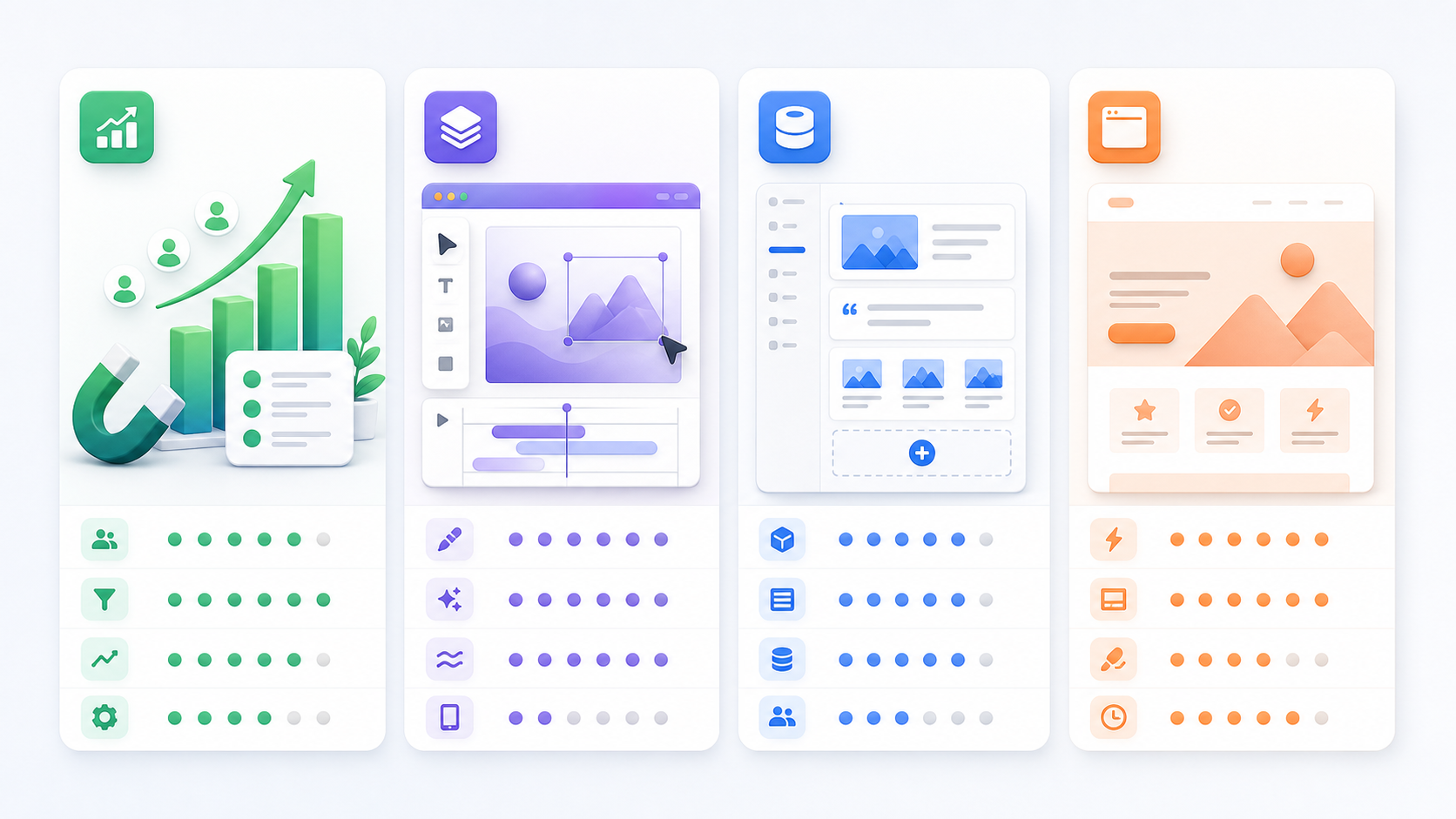
They are actually solving four different types of problems.

The Bottom Line First: These Four Tools Are Not the Same Kind of Thing
If you just want a quick overview, start with this table.
| Tool | Best suited for | Core strengths | Main limitations | One-line verdict |
|---|---|---|---|---|
| We0 AI | SaaS, AI products, indie developers, consultants, agencies, foreign trade, local services | Website building + presentation + SEO/GEO + content + growth + leads | Not suitable for people who just want to casually drag together a toy page themselves | Best for those who treat their website as a customer acquisition asset |
| Framer | Designers, early-stage product pages, teams with strong visual needs | High design freedom, great animations, fast launch | Ongoing content growth and customer acquisition operations still need to be handled by yourself | Best for design-first showcase pages |
| Webflow | Mature teams, design teams, websites with complex content/structure | CMS, design control, strong scalability | Higher learning and maintenance costs | Best for teams with resources to operate complex websites |
| Carrd | Personal projects, minimalist landing pages, temporary validation pages | Cheap, simple, very fast | Not suitable for complex structures, long-term SEO content, or growth | Best for quick one-page validation |
There is one key difference here:
Framer, Webflow, and Carrd are more like “website builders.” We0 AI is more like a “showcase website growth platform.”
This may sound like marketing language, but the difference is actually very practical.
Creating a page and getting that page continuously discovered through search, recommended by AI, trusted by users, and converted into customers are two different things.
In 2026, the Job of a Startup Website Has Changed
In the past, companies built official websites mainly to “look legitimate.”
Now it is different.
A startup website needs to do at least four things:
- Build: Get the website up first
- Showcase: Clearly explain the product, service, cases, and team
- Grow: Continuously acquire traffic through SEO, GEO, content, and page optimization
- Leads: Turn visitors into leads, inquiries, and customers
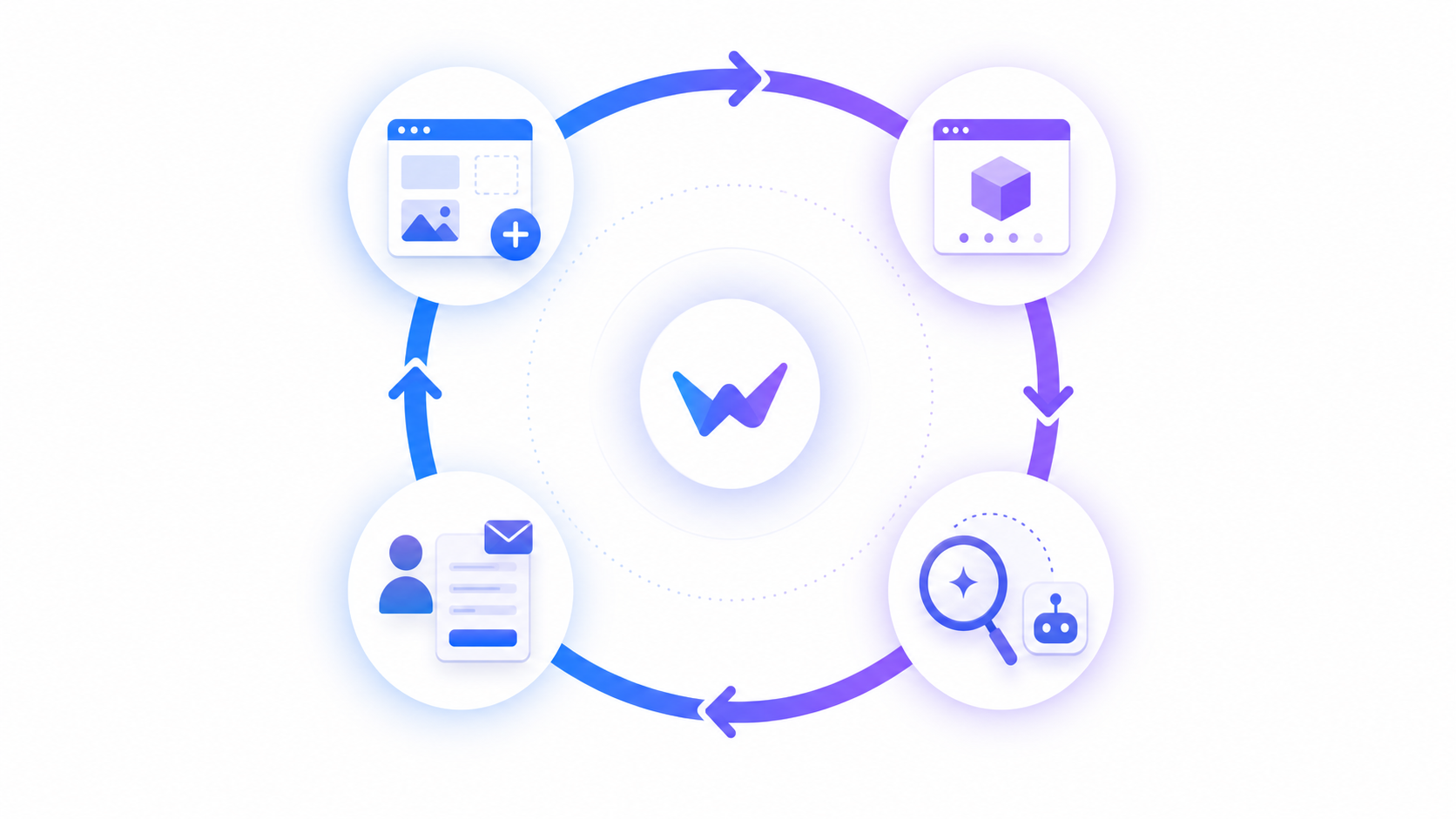
This is the workflow We0 AI has always emphasized:
Build -> Showcase -> Grow -> Leads
If you are only building a launch page, Carrd may be enough.
If you want a visually impressive product homepage, Framer feels great.
If you have designers, developers, and a content team, Webflow is powerful.
But if you are a founder, indie developer, consultant, agency, or foreign trade team, what you need is not just pages.
What you need more is:
Someone to help you think through the website structure, copy, launch, SEO/GEO, content layout, visitor data, and lead conversion path together.
This is exactly where We0 AI is more suitable.
We0 AI: Not “Generate a Webpage,” but Put the Website into Growth Mode
We0 AI should not be simply understood as an “AI website builder.”
A more accurate positioning is:
An AI website-building and lead generation growth platform for showcase websites.
It is suitable for these scenarios:
- SaaS / AI product teams building product websites, feature pages, pricing pages, and case study pages
- Indie Hackers building project showcase pages, launch pages, and waitlist pages
- Consultants and freelancers building service showcase pages and consultation booking pages
- Agencies building case study showcases, service pages, and client acquisition pages
- Foreign trade companies building multilingual product showcases and inquiry pages
- Creators and experts building personal brand sites, portfolios, and course pages
- Local service businesses building service introductions, review showcases, and booking entry points
The focus of We0 AI is not “you type one sentence, and it spits out a page.”
The truly valuable part comes afterward: page structure, brand information organization, copy planning, manual site building, launch, SEO/GEO configuration, content production, data monitoring, growth recommendations, and continuous optimization.
This is crucial for startup teams.
Because many websites do not fail because they “cannot be built.”
They fail because:
- The homepage does not clearly explain who they are
- The pages have no search entry points
- There is no accumulated content
- There is no long-tail keyword strategy
- There is no clear conversion path
- No one maintains the site after launch
- They get visits but do not know what happened
What We0 AI solves is not a page problem, but a growth loop problem.
Framer: Design-First, Great for Quickly Building Beautiful Product Showcases
Framer remains very suitable for startup teams in 2026, especially early-stage products, design-driven teams, and SaaS websites that need strong visual expression.
Its advantages are clear:
- Strong page visuals
- Smooth animations and interactions
- Fast launch speed
- Designer-friendly
- CMS and SEO capabilities are also continuously improving
If your goal is:
To build a beautiful, modern product website or landing page that can launch quickly, Framer is a very strong choice.
But it also has a practical issue.
Framer helps you make the page beautiful, but that does not mean it helps you build growth.
After launch, you still need to solve the following yourself:
- How to write content
- How to plan SEO keywords
- How to cover GEO / AI search
- Which pages should be continuously updated
- How to read the data
- How to optimize the conversion path
- Why visitors do not leave their contact information
So Framer is more like an excellent design-focused website builder.
But if you do not have content and growth capabilities, the website may quickly enter a “quiet state” after launch.
Webflow: Powerful, but Not Necessarily Lightweight
Webflow is the most professional-site-system-oriented tool among these options.
It is suitable for websites with more complex structures, such as:
- Multi-page brand websites
- Content-driven websites
- CMS
driver websites
- Marketing sites that require fine-grained design control
- Websites maintained by design, operations, and content teams
Webflow’s strengths are:
- Strong design control
- Mature CMS
- Solid basic SEO capabilities
- Better extensibility
- Suitable for team collaboration and long-term content structures
If your team already has designers, marketers, and content operators, Webflow is a great fit.
But for many early-stage founders, the problem is also obvious:
Webflow is powerful, but it is not lightweight.
You may face learning costs, setup costs, template customization costs, CMS maintenance costs, third-party integration costs, and may even need to hire an agency.
This is not Webflow’s fault.
It is simply better suited to teams where “someone is responsible for the website.”
If you don’t have anyone responsible for long-term website growth, Webflow’s powerful capabilities may end up underused.
Carrd: the fastest and cheapest, but with the clearest boundaries
Carrd is well suited for one-page websites.
For example:
- Personal profile pages
- MVP validation pages
- Waitlist pages
- Simple portfolios
- Event registration pages
- A very lightweight landing page
It is cheap, simple, and fast to launch.
If you just want to publish a page tonight, Carrd may be the easiest option.
But Carrd’s boundaries are also very clear:
- Not suitable for complex information structures
- Not suitable for multiple content sections
- Not suitable for systematic SEO content
- Not suitable for multi-page product matrices
- Not suitable for long-term official websites that require ongoing operations
So Carrd is not “bad.”
It is a tool that is well suited for “small tasks.”
But if you want to turn your website into a real brand asset and customer acquisition channel, Carrd is likely only the first step, not the destination.
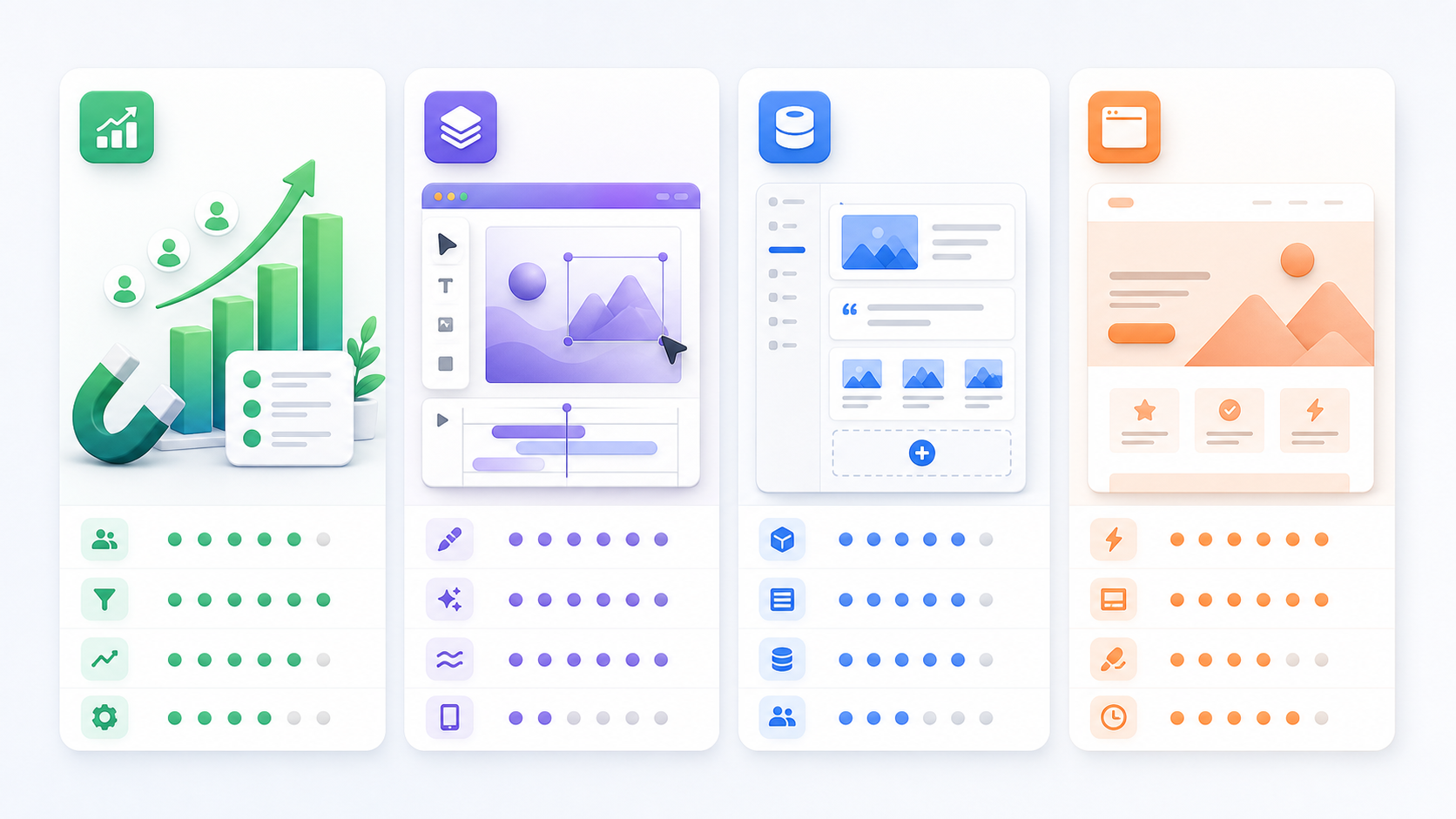
How to choose: don’t choose the tool first; choose your goal first
Many people choose the wrong tool because they start by asking: Which tool is the best?
There is no answer to that question.
A better question is:
What job does my website need to accomplish right now?
| Your goal | Recommended |
|---|---|
| Just create a temporary validation page | Carrd |
| Create a visually strong product showcase page | Framer |
| Build a complex CMS, content site, or multi-page structure | Webflow |
| Build a showcase website that can launch, operate, grow, and acquire leads | We0 AI |
If your website is just “a link,” there is no need to make it complicated.
But if your website needs to handle search traffic, AI recommendations, customer trust, and lead conversion, then don’t look only at website-building speed.
Speed only solves the launch problem; it does not automatically solve the growth problem.
An easily overlooked cost: who manages it after launch?
Startups often underestimate the ongoing costs of a website.
You may think the cost is the tool subscription fee.
But the bigger costs come later:
- Who will keep writing content?
- Who will optimize page titles and descriptions?
- Who will plan long-tail keywords?
- Who will improve AI search / GEO visibility?
- Who will look at traffic data?
- Who will decide which pages need to be changed?
- Who will optimize inquiries and CTAs?

This is also the difference between We0 AI and ordinary website builders.
We0 AI doesn’t just help you “have a website.”
It is more like helping you keep pushing the website forward:
From building, to presentation, to search visibility, to content growth, to lead acquisition.
For startups without a full marketing team, this difference is significant.
My advice: choose by stage, not by reputation
If you are still validating an idea
Choose Carrd or Framer.
Launch the page first, collect feedback, and don’t over-design.
If you are seriously launching a product
Framer, Webflow, and We0 AI are all worth considering.
But you need to ask clearly: will someone handle content and growth afterward?
If you want to use your official website as a customer acquisition channel
Prioritize We0 AI.
Because at this point, the question is no longer “Can the page be built?” but:
Can it continue to be seen, can it build user trust, and can it turn visits into leads?
If you are a growing team with internal resources
Webflow can be very powerful.
The prerequisite is that you have design, content, and operations resources to make full use of it.
FAQ
1. What is the biggest difference between We0 AI and Framer?
Framer leans more toward design and page experience, making it suitable for quickly building beautiful websites. We0 AI leans more toward growth for showcase websites. In addition to website building, it continues to support SEO, GEO, content, data, and lead conversion.
2. Is Webflow suitable for early-stage startups?
Yes, but it depends on team resources. If you have designers, content operators, or an external agency, Webflow is very powerful. If you only have a single founder, it may feel relatively heavy to maintain.
3. Can Carrd still be used for a startup’s official website?
Yes, but it is better suited for one-page validation, personal profiles, waitlists, or lightweight landing pages. If you need multiple pages, SEO content, and long-term growth, Carrd’s limitations will become quite obvious.
4. What should startups pay the most attention to when building a website in 2026?
Not just website-building speed, but whether the website can continuously generate search traffic, AI recommendation visibility, content assets, and qualified leads after launch.
5. Who is We0 AI suitable for?
It is suitable for SaaS / AI product teams, indie developers, consultants, agencies, foreign trade companies, creators, local service businesses, and anyone who wants their website not only to showcase their offering, but also to grow and acquire customers.
Related Tools
- We0 AI: An AI website-building and customer acquisition growth platform, suitable for showcase websites, SEO/GEO, content growth, and lead acquisition.
- Framer: A design-first website builder, suitable for product pages with strong visual expression.
- Webflow: A professional no-code website platform, suitable for CMS, multi-page sites, and complex site structures.
- Carrd: A lightweight one-page website builder, suitable for quick validation and simple landing pages.
Sources
com/)
Partner Links / Related Reading / Internal Link Suggestions
- 10 Best AI Website Builders in 2026
- How to Build a Showcase Website for a SaaS Product
- SEO vs GEO: What Startup Websites Should Prepare For
- Startup Landing Page Checklist
- How We0 AI Helps Turn a Website Into a Lead Generation Asset
Ready to Build?
If you just want to make a single page, there are many tools available.
But if what you want is a website that can showcase your business, be searchable, be understood by AI, and continuously generate leads, you can try We0 AI.
Don’t just build a website. Build a showcase website that can grow.

Conclusion
In 2026, when startups choose a website-building tool, they should not only look at which one is faster, cheaper, or offers more templates.
What really matters is the role your website needs to play.
Carrd is suitable for quick validation. Framer is suitable for design-focused showcases. Webflow is suitable for complex websites and professional teams. We0 AI is better suited to turning a showcase website into a long-term growth and lead-generation asset.
If your website is just a business card, choose something simple.
If your website needs to bring in customers, don’t treat it as just a page.
Comparison of startup website tools for 2026: How to choose between We0 AI, Framer, Webflow, and Carrd?
A lot of startup teams choose a website tool by asking one simple question:
Which one is the fastest?
In 2026, that question is not enough anymore.
For a startup, a website is not something you “finish” and forget. It is often the first place people check when they search your name, compare your product, judge your credibility, and decide whether to leave an email, book a demo, or send an inquiry.
So the better question is:
Can this tool help turn my website into a long-term growth and lead-generation asset?
That is why comparing We0 AI, Framer, Webflow, and Carrd is not just about design quality or subscription price.
They solve four very different jobs.

Quick answer: these tools are not the same category
If you only want the short version, start here.
| Tool | Best for | Core strength | Main limitation | Simple take |
|---|---|---|---|---|
| We0 AI | SaaS, AI products, indie makers, consultants, agencies, exporters, local services | Website + showcase + SEO/GEO + content + growth + leads | Not for people who only want to drag together a throwaway page | Best if you treat your website as a growth asset |
| Framer | Designers, early product pages, visually strong startup sites | High design freedom, smooth motion, fast publishing | You still need to handle content, SEO, and growth yourself | Best for design-first showcase pages |
| Webflow | Mature teams, design teams, content-heavy or structured websites | CMS, design control, scalability | Higher learning and maintenance cost | Best for teams that can operate a more complex site |
| Carrd | Personal projects, simple |
landing pages, quick validation | Cheap, simple, very fast | Limited for complex structure, SEO content, and long-term growth | Best for one-page validation |
Here is the important difference:
Framer, Webflow, and Carrd are mainly website-building tools. We0 AI is closer to a showcase website growth platform.
That may sound like positioning language, but the difference is practical.
Making a page and making that page continuously discoverable, understandable, trusted, and conversion-ready are not the same job.
In 2026, a startup website has a different job
A few years ago, many teams built websites mainly to “look legit.”
Now the job is bigger.
A startup website needs to do at least four things:
- Build: get the site live
- Showcase: explain the product, service, case studies, and proof clearly
- Grow: bring in traffic through SEO, GEO, content, and page optimization
- Leads: turn visitors into inquiries, demos, signups, or customers
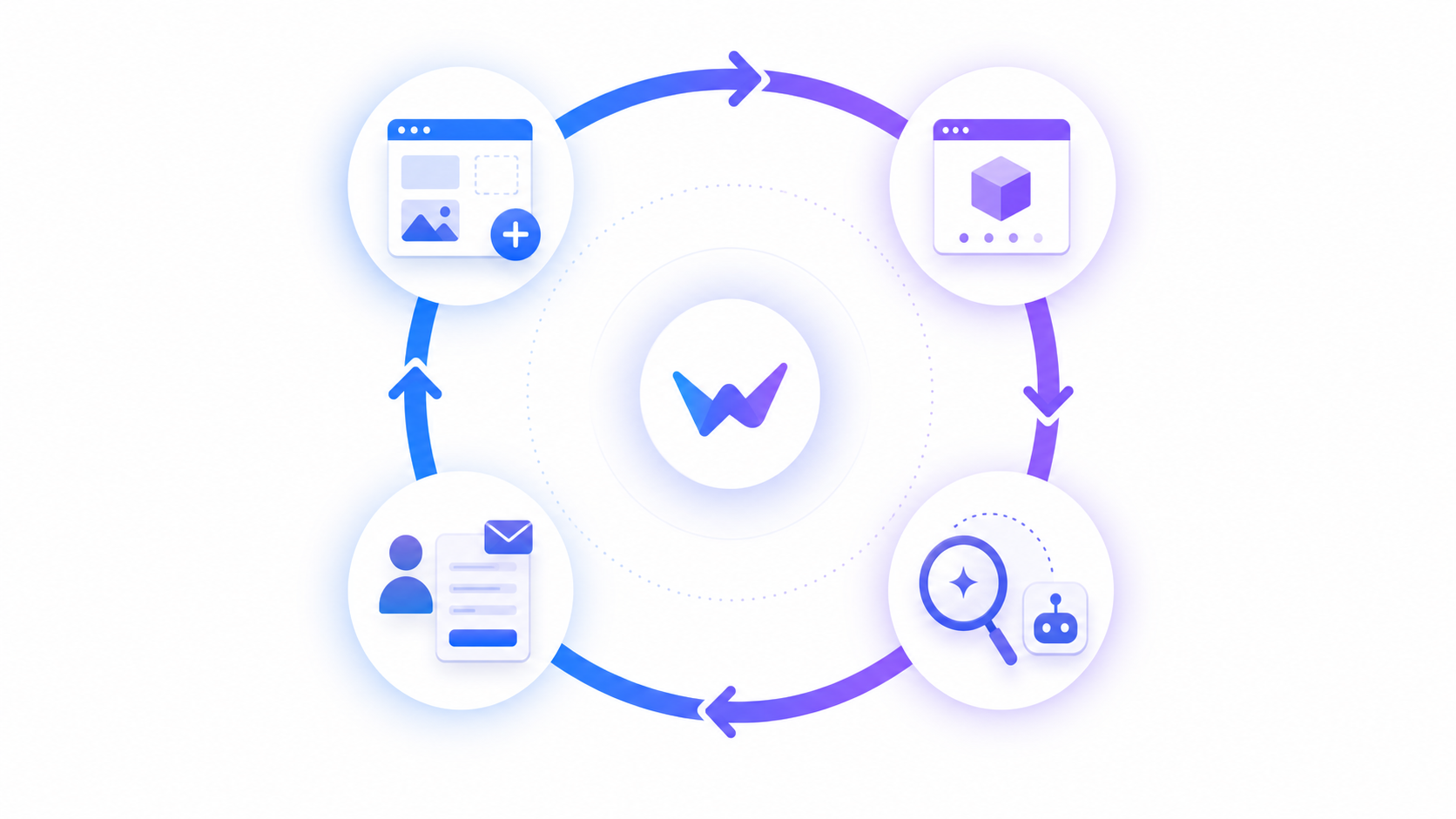
This is the logic We0 AI keeps focusing on:
Build -> Showcase -> Grow -> Leads
If you only need a launch page, Carrd may be enough.
If you need a visually impressive product homepage, Framer feels great.
If you have designers, developers, and content people, Webflow can be very powerful.
But if you are a founder, indie maker, consultant, agency, or export business, you may need more than a page.
You probably need:
someone to help think through the site structure, messaging, publishing, SEO/GEO setup, content layout, traffic data, and lead path together.
That is where We0 AI fits better.
We0 AI: not just generating a webpage, but moving the website into growth mode
We0 AI should not be understood as just another “AI website builder.”
A more accurate description is:
an AI-powered website and lead-generation growth platform for showcase websites.
It fits use cases like:
- SaaS and AI product teams building product sites, feature pages, pricing pages, and case study pages
- Indie hackers building project pages, launch pages, and waitlist pages
- Consultants and freelancers building service pages and booking pages
- Agencies building case studies, service pages, and client acquisition pages
- Export businesses building multilingual product showcase and inquiry pages
- Creators and experts building personal brand sites, portfolios, course pages, and consulting pages
- Local service businesses building service pages, review pages, and appointment flows
The point of We0 AI is not “type one sentence and get a website.”
The more valuable part is what happens after that: brand information organization, page structure, copy planning, human-assisted building, publishing, SEO/GEO basics, content production, traffic monitoring, growth suggestions, and continuous optimization.
That matters a lot for startup teams.
Because most websites do not fail because they cannot be built.
They fail because:
- the homepage does not clearly explain what the company does
- there is no search entry point
- there is no content base
- there is no long-tail keyword layout
- the conversion path is unclear
- nobody maintains the site after launch
- traffic comes in, but nobody knows what happened
We0 AI is not solving only a page problem. It is solving a growth-loop problem.
Framer: design-first, great for beautiful product showcase pages
Framer is still a strong choice for startup teams in 2026, especially early-stage products, design-led teams, and SaaS websites that need a polished visual impression.
Its strengths are easy to see:
- strong visual design
- smooth motion and interaction
- fast publishing
- designer-friendly workflow
- improving CMS and SEO features
If your goal is:
to launch a modern, good-looking product website or landing page quickly, Framer is a very good option.
But there is a practical limitation.
Framer can help you make the site look good. It does not automatically make the growth work happen.
You still need to figure out:
- what content to write
- which SEO keywords to target
- how to cover GEO / AI search visibility
- which pages should be updated over time
- how to read analytics
- how to improve conversion paths
- why visitors are not leaving contact details
So Framer is best understood as an excellent design-first website builder.
If you do not have content and growth capability, the site may look great at launch and then quietly stop moving.
Webflow: powerful, but not always light
Webflow is the most professional site system among the tools in this comparison.
It works well for:
- multi-page brand websites
- content-driven websites
- CMS-powered websites
- marketing sites that need precise design control
- websites maintained by design, content, or marketing teams
Webflow is strong because of:
- deep design control
- mature CMS
- solid SEO fundamentals
- better scalability
- team collaboration and long-term content structure
If your team already has designers, marketers, and content operators, Webflow can be a great choice.
But for many early-stage founders, the issue is obvious:
Webflow is powerful, but it is not light.
You may face learning cost, building cost, template customization cost, CMS maintenance cost, third-party integration cost, and sometimes agency cost.
That is not a flaw.
Webflow is simply better for teams that have someone responsible for the website.
If nobody owns website growth internally, you may not get the full value from Webflow’s power.
Carrd: fastest and cheapest, but with clear boundaries
Carrd is very good for one-page websites.
For example:
- personal profile pages
- MVP validation pages
- waitlist pages
- simple portfolios
- event signup pages
- lightweight landing pages
It is affordable, simple, and quick to publish.
If you just want to put a page online tonight, Carrd may be the easiest option.
But Carrd also has clear boundaries:
- not ideal for complex information architecture
- not ideal for content sections and multi-page systems
- not
ideal for systematic SEO content
- not ideal for product page matrices
- not ideal for long-term website operations
So Carrd is not “bad.”
It is a very good small-task tool.
But if you want the site to become a real brand asset and customer acquisition channel, Carrd is likely a first step, not the final answer.
How to choose: do not choose the tool first, choose the job first
Many teams pick the wrong tool because they start with the question: which tool is best?
There is no universal answer.
A better question is:
What job does my website need to do right now?
| Your goal | Better choice |
|---|---|
| Build a temporary validation page | Carrd |
| Build a visually strong product showcase page | Framer |
| Build a complex CMS, content site, or multi-page structure | Webflow |
| Build a live, operable, growth-ready, lead-generating showcase website | We0 AI |
If your site is just “a link to share,” keep it simple.
But if your site needs to support search traffic, AI search visibility, customer trust, and lead conversion, do not judge only by launch speed.
Speed solves the launch problem. It does not automatically solve the growth problem.
The hidden cost most startups forget: who runs the site after launch?
Startups often underestimate the post-launch cost of a website.
You may think the cost is the monthly tool subscription.
The bigger cost usually comes later:
- who keeps writing content?
- who optimizes titles and descriptions?
- who plans long-tail keywords?
- who works on AI search / GEO visibility?
- who checks traffic data?
- who decides which page needs improvement?
- who improves inquiry flows and CTAs?

This is where We0 AI differs from ordinary website builders.
We0 AI is not only about giving you “a website.”
It helps push the website forward after launch:
from building, to showcasing, to search visibility, to content growth, to lead generation.
For startups without a full marketing team, that difference is big.
My recommendation: choose by stage, not by hype
If you are still validating an idea
Choose Carrd or Framer.
Get the page out, collect feedback, and avoid overbuilding.
If you are seriously launching a product
Framer, Webflow, and We0 AI are all worth considering.
But ask one thing clearly: do you have someone to handle content and growth later?
If your website needs to become an acquisition channel
Look at We0 AI first.
At this stage, the question is no longer “can we build the page?”
It becomes:
can people find it, trust it, and turn into leads?
If you are a growing team with internal resources
Webflow can be very strong.
The condition is that you have design, content, and operation resources to actually use it well.
FAQ
1. What is the biggest difference between We0 AI and Framer?
Framer is more focused on design and page experience. It is great for building beautiful websites quickly. We0 AI is more focused on showcase website growth, including SEO, GEO, content, analytics, and lead conversion after the site is built.
2. Is Webflow good for early-stage startups?
Yes, but it depends on your resources. If you have a designer, content operator, or agency support, Webflow is powerful. If you are a solo founder, it may feel heavy to maintain.
3. Can Carrd still be used for startup websites?
Yes. Carrd is useful for one-page validation, personal profiles, waitlists, and lightweight landing pages. But if you need multi-page structure, SEO content, and long-term growth, its limits become clear.
4. What should startups care about most when building a website in 2026?
Not just launch speed. Startups should care about whether the website can generate search traffic, AI-search visibility, content depth, trust, and qualified leads after launch.
5. Who is We0 AI best for?
We0 AI is best for SaaS and AI product teams, indie makers, consultants, agencies, exporters, creators, local service businesses, and anyone who wants a website that can showcase, grow, and generate leads.
Related Tools
- We0 AI: an AI-powered website and lead-generation growth platform for showcase websites, SEO/GEO, content growth, and leads.
- Framer: a design-first website builder for visually strong product pages.
- Webflow: a professional no-code website platform for CMS, multi-page systems, and more complex site structures.
- Carrd: a lightweight one-page website builder for quick validation and simple landing pages.
Sources
- Framer Official Website
- Framer Pricing
- Webflow Official Website
- Webflow Pricing
- Carrd Official Website
Related Reading / Internal Link Suggestions
- 10 Best AI Website Builders in 2026
- How to Build a Showcase Website for a SaaS Product
- SEO vs GEO: What Startup Websites Should Prepare For
- Startup Landing Page Checklist
- How We0 AI Helps Turn a Website Into a Lead Generation Asset
Ready to Build?
If you only want to create a page, there are many tools.
But if you want a website that can showcase your business, rank in search, be understood by AI systems, and keep generating leads, try We0 AI.
Do not just build a website. Build a showcase website that can grow.

Conclusion
In 2026, startup teams should not choose a website tool based only on speed, price, or the number of templates.
The real question is what role your website needs to play.
Carrd is good for quick validation. Framer is good for design-first showcase pages. Webflow is good for complex sites and professional teams. We0 AI is better when you want your showcase website to become a long-term asset for growth and lead generation.
If your website is only a business card, choose something simple.
If your website needs to bring in customers, do not treat it as just a page.