Will AI Kill Mathematics by Producing Too Much of It?
The 2026 Fields Medals arrived at an unusually unsettled moment for mathematics.
Will AI Kill Mathematics by Producing Too Much of It?
Introduction
The 2026 Fields Medals arrived at an unusually unsettled moment for mathematics.
The International Mathematical Union awarded the medals to Yu Deng, John Pardon, Jacob Tsimerman, and Hong Wang. Almost immediately, attention shifted from what the winners had already accomplished to what one of them believed was about to happen next.
Tsimerman announced plans to join OpenAI and focus on AI safety. In an interview published around the award, he predicted that AI could become better than human mathematicians at doing mathematics within two years.
That is a forecast, not an established timeline. Still, it carries unusual weight coming from a mathematician at the top of the field.
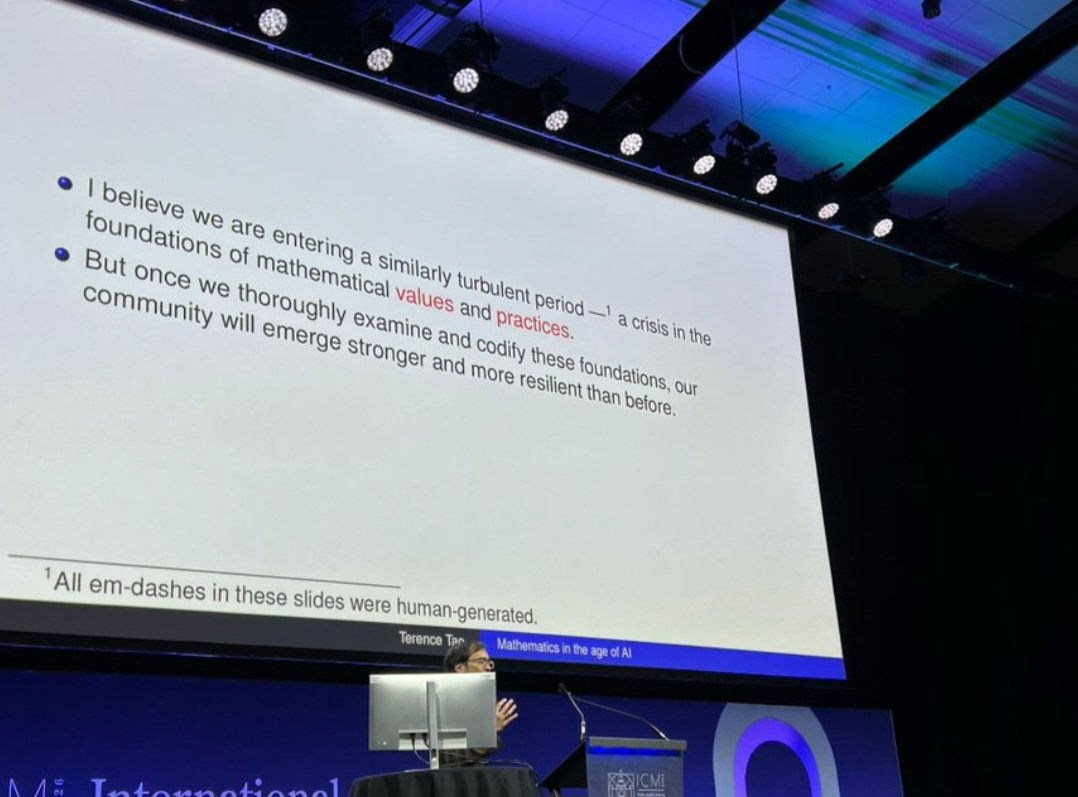
At the International Congress of Mathematicians in Philadelphia, Terence Tao presented a similarly serious—but more measured—message. He argued that mathematics may be entering a turbulent period in which the foundations of its values and practices must be examined and rebuilt.
Another Fields Medalist, Timothy Gowers, has been thinking about the same transition from a different direction.
His concern is not simply that AI will solve problems faster than mathematicians, take academic jobs, or make traditional proof discovery less prestigious. His deeper fear is that mathematics could continue producing an enormous volume of correct results while losing the human community capable of understanding, organizing, teaching, and valuing them.
In that scenario, mathematics would not die from a shortage of knowledge.
It would be overwhelmed by abundance.
AI May Not Starve Mathematics—It Could Overfeed It
The most striking part of Gowers’ argument is that he does not imagine AI causing mathematical progress to stop.
He imagines the opposite.
Suppose increasingly autonomous systems can:
- Read the existing literature
- Select open problems
- Generate new conjectures
- Produce formal proofs
- Verify those proofs automatically
- Explain the results at any requested level of detail
- Continue doing this at machine speed
From the perspective of theorem production, this would look like an extraordinary success.
The literature would grow faster than at any previous moment in mathematical history. Longstanding conjectures might fall quickly. Entire subfields could be explored in parallel. Results that would have taken a human research group years to develop could appear in hours.
Yet Gowers asks whether this expansion could hollow out the discipline rather than enrich it.
Mathematics is not only a collection of true statements stored in papers and databases. It also exists as a living network of intuitions, examples, explanations, habits, open questions, judgments, and shared standards inside communities of mathematicians.
A theorem can be correct without being understood.
A proof can be verified without becoming part of anyone’s working knowledge.
A field can contain millions of results while gradually losing the people who know why those results matter.
That is the central paradox: AI could make mathematical output flourish while weakening mathematical culture.
The Leiden Declaration Draws a Line Around Human Mathematical Values
On June 2, 2026, an international group of researchers published the Leiden Declaration on Artificial Intelligence and Mathematics.
The declaration grew out of a 2025 workshop at the Lorentz Center in Leiden, where mathematicians, computer scientists, philosophers, historians, and AI researchers discussed the changing relationship between AI and mathematical research.
The International Mathematical Union formally endorsed the declaration. By July 29, the public site listed more than 3,200 signatories.
The declaration identifies several values that its authors believe should be protected:
- Proof should provide both certainty and understanding.
- Results should remain attributable to responsible authors.
- Mathematical arguments should be transparent and independently verifiable.
- Research should be evaluated through shared standards of depth, difficulty, and significance.
- Mathematics should continue to produce human understanding, judgment, and expertise—not only a growing inventory of results.
- The research community should retain meaningful control over its own direction and methods.
Its recommendations include disclosing AI assistance, protecting review systems from low-quality automated output, supporting public research infrastructure, preserving human education and mentoring, and preventing mathematical knowledge from becoming concentrated inside a small number of private companies.
The declaration has received public support from prominent mathematicians including Terence Tao, Peter Scholze, Jeremy Avigad, Kevin Buzzard, and Steven Strogatz.
Scholze’s endorsement is especially direct. He argues that the purpose of mathematical research is human understanding and that mathematics can thrive only through a community of human mathematicians. He also says he generally avoids AI-generated mathematical text and does not use AI when developing his own ideas.
Tao describes the declaration as the result of months of community discussion and says he supports its recommendations wholeheartedly.
Gowers did not sign it.
That choice does not mean he rejects its purpose. He participated in the original Leiden workshop and describes the declaration as an important contribution. His hesitation comes from several statements and recommendations that he thinks require more qualification.
Gowers’ Thought Experiment: A Library Without Readers
Gowers begins with a deliberately extreme scenario.
Imagine that AI never existed. Then imagine a pandemic that somehow killed every mathematician while leaving everyone else unharmed.
All mathematical papers, books, databases, and archives would remain intact.
No information would have been physically destroyed.
Yet the mathematical tradition would be devastated.
The literature alone would not tell a new generation which ideas are central, which techniques belong together, which definitions are natural, where the difficult points are, or which forgotten result deserves renewed attention.
Reconstructing that culture could take decades.
The reason is that mathematical knowledge is not stored only in formal text. Much of it lives in the minds of researchers:
- Tacit knowledge about which approaches are promising
- Intuition about which examples are representative
- Familiarity with the history of a problem
- Awareness of failed methods that never appeared in papers
- Judgment about what is deep, routine, surprising, or important
- Shared language developed through seminars and collaboration
- The ability to place a new result inside a larger conceptual map
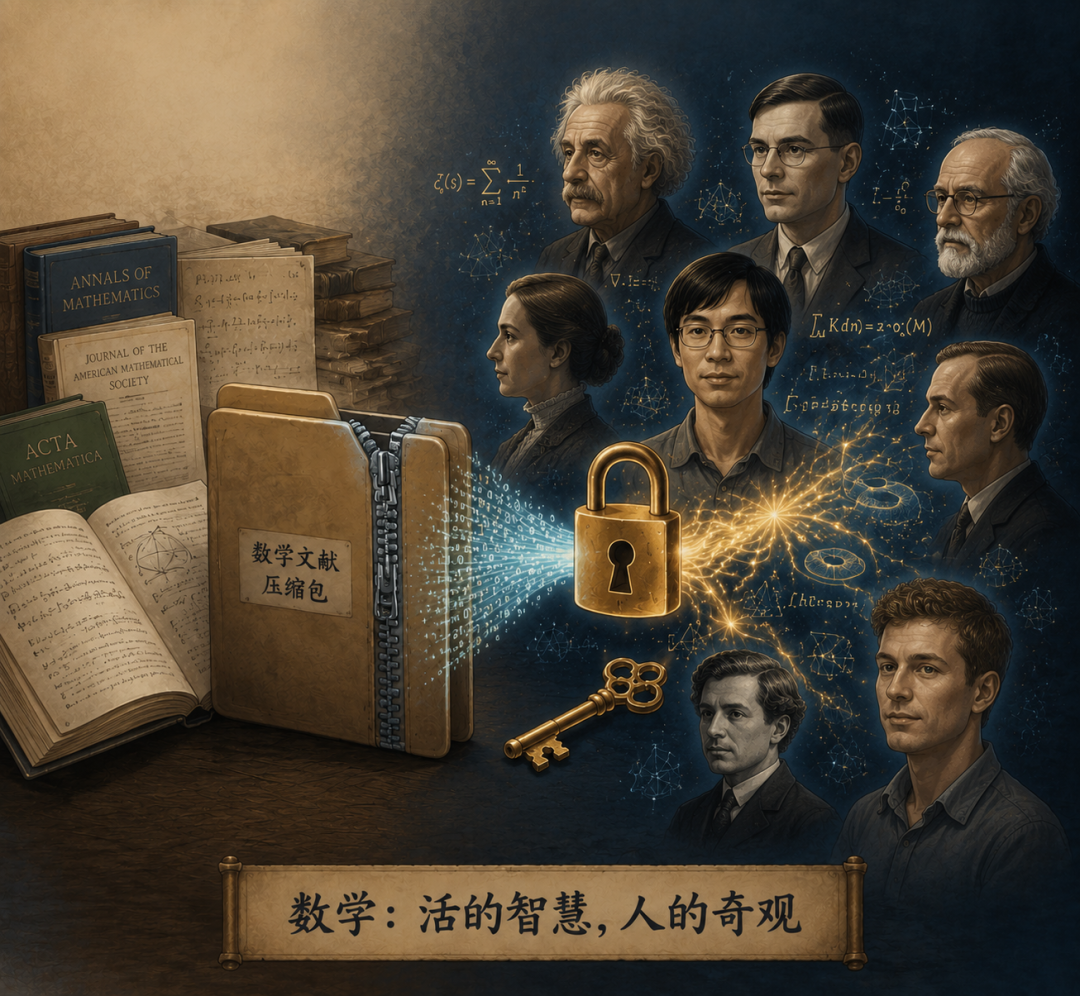
A written paper is therefore closer to a compressed file than a complete intellectual world. The mathematical community supplies the decoder.
Now change the thought experiment.
This time, AI exists and can explain any proof in as much or as little detail as a user requests.
Because machines can solve and explain problems so easily, fewer people spend the years required to become research mathematicians. Students may still learn some mathematics, but the incentive to develop deep expertise weakens.
A decade or two later, the literature has expanded enormously. AI systems have produced countless correct results. At the same time, the number of human experts who share a working understanding of those areas has sharply declined.
The archive is full.
The seminars are empty.
The results exist, but few people care enough to read them.
That is Gowers’ feared version of mathematical death.
In the first pandemic scenario, mathematics dies through scarcity: the community disappears and no new knowledge is produced.
In the AI scenario, mathematics dies through overproduction: the volume of material becomes immense while the human culture that gives it meaning fades away.
The Eutrophication Analogy
The source article compares this possibility with eutrophication in a lake.
A lake does not always die because it lacks nutrients. It can also receive too many.
Excess nitrogen and phosphorus cause algae to grow rapidly. At first, the ecosystem appears exceptionally productive. The water fills with biological activity.
Eventually, that growth consumes the available oxygen. Fish and other organisms die, and a once-living ecosystem becomes a stagnant body of water.
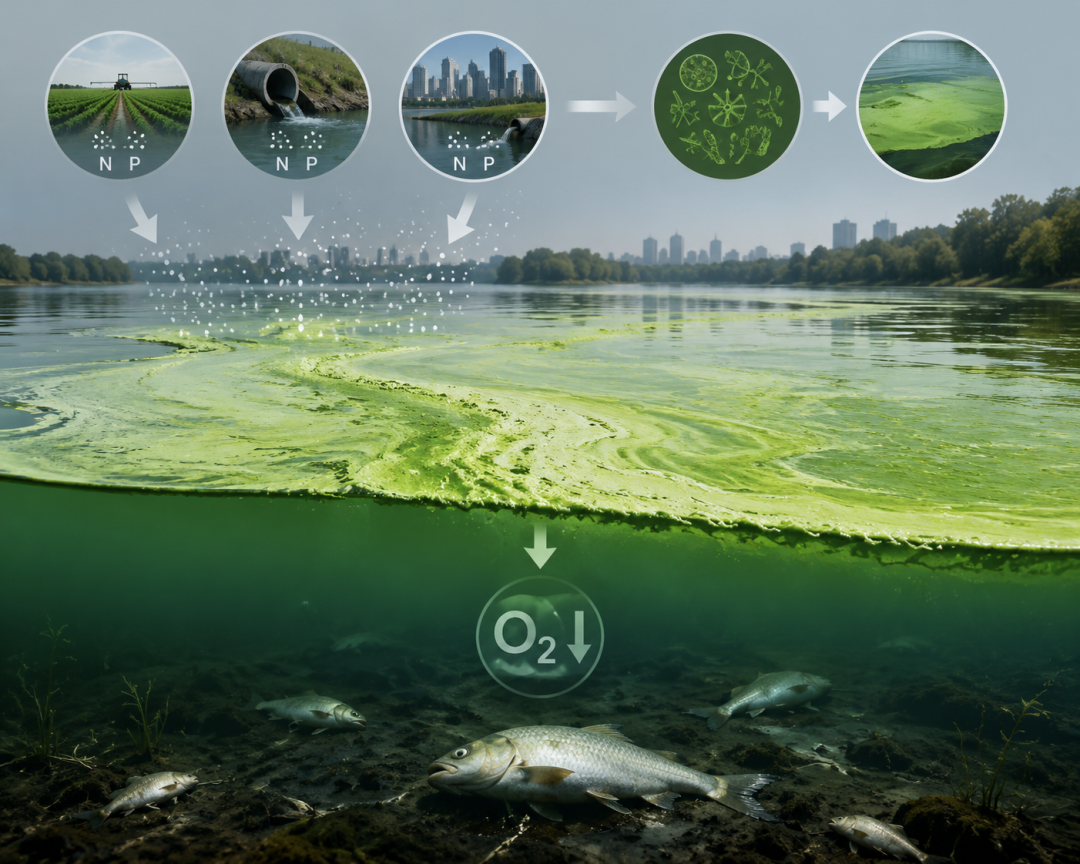
The analogy is not exact, but it captures Gowers’ concern.
An unlimited supply of mathematical output may not strengthen mathematics if the community cannot absorb, organize, teach, and debate it.
The scarce resource may no longer be proof generation.
It may become human attention and shared understanding.
What Counts as Mathematical Progress?
This shift forces a difficult question: what is mathematics trying to maximize?
If the answer is simply “the number of solved problems,” then highly autonomous AI could represent an almost unqualified success.
But mathematical practice has never been only a production quota for theorems.
A result contributes to a field when other mathematicians can:
- Verify it
- Understand its key ideas
- Connect it to existing theory
- Reuse its methods
- Teach it
- Recognize its significance
- Build further questions from it
Tao’s ICM presentation makes a similar distinction.
Correctness is necessary, but it is not enough. A proof must also be communicated, digested, accepted, and integrated into the community’s understanding.
His closing recommendations emphasize human education, transparent AI use, stronger verification, new mathematical infrastructure, and open discussion about both capability and values.
The future bottleneck may therefore move through several stages:
| Stage | Main Question |
|---|---|
| Proof generation | Can a solution be produced? |
| Verification | Is the solution correct? |
| Exposition | Can it be explained clearly? |
| Digestion | Can experts understand and reuse it? |
| Community acceptance | Does the result become part of shared mathematics? |
| Canonicalization | Does it enter textbooks, teaching, and the long-term structure of the field? |
AI may eventually perform well at every stage.
For now, however, the last three remain deeply social processes. A field is not sustained only by answers. It is sustained by groups of people who care about the same ideas and can think together about them.
Gowers Once Bet on Traditional Automated Theorem Proving
Gowers’ concerns are especially notable because he has spent years working on automated theorem proving.
In 2022, he announced a project that took a more traditional AI approach. Instead of relying primarily on large language models, the project aimed to understand the methods human mathematicians use to discover proofs and encode those methods in a more explicit system.
The project was guided by the idea of motivated proofs.
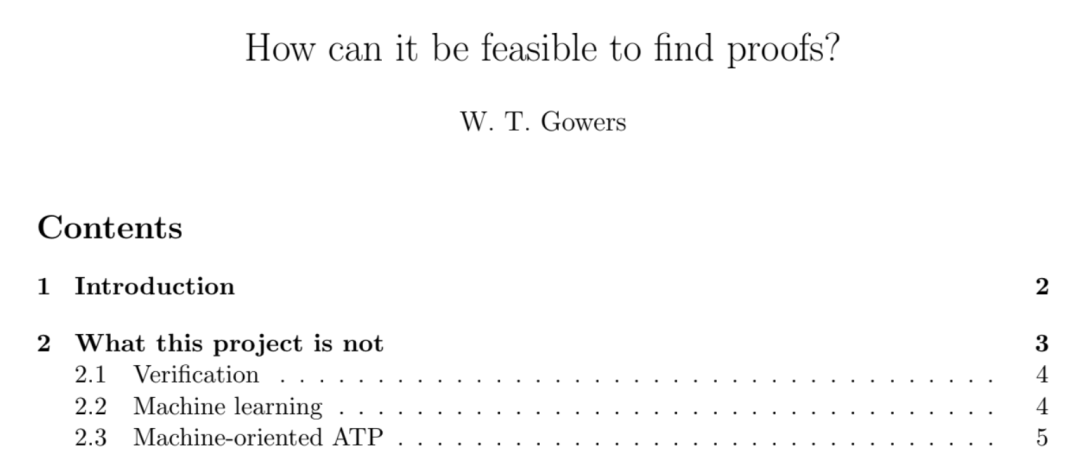
A motivated proof does more than certify a conclusion. It makes the route to the conclusion feel natural.
It explains:
- Why a definition is introduced
- What obstacle a lemma removes
- Why one construction is chosen over another
- Which failed approaches shaped the final argument
- How a proof could have been discovered rather than merely checked
Gowers believed that an automated system built around this structure might produce proofs suitable for human learning and even undergraduate teaching.
He later argued for a database of motivated proofs because published papers usually show only the polished endpoint of a long process. They omit false starts, intermediate intuitions, changes of notation, and the reasons a researcher chose one path over another.
The rapid improvement of LLMs has disrupted that program.
Gowers still sees value in transparent, motivated proof systems. What has changed is his belief that this approach will define the frontier of machine mathematical capability.
Language models have improved too quickly.
ChatGPT 5.5 Pro Changed His Estimate
In May 2026, Gowers published a detailed account of an experiment with ChatGPT 5.5 Pro.
He gave the model a combinatorics problem that required genuine research-level construction. According to his report, he supplied almost no substantive mathematical guidance.
The system worked for roughly an hour and produced what Gowers described as PhD-level research.
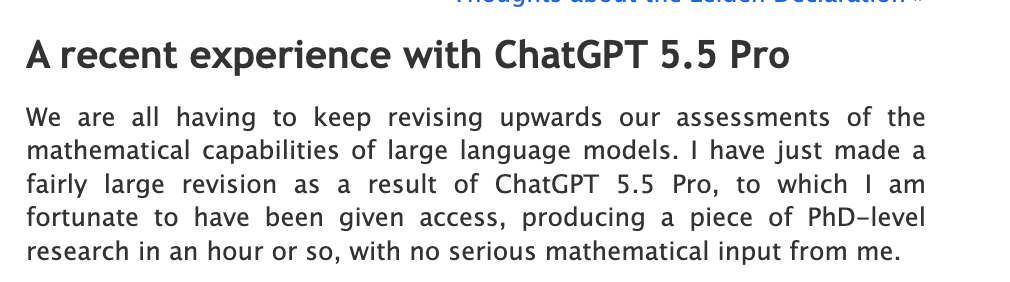
The argument used highly dissociated sets to control additive relations. Gowers wrote that, in hindsight, he could understand and motivate the construction, but the model’s decision to use that technique felt ingenious and, as far as he could tell, original.
This distinction matters.
An idea can become understandable after it is shown to a mathematician without being obvious before it appears. Human researchers regularly evaluate new work in exactly that way.
The episode did not prove that AI had achieved general mathematical autonomy. It did change Gowers’ estimate of what current language models could do.
The threshold for a useful beginner research problem had moved.
A problem was no longer safely accessible to a student simply because it had remained officially open. It also had to be difficult enough that a leading model could not solve it quickly.
That is a major change for graduate training.
Research education has traditionally depended on finding problems that are genuinely open but still manageable for someone building experience. If machines can rapidly clear large numbers of such problems, departments may need new ways to teach discovery, judgment, exposition, and research independence.
The Unit-Distance Breakthrough Raised the Stakes
The next milestone was larger.
On May 20, OpenAI announced that an internal model had disproved a central conjecture in the planar unit-distance problem, a famous question originating with Paul Erdős.
The model found infinitely many point configurations that improve polynomially on the grid-based constructions that had long been believed close to optimal.
OpenAI released the proof together with a companion paper written by leading mathematicians, including Noga Alon, Timothy Gowers, Arul Shankar, Jacob Tsimerman, and others. The companion paper gives a shorter, human-verified presentation and discusses the significance of the result.
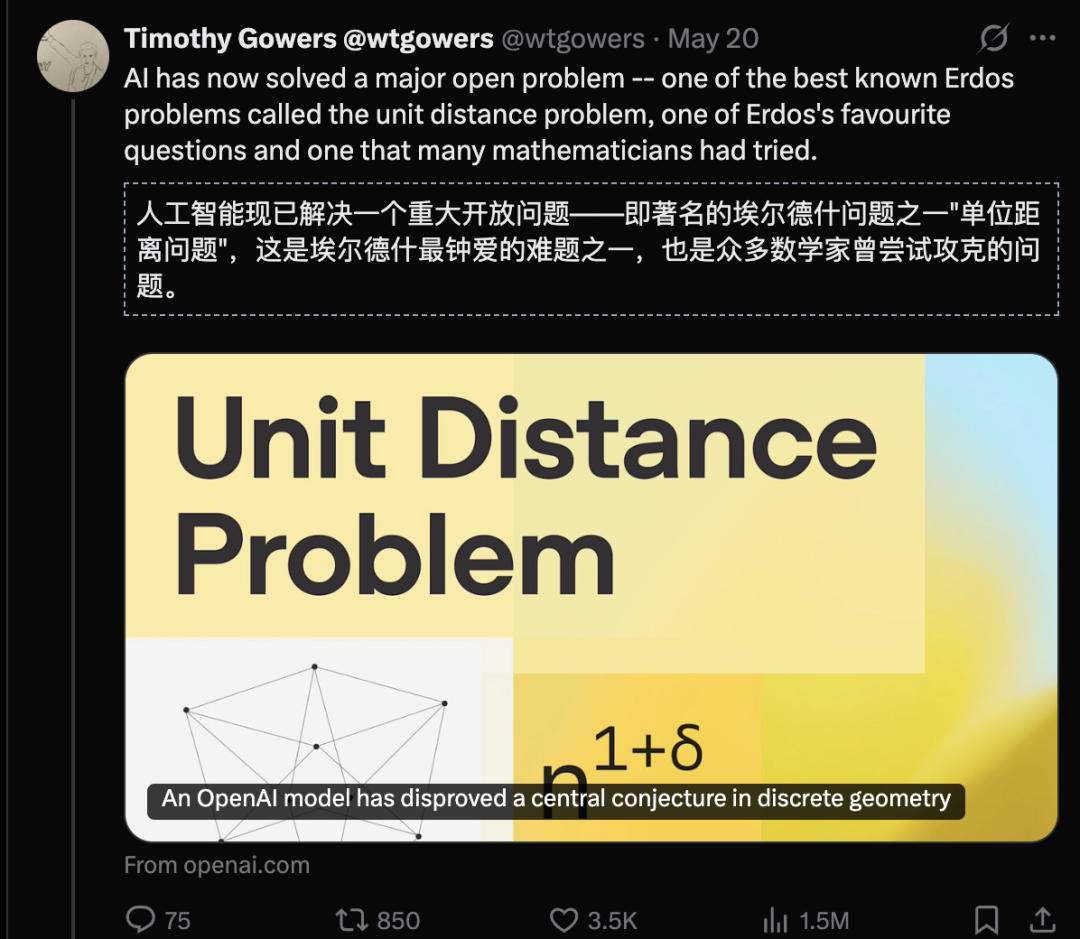
The result is significant for several reasons.
First, the model did not merely retrieve a known proof or combine a few textbook steps. It found a counterexample to a widely believed conjecture using ideas connected to deep algebraic number theory.
Second, external mathematicians reviewed and digested the proof rather than accepting the output on trust.
Third, the episode exposed a new division of labor.
The AI system produced the key construction. Human mathematicians verified it, shortened it, traced its intellectual background, explained why it worked, and evaluated how much it changed the field.
Gowers argues that, in a future with abundant machine-generated results, this work of digestion may deserve more credit than merely being the person who asked the model to solve the problem.
If one person obtains a one-shot solution and another spends months turning it into comprehensible mathematics, the second person may be contributing more to the survival of the discipline.
Formalization Is Becoming Easier Too
One possible defense against unreliable AI-generated mathematics is formal proof verification.
A proof written in Lean can be checked by a small trusted kernel. If it compiles without unsupported axioms or gaps, the system provides a much stronger correctness guarantee than an informal text alone.
Historically, formalizing a research paper required significant expertise in a proof assistant and a great deal of manual work.
That barrier is beginning to fall.
Gowers reports using Harmonic’s Aristotle system to formalize a complicated paper in Lean despite not knowing Lean himself. He uploaded the paper, asked the system to continue through successive sections, and spent only a small amount of active prompting time while the process ran over roughly a week and a half.
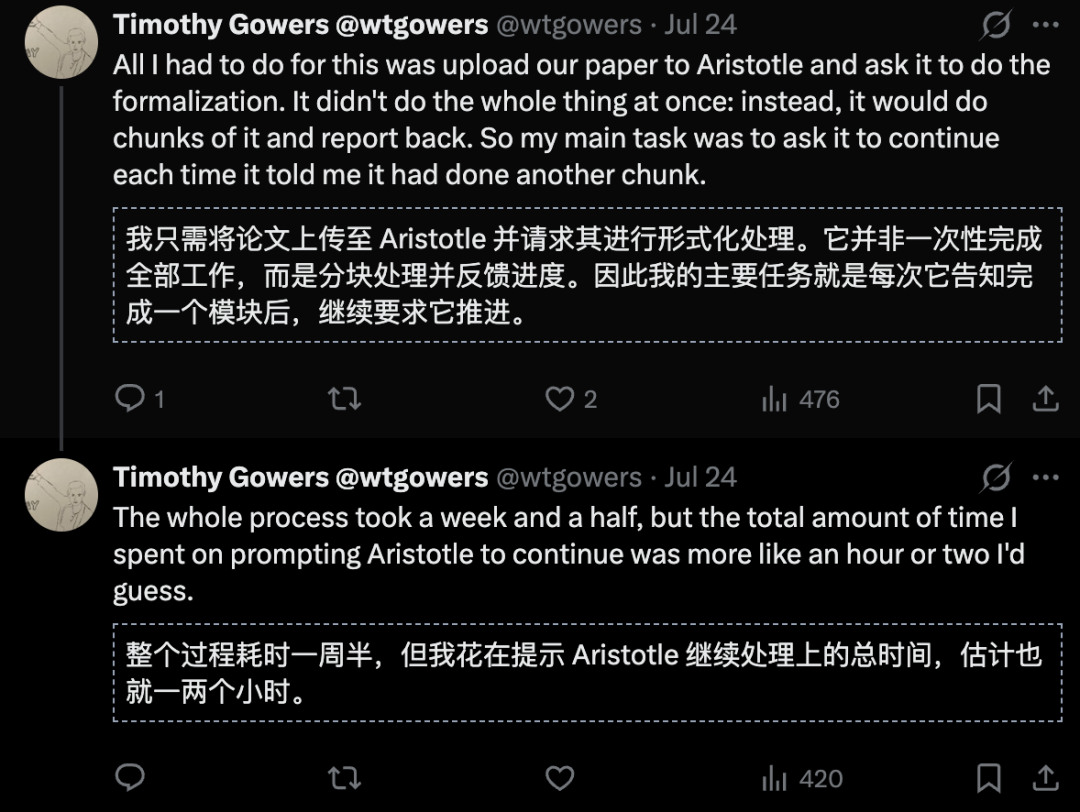
Aristotle combines informal reasoning with Lean proof search and formal verification. Harmonic describes it as an agent that can prove or formalize mathematical material over long-running sessions.
This development weakens one objection to machine-generated proofs: that the output will always remain too unreliable to trust.
Formal verification does not solve every problem.
A formal theorem can encode the wrong statement. Definitions can fail to capture the intended concept. A verified proof can still be unilluminating. The translation between informal mathematics and a formal statement still requires judgment.
But as autoformalization improves, it becomes increasingly plausible that AI could generate both a candidate result and a machine-checkable proof.
The bottleneck then shifts again—from correctness toward significance, interpretation, and culture.
Gowers’ Position Is More Complicated Than “AI Will Kill Math”
The headline version of this debate can be misleading.
Gowers is not arguing that AI-generated mathematics should be rejected simply because a machine produced it.
He questions some parts of the Leiden Declaration precisely because he is unsure whether traditional ideas of authorship and ownership will survive.
If an AI system autonomously finds a correct theorem, he does not believe a human should receive credit merely for operating the interface.
He also doubts that existing peer-reviewed journals are necessarily the right institutions to protect mathematical culture from an AI-generated flood. The current publishing system already has serious weaknesses, and a new environment may require new forms of filtering, exposition, and collective evaluation.
His view is therefore neither simple resistance nor uncomplicated enthusiasm.
He expects AI to become better than humans at more aspects of mathematical work. He thinks that may happen within a few years, although he does not rule out a longer period of productive human-AI collaboration.
He also finds the progress personally disruptive.
In his July essay, Gowers wrote that GPT-5.6 Pro had twice produced one-shot solutions to problems he cared about and had considered seriously. Younger collaborators prompted the model with his approval.
He was pleased that the problems were solved.
He also described the experience as strange and unpleasant—like having the ground removed beneath him.
Both reactions can be true at the same time.
A Requiem for a Field?
On the same day that Gowers published his Leiden Declaration essay, Columbia mathematician and physicist Peter Woit published a post titled “Requiem for a Field?”
The post connected Tsimerman’s Fields Medal, his move toward OpenAI, and the accelerating role of AI agents in mathematics.
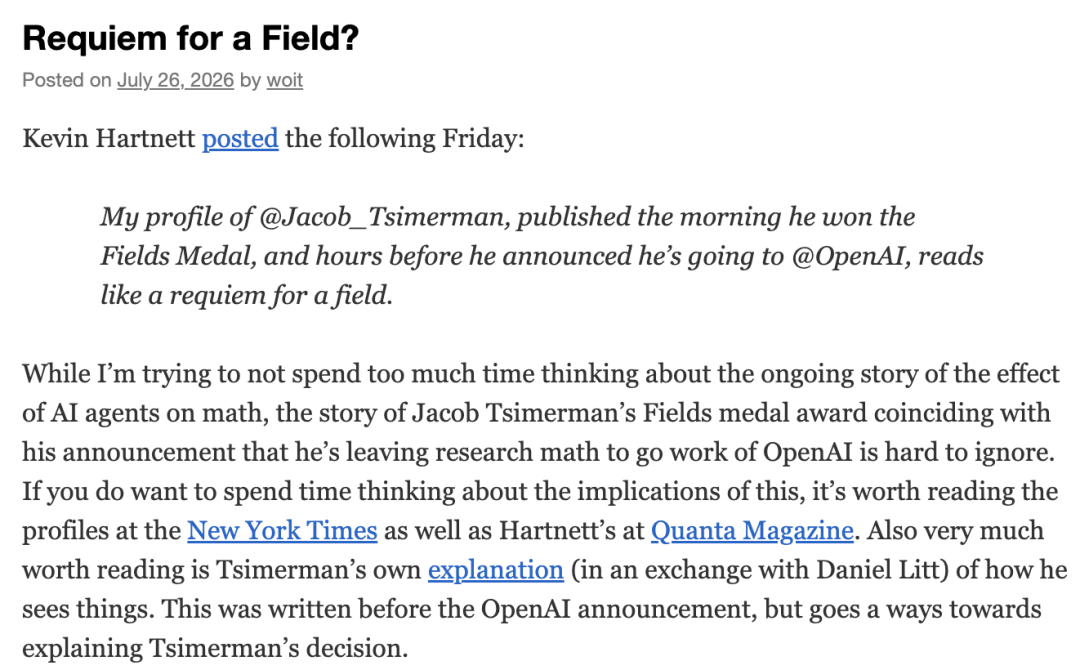
Woit notes that mathematics differs from a game such as chess.
When computers surpassed human chess players, human tournaments remained meaningful. Players continued competing under the same rules, and audiences continued valuing the activity as a human performance.
Mathematics is less neatly separated.
Researchers already use software, symbolic systems, databases, proof assistants, and now LLM agents in ordinary work. If nearly everyone adopts the same powerful systems, there may be no stable category of “human-only professional mathematics” comparable to human-only chess.
Attribution may also change.
Academic mathematics currently rewards priority: who first found a theorem, method, or definition. An autonomous agent has no personal interest in having a theorem named after it.
If discovery becomes cheap and abundant, the culture may place less emphasis on ownership and more emphasis on:
- Selection
- Verification
- Exposition
- Synthesis
- Teaching
- Historical attribution
- Connecting isolated results
- Choosing questions with human or scientific value
But Gowers immediately raises a further problem: why assume that AI could not eventually perform those roles as well?
An AI tutor could personalize an explanation. An AI editor could select results. An AI historian could trace influences. An AI textbook generator could adapt an entire field to one reader’s background.
The remaining human role cannot be protected merely by listing tasks that machines have not yet mastered.
The stronger argument is cultural: mathematics matters partly because humans do it together.
What Could Human Mathematicians Do in an Age of Machine Discovery?
No one currently has a complete answer.
Several possible roles are emerging.
1. Set Goals and Choose Problems
Mathematicians can decide which questions connect to science, society, education, or deeper conceptual understanding.
This role remains important, although Gowers expects AI may eventually become capable of proposing valuable problems and theories too.
2. Verify and Formalize Results
Proof assistants can establish correctness. Human experts still need to ensure that the formal statement captures the intended theorem and that hidden assumptions have not changed the question.
3. Digest and Organize Machine Output
A future mathematician may explore a large body of AI-generated results, identify the small number that deserve attention, and build a coherent theory around them.
This resembles writing a great textbook more than winning a race to a proof.
4. Preserve Intellectual History and Attribution
Even when a model generates a new result, it may depend on concepts built by generations of researchers. Tracing those connections remains essential for understanding what is genuinely new.
5. Teach Mathematical Judgment
Students need more than answers. They need to learn what questions mean, how assumptions interact, why one abstraction is useful, and how to recognize a misleading argument.
AI may assist with this work, but education remains one of the areas where Tao argues that the human dimension should be strongly protected.
6. Maintain a Shared Community
Seminars, collaborations, mentorship, disagreement, and collective standards turn isolated information into a field.
A personalized AI tutor can explain a theorem to one user. It does not automatically create a community that shares responsibility for a body of knowledge.
The Real Risk Is Not That Mathematics Stops
The phrase “AI will kill mathematics” sounds like a prediction that theorem discovery will end.
Gowers’ argument is almost the reverse.
The machine-generated literature may become richer than anything humans could produce alone.
What may disappear is the relationship between that literature and a living human tradition.
This risk is not inevitable.
The Leiden Declaration, Tao’s ICM recommendations, formal verification projects, public mathematical infrastructure, and Gowers’ own criticism all point toward practical responses:
- Require transparent disclosure of AI assistance
- Preserve rigorous proof and independent verification
- Invest in public and academic AI tools
- Reward exposition and synthesis
- Develop better filters for machine-generated results
- Protect education and mentoring
- Keep humans capable of understanding the fields they study
- Create infrastructure that supports collective rather than purely private exploration
- Evaluate mathematical work by insight and contribution, not output volume alone
The challenge is to build these systems before theorem production becomes too fast for existing institutions to manage.
常见问题
Did a Fields Medalist really say AI will surpass mathematicians within two years?
Yes. Jacob Tsimerman told Quanta Magazine that he believed AI would become better than mathematicians at doing mathematics within two years. It is a personal prediction rather than a verified development timeline.
Is Timothy Gowers against using AI in mathematics?
No. Gowers uses advanced AI systems himself and has publicly discussed impressive results from ChatGPT and Aristotle. His concern is that rapid automation could damage mathematical culture, expertise, education, and shared understanding even while producing valuable results.
What is the Leiden Declaration on AI and Mathematics?
It is a community declaration published on June 2, 2026, addressing AI’s effects on mathematical research, education, publishing, attribution, infrastructure, and ethics. The International Mathematical Union endorsed it, and more than 3,200 people had signed it by July 29, 2026.
What did OpenAI solve in the unit-distance problem?
An internal OpenAI model disproved a widely believed conjecture about the maximum number of unit-distance pairs among planar points. The model produced infinitely many configurations giving a polynomial improvement over previously favored grid-based constructions.
Was OpenAI’s unit-distance proof checked by humans?
Yes. OpenAI released the original proof and a separate companion paper containing a shorter, human-verified presentation and commentary from leading mathematicians.
What is automated proof formalization?
Formalization translates a mathematical statement and proof into a language such as Lean, where a small proof-checking kernel verifies every logical step. AI systems such as Aristotle are increasingly able to help convert informal research mathematics into machine-checkable form.
Could mathematics survive if AI produces most new proofs?
The literature could certainly continue growing. The unresolved question is whether a strong human community would continue to understand, teach, organize, and value that material rather than becoming passive consumers of machine output.
What skills may matter most for future mathematicians?
Verification, problem selection, exposition, synthesis, formalization, historical attribution, and teaching may become more important. However, AI may also improve at these tasks, so preserving mathematics as a meaningful human community will require institutional and cultural choices, not only new technical skills.
相关工具
- Lean: An interactive theorem prover and programming language used to create machine-verifiable mathematical proofs.
- Mathlib: A large community-maintained library of formalized mathematics for Lean.
- Aristotle: Harmonic’s agent for proving and formalizing mathematics in Lean over long-running sessions.
- Erdős Problems: A community database tracking more than a thousand problems associated with Paul Erdős.
- arXiv: The primary open preprint platform through which much current mathematical research is distributed.
Related Links
- Timothy Gowers: Thoughts About the Leiden Declaration: Gowers’ full discussion of mathematical culture, authorship, AI abundance, and the declaration.
- Leiden Declaration on Artificial Intelligence and Mathematics: The official declaration, recommendations, endorsements, and signatory list.
- Terence Tao: Mathematics in the Age of AI: Tao’s ICM 2026 presentation on verification, exposition, community acceptance, education, and mathematical values.
- OpenAI Unit-Distance Announcement: OpenAI’s official account of its model’s discrete-geometry breakthrough.
- Human-Verified Remarks on the Unit-Distance Result: The companion paper explaining and evaluating the AI-generated proof.
- Timothy Gowers: A Recent Experience with ChatGPT 5.5 Pro: Gowers’ technical account of an AI-generated combinatorics result.
- Peter Woit: Requiem for a Field?: Commentary on Tsimerman, OpenAI, and the changing culture of mathematical research.
Summary
AI is beginning to affect professional mathematics at several levels at once: problem solving, proof generation, formal verification, exposition, training, attribution, and academic careers.
Gowers’ central warning is not that machines will stop mathematical progress. It is that they may generate so much correct mathematics that the human community loses the incentive and capacity to understand it collectively.
The Leiden Declaration, Tao’s ICM lecture, the OpenAI unit-distance result, and the growth of automated formalization all suggest that mathematics needs new systems for verification, exposition, education, and community judgment.
The future of mathematics will depend not only on how many theorems AI can prove, but on whether humans can still turn those theorems into shared understanding.