With OpenAI Starting to Test Sponsored Agents, Will Every Business Need an 'AI Sales Representative' in the Future?
The image shows OpenAI's Sponsored Agents content. On the left, "OpenAI Sponsored Agents" appears in purple font with "AI Sales Rep Future of Enterprise Sales" below it
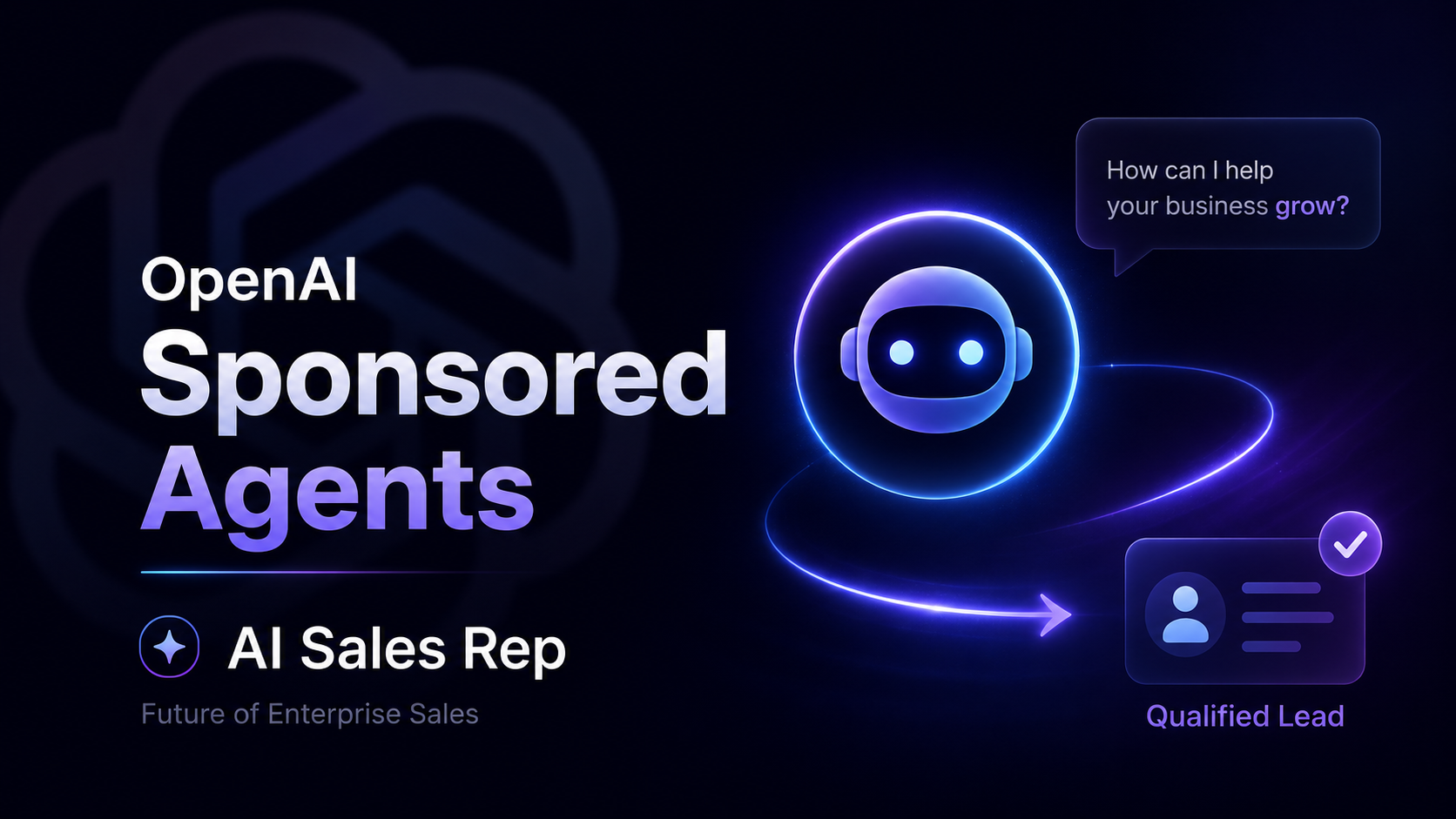
The image shows OpenAI's Sponsored Agents content. On the left, "OpenAI Sponsored Agents" appears in purple font with "AI Sales Rep Future of Enterprise Sales" below it. On the right, there's a robot avatar with a blue halo, beside which a dialog box reads "How can I help your business grow?" Below that is "Qualified Lead" with a checkmark icon. This image relates to the document's theme of OpenAI beginning to test Sponsored Agents and explore AI applications in enterprise sales, visually presenting the concept of an AI sales representative.
title: "If OpenAI Tests Sponsored Agents, Does Every Business Need an AI Sales Representative?"
english_title: "If OpenAI Tests Sponsored Agents, Does Every Business Need an AI Sales Representative?"
seo_title: "Sponsored Agents Are Here: Why Businesses Need an AI Sales Representative?"
seo_description: "When conversational AI starts taking on sponsored recommendations, businesses will no longer compete just for ad placements—but for who gets understood, validated, and recommended by AI. This article breaks down the real definition, capability boundaries, and implementation paths of an AI sales representative."
seo_keywords: "Sponsored Agents, OpenAI Sponsored Agents, AI sales representative, AI sales rep, AI agent marketing, agentic commerce, conversational commerce, GEO, AI search optimization, corporate website growth, We0 AI"
If OpenAI Tests Sponsored Agents, Does Every Business Need an AI Sales Representative?
Let's start with the conclusion: Not every business needs to immediately hire a "digital employee," but every business that relies on online customer acquisition should start building a sales front desk that AI can call upon.
The truly noteworthy thing about signals like Sponsored Agents isn't "you can now advertise inside AI too." That's too shallow.
It's more like this: in the future, users may not click through ten links first, then compare prices, read reviews, and look for case studies on their own. They'll just ask directly:
"What customer support tools are suitable for a 20-person team? Budget shouldn't be too high, and it'd be best if it can integrate with Slack."
And AI won't just hand back a pile of web pages. It might understand the need, filter out unsuitable options, explain the reasoning behind recommendations, and even guide the user into a consultation, trial, or purchase.
At that point, businesses aren't facing a new ad slot—they're facing a new job position: the AI Sales Representative.
In the future, the scarcest resource isn't "being seen," but "being credibly recommended within a specific problem."
Note: As of the publication of this article, the specific product mechanics, coverage, and commercial rules of Sponsored Agents may still be subject to change. This article discusses the trend of "conversational recommendation + agentic closing" that this direction represents, rather than a commitment to any single product feature.
What Sponsored Agents Change Isn't the Ad Format—It's Where Deals Happen
The traditional search advertising path is familiar: keyword → click → landing page → form → sales follow-up.
The problems are familiar too: users click but don't understand; they understand a bit but open seven more tabs; by the time sales finally gets the lead, the interest has gone cold.
Conversational agents compress that middle stretch where "users do their own homework."
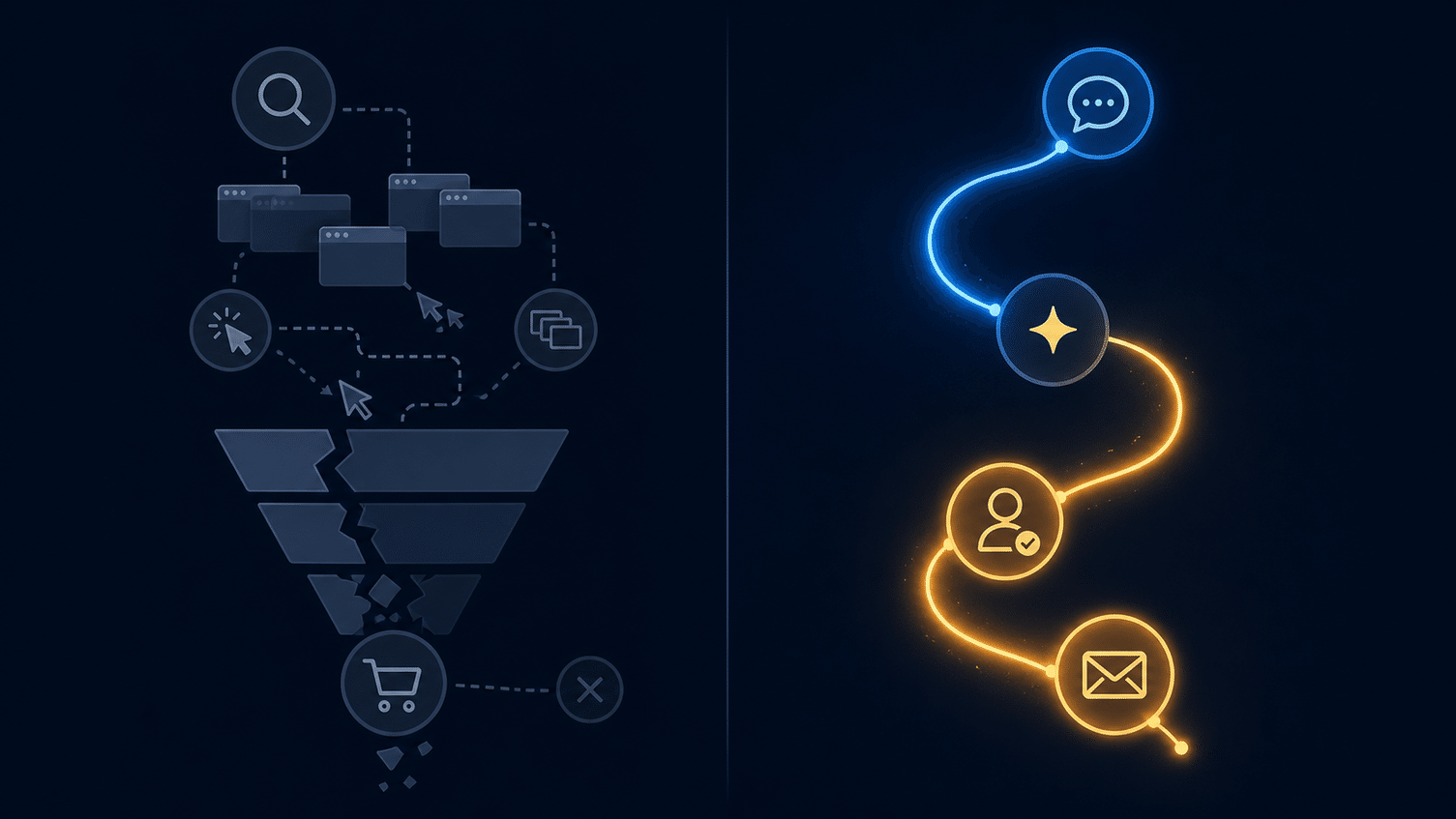
| Traditional Search-Based Acquisition | Conversational Agent-Based Acquisition |
|---|---|
| Compete for keywords and clicks | Compete to enter the recommended candidate set |
| Landing pages do the explaining | Agent completes a round of needs clarification first |
| Users compare horizontally on their own | AI does initial matching based on conditions |
| Forms are the primary conversion point | Conversation, booking, trial, and ordering can all be conversion points |
| Focus on CTR | Focus more on recommendation rate, adoption rate, and qualified lead rate |
This doesn't mean SEO is useless—quite the opposite. SEO, content, case studies, and product pages will become the evidence base AI uses to judge "whether you're worth recommending."
Advertising can get you to the table; whether you stay depends on whether your information can withstand follow-up questions.
What Exactly Is That "AI Sales Representative"?
Don't think of it as a chatbot that makes small talk.
A truly useful AI sales representative is a system that can do four things around your business:
- Understand: Identify the customer's industry, budget, use case, decision stage, and key constraints;
- Explain: Articulate the product, pricing, differentiation, cases, and boundaries in a way the brand endorses;
- Provide evidence: Deliver feature pages, comparisons, customer cases, FAQs, policies, and demos when needed;
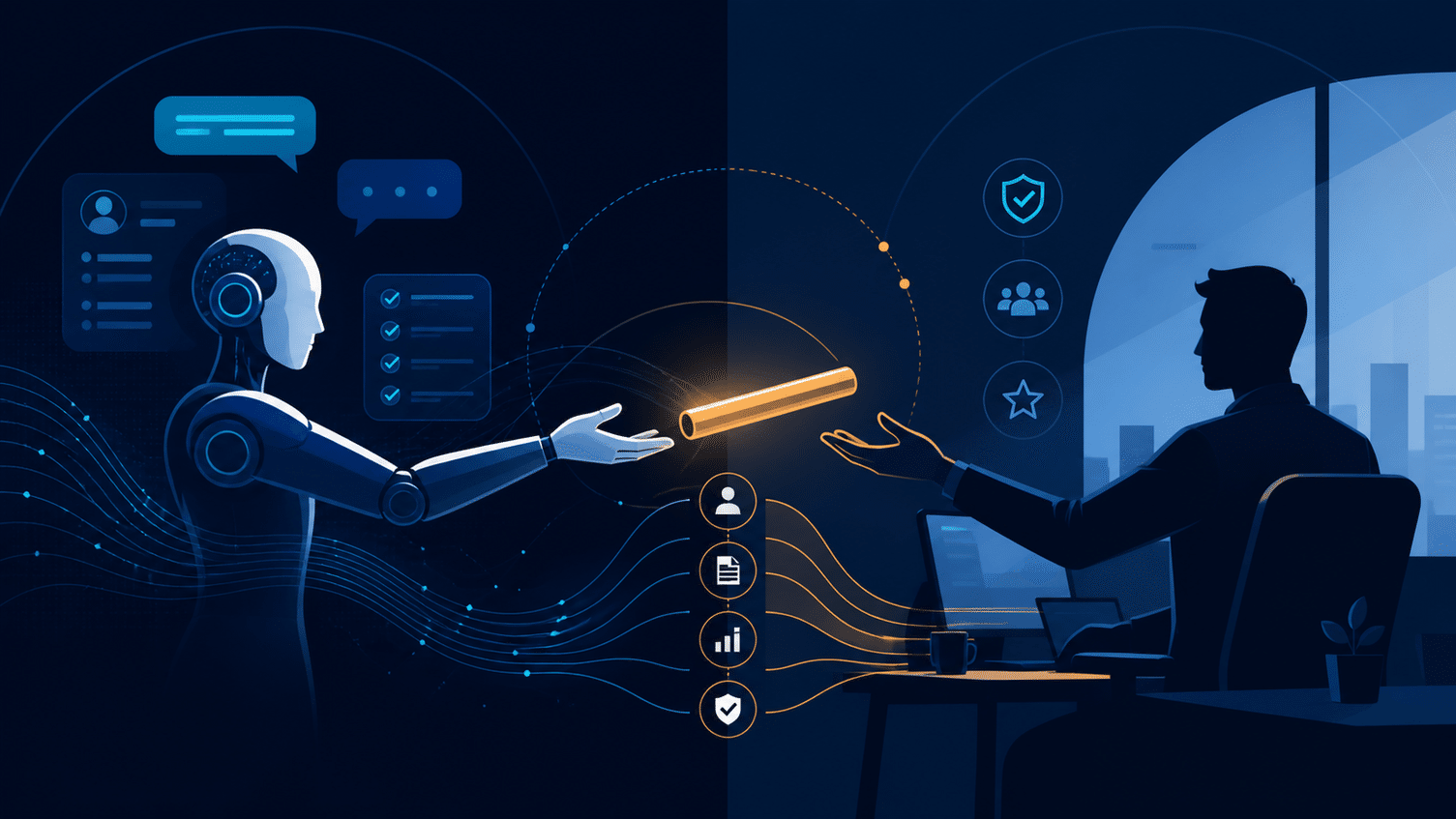
- Hand off well: Pass high-intent leads to humans along with context, rather than just dropping off a "name + phone number."
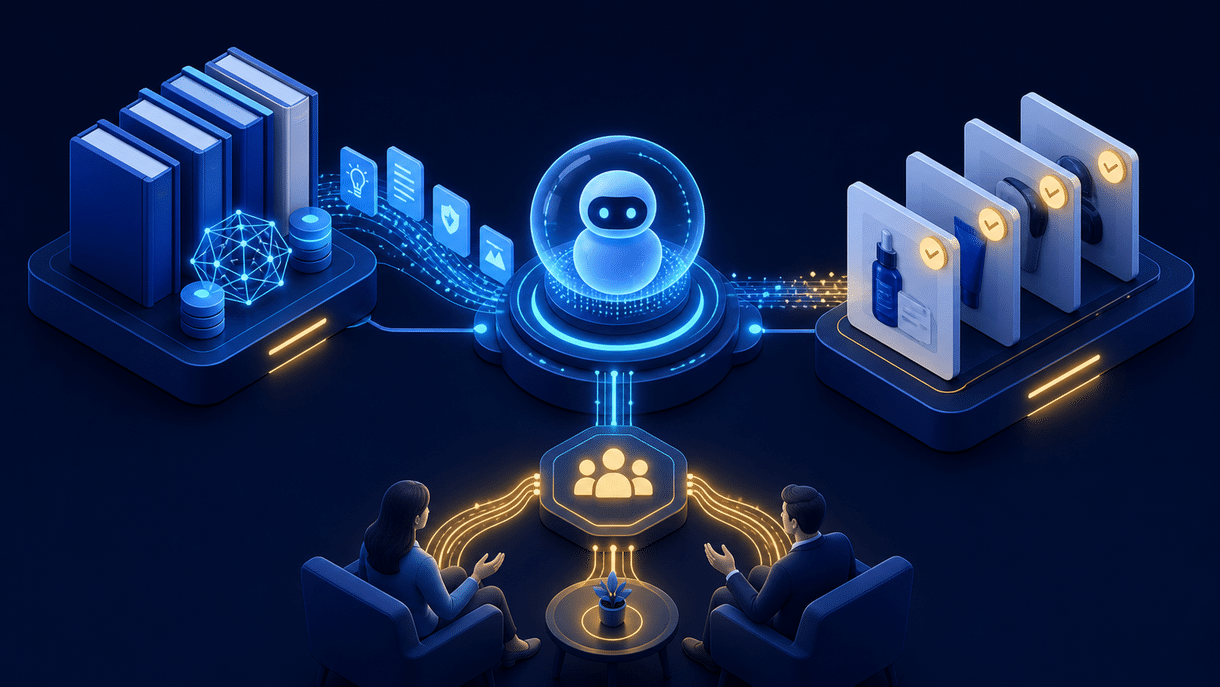
It doesn't mean replacing salespeople. For complex B2B deals, customized services, and high-ticket projects, humans still handle judgment, negotiation, trust-building, and advancing complex relationships.
AI is better suited to absorb the most repetitive work that sales teams most easily miss: first-round Q&A, requirement gathering, material matching, light qualification, and 24/7 follow-up.
| Things That Shouldn't Be Delegated to AI | Things Well-Suited for AI First |
|---|---|
| Final pricing and non-standard commitments | Basic product Q&A |
| High-risk compliance judgments | Scenario matching and preliminary lead qualification |
| Complex procurement negotiations | Recommendations for cases, documents, and demo materials |
| Key client relationship maintenance | First response and booking triage |
What Businesses Really Need to Compete On Is "Verifiable Recommendation Eligibility"
With Sponsored
Agents — many teams' first reaction is: then we just buy the entry point.
That's possible. But buying only the entry point will likely cost more than today's traffic acquisition — and be more fragile.
Because an Agent doesn't just display a sponsored message. Users will keep asking:
- How is it different from another tool?
- Are there peer case studies?
- Can it solve the specific problem we have now?
- What are the pricing, integrations, and limitations?
If your website is just a tagline, a few pretty hero images, and a "Contact Us" button, AI has nothing to say about you, and users have nothing to trust.

So what companies need to prepare is not a standalone bot, but a set of public business information that is clear to both humans and AI:
- Clear product/service pages: who they solve what problem for;
- Structured case studies: customer background, approach, results, and applicable conditions;
- FAQ that doesn't dodge: pricing ranges, delivery methods, limitations;
- Searchable comparison content: who you're a fit for and who you're not;
- Continuously updated industry content: building the brand's interpretive authority on specific topics;
- A website that supports actions: booking, trials, inquiries, downloads, subscriptions — not just display.
The "brain" of an AI sales representative is essentially the content and evidence a brand has accumulated over time.
Not every company needs the same kind of Agent, but all should do the same thing
That thing: upgrade the website from an online business card into a business asset that can be understood, referenced, and continuously converted.
| Company Type | Most Important Thing to Do Now | Priority Form of AI Sales Representative |
|---|---|---|
| SaaS / AI products | Fill in features, integrations, pricing, comparisons, and case study pages | Trial guidance + product advisor |
| Consultants / Agencies | Clearly articulate service scope, methodology, and proof of results | Needs diagnosis + booking screening |
| Foreign trade & B2B manufacturing | Develop multilingual specs, application scenarios, certifications, and inquiry paths | Product matching + RFQ collection |
| Creators / Experts | Consolidate works, viewpoints, service packages, and credible endorsements | Content Q&A + consultation routing |
| Local services | Define service areas, hours, pricing, reviews, and booking | Instant Q&A + booking assistant |
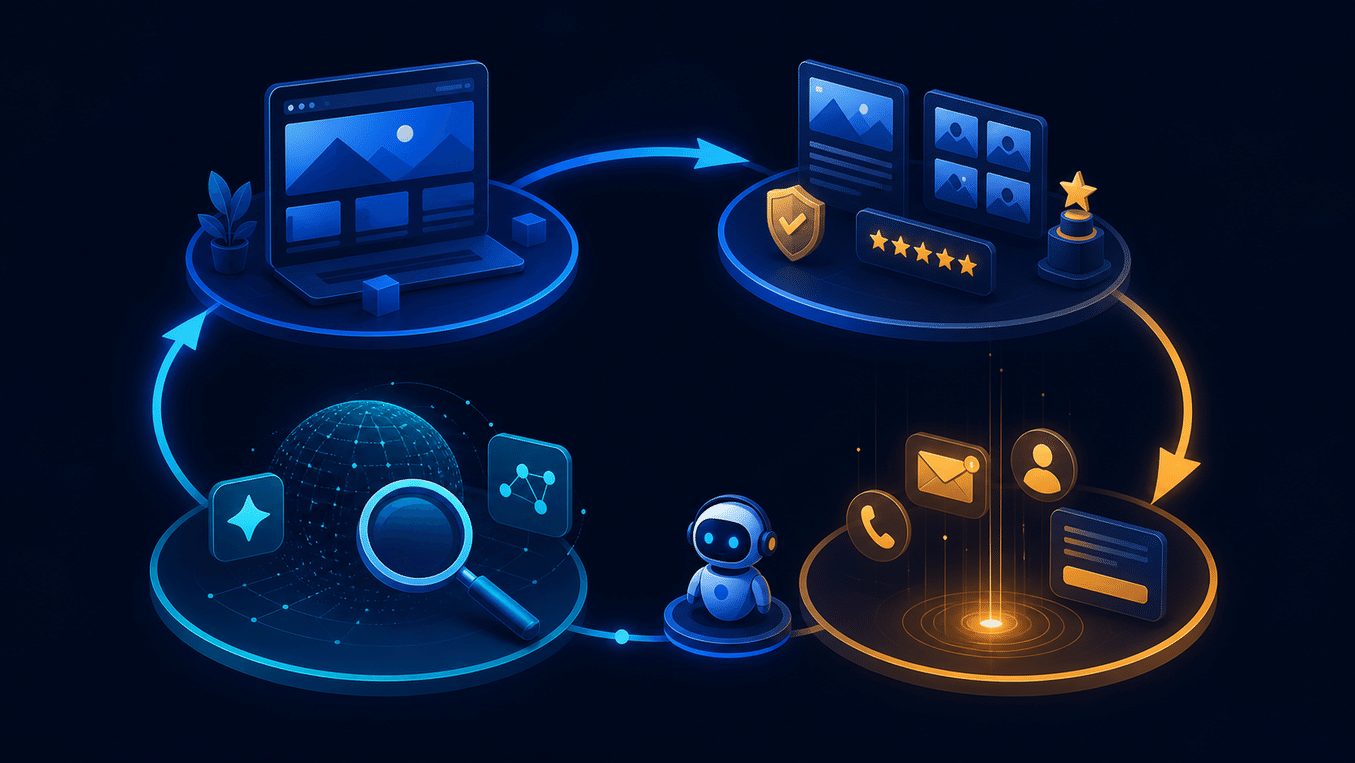
This is also the longer chain We0 AI aims to solve: Build → Showcase → Grow → Leads.
First, build a display-ready website; then present products, services, and cases clearly; then make it discoverable and understandable by AI through SEO, GEO, content updates, and page optimization; only then can you reliably generate leads.
A beautiful page is not a sales system. Whether a website can continuously add content, track data, optimize paths, and handle inquiries after launch makes a huge difference.
A 90-day starter checklist for companies
No need to wait for all platform rules to settle. Start with these — almost none of it will be wasted:
Days 1–30: Identify where "sales can't explain clearly"
Audit your website, sales scripts, customer service logs, and common objections. Turn the 20–50 questions customers repeatedly ask into publishable answers. Especially don't avoid "who this is not for." That actually increases credibility.
Days 31–60: Turn evidence into pages AI can cite
Create dedicated pages for core products, scenarios, and customer types; add case studies, comparison pages, pricing logic, implementation processes, and FAQ. Every page should have a clear next step.
Days 61–90: Connect conversations into a lead loop
Integrate on-site chat, booking, or form routing; define which questions AI handles and which must be escalated to humans; sync conversation summaries to sales. Then track three metrics: effective inquiry rate, progression rate after human handoff, and quality of leads generated from content.
FAQ
Will Sponsored Agents replace Google search ads?
Not entirely in the short term. The more likely scenario is that users switch between tasks: they go straight to conversation for clear needs, but still search, browse, and verify when exploring and comparing. Companies need to manage both search visibility and conversational recommendability.
Do AI sales representatives require companies to train their own models?
Not necessarily. For most companies, the first step isn't training a model — it's organizing credible brand knowledge, clear page structures, callable content, and compliant human handoff processes.
Is it necessary for small businesses?
Yes, but it doesn't need to be complex. Small teams usually benefit most from fast responses, service descriptions, booking screening, and content asset accumulation. Solving the 20 most repetitive customer questions is enough to start.
How do you prevent AI from making random promises?
Give it a defined knowledge scope, a list of things it must not answer, pricing and compliance boundaries; force human escalation for high-risk questions; regularly audit conversations and update materials. Being able to answer doesn't mean you should answer.
Related Tools
- We0 AI: Turn your showcase website into a growth and lead-generation asset
- OpenAI Developer Platform
- Google Search Central: Understanding structured content and search visibility
References
Ready to get started?
If you already sense that future customers won't just "find you" through search — they'll first let AI judge whether you're worth recommending — then the most urgent thing now isn't adding a robotic welcome message.
First, make your brand website, content evidence, scenario pages, and lead paths solid.
We0 AI helps companies turn websites from "done once published" pages into assets that can showcase, continuously optimize, and gain SEO/GEO
Traffic, and a growth asset that can capture real leads.
Summary
Sponsored Agents is not a change that can be summed up as "ads popping into a chat window."
It could shift customer acquisition from "fighting for a click" to "fighting for a trusted recommendation." And behind every trusted recommendation, there needs to be an AI sales front-end that can understand the customer, articulate value, provide evidence, and complete the handoff.
In the future, not every business will necessarily need a human-like AI salesperson, but every business will need a sales infrastructure that allows AI to explain your business clearly on your behalf.