OpenAI Sites Launch: AI Website Building Enters a New Phase
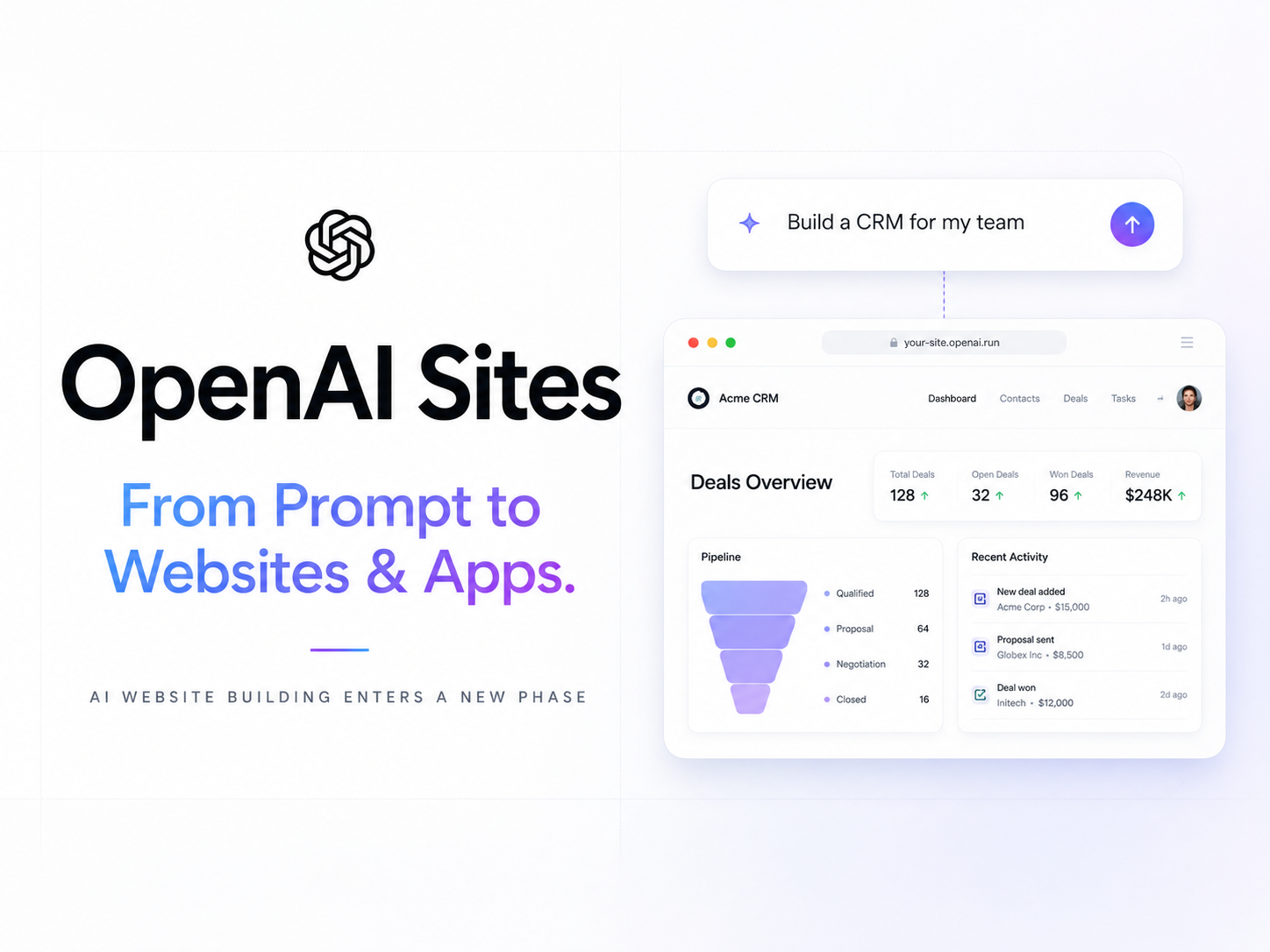
OpenAI is pushing Sites forward inside Codex and ChatGPT, turning AI-generated websites, AI-generated apps, deployment, and sharing into one connected flow. AI website building is moving from page generation to site and app generation, making showcase, growth, and lead capture even more important.
If you have been watching OpenAI Codex, AI website builders, AI-generated websites, and Web App generation, you have probably noticed a very clear shift:
AI website building is no longer just about generating a page.
More specifically, by June 2, 2026, OpenAI had already made that signal pretty explicit.
On one side, OpenAI’s official blog said that Codex was beginning to preview a new capability called Sites, which can create and share interactive websites and apps.
On the other side, OpenAI’s help center updated its release notes the same day and explicitly mentioned ChatGPT Sites: users can ask Codex to create, iterate on, and deploy lightweight full-stack JavaScript / TypeScript Web Apps, complete with hosted URLs, ChatGPT sign-in, and data and file storage.
Why is this worth pulling out as a standalone topic?
Because it tells us something important:
AI website building has entered a new phase.
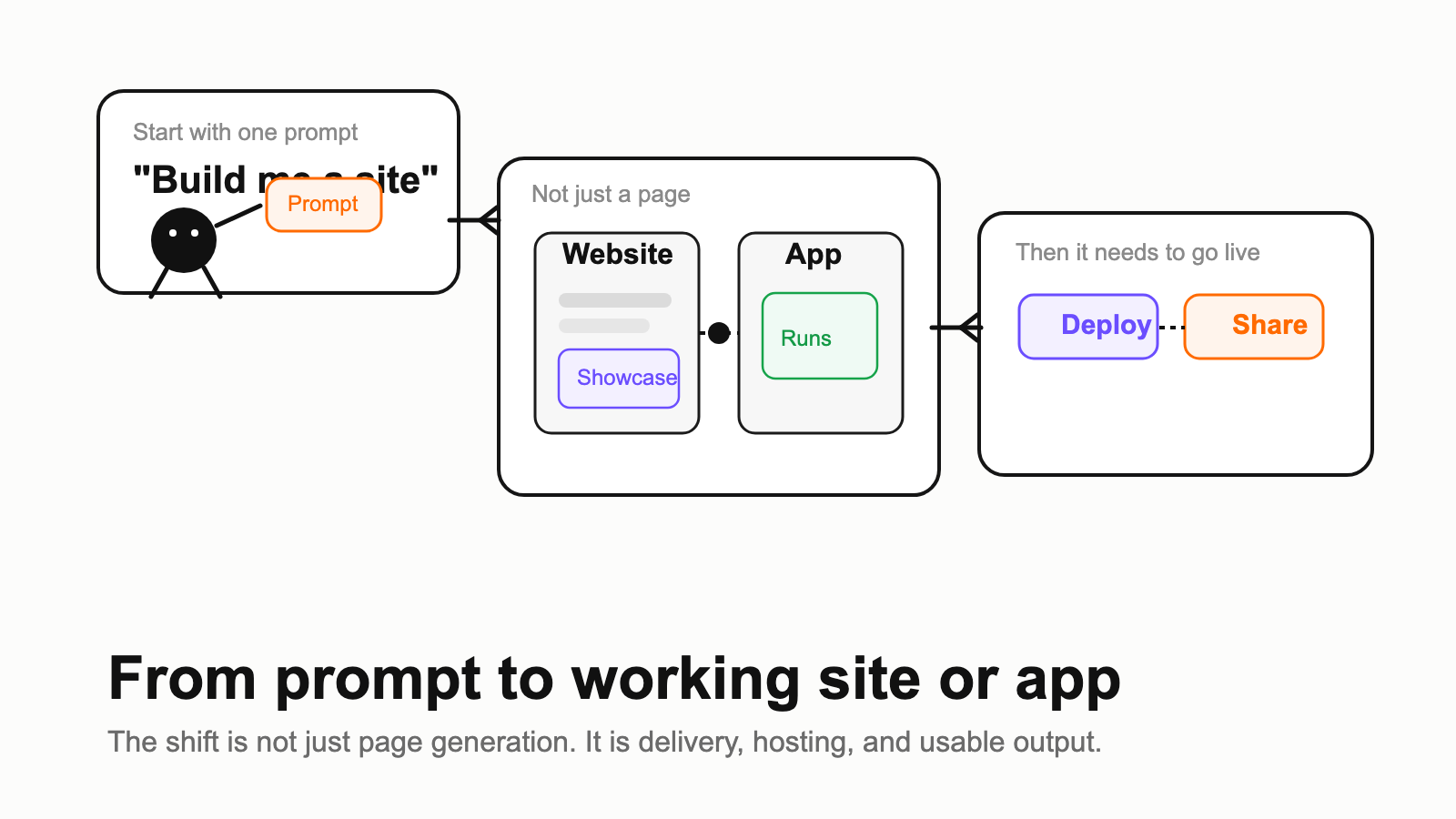
Figure 1: What is moving forward here is not just page generation, but the full chain from prompt to site, app, deployment, and sharing.
For a while, most AI website tools were really solving “generate a page”
For some time now, there have already been many products across AI website building, no-code, low-code, and natural language development.
Most of them were solving things like:
generating a homepage from a prompt
writing copy automatically
filling in website sections
creating something that looks like a complete site
helping people get a website-shaped result much faster
That direction was not useless at all. If anything, it gave many people without design, frontend, or coding experience a much lower-friction way to get something made.
But the limitation was always there.
Many so-called AI-generated websites ended up being closer to:
a landing page
a demo page
a prototype
a static output
a nice-looking shell that still needed a lot of manual work afterward
In other words, many products were really doing AI-assisted page generation, not yet AI-assisted website and app generation.
And those are two very different layers.
What OpenAI Sites is really pushing forward is the “website + app + deployment” chain
That is why OpenAI Sites matters as more than a product update.
OpenAI is not just saying:
“Look, we can generate a page too.”
What it is really pushing forward is this chain:
Prompt -> website / app -> deployment -> shareable link -> further iteration
Based on OpenAI’s current official wording, the important pieces here include:
generating interactive websites and apps from natural language
moving beyond static pages toward working
Web Appssharing output inside a workspace
providing hosted URLs
supporting identity and access
handling data and file storage
letting Codex keep iterating on the result
That matters quite a lot for what people mean when they talk about AI website development, AI-generated apps, AI software development, and AI product development.
Because for a long time, when people talked about AI coding, what they often meant was:
“AI helps me write some code.”
Now it increasingly looks more like:
“AI helps me build the website, the app, or the internal tool first, and it can actually run.”
That is no longer simple page generation. It is moving into AI app building and natural-language software development.
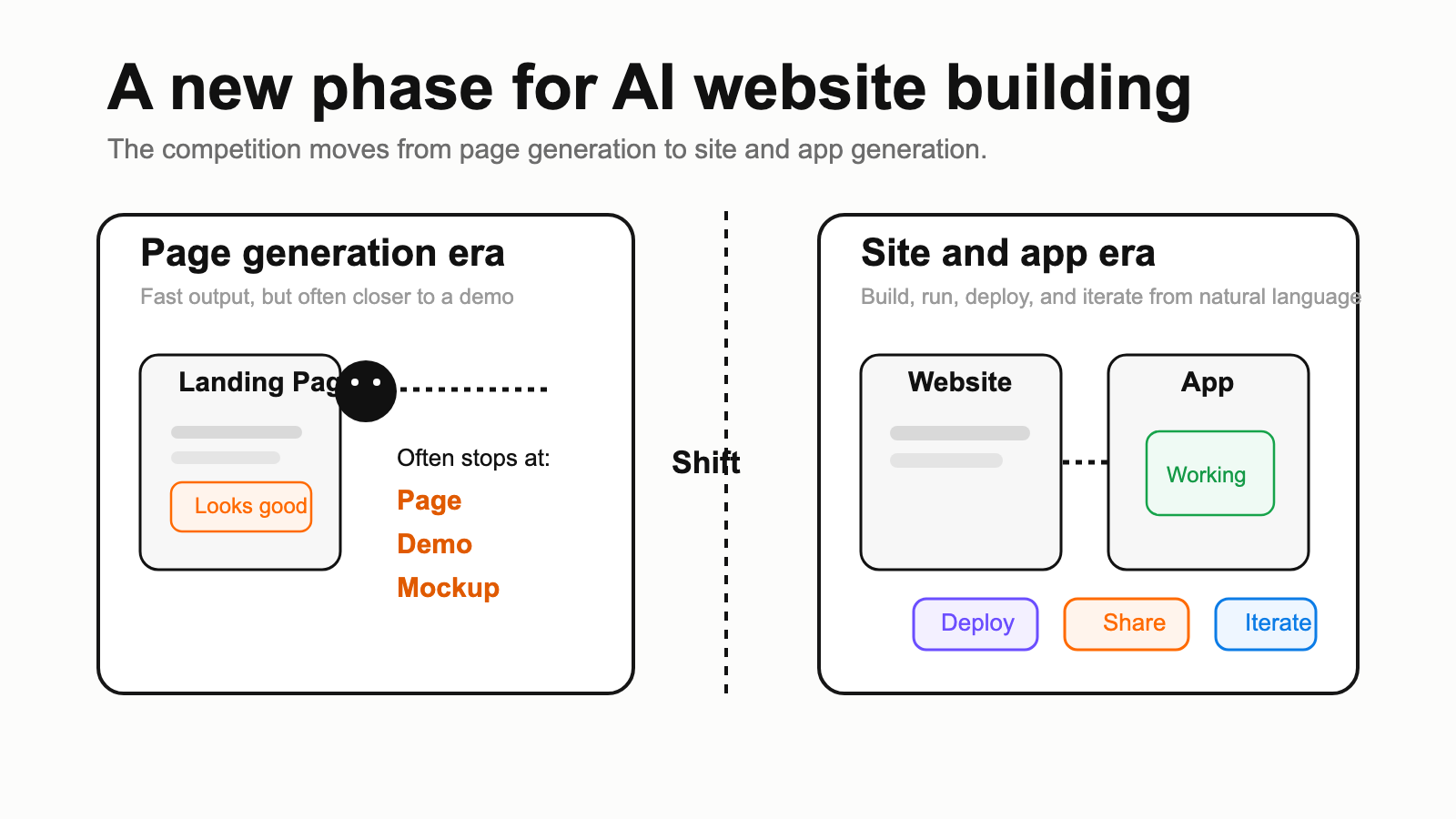
Figure 2: The competitive axis is shifting from “generate a page” to “generate a working site or app.”
The competition is shifting from page generation to website and app generation
To me, the most important thing here is that the competitive dimension has changed.
The old comparison was about:
who can generate pages faster
who has more templates
who produces better-looking copy
who can make a page feel like a complete website
who is easier for non-technical users
But after this OpenAI move, the more important questions start to look like:
who can generate a
Web Appwho can deploy directly
who can provide a hosted link
who can handle real application needs like data, files, and authentication
who can help non-technical users build something real
who can turn
prompt-based developmentinto an actual deliverable
That means the line between AI website building and AI-generated apps is getting blurry very quickly.
It feels like the industry is moving from phase one into phase two.
Phase one looked more like:
AI helps you make a page
Phase two looks more like:
AI helps you make a website or app that actually runs
And that is the step that should make a lot of traditional low-code platforms, no-code builders, and AI dev tools nervous.
Because one of their strongest selling points used to be:
People who cannot code can still build something.
Now the user expectation is starting to shift toward:
“Can I just use one prompt to build the site or app first?”
Once that expectation changes, the rules of the market change with it.
This will pressure no-code and low-code, but it does not mean everyone else is dead
Still, it would be too simple to jump to the conclusion that “OpenAI enters, everyone else loses.”
It is not that simple.
Because the strongest part of OpenAI Codex + Sites right now is still:
model capability
code generation
app generation
natural-language-driven development
But whether a website or app is actually valuable is not only about whether it can be generated.
At the business layer, teams still care about things like:
whether the website explains the product clearly
whether it presents services, case studies, or work clearly
whether it can support SEO and GEO
whether it can capture search traffic and AI recommendation traffic
whether it can ultimately turn into sign-ups, inquiries, leads, and customers
That is a different layer of the problem.
In other words:
Build is only the beginning. Showcase, growth, and leads are what define the outcome.
That is exactly where products like We0.ai still have real room to matter.
Because for many founders, creators, consultants, agencies, and small teams, the real need is not just:
“Can AI help me make an app that runs?”
What they actually care about is the larger commercial chain:
Build -> Showcase -> Grow -> Leads
That means:
build the site
present the product, service, work, or case studies clearly
capture search and AI recommendation traffic
convert that attention into leads and customers
And that is not the same problem as generating an internal tool.
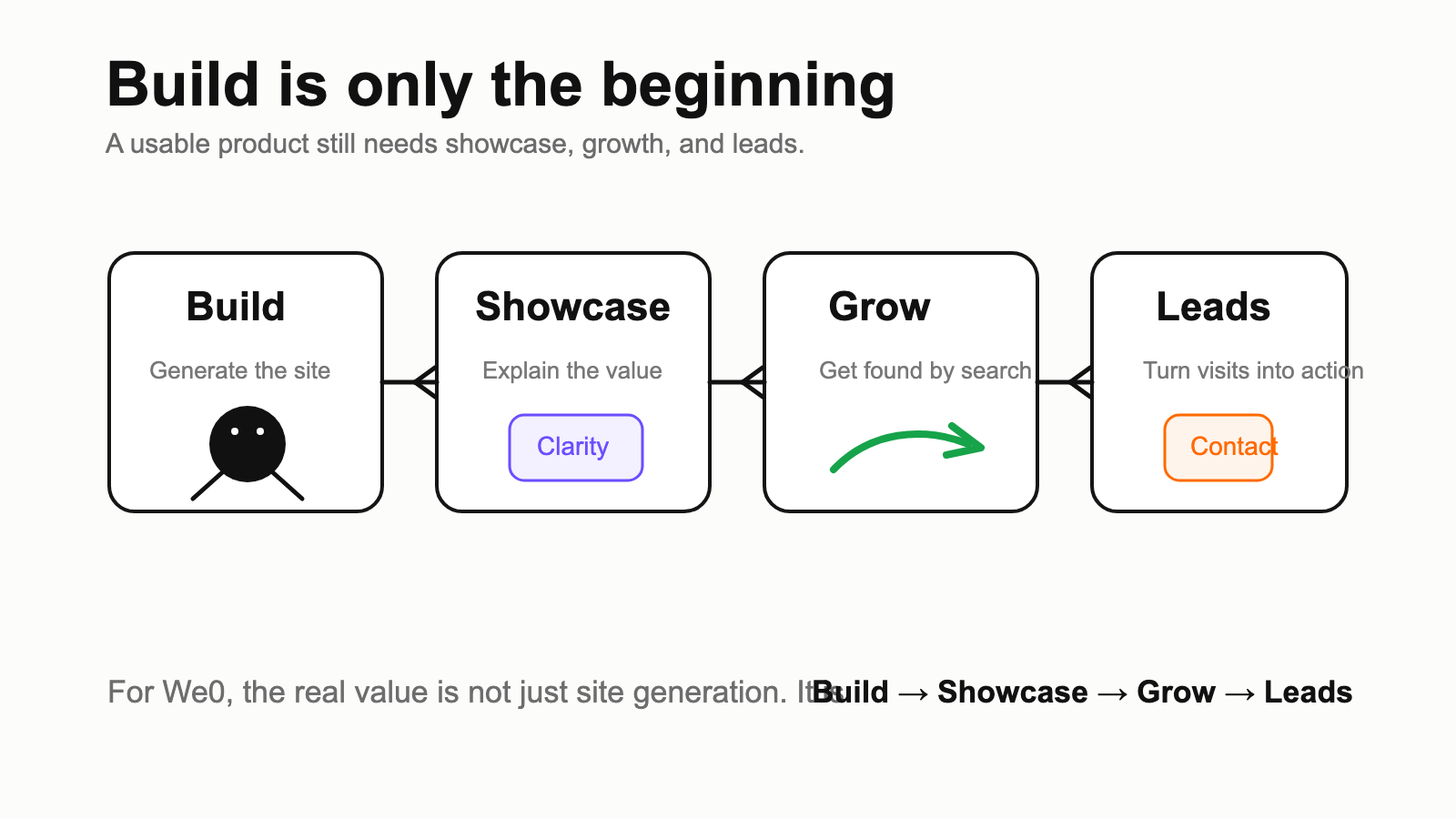
Figure 3: Generation will get cheaper. Turning a site into a showcase, growth, and lead engine is where the real value moves next.
OpenAI is pushing AI website building forward and redefining the category at the same time
So if we look at this release in the broader market, I would describe it like this:
AI website building is moving from the page-generation era into the website-and-app era.
That is really the core idea behind this article.
The next comparison will not just be:
who is better at
AI website auto-generationwho is better at
AI-generated websiteswho is better at automatic page output
who can turn a prompt into a decent-looking page
It will be:
who can connect natural-language development, AI coding, Web App generation, deployment, iteration, and real usage into one usable flow
That is the next phase.
From that angle, the OpenAI Sites launch is not just one more feature.
It is also a new standard for the category:
Real AI website building is not just making a page.
It is about being able to:
generate a website
generate an app
deploy it
run it
iterate on it
fit it into real workflows
That is much closer to what the next generation of AI development tools and AI app building platforms should actually look like.
For We0, this makes showcase and growth even more important
For We0, this is not necessarily bad news.
If anything, it may be a very useful market education moment.
Because it makes one thing much more obvious:
Generating a website will keep getting cheaper.Generating an app will keep getting cheaper too.
But one thing will not automatically get easier:
getting the website right
In other words, the real value will not just sit in “can you generate a website?”
It will sit in questions like:
can you turn the website into a real showcase entry point
can you explain the product, service, work, and case studies clearly
can you capture SEO, GEO, and AI recommendation traffic
can you turn that traffic into leads and customers
That is why We0.ai is not just trying to talk about AI website building.
It makes more sense for We0 to stay anchored in:
Build & Growth For Showcase
Because the website is not done the moment it is generated.
The real chain is:
Build -> Showcase -> Grow -> Leads
OpenAI is pushing the Build side, and some of the App side, much harder now.
What platforms like We0 can go deeper on is everything after that:
ShowcaseGrowthLeads
From this angle, the most important meaning of this launch is not “OpenAI is doing website building now.”
It is that the whole category is being pushed forward, and the market is being reminded of something important:
The next phase of AI website building is not just about generating pages.It is about turning generation into product capability, showcase capability, growth capability, and actual business results.
That is the part worth watching next.
FAQs
What is OpenAI Sites?
Based on OpenAI’s official wording on June 2, 2026, Sites / ChatGPT Sites is a preview capability inside the Codex and ChatGPT ecosystem focused on creating, iterating on, and deploying interactive websites and apps from natural language.
How is OpenAI Sites related to OpenAI Codex?
This Sites capability is being pushed forward through OpenAI Codex. It is not a completely separate story from Codex. It is better understood as an extension of Codex into website and app generation.
Can OpenAI Sites generate websites?
Yes. And the official framing is already beyond simple page generation. It emphasizes interactive websites, which is much closer to a real, shareable site.
Can OpenAI Sites generate apps?
Yes. OpenAI’s release notes explicitly say that ChatGPT Sites can create and deploy lightweight full-stack JavaScript / TypeScript Web Apps.
Will OpenAI Sites replace no-code and low-code platforms?
Not overnight. But it will absolutely raise market expectations. More users will naturally start asking, “Can I just use one prompt to build the website or app first?” That alone puts real pressure on traditional no-code and low-code tools.
Why do showcase and growth matter even more if website generation gets easier?
Because “generated” does not mean “done right.” A website still has to represent the business clearly, explain value, capture search and AI recommendation traffic, and convert that attention into leads and customers.
Conclusion
On the surface, this looks like OpenAI throwing even more fuel onto the AI website builder market.
But at a deeper level, what it really changes is the standard people use to judge the category.
The next comparison will not just be about who can generate pages better.
It will be about who can turn natural-language development into websites, apps, deployed outputs, and things people can actually use.
That is why OpenAI Sites matters.
Ready to Build?
If what you care about is not just “can I generate a website,” but:
how to present your product, service, work, and case studies clearly
how to make the site more ready for SEO and GEO
how to capture search traffic and AI recommendation traffic
how to turn that traffic into sign-ups, inquiries, leads, and customers
then the real question is not just Build.
It is the full chain:
Build -> Showcase -> Grow -> Leads
That is the problem We0.ai is trying to solve.
Not just helping you make a page, but helping you turn a website into something that can truly showcase, grow, and attract customers over time.
Related Tools
OpenAI CodexChatGPT SitesWe0.aiLovableBoltv0FramerWebflow