OpenAI Personalized Recommendations Boost Customer ARPU by 22%: How Does We0.ai's Website Design Tailored Landing Pages by Industry and Need?
The problem with many websites is not too little traffic.
OpenAI Personalization Lifted Customer ARPU by 22%: How We0.ai Designs Landing Pages by Industry and Intent
The problem with many websites is not too little traffic.
It's that everyone who walks in sees the same pitch.
A SaaS founder wants to know if they can get a product page live faster. A foreign trade owner cares about multilingual support, inquiries, and trust signals. A consultant cares more about case studies, methodology, and booking calls. Yet you greet all of them with one generic homepage that says, "We provide professional solutions."
That's like handing the department store's master catalog to every visitor who walks in, then asking: "Want to leave your phone number?"
OpenAI's recently released Circles case study makes this concrete: Circles' Xplore IQ combines user behavior, account history, and real-time signals to recommend the single most relevant next action. In Singapore, the group that received AI recommendations saw ARPU grow 22% and churn drop 9%. That 22% is a measured result from the telecom business comparing an AI-recommended group against a non-recommended group — not a blanket promise that "swapping a landing page gets you +22%." But it does reveal a principle that every website team should take away:
Growth rarely comes from describing yourself louder. It comes from answering, at the right moment, the question the other person most wants solved right now.
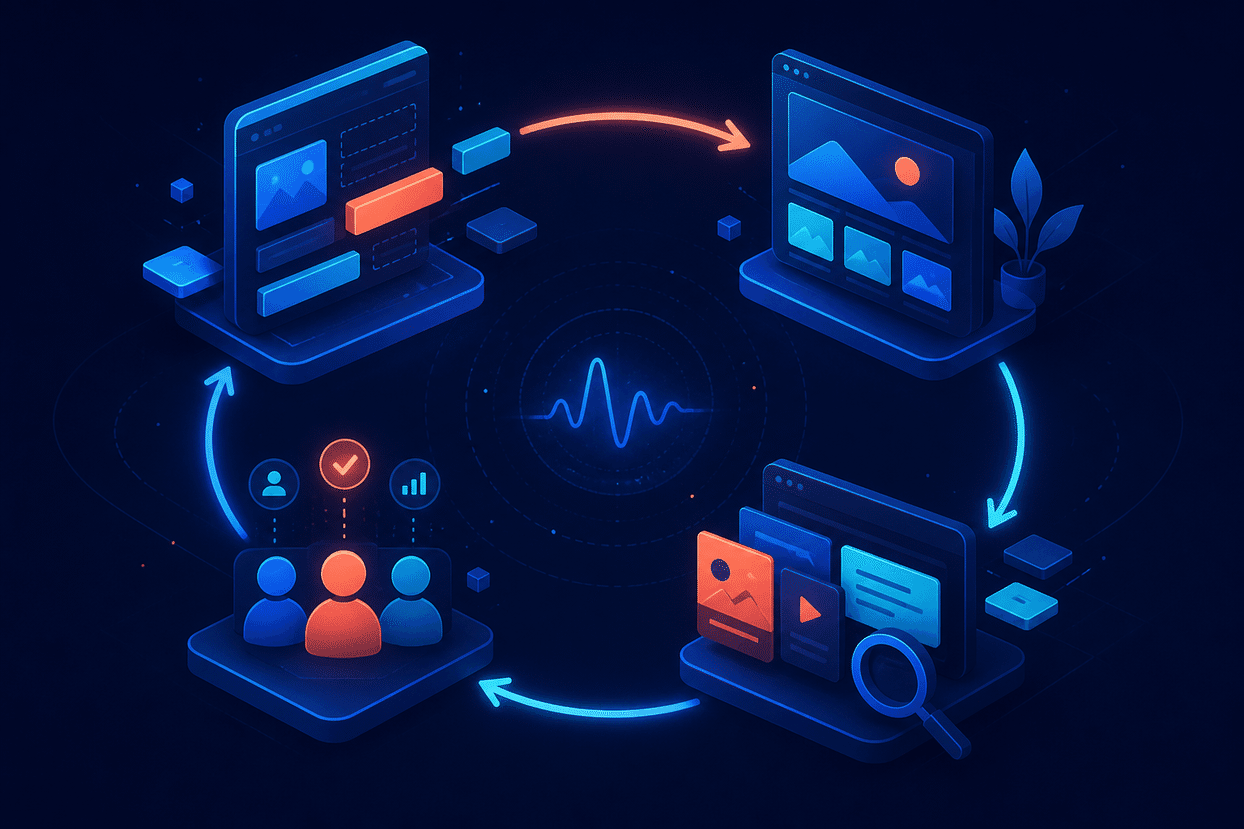
For We0.ai, this means a website should be more than a pretty facade. It should be a system that routes traffic, explains value, accumulates search equity, and captures leads: Build → Showcase → Grow → Leads.

Read the Case Correctly First: Circles Isn't a "Recommendation Feature" — It's a Timely Next Step
Circles wasn't dealing with a lack of data. It was dealing with too many signals: usage, billing, network activity, location, current browsing behavior... Traditional customer service and marketing split these signals across different workflows — waiting for users to ask, waiting for complaints, waiting for churn.
Its AI Concierge brings search, account management, support, and personalized recommendations into a single experience. A multi-agent architecture called CareX handles context understanding and routes requests to the right specialist agent. Xplore IQ then decides: should we recommend a roaming pack, a plan upgrade, or run a retention action early?
Your website doesn't need to replicate a telecom recommendation engine. But you can replicate the underlying logic:
| Circles' personalization logic | How a landing page can translate it |
|---|---|
| Identify real-time context | Identify source keywords, ad topics, industry, on-page behavior, geography, and device |
| Decide the "most relevant next action" | Decide whether the visitor needs product capabilities, case studies, pricing, booking, or FAQ |
| Replace spray-and-pray with specific recommendations | Replace the one-size-fits-all homepage with industry/scenario pages |
| Measure by ARPU and churn | Measure by qualified inquiries, booking rate, engagement on key pages, and deal quality |
The key is not "build a new page for every person." The key is to shorten the path for high-intent visitors.
We0.ai's Landing Pages Shouldn't Be Split by "Department" — They Should Be Split by "Industry × Intent"
Many teams structure their site around internal org charts: Product, About Us, Solutions, Resources. That makes sense internally, but not necessarily to visitors.
A better growth-oriented structure uses two layers:
- Industry layer: Who am I? What are my business constraints and trust standards?
- Intent layer: What am I trying to get done right now? Launch, acquire customers, go global, showcase cases, or validate a new product?
When these two dimensions intersect, the page finally starts to feel like "this was built for me."
| Target audience | Typical search/visit intent | Landing page to serve | What the first screen must clarify |
|---|---|---|---|
| SaaS / AI teams | AI product website, feature pages, waitlist | SaaS website growth page | Ship the product narrative faster and keep earning search and AI-recommended traffic |
| Foreign trade / B2B companies | Multilingual website, overseas inquiries | Foreign trade lead-gen page | How product display, trust materials, multilingual content, and inquiry paths work together |
| Agencies / consultants | Service website, case studies, lead-gen page | Service business growth page | How to present experience, cases, and service scope clearly to attract better leads |
| Indie developers | Product launch page, MVP website | Launch and validation page | Validate demand with minimal pages while leaving structure for future SEO |
| Creators / experts | Personal brand site, portfolio, consultation | Personal brand page | How content, proof, services, and booking connect naturally |
Industry determines "what you need to prove." Intent determines "what you say first."
For example, the first screen of a foreign trade brand page shouldn't rush into how AI generates pages. It should first answer: Can overseas buyers quickly understand the product? Can language and categories scale? Are credentials, delivery, cases, and inquiries credible enough?
Similarly, a SaaS page shouldn't pile on all features at once. A visitor coming from a search for "AI SaaS landing page" wants to see first: product positioning, target users, key capabilities, use cases, launch timeline, and proof — cases or product visuals that demonstrate it actually works.
A High-Converting Industry Page Needs at Least This Much
5 Replaceable Modules
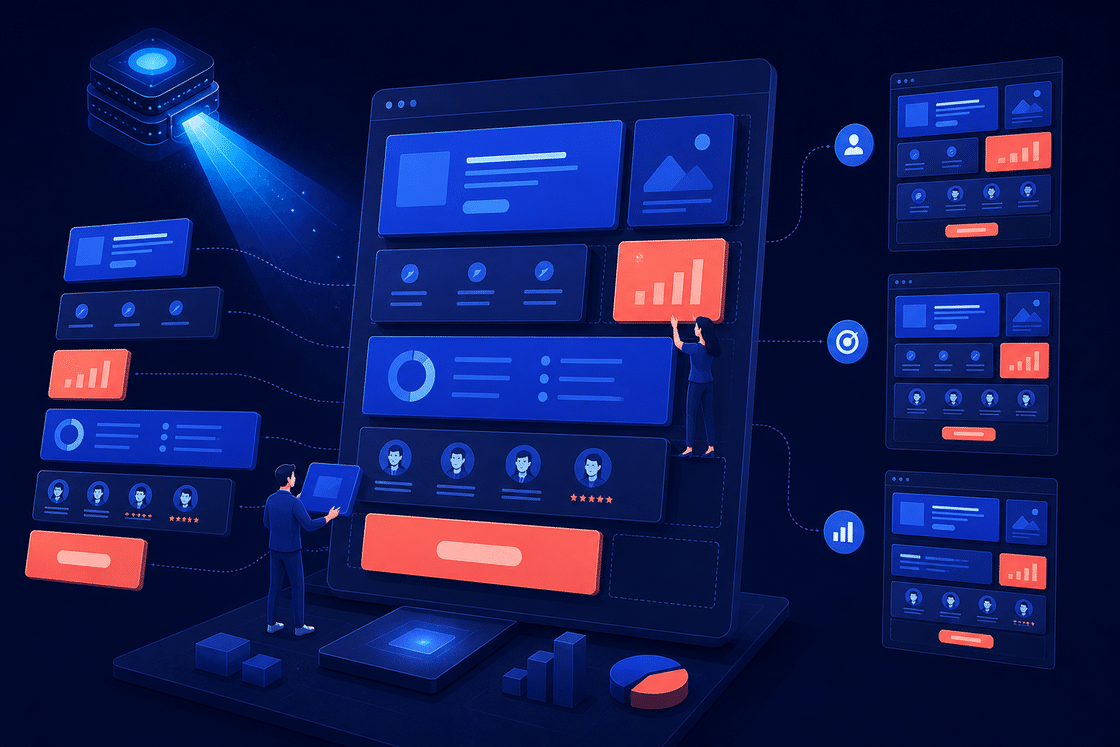
Don't mistake "personalization" for swapping out a headline or inserting a company name. That's shallow—and it tends to come across as forced.
What actually works is to first build a reusable page skeleton, then tailor the key modules to the industry and intent:
1. Value Proposition: Lead with the Industry Task, Not the Product Self-Introduction
- SaaS: Launch product stories, feature pages, and SEO/GEO growth assets together.
- Export/Trade: Turn products, trust, and multilingual inquiries into a clear funnel.
- Consulting: Let case studies build trust for you, and let booking pages qualify clients for you.
2. Scenario Modules: Let Visitors See "How I Would Use This"
Abstract capabilities need to be grounded in concrete actions. For example, "content growth" can become "continuously adding pages around product features, industry pain points, and long-tail keywords that are searchable and citable by AI."
3. Proof Modules: Each Industry Trusts Different Things
SaaS needs product screenshots, integration documentation, and customer results; export/trade needs certifications, factory/delivery capabilities, product specifications, and regional case studies; consulting needs methodology, representative projects, client testimonials, and engagement boundaries.
4. Conversion Modules: CTAs Must Match the Decision Stage
Someone just learning about you can "view industry solutions"; someone with a defined project can "get a website growth diagnostic"; high-ticket, complex services are better suited for "book a requirements discovery call."
5. SEO/GEO Modules: Not Keyword Decoration Stuffed in the Footer
The page needs to cover industry language, real problems, FAQs, case studies, and related content. That way it serves Google search, AI answer citations, and visitor decision-making simultaneously—rather than merely catching a single ad click.
A good landing page isn't one that lists more selling points—it's one that deletes irrelevant information earlier.
From "Industry Pages" to "Needs Pages": Don't Make One Page Shoulder Every Conversion Task
Industry pages answer "Do you understand me?" But as visitors go deeper, they develop more specific tasks.
Using We0.ai as an example, a single industry hub page can branch out into needs pages:
/solutions/saas-websites
  ├─ /saas-product-launch-page
  ├─ /saas-feature-pages
  ├─ /saas-seo-content-hub
  └─ /saas-waitlist-page

/solutions/export-b2b
  ├─ /multilingual-product-website
  ├─ /b2b-inquiry-landing-page
  ├─ /manufacturing-case-study-page
  └─ /export-seo-content
This isn't about padding the URL count.
Every page should map to a task that can be articulated, searched, and measured.
| Page Type | Best-Suited Intent | Primary CTA | Key Metrics to Watch |
|---|---|---|---|
| Industry hub page | "Are you right for me?" | View relevant scenario | Clicks to needs pages, inquiry rate |
| Problem/solution page | "How is this problem solved?" | Get solution/diagnostic | Scroll depth, CTA clicks |
| Feature page | "What can it actually do?" | See case studies/start building | Engagement with key modules |
| Case study page | "Has anyone validated this?" | Book a conversation | Form completion, case-to-inquiry conversion |
| Comparison page | "Why you instead of someone else?" | See implementation approach | Organic search traffic, assisted conversions |
The value of We0 AI goes beyond just "generating a page." It helps teams organize their brand and website structure, plan pages and copy, get launched, and then continuously optimize around SEO/GEO, content updates, traffic data, conversion paths, and monthly reviews.
So the page matrix shouldn't end at launch. It should be an acquisition asset that keeps growing.
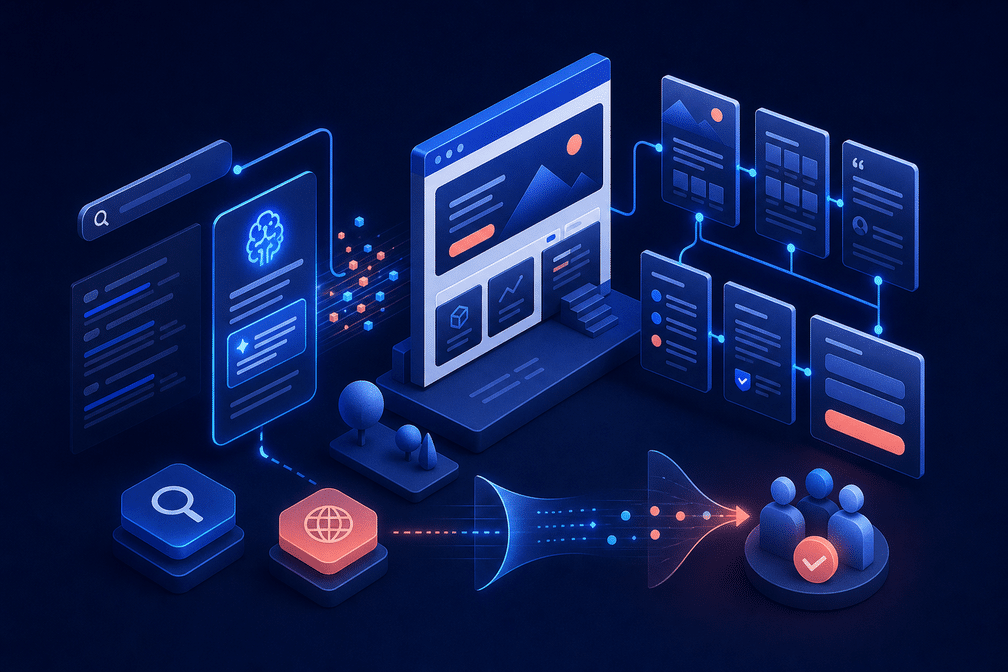
How to Decide Who Sees Which Page? Start with "Explicit Signals"—Don't Jump Straight to Mysterious Algorithms
When small teams attempt personalization, the instinct is often to jump straight to user personas, recommendation models, and complex automation. Not so fast.
The most valuable and easiest-to-use signals for a website's early stage are actually quite explicit:
- Referral keywords: Did the user search for "外贸官网设计" or "AI SaaS landing page"?
- Campaign theme: If the ad talks about multilingual capabilities, the landing page shouldn't bounce back to a generic brand homepage.
- UTM and partner channels: Traffic from an industry event, media outlet, or partner already comes with context.
- Geography and language: This isn't just about translating copy—it affects case studies, delivery methods, time zones, and trust signals.
- Browsing path: Repeatedly viewing pricing, case studies, or a specific service indicates a different next step for each visitor.
- Form choices: Let users proactively select their industry, goal, and timeline—this both segments traffic and improves sales follow-up quality.
Proceed in this order:
- Start with 3–5 high-value pages: Cover the audiences with the highest revenue potential and clearest intent.
- Write a distinct promise, proof, and CTA for each page: Don't just swap the banner.
- Unify analytics tracking: At minimum, track source, page path, CTA, form, and qualified leads.
- Review monthly: Identify which pages deliver "volume" and which deliver "the right people."
- Then do dynamic routing: Once content and data are sufficient, add recommended content, regional versions, or behavior triggers.
Personalization doesn't start with "guessing who the user is"—it starts with respecting what the user has already told you.
Don't Treat 22% as a KPI—Treat It as a Reminder About Page Strategy
Circles' 22% ARPU lift came from a specific business, a specific audience, a specific recommendation system, and controlled measurement. It is not a We0.ai customer result, and it certainly shouldn't be packaged as a guarantee for landing page redesigns.
But this case reminds us that website optimization should move one step beyond "click-through rate":
- Is this traffic more likely to become qualified leads?
- Do users understand the value of working with you faster?
- What kind of content is helping sales reduce repetitive explanations?
- Has a specific industry page led to higher-quality bookings, not just more form submissions?
- Are SEO and GEO content efforts making pages consistently discoverable in search results and AI answers?
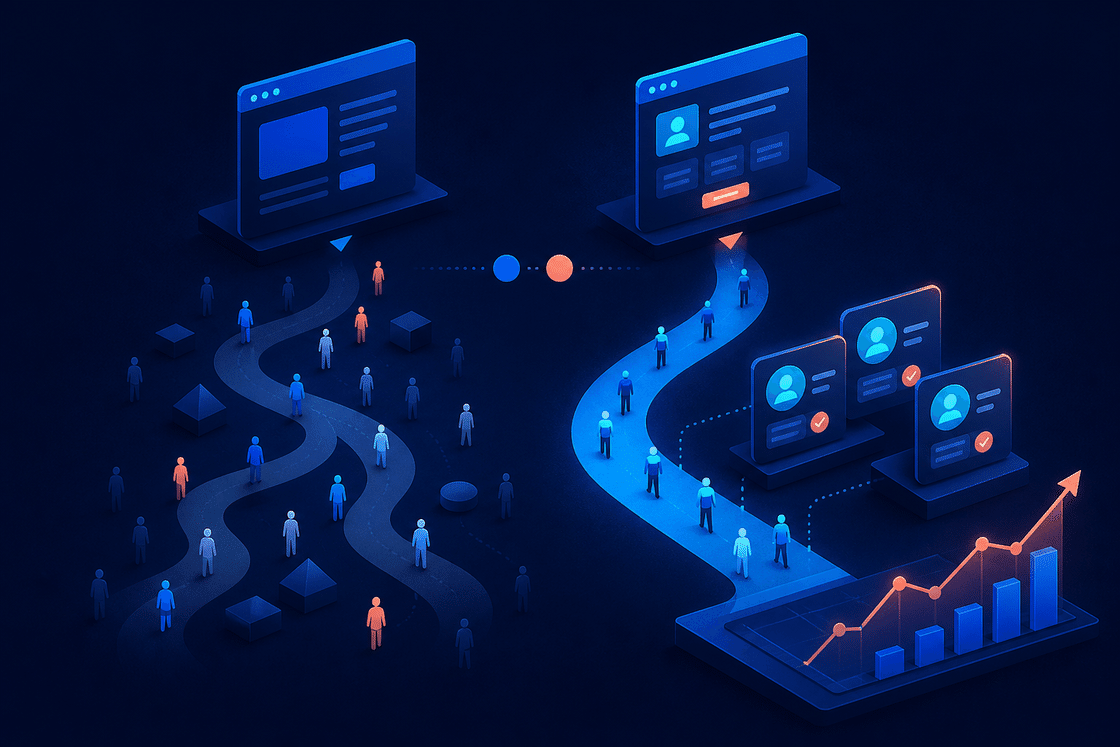

A more practical measurement framework is:
| Level | What to Look At | Common Mistakes |
|---|---|---|
| Traffic Matching | Quality of site entry traffic across industries/demand pages | Looking only at total UV |
| Content Understanding | Time on page, scrolling, clicks on key modules | Treating dwell time as the only answer |
| Action Intent | CTA clicks, bookings, form completions | Routing all CTAs to the same form |
| Lead Quality | Valid demand rate, sales acceptance rate | Padding numbers with junk leads |
| Business Outcomes | Deals closed, average order value, repeat visits, repurchases | Treating correlation as causation |
This framework also maps perfectly to the logic of We0 AI: Build is not just about creating pages; Showcase is about clearly presenting products, case studies, and professional expertise; Grow is about continuously creating opportunities to be discovered through SEO, GEO, and content; and only then comes Leads, turning traffic into real customers that can be followed up with.
A We0.ai Page Blueprint You Can Put into Action Right Away
If you're rebuilding your website, don't start with "how flashy the homepage should look." Start with this blueprint instead:
A. Homepage: Route Traffic, Don't Be an Information Warehouse
Your homepage should tell visitors who you are, who you help, and what outcomes you deliver. Then use clear entry points to direct them toward paths for SaaS, foreign trade, service-based businesses, or independent developers and creators.
B. Industry Pages: Build Resonance and Trust
Each industry page must include: industry pain points, growth goals for that industry, suitable page combinations, types of evidence, implementation approaches, and low-barrier CTAs.
C. Demand Pages: Close the Loop on Problems
One page solves one high-intent task. For example, "How to build a multilingual product showcase site," "How SaaS feature pages can earn organic traffic," or "How consultant websites can turn case studies into consultations."
D. Case Studies and Content Pages: Build Search Assets and Sales Materials
Case studies are not a "client logo wall." Write clearly about the starting point, constraints, the page and content actions taken, the process, and the results. Content pages, meanwhile, should be structured around problems, comparisons, guides, and tool-related keywords, funneling relevant traffic to industry pages and demand pages.
E. Lead Pages: Design the Next Step, Not the Last Step
Bookings, diagnostics, needs assessment, and quote inquiries should all tell users what happens next, what they need to prepare, and how soon they'll hear back. Being clear reduces hesitation more than an "Submit Now" button.
Summary
The OpenAI and Circles case isn't about "AI recommends everything." It's about something more fundamental: when businesses can understand context and offer relevant next steps at the right moment, both customer experience and business outcomes can be rewritten.
The same applies to your website.
Stop letting one generic homepage bear the burden of everyone's understanding, trust, and conversion. Build resonance by industry, design paths by demand, provide evidence through case studies and content, and use SEO, GEO, data monitoring, and continuous optimization to make your pages create long-term value.
That's what We0 AI wants to help you do: not just deliver a website that looks good, but turn a showcase site into an asset that keeps displaying, keeps growing, and keeps acquiring customers.
FAQ
Did OpenAI's personalization really increase Circles' revenue by 22%?
The official OpenAI case study states: In Singapore, Circles compared a user group that received AI-driven recommendations with a group that did not. The former saw a 22% increase in ARPU while churn decreased by 9%. These metrics belong to Circles' specific business context and should not be taken as a promise for other companies or landing page projects.
What's the difference between industry landing pages and regular "solution pages"?
Regular solution pages often start from the company's internal capabilities. Industry landing pages start from the visitor's business context, addressing industry pain points, trust requirements, typical paths, and suitable proof materials. This makes it easier for users to quickly judge, "Is this made for me?"
Do small teams need a personalized page for every client?
No. Start with 3-5 high-value industry pages or high-intent demand pages, and use source keywords, ad themes, language, and browsing paths for basic traffic routing. Only add page granularity when data proves a specific segment deserves deeper cultivation.
What can We0 AI do for industry landing pages?
We0 AI doesn't just generate pages. It can work alongside humans to refine brand and website structure, plan pages and copy, build and launch the site, complete foundational SEO/GEO configuration, and continuously handle content production, traffic monitoring, page optimization, growth recommendations, and reviews—helping showcase websites become customer acquisition assets.
Why do GEO and SEO need to be done together?
SEO gives pages a better chance of being found in traditional search. GEO focuses more on whether content can be understood, extracted, and cited by generative AI. Both depend on clear page structure, credible evidence, real problems, and continuously updated content assets.
Related Tools
- We0 AI: Build, Showcase, Grow, and Acquire Customers in One Platform
- OpenAI API Platform
- Google Search Central: SEO Starter Guide
Ready to Get Started?
If your website only has a generic homepage right now, the next step doesn't have to be tearing it down and starting over.
Start by clarifying: Who are the three types of customers you most want to close? What problems do they come with? What evidence do they need to see before they're willing to act?
Then let We0 AI help you turn those answers into a website path that can go live, be continuously optimized, and keep acquiring customers.