Meta Is Pushing 'Personal Superintelligence': Will Companies Still Need a We0.ai Website When Everyone Has an AI Assistant?
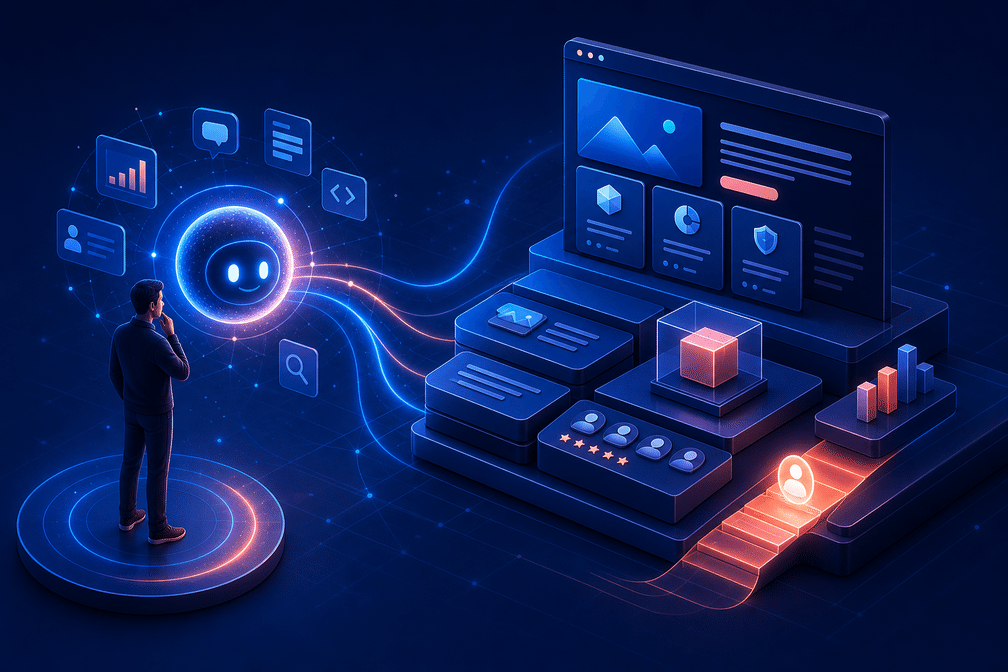
The short answer is: Yes, you do. And the more AI assistants "find answers, make comparisons, and offer suggestions" on your behalf, the more businesses need a website that can truly be understood, verified, and acted upon.
Meta Is Pushing 'Personal Superintelligence': Will Companies Still Need a We0.ai Website When Everyone Has an AI Assistant?
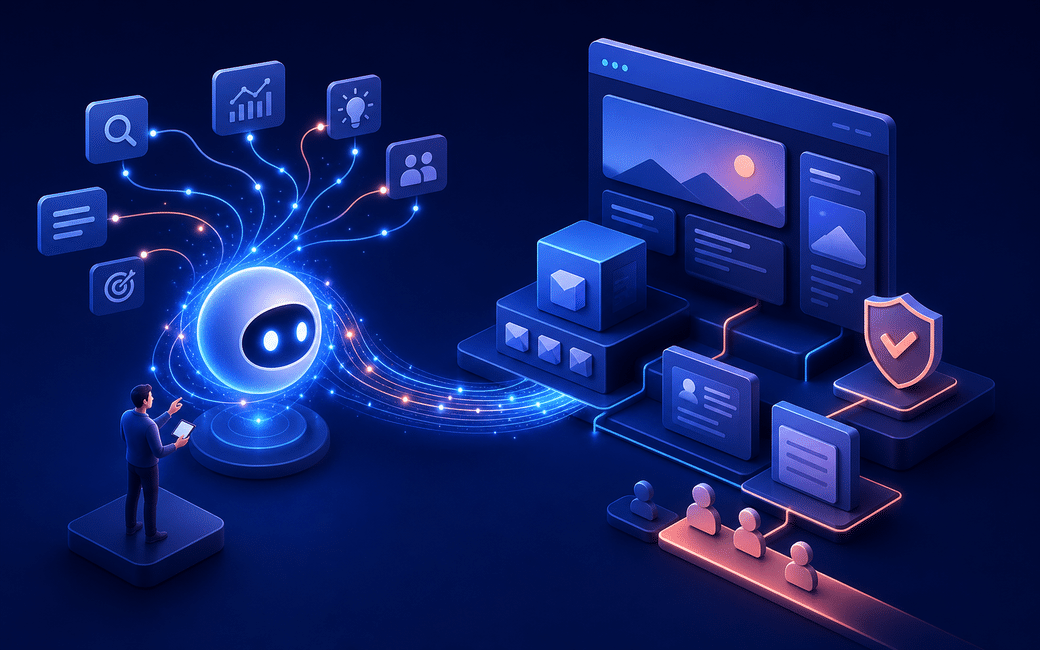
The short answer is: Yes, you do. And the more AI assistants "find answers, make comparisons, and offer suggestions" on your behalf, the more businesses need a website that can truly be understood, verified, and acted upon.
However, the role of the website has changed.
In the past, a website was more like a storefront sign: someone found you, clicked in, and saw who you are. Now, users are likely to ask their AI first:
"Help me find website growth services suitable for a SaaS company going global."
"What problem does this company's product actually solve?"
"Is it reliable? Are there case studies? Is it right for our stage?"
Users may not even have opened their browser before you've already entered their comparison list—or been ruled out.
Meta publicly proposed the vision of Personal Superintelligence in 2025: putting more powerful AI capabilities into everyone's hands, letting it serve what individuals truly value. This concept is not far from "everyone having a more proactive and context-aware AI assistant."
Many people hear this and reach a seemingly logical conclusion: Since AI can find companies, read web pages, and screen products for users, why should businesses bother having a website?
That conclusion is only half right.
AI assistants will absorb some of the "link-finding" work, but they can't generate trustworthy facts out of thin air for a business. They need materials, evidence, verifiable product information, clear service boundaries, and a place to turn interest into action.
AI is the discovery layer; websites are increasingly becoming the facts layer, the proof layer, and the conversion layer.
This is why what the AI era should truly eliminate is not the website itself, but the old kind of website that goes live and never updates—the one that only says, "We provide professional services."
What Has Meta's "Personal Superintelligence" Actually Changed?
Meta's statement is not about "giving everyone another chatbot." It's about AI helping individuals more deeply achieve goals, create, connect, and make decisions. For businesses, the impact is direct: The user's information filter has shifted from a search box to an assistant that continuously participates in decision-making.
The past path was typically:
User searches a keyword → Looks at search results → Clicks on multiple websites → Compares themselves → Leaves contact info
The future more common path will be:
User proposes a task → AI breaks down the need, searches, and compares → Recommends a few candidates → User verifies and acts
This does not mean search disappears, nor that users stop visiting websites. Quite the opposite: after being initially filtered by AI, users who click on a website are often closer to a decision.
So, the question businesses should ask isn't "Will AI replace the website?" but rather:
When AI asks questions on behalf of customers, can it read clear and trustworthy enough answers from your public assets?
AI Assistants Can Help You Discover a Brand, But They Can't Own It for You
AI can summarize information, compare features, and narrow ten vendors down to three candidates. But there are three things it cannot do for a business in the long term.
1. Your Right to Define Yourself
Social media posts can go viral, platform bios can be changed, third-party reviews can shift. But what your product is, who you serve, how you charge, and why you are trustworthy—these core messages require a long-term base you fully control.
Without a website, your brand narrative is scattered across platforms, chat logs, short videos, and others' retellings. AI might see you, but it might not understand you.
2. Verifiable Evidence
"We are professional" is not evidence.
Case studies, customer scenarios, methodologies, service processes, product updates, founder perspectives, FAQs, terms, contact points—these are the signals both users and AI can repeatedly check.
A website isn't a brochure; it should be a verifiable business manual.
3. The Last Mile of Conversion
AI can bring a potential customer to the door, but it struggles to complete all the final actions for you: viewing case studies, understanding plans, booking demos, submitting inquiries, subscribing to updates, starting a trial.
These actions need a site with clear page structures, coherent information, and a system that can be continuously tested and optimized to catch them.
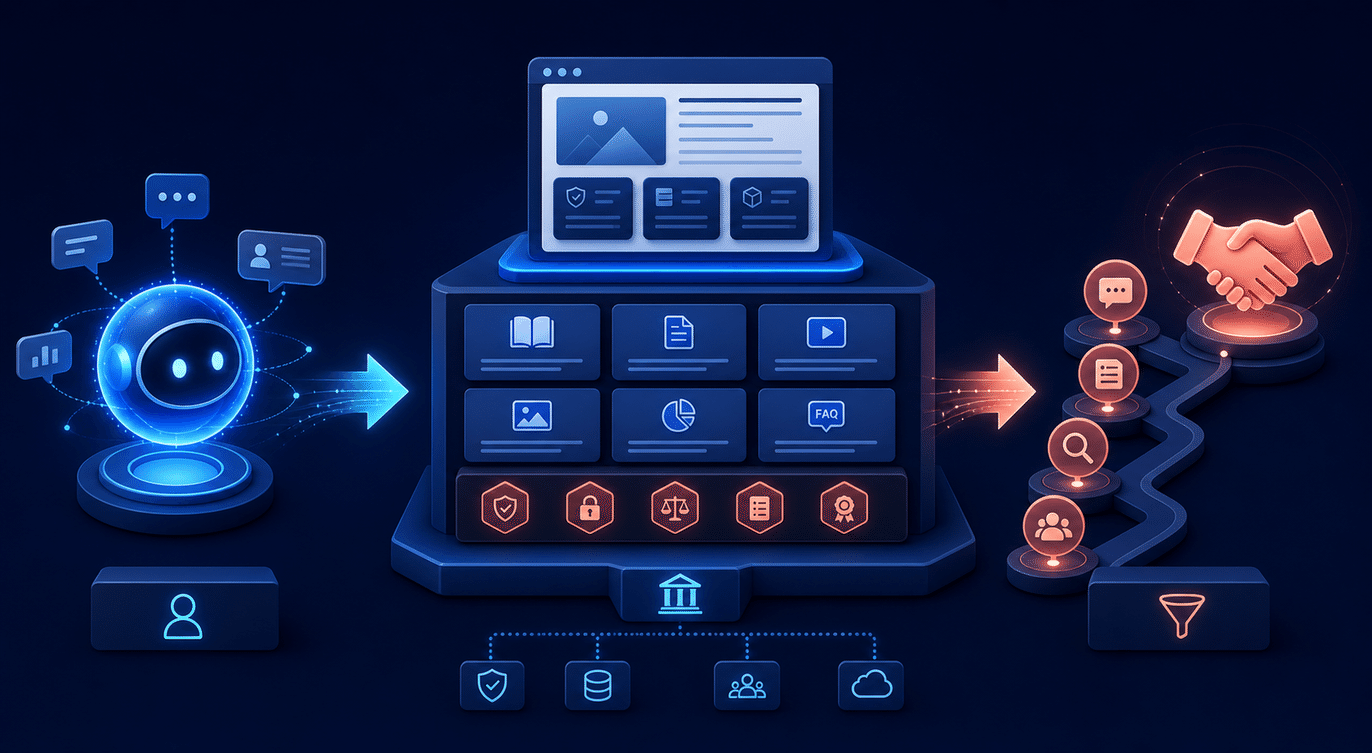
A business without a website might still be mentioned by AI; but it's hard to be consistently explained by AI, and even harder to turn being mentioned into a lead.
What Will Truly Be Eliminated Is the "Business Card Website"
Not all websites are worth keeping.
If a website has only a company introduction, a few large images, and an unresponsive contact form, it indeed has little presence in the AI era. It offers no incremental information, no continuous updates, and no clear conversion path.
What needs to be upgraded is the website's role: from a one-time delivery page to a continuously growing business asset.
| Old Approach: Business Card Website | New Approach: Growth Website for the AI Era |
|---|---|
| Goes live and is done | Continuously updated, tested, and optimized after launch |
| Only says "who we are" | Answers questions customers and AI will actually ask |
| Prioritizes looking good | Balances display, understandability, discoverability, and convertibility |
| Traffic mainly relies on ads or luck | SEO, GEO, content, brand keywords, and conversion paths accumulate together |
| Website is a cost | Website is a long-term lead generation asset |
This is also what We0 AI aims to solve. We0 AI is not just about turning a prompt into a page; it's better suited to help businesses build a showcase website that can go live, be displayed, be found and understood by search and AI, and continuously capture leads.
Its flow can be summarized as: Build → Showcase → Grow → Leads.
Setting it up is just the first step. Then comes showcasing, content, SEO/GEO, data observation, page optimization, and turning visits into inquiries.
AI Won't "Trust" Your Ads; It Will Seek Your Verifiable Information
Some people see AI search as a new traffic black box: add a few GEO keywords, stuff in a llms.txt file, create dozens of Q&A pages, and you'll be recommended by the model.
Don't rush to believe that.
Google stated plainly in its generative search optimization guidelines: generative search still builds upon core search ranking and quality systems. To gain visibility, the foundation remains crawlable and indexable page structures, along with unique, valuable, people-first content. Google also explicitly advises against creating so-called "special files" for AI search or mechanically chunking content.
The insight for businesses is not "SEO is back again." SEO never left.
AI is not a shortcut to bypass websites; it's more like a distribution layer that asks better questions and synthesizes information better.
If your website doesn't clearly answer these questions, no matter how smart the AI is, it can only give vague answers:
- Who exactly do you solve a problem for, and what is that problem?
- How is your product or service different from alternatives?
- What real cases, data, or delivery methods can prove it?
- What are the price, geographic, industry limits, and delivery timeline?
- How does a user start the next step?
Moreover, the future extends beyond "people searching websites." Browser agents, shopping agents, and procurement agents will also read webpage structures, page rendering, DOM, and accessibility information to complete tasks for users, such as comparisons, bookings, or placing orders.
This leads to one conclusion: Official websites are not just for humans; they are gradually becoming machine-readable business interfaces.
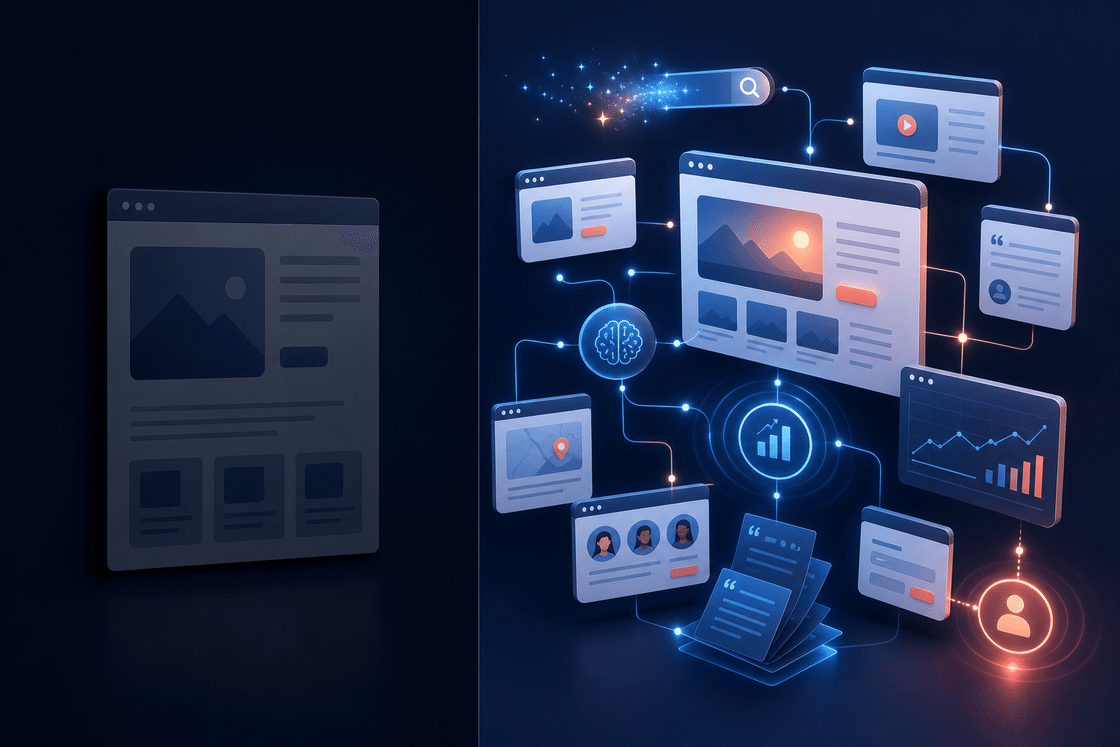
Once Everyone Has an AI Assistant, Which Businesses Need an Official Website More?
The answer is pragmatic: Businesses that require more explanation, more trust, and more comparison are the ones that need an official website the most.
| Business Type | Changes Brought by AI Assistants | Tasks the Official Website Must Undertake |
|---|---|---|
| SaaS / AI Products | Users first let AI screen for features and prices | Clear product pages, feature pages, integration pages, pricing pages, and case study pages |
| Consultants / Agencies | Users will inquire about capability boundaries and past results | Methodology, industry scenarios, client cases, appointment booking for consultations |
| Foreign Trade / B2B | Procurement processes rely more on multilingual information and credential verification | Product specifications, certifications, delivery capabilities, inquiry pages, multilingual content |
| Indie Developers | AI can recommend tools but struggles to explain your product's trade-offs | Launch pages, Use Cases, documentation, roadmap, feedback channels |
| Creators / Experts | Content platforms facilitate discovery but struggle to build lasting relationships | Portfolio, knowledge base, service descriptions, subscription and consultation channels |
Conversely, if your business simply sells a highly standardized, low-ticket product on a whim, a platform storefront might suffice. But as long as you aim to build a brand, increase average order value, and avoid relying on a single platform, the question isn't "whether to have an official website," but "what kind of official website to build."
The Official Website of the Future Must Become These 5 Things, at Minimum
1. A Clear Source of Truth
Product information, service scope, case studies, team details, policies, and contact information should not be scattered across ten platforms. Place the core facts on your official website and keep them consistently fresh.
2. An AI-Readable Content Repository
You don't need to write like a manual for an AI model, but you need to speak clearly and simply. Use clear titles, specific scenarios, unique experiences, and real evidence. Avoid making AI guess what you're selling with a bunch of vague terms like "empowerment," "innovation," and "leadership."
3. A Multi-Entry Showcase
Users may arrive from search engines, social media, AI recommendations, emails, or friend referrals. They don't necessarily visit your homepage first. Therefore, product pages, case study pages, topic pages, FAQs, and regional pages must all be capable of independently explaining your offering and engaging the user.
4. A Growth System for Continuous Optimization
Launching is not the finish line. Monitor which pages are visited, which questions are searched for, which CTAs are clicked, and which content generates inquiries, then continue to update. The longer a website remains static, the more it resembles an outdated archive.
5. A Lead Capture System of Your Own
Social media followers, platform exposure, and AI mentions are not customer relationships you truly own. Forms, appointments, free trials, email subscriptions, and CRM integration are the steps that convert external traffic into your business system.
A Pragmatic Suggestion for Businesses: Don't Rush to "Rebuild Your Website for AI" Yet; First Fill These Gaps
You don't need to transform your website into a screen full of robots, nor do you need to chase every new trend. Start with a simple but effective audit:
- Articulate your positioning in one sentence: Who do we solve what problem for, and why are we not just another generic alternative?
- Complete key decision-making pages: Product/Service, Solutions, Case Studies, Pricing or Inquiry Logic, FAQ, Contact, and Next Steps.
- Continuously create non-homogeneous content: Frontline experience, customer problems, project post-mortems, specific viewpoints – these are more valuable than mass-produced "AI-generated articles."
- Ensure technical accessibility: Pages can be crawled, load speed is good, mobile experience is solid, structure is clear, and duplicate content is minimal.
- Set up measurable conversion actions: Don't just put a "Contact Us" button. Provide different entry points for people at different stages: Book a Demo, Get a Proposal, View Case Studies, Subscribe, Start a Free Trial.
In the age of AI assistants, the official website is no longer just "your business online." It is your own territory for synchronously delivering your true capabilities to both humans and machines.
What Can We0 AI Do? Not Just Help You "Have a Site," But Help You Turn Your Site into a Growth Asset
What many teams lack isn't just a page builder. They lack: someone to help organize brand information and website structure, to decide which pages to build first; someone to place products, case studies, and copy in positions where they can truly engage customers; and someone to continue monitoring SEO/GEO, content, traffic data, and conversion paths after launch.
That's exactly We0 AI's positioning: A showcase website growth platform + AI site building capabilities + continuous optimization and growth support.
From Build to Showcase, then to Grow and Leads, the goal isn't to deliver a pretty webpage, but to make your website an asset for sustainable showcasing, sustainable discovery, and sustainable lead generation.
If your official website is still in the "build it and forget it" phase, now might be the perfect time for an upgrade.
FAQ
Will official websites be replaced after AI assistants become widespread?
No. AI assistants will change how users discover and compare brands, but official websites remain the controllable source of truth, proof of trust, and conversion hub for businesses. What will be replaced are static, vague business card websites that haven't been updated in a long time.
Is SEO still necessary in the AI search era?
Yes. Google's official guidelines indicate that generative search still relies on core search indexing, ranking, and quality systems. A crawlable technical structure, unique and useful content, and a good page experience remain foundational.
Is GEO just about adding an llms.txt file?
No. Google has clearly stated that its generative search does not require special AI files or extra markup. The focus should be on publicly crawlable content, reliable information, and solid SEO fundamentals, not on chasing a single "trick."
Which businesses most need to upgrade their official websites?
Teams that need to explain complex products, build trust, and handle high-ticket or long-decision-cycle sales benefit most. Examples include SaaS, B2B, foreign trade, consulting services, agencies, creators, and indie developers.
Related Tools
- We0 AI: Build and Continuously Grow Your Showcase Website
- Google Search Console
- Google's Guide to Optimizing for Generative Search
Sources
Ready to Build?
When everyone has an AI assistant, businesses shouldn't leave their brand to fragmented platforms and others' summaries.
Use We0 AI to turn your official website into a long-term asset that can showcase, grow, and generate leads. From positioning, pages, and content to SEO/GEO and continuous optimization, let's work together to turn "being seen" into "being chosen."
Conclusion
Meta’s vision of “Personal Superintelligence” is a real reminder for businesses not that “websites are going to disappear,” but that users’ decision-making entry points are shifting.
In the future, AI may get to know you on behalf of your customers first. But where it gets to know you, how it interprets you, why it trusts you, and where it takes customers to continue their journey still depends on whether you have a clear, credible, and continuously evolving website.
So the answer isn’t to build fewer websites—it’s to build a website worthy of the AI era.
Meta’s Personal Superintelligence: Do Companies Still Need a Website When Everyone Has an AI Assistant?
Here’s the short answer: yes. And the more AI assistants search, compare, and recommend on people’s behalf, the more companies need a website that can be understood, verified, and acted on.
What changes is the job of the website.
In the old flow, a website was mostly a storefront. Someone searched, found you, clicked through, and figured out who you were. Soon, the first interaction may happen somewhere else:
“Find me a website growth partner for an international SaaS product.”
“What does this company actually do?”
“Are they credible? Do they have proof? Are they right for a team like ours?”
The buyer may not even open a browser tab before your company makes—or misses—the shortlist.
In 2025, Meta publicly outlined its vision for Personal Superintelligence: putting increasingly capable AI in people’s hands so it can help them pursue what matters in their lives. That points toward a world where each person has a more proactive, context-aware assistant.
And that leads to a seemingly logical question: if AI can find companies, read pages, and screen products for buyers, why should a business still maintain a website?
The answer is only half obvious.
AI assistants can reduce the work of hunting for links. They cannot manufacture trustworthy facts about your business. They still need source material, proof, clear product information, service boundaries, and somewhere to send a high-intent buyer.
AI becomes an entry layer. Your website becomes the fact layer, the proof layer, and the conversion layer.
That is why the AI era does not kill the company website. It kills the dusty brochure site that says “we provide professional services” and nothing more.
What does Meta’s “personal superintelligence” really change?
Meta is not simply talking about another chatbot. Its framing is about AI helping individuals pursue goals, create, connect, and make decisions. For businesses, the implication is immediate: the user’s information filter shifts from a search box to an assistant that actively participates in decisions.
The familiar path looks like this:
Search a keyword → scan results → open several sites → compare manually → submit an inquiry
A more AI-native path could look like this:
Give an assistant a task → AI breaks down needs, researches and compares → it surfaces a short list → the user validates and acts
That does not mean search disappears. It does not mean people stop visiting websites. In fact, the visitor who arrives after an AI has done early research may be much closer to a decision.
So the better question is
not "Will AI replace our website?" It is this:
When an AI asks questions for your customer, can it find clear and credible answers in your public business assets?
An AI assistant can help people discover your brand. It cannot own your brand for you.
AI can summarize, compare features, and narrow ten providers down to three. But there are three things it cannot own for a company over time.
1. Your right to define yourself
A social post can take off. A marketplace profile can change. A third-party review can oversimplify you. But what your product is, who your service is for, how pricing works, and why you are credible need a long-term home you fully control.
Without a website, your narrative is scattered across platforms, chat histories, short videos, and someone else’s retelling. AI may have seen you. It may still not understand you.
2. The proof that makes people comfortable
“We’re professional” is not proof.
Case studies, use cases, your process, product updates, founder perspectives, FAQs, terms, and clear contact paths—those are signals that both people and AI can return to and verify.
A website should not be a brochure. It should be a verifiable explanation of how your business works.
3. The last mile of conversion
An assistant may bring a potential buyer to your door. It cannot reliably complete every final step for you: reviewing examples, understanding the offer, booking a demo, requesting a quote, subscribing for updates, or starting a trial.
Those actions need a site with a clear structure, a coherent story, and the ability to be continuously improved.
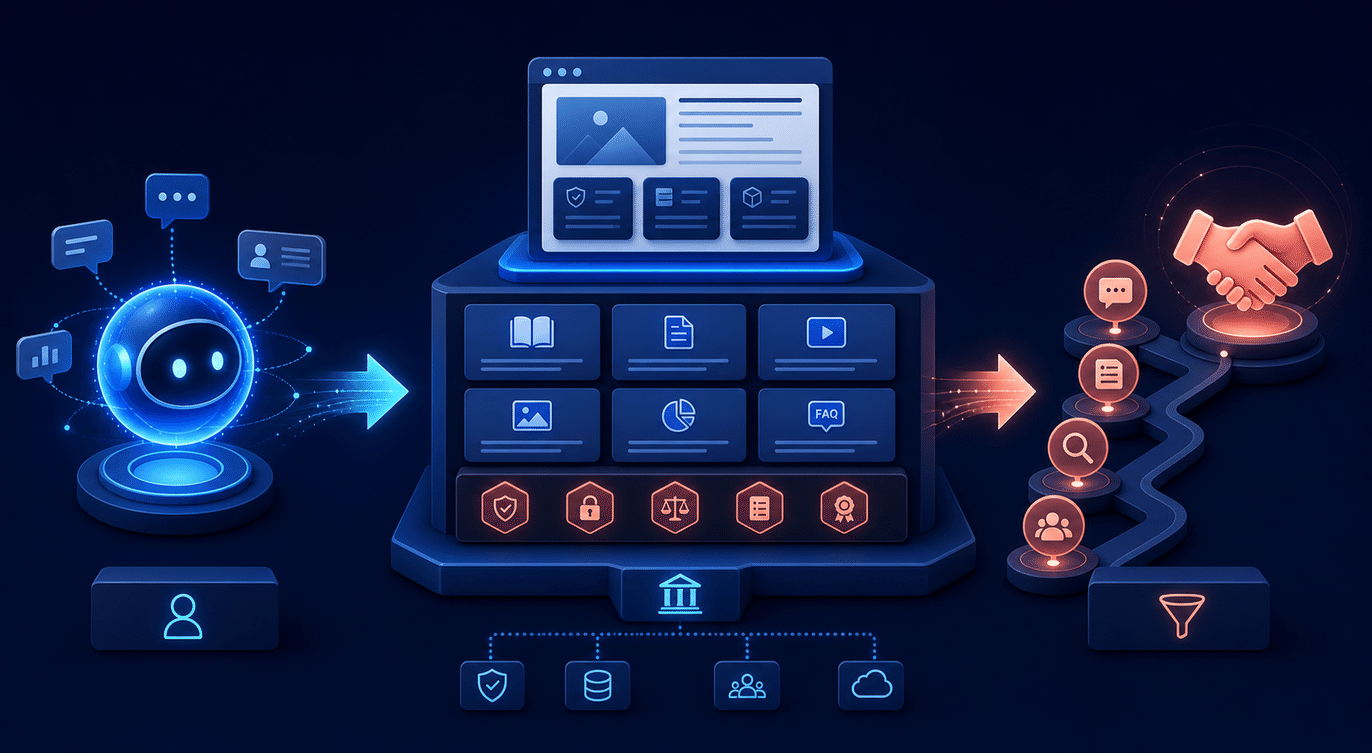
A company without a website may still get mentioned by AI. But it will struggle to be explained consistently—and struggle even more to turn that mention into a lead.
What is actually being replaced: the brochure website
Not every website deserves to survive.
If your site is a company bio, a few hero images, and a contact form nobody answers, it has little to contribute in an AI-first environment. It adds no fresh information, no ongoing proof, and no deliberate conversion path.
The role of the website needs an upgrade: from a one-off deliverable to a business asset that keeps growing.
| Old model: brochure site | New model: growth website for the AI era |
|---|---|
| Launch is the finish line | Launch begins an ongoing cycle of updates, testing, and optimization |
| Mostly says “who we are” | Answers what customers and AI actually need to know |
| Attractive pages come first | Showcase, clarity, discoverability, and conversion all matter |
| Traffic comes from ads or luck | SEO, GEO, content, branded search, and conversion paths compound together |
| Website is a cost | Website is a long-term acquisition asset |
This is where We0 AI fits. We0 AI is not just a prompt-to-page tool. It is designed to help
企业网站已经从“一个展示页面”进化为“一个机器可读的商业接口”。
企业搭建展示型网站,可以让产品上线、解释价值主张、被搜索和 AI 系统理解,并持续获取线索。
中间的运营链条很简单:搭建 → 展示 → 增长 → 线索。
先搭建。然后是呈现、内容、SEO/GEO、数据观察、页面优化,以及把流量变成询盘的转化工作。
AI 不会“相信”你的广告,它找的是可验证的商业信息
有些人把 AI 搜索当成新的流量漏洞:加几个 GEO 关键词、上传一个 llms.txt、发几十篇机翻问答式的页面,就等着被推荐。
不要太相信这件事。
Google 在生成式 AI 搜索方面的指引非常直接:生成式功能依然建立在核心搜索排名和质量系统之上。可见性仍然始于可被抓取和索引的页面,加上独特、有用、以人为本的内容。Google 也说,你不需要专门的 AI 文件或机械拼凑的内容来出现在生成式搜索中。
结论不是“SEO 回来了”——SEO 从未离开。
AI 不是网站的捷径,而是一个分发层。它提问更精准,合成信息更复杂。
如果你的网站无法清晰说明以下问题,再强的助手也只能给出模糊答复:
- 你帮谁解决什么具体问题?
- 你的产品或服务与别的选项有何不同?
- 有什么案例、数据或交付方式证明你能做到?
- 定价、市场、行业或交付方面的限制是什么?
- 买家下一步应该做什么?
很快,将不只是“人在搜网站”。浏览器代理、购物代理、采购代理可能直接检查渲染后的页面、DOM 结构和无障碍信息,替用户比较、预订甚至购买。
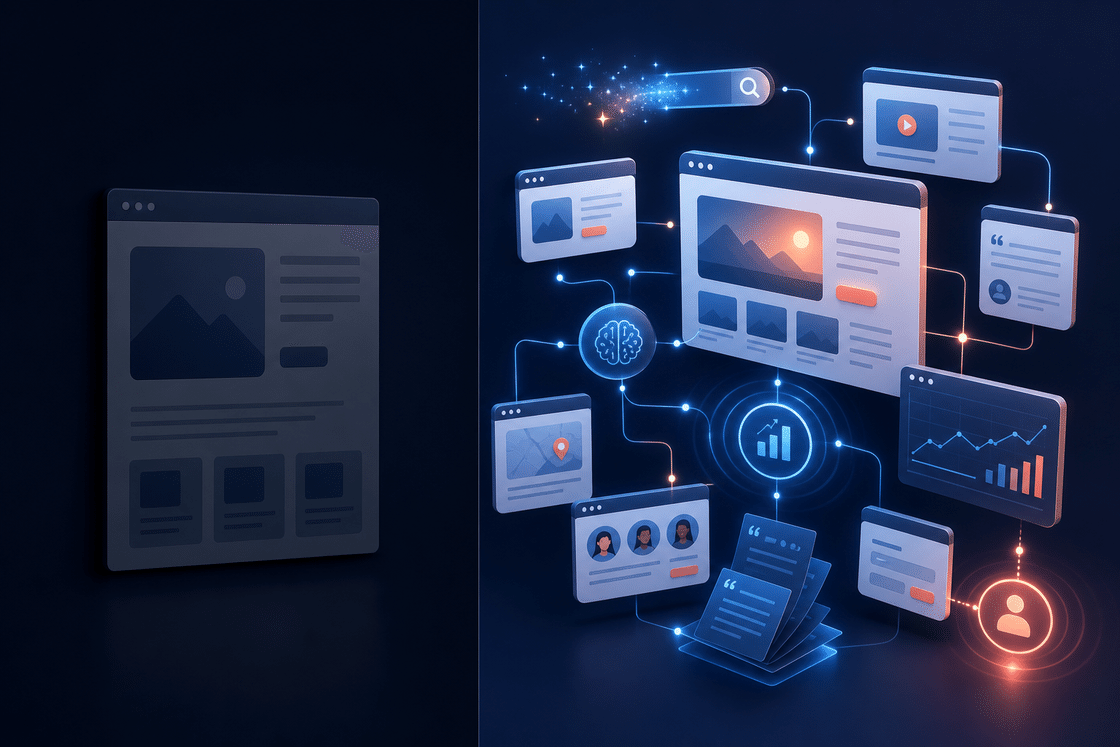
这让一件事变得清晰:网站不再是只面向人的表面;它正变成一个机器可读的商业接口。
当人人都有 AI 助手时,哪些企业更需要网站?
实际答案很简单:你的业务越需要解释、信任和比较,网站就越是不可或缺。
| 企业类型 | AI 助手改变什么 | 网站必须做什么 |
|---|---|---|
| SaaS / AI 产品 | 买家通过 AI 预筛功能和定价 | 说明产品、功能、集成、定价和证据 |
| 咨询 / 服务机构 | 买家探查能力边界和过往成果 | 展示方法论、行业经验、案例和预约路径 |
| 外贸 / B2B 企业 | 采购更依赖多语言信息和验证 | 展示规格、认证、交付能力、询盘和语言 |
| 独立开发者 | AI 能推荐工具但无法讲清你的权衡 | 提供发布页、使用场景、文档、路线图和多渠道入口 |
feedback |
| Creators / experts | Platforms drive discovery but do not build owned relationships | Bring together work, ideas, offers, subscriptions, and consultation |
The reverse is also true. If you sell a highly standardized, low-ticket item, a marketplace listing may be enough for now. But the moment you want to build a brand, raise deal size, and reduce dependence on a single platform, the question is no longer whether to have a website. It is what kind of website to build.
The future company website needs to become at least five things
1. A clear source of truth
Product details, service boundaries, proof, team information, policies, and contact details should not be scattered across ten platforms. Put essential facts on your site and keep them current.
2. A content library AI can actually understand
You do not need to write like a machine manual for a model. You do need to be plain and specific. Use meaningful headings, concrete scenarios, distinctive experience, and real evidence. Do not make AI guess what you sell through a cloud of "empower," "innovate," and "leading."
3. A showcase site with multiple entry points
Visitors may arrive from search, social media, an AI recommendation, an email, or a referral. They will not always start at the homepage. Product pages, case studies, topical pages, FAQs, and regional pages should each be able to explain and convert on their own.
4. A growth system that can be improved continuously
Publishing is not the end. Watch which pages attract attention, what questions people search for, which CTA gets clicked, and which content turns into inquiries. A site left untouched starts to look like an outdated record.
5. A lead receiver you own
Social followers, marketplace exposure, and AI mentions are not customer relationships you own. Forms, booking, trials, email subscriptions, and CRM connections are how external attention enters your actual business system.
A practical next step: do not rebuild "for AI" yet. Fix these basics first.
You do not need a robot-filled redesign. You do not need to chase every new acronym. Start with a simple, useful audit:
- State your positioning in one clear sentence: Who do you help, what problem do you solve, and why are you not just another generic alternative?
- Complete the decision pages: product or service, use cases, proof, pricing or quoting logic, FAQ, contact, and next step.
- Publish non-commodity content: frontline lessons, customer questions, delivery retrospectives, and specific opinions are worth more than a pile of generic AI posts.
- Keep the technical foundation accessible: crawlable pages, reasonable speed, mobile usability, a clear structure, and less duplication.
- Define measurable conversion actions: Do not only say "contact us." Offer stage-appropriate paths such as booking, getting a plan, reviewing cases, subscribing, or trying the product.
In the AI assistant era, a website is not simply a way for a business to be online. It is an owned place for the business to communicate real capability to both people and machines.
What can We0 AI do? Not just help you "have a
"site," but help you build a growth asset.
Most teams do not merely lack a page generator. They need help clarifying brand information and site structure, deciding which pages matter first, putting product and proof where buyers can act on them, and then improving content, SEO/GEO, traffic data, and conversion paths after launch.
That is the position of We0 AI: a showcase website growth platform that combines AI website building with ongoing optimization and growth support.
From Build to Showcase to Grow and Leads, the goal is not to ship a pretty page. It is to create an asset that can keep showing what you do, keep getting discovered, and keep generating inquiries.
If your website still lives in the "finished means finished" era, this may be the time to upgrade it.
FAQ
Will company websites be replaced when AI assistants become common?
No. AI assistants will change how people discover and compare brands, but a website remains a company-controlled source of truth, proof layer, and conversion destination. What is being replaced is the stale brochure site with unclear information.
Is SEO still necessary in the age of AI search?
Yes. Google's official guidance says generative AI features still rely on core Search indexing, ranking, and quality systems. Crawlable structure, useful original content, and strong page experience remain foundational.
Is GEO just about adding an llms.txt file?
No. Google explicitly says its generative Search features do not require special AI files or extra markup. Focus on publicly crawlable content, reliable information, and normal SEO fundamentals instead of a single trick.
Which businesses should upgrade their websites first?
Businesses that need explanation, trust, and a longer decision cycle: SaaS, B2B, exporters, consultants, agencies, creators, experts, and indie product teams.
Related Tools
- We0 AI: Build and grow your showcase website
- Google Search Console
- Google's guide to generative AI search optimization
Sources
- Meta: Personal Superintelligence for Everyone
- Google: Guide to Optimizing for Generative AI Features on Google Search
Ready to Build?
When everyone has an AI assistant, do not leave your brand to scattered platforms and someone else's summary.
Use We0 AI to turn your website into an owned asset that showcases, grows, and generates leads. From positioning and pages to content, SEO/GEO, and ongoing optimization, turn "being seen" into "being chosen."
Conclusion
Meta's vision of personal superintelligence is not a warning that company websites are about to vanish. It is a reminder that the entrance to a customer decision is changing.
AI may get to know your business before a customer does. But where it learns about you, how it explains you, why it trusts you, and where it sends a ready buyer still depend on whether you have a
清晰、可信、持续增长的网站。
因此,答案不是减少网站建设,而是打造一个配得上人工智能时代的网站。