Meta AI Can Now Call External Tools and Generate Images and Videos—Can It Replace We0.ai in Sustaining a Brand Website?
Let's get straight to the point: In the short term, no. At least, "Meta AI is great at generating" cannot be directly equated with "it can sustain a brand website."
Meta AI Can Now Call External Tools and Generate Images and Videos—Can It Replace We0.ai in Sustaining a Brand Website?
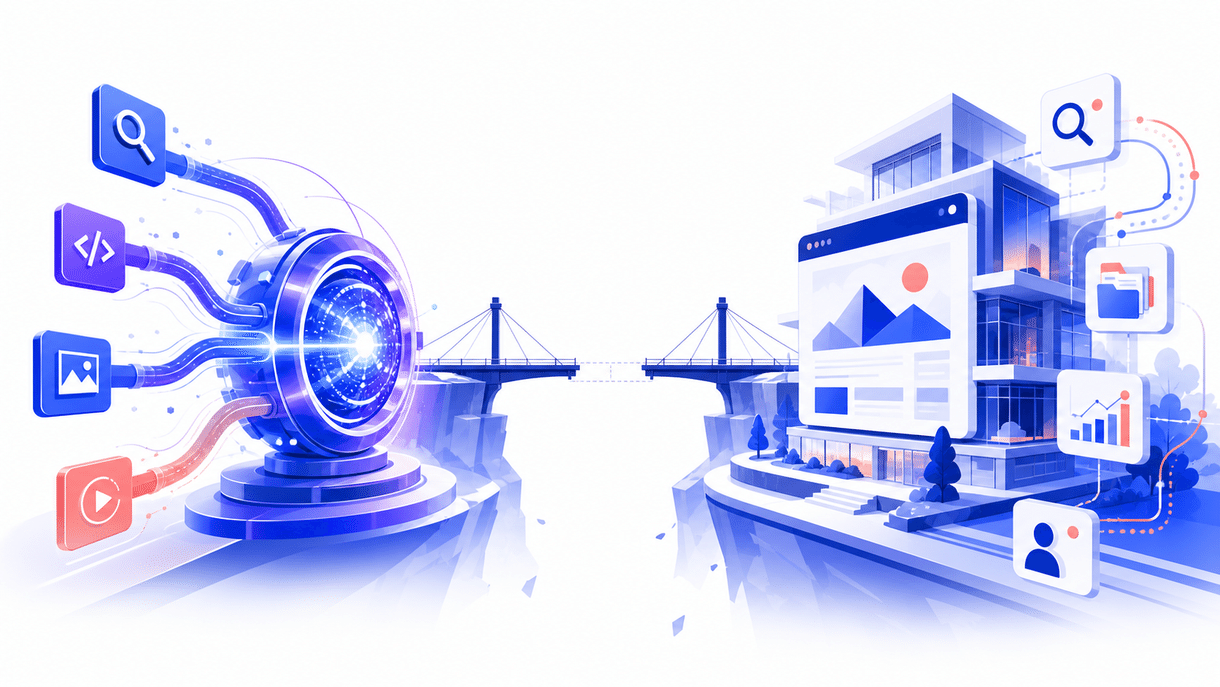
Let's get straight to the point: In the short term, no. At least, "Meta AI is great at generating" cannot be directly equated with "it can sustain a brand website."
This is not to downplay Meta AI.
On the contrary, the capabilities Meta has recently demonstrated have already made many content teams uneasy: its image model can use search and code tools, enabling self-correction during the generation process; video capabilities are also advancing rapidly. What once required switching between people, search tools, design tools, and editing tools is now increasingly achievable in a single conversation.
But a brand website is not a single piece of content, nor is it a single video, nor is it just a beautiful hero image.
A website is a long-term business system. It needs to clearly communicate the brand, incorporate products, services, case studies, and trust; it needs to be understood by Google and AI search; it requires continuous content expansion, page monitoring, conversion path optimization, and ultimately turning visitors into inquiries and customers.
Meta AI is likely to become a stronger "content producer" within this system. What We0.ai aims to solve is a different problem: making a website, from the day it goes live, a persistent asset for showcasing, growth, and customer acquisition.
Being good at creating assets is not the same as managing a website.
What Really Got Stronger with Meta AI This Time?
First, don't read the news headlines as "Meta AI can now automatically manage your entire online business." A more accurate statement is: Meta is advancing its generative models toward creative agents equipped with tool usage, reasoning, and self-correction capabilities.
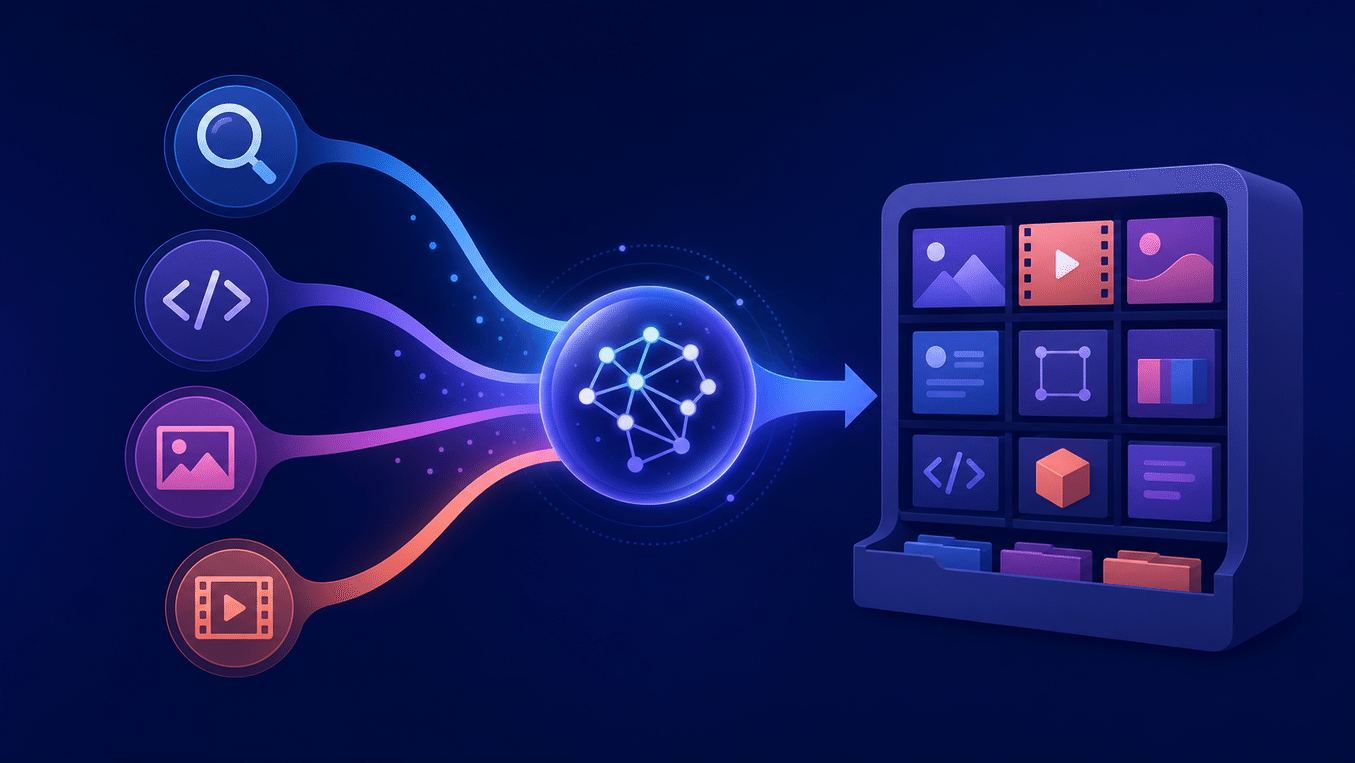
According to Meta Superintelligence Labs' July 2026 release, Muse Image is no longer just about "inputting a prompt and outputting an image." It can now call:
- Search tools: Ground information with real-time facts and visual references;
- Code tools: Generate more accurate structured visuals like charts and QR codes;
- Self-correction: Modify images when local issues are found, or regenerate or change strategies for larger problems;
- Multi-reference image composition: Process people, objects, styles, and scenes together in a single creative task.
Meanwhile, Meta has already introduced generative short video editing capabilities in its App, Meta.AI website, and Edits. Muse Video is still in preview and gradually available. This distinction matters: there's a gap between "the model demonstrates capability" and "all enterprises can stably and controllably deploy it into workflows," involving productization, permissions, integration, and governance.
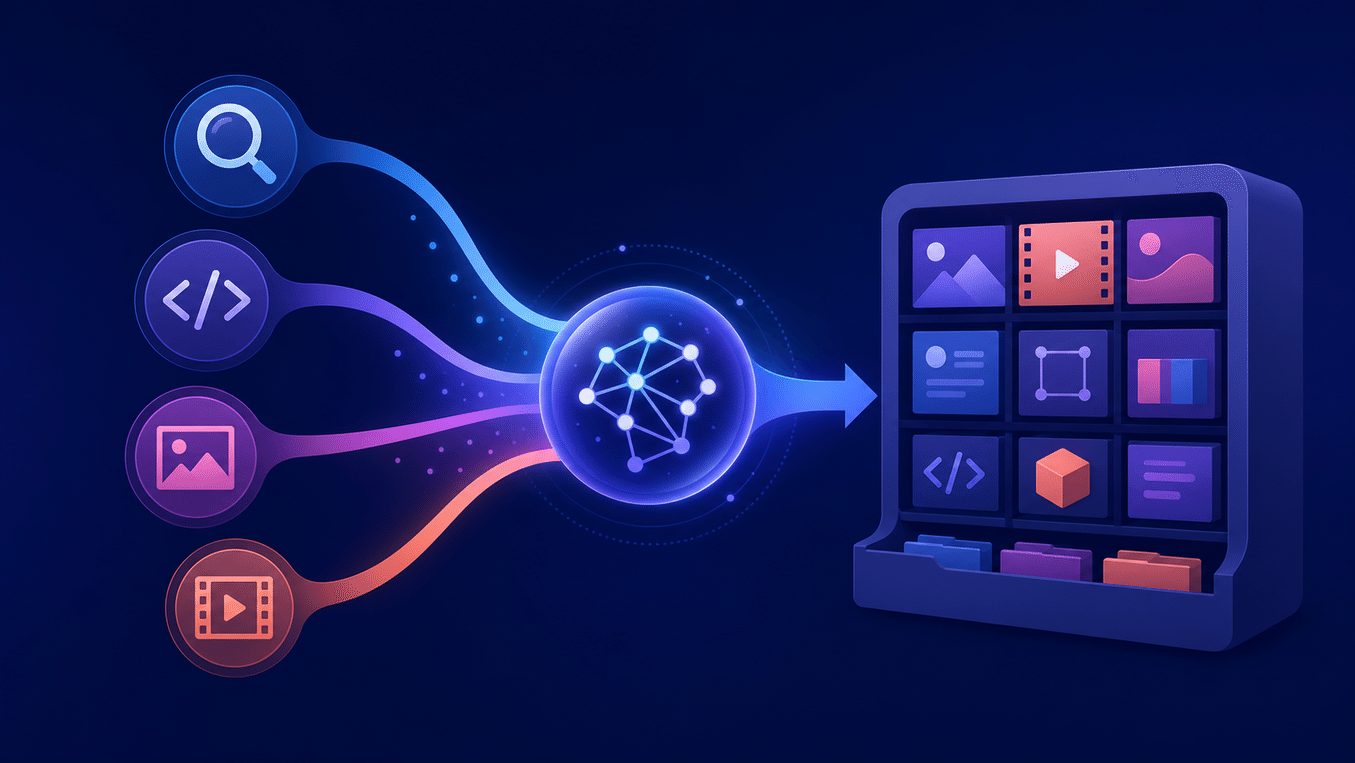
This is already enough to change the daily work of content teams. You can quickly get it to:
- Research materials and generate visual directions based on a product selling point;
- Break down a long-form topic into illustrations, social media images, and short video ideas;
- Generate first drafts for campaign pages and landing pages;
- Execute multiple rounds of visual modifications based on feedback.
For those who need to "publish content today," this is valuable. The bottleneck of asset production will indeed be significantly compressed.
But note: what's being compressed here is the chain from "idea to asset," not the full chain from "website to growth."
Why Can't a Single Image or Video Support Website Operations?
The difficulty of a brand website often lies not in the moment of generating a page.
What truly requires effort are these less glamorous tasks:
- Should the homepage prioritize brand positioning or customer results first?
- How should product pages, service pages, case study pages, and industry pages link to each other?
- Which search terms bring curiosity, and which actually generate inquiries?
- After an article goes live, how should it be supplemented, updated, and internally linked within three months?
- If traffic comes but no one fills out the form, is the issue with copy, trust, pricing, or the CTA?
- How does the same brand maintain consistency without being generic across Chinese, English, and different international markets?
None of these problems can be solved by just "generating another image."
| Dimension | What Meta AI Currently Excels At | What Sustaining a Brand Website Truly Needs |
|---|---|---|
| Creative Production | Images, videos, modifications, creative divergence | Planning an asset system aligned with brand and business goals |
| Information Retrieval | Search assistance, real-time references | Keyword prioritization, search intent, and competitive judgment |
| Page Output | Can assist in generating web or content components | Information architecture, launch quality, and long-term page iteration |
| Content | Quick drafting, multi-format adaptation | Topic matrix, content publishing, internal links, updates, and quality control |
| Growth | Provides task-specific capabilities | SEO/GEO, data monitoring, conversion optimization, and lead closure |
| Responsibility | Helps complete a single task | Sustained responsibility for the website as a long-term asset |
So the question isn't whether Meta AI is "smart enough."
The question is: Is it embedded in an operational system centered on growth results?
A model can call search, but that doesn't mean it will make keyword trade-offs for your business; it can write code, but that doesn't mean it will handle website launch processes, structured data, performance, indexing, and ongoing page maintenance; it can generate videos, but that doesn't mean it knows where to place that video on a product page to reduce cognitive load and improve conversion.
"Ability to Call Tools" vs. "Ability to Be Accountable for Results" – A Full Set of Operational Capabilities Lies Between
Tool calling is a significant leap for agents. It means the model doesn't have to rely solely on parametric memory but can go out and search, execute local operations, and obtain new context.
But a brand website needs more than just "executing actions." It requires long-term goals, contextual grounding, rule boundaries, and a review mechanism.
Think of it this way: Meta AI is like a creative colleague who reacts quickly, researches, designs, and edits videos. Give it a task, and it can produce a first draft very fast—even faster than most teams in the past.
Sustaining a website is more like equipping a business with a small growth team: someone first clarifies what you sell and why customers choose you; someone builds a site that communicates this content; someone continuously monitors search opportunities, content gaps, and page performance; someone asks periodically—"Traffic is growing, why aren't leads?"
The former solves production efficiency; the latter solves the growth loop.
This is where We0.ai positions itself. It doesn't define itself as a tool that "creates a webpage with one sentence" but instead builds a Build → Showcase → Grow → Leads loop around presentation websites:
- Build: Organize brand information, website structure, pages, and copy to create a launch-ready site;
- Showcase: Clearly present products, services, case studies, work, and trust signals;
- Grow: Continuously expand discovery opportunities through SEO, GEO, content updates, page optimization, and data monitoring;
- Leads: Direct traffic toward consultations, appointments, inquiries, or registrations—not just "impressive visitor numbers."
That's also why, upon seeing Meta AI's new capabilities, the most reasonable reaction isn't "website building and operations are about to be replaced."
Instead, it's: Website operations teams finally have a highly capable content and creative collaborator.
So, Which Part of We0.ai Will Meta AI Replace?
Let's be direct: It will replace parts of the work that are repetitive, fragmented, and reliant on asset production.
For example, in the past, you might have spent hours finding matching images, writing image captions, breaking down video scripts, and adjusting visual styles. Now, Meta AI
Products with tool-calling and multimodal generation capabilities can compress these tasks into shorter workflows.
This is not bad news for We0.ai; rather, it represents an infrastructure upgrade.
Because what customers truly pay for is never simply "someone manually created an image for me." What they pay for is: Someone putting the right content, in the right page structure, at the right time, into a position that drives business results.
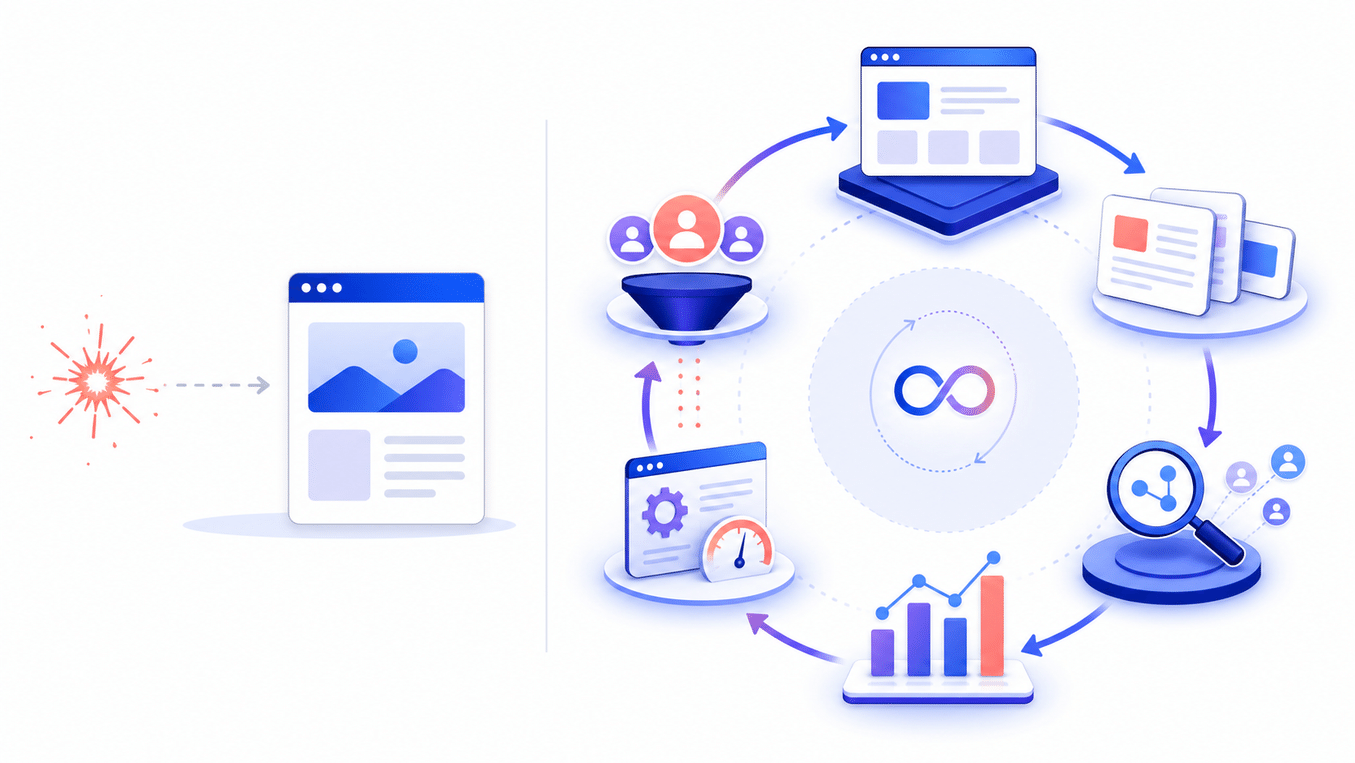
Therefore, a more realistic division of collaboration would look like this:
| Task | What Meta AI Can Handle | What We0.ai Should Handle |
|---|---|---|
| Visual Assets | Quickly generate illustrations, edit images, create video concepts, and produce multiple asset versions | Define brand asset usage scenarios, assess which assets serve page comprehension and conversion |
| Content Drafts | Assist with research, outlines, first drafts, rewriting, and multilingual variations | Plan content themes, review facts and brand voice, build sustainable content assets |
| Page Creation | Generate local components, visual inspiration, code, or web prototypes | Plan site structure, launch pages, optimize user experience and technical foundation |
| SEO/GEO | Help research topics, organize candidate keywords and materials | Align with business priorities for layout, publishing, monitoring, updates, and iteration |
| Growth Review | Summarize data, propose hypotheses | Analyze real business data to decide next steps for pages, content, and conversion actions |
[Image: An illustration of the collaboration workflow between Meta AI and We0.ai in brand website operations. A website icon on the left represents the brand's official site, while the right side features multiple blue-toned elements including data charts, code, a search icon, and user avatars, symbolizing data, technology, and users. An infinity symbol in the center represents the ongoing cycle of collaboration. The image directly corresponds to the context, visually depicting the division of tasks in visual assets, content drafts, page creation, SEO/GEO, and growth review, emphasizing their complementary roles in brand website management.]
AI will make "building things" cheaper, but it will make "knowing what to build, why to build it, and how to iterate after building" more valuable.
This is especially true for brand websites.
When anyone can generate a visually appealing page in half an hour, the page itself is no longer scarce. What becomes scarce is: Does your website have a clear positioning? Are there credible case studies? Is there a topic library that can be consistently found through search? Is there a path that guides visitors to the next step?
Choose Meta AI or We0.ai? Don't Make It an Either/Or
If you just need to quickly produce a social media short video, a visual for an event, or a batch of content assets, tools like Meta AI are worth trying first. Their speed and creative flexibility can significantly boost a small team's content output.
But if you need the following outcomes, you shouldn't just buy a "generation capability":
- A brand website that is ready for official launch, not just suitable for a demo;
- A complete information architecture for products, services, case studies, industries, and content;
- A foundation for SEO/GEO that can sustainably capture opportunities from Google and AI-powered search recommendations;
- A mechanism for continuous content updates, not just occasional posts;
- Ongoing monitoring of traffic, page performance, conversion paths, and leads;
- Someone to provide optimization actions and monthly reviews based on business goals.
Then the more fitting answer is: Use Meta AI to accelerate creation, and use We0.ai to integrate that creation into a website growth system.
This isn't being conservative; it's about placing tools where they deliver the most value.
A brand website is not a "generate and done" project. It's more like a digital asset that requires ongoing compounding returns.
A Checklist for Owners, Indie Developers, and Global Teams
Before deciding whether to hand over your website operations to an AI tool, ask yourself these 6 questions:
- Do you just want a page that "looks good," or a site that clearly explains your business and engages customers?
- Three months after launch, who will update the content, adjust the structure, and refresh case studies?
- Do you know which questions and keywords customers will use to find you?
- Can you distinguish between traffic from brand exposure and traffic with genuine inquiry intent?
- When pages aren't converting, who will diagnose the problem and run continuous experiments?
- Can your AI-generated content be accumulated into your own controllable website asset, rather than just staying within platform feeds?
If you don't have clear answers to more than three of these questions, what you're likely missing isn't "an even more powerful generation model."
What you're missing is a system for website growth and operations.
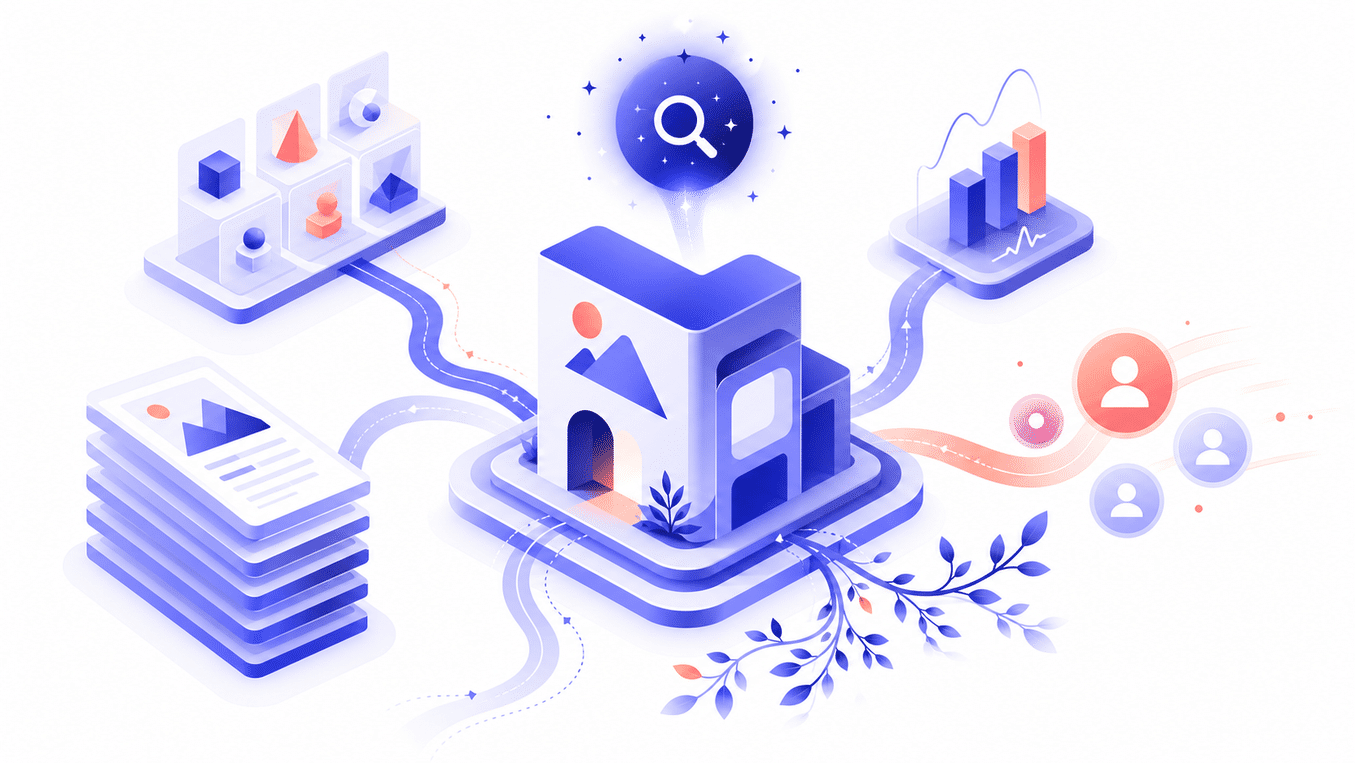
[Image: A scene depicting website growth operations. A blue building with mountain scenery and plant decorations stands in the center, with a magnifying glass icon above it. Surrounding elements include data charts, stacked files, and geometric shapes, representing data, content, and tools. On the right, three red circular icons contain avatars symbolizing users. The overall blue palette, accented with orange and white, conveys the idea of achieving website growth through the integrated use of resources and user interaction.]
FAQ
Can Meta AI really call external tools now?
According to Meta's announcement of Muse Image in July 2026, its model can invoke search and code tools to improve factual accuracy, generate charts or QR codes, and perform self-correction during generation. A key distinction is that this highlights the agentic tool-use capability of the media generation model, not that Meta AI has publicly become a universal agent capable of taking over all website backends and operational systems for enterprises.
Can Meta AI generate a brand website?
It can help generate creative concepts, copy, page prototypes, images, and even collaborate with code tools to produce a website with images. However, "generating a website" is not the same as "continuously operating a brand website." The latter involves information architecture, launch quality, SEO/GEO, content strategy, data monitoring, conversion optimization, and long-term iteration.
Can Meta AI's video capabilities be used on websites?
Yes. Product demos, brand ambiance pieces, case explanations, and FAQ videos can all become part of your website content. The prerequisite is to first determine the video's role in the user's decision-making path: Is it to explain a complex product, build trust, or drive inquiries? Video is a part of page expression, not a growth strategy itself.
What sets We0.ai apart from ordinary AI website builders?
We0.ai doesn't just help generate pages. It is designed for showcase websites, covering the entire chain from site building and brand presentation, to SEO/GEO, content production and publishing, data monitoring, growth recommendations, continuous optimization, and lead acquisition. The core is not "making a site quickly," but gradually turning the website into an asset that sustainably generates customer acquisition.
Should a small team use Meta AI or We0.ai first?
You don't have to choose. Small teams can use Meta AI to boost creative and asset production efficiency. When you need a formal brand website, search growth, content accumulation, and long-term conversion, using We0.ai to place that content into an operable website system is usually more cost-effective.
Related Tools
- Meta AI: For Q&A, creative generation, and experiencing AI features within the Meta ecosystem.
- Muse Image and Muse Video: Learn about Meta's latest image agent capabilities and video model progress.
- We0 AI: An AI-powered website building, customer acquisition, and growth platform for showcase websites, helping you move from site creation to continuous growth and lead generation.
Sources
- [Meta Superintelligence Labs: Introducing Muse Image and Muse Video](https://ai.meta.
/com/blog/introducing-muse-image-muse-video-msl/) (July 2026): Muse Image’s search, code tool invocation, and self-correction capabilities; preview progress for Muse Video.
- Meta Newsroom: You Can Now Edit Videos With Meta AI (June 2025): Generative short video editing features in Meta AI App, Meta.AI Web, and Edits.
Ready to Build?
If you already have content, images, and videos that AI can generate quickly, don’t let them scatter across different platforms.
Put them into a brand website that can showcase, be searched, continuously optimized, and capture leads.
We0.ai is for teams and individuals who need product websites, service showcases, case studies, portfolios, content sites, and multilingual sites for global audiences. It not only helps you build the site but also focuses on SEO, GEO, content, data, and ongoing optimization, making the website more like a true growth asset.
See how your website can keep growing with We0.ai →
Conclusion
Meta AI’s tool invocation, image generation, and video capabilities will continue to reshape content production. There’s little doubt about that.
But what it cannot replace—at least not yet—is a continuously running website growth system around brand, search, content, data, and leads.
Generation is the starting point; operations create compounding returns.
For brands, the best strategy isn’t choosing between Meta AI and We0.ai. It’s letting the former accelerate creation and the latter turn that speed into clearer showcases, stable organic traffic, and more real customer opportunities.
title: "Meta AI Can Now Use Tools and Generate Images & Video. Can It Replace We0.ai in Running Your Brand Website?"
chinese_title: "Meta AI 已能调用外部工具并生成图片和视频,它能否替代 We0.ai 持续运营品牌官网?"
seo_title: "Can Meta AI Replace We0.ai for Brand Website Operations?"
seo_description: "Meta AI can use tools and create images and video. But content generation is not the same as operating a brand website. Here is where Meta AI helps—and where We0.ai fits."
seo_keywords: "Meta AI, Meta AI tool use, Muse Image, Muse Video, AI image generation, AI video generation, AI website builder, brand website operations, SEO, GEO, content marketing, website growth, We0 AI"
seo_slug: "can-meta-ai-replace-we0-for-brand-website-operations"
cover_brief: "A creative AI engine and a compounding brand website ecosystem are linked by a bridge with a visible gap, showing that generation is not the same as continuous operations."
Meta AI Can Now Use Tools and Generate Images & Video. Can It Replace We0.ai in Running Your Brand Website?
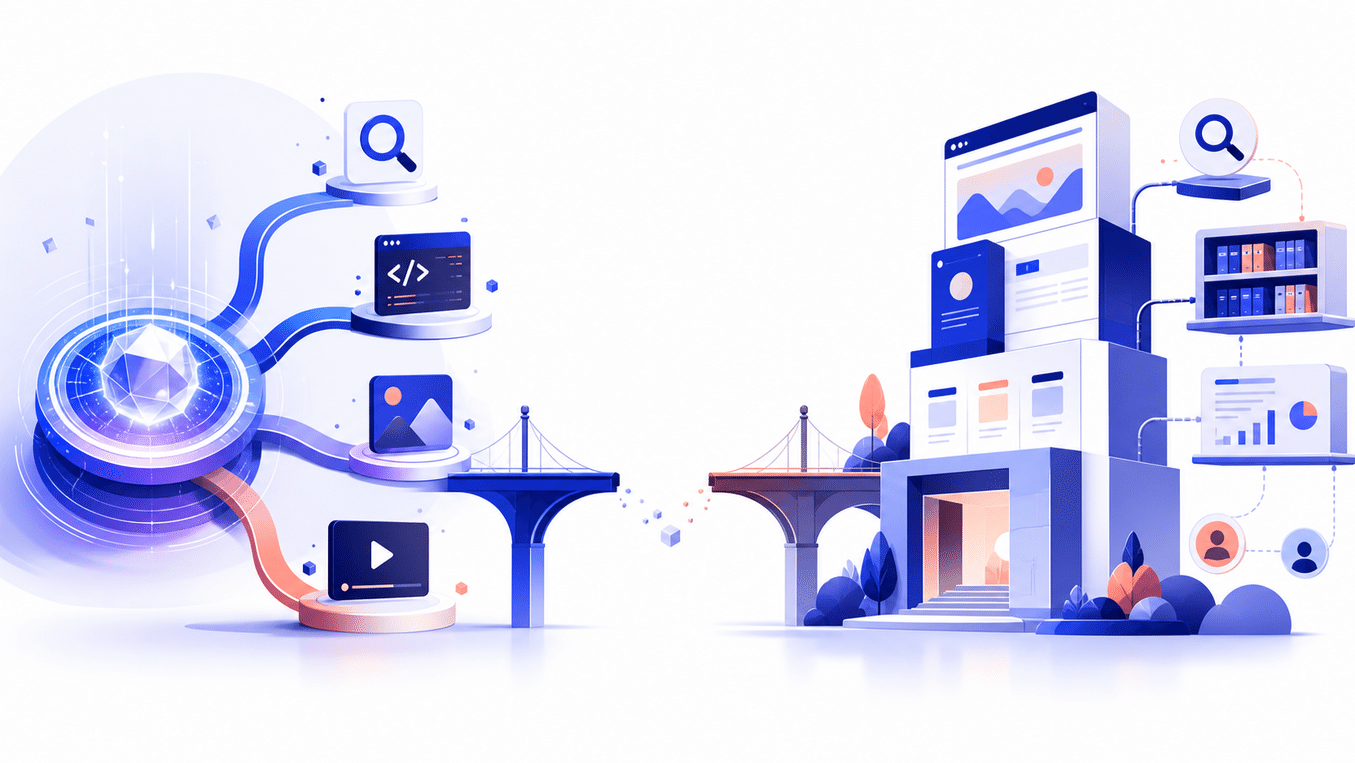
Here is the short answer: not yet. At least, you should not confuse “Meta AI is great at generating things” with “Meta AI can continuously run a brand website.”
That is not a knock on Meta AI.
Quite the opposite. Meta’s latest capabilities are enough to make a lot of content teams pause. Its image model can use search and coding tools, generate and refine assets iteratively, and Meta’s video capabilities are moving fast. Work that used to bounce between a researcher, a designer, a video tool, and a content editor is starting to look like a single conversational workflow.
But a brand website is not one article. It is not one video. And it is definitely not one polished hero image.
A website is a long-term business system. It needs to explain the brand, product, services, proof, and value. It needs to be understood by Google and AI-driven discovery. It needs new content, monitored pages, better conversion paths, and eventually, leads.
Meta AI can become a much stronger content producer inside that system. We0.ai is built to solve a different problem: **turning a
website into an asset that keeps showcasing, growing, and generating leads after launch.**
Being able to make assets is not the same as being able to run a website.
What Has Actually Changed With Meta AI?
Do not read the headlines as "Meta AI can now autonomously run every part of your business." A more accurate read is this: Meta is moving its generative models toward agentic creative systems with tool use, reasoning, and self-refinement.
In its July 2026 announcement, Meta Superintelligence Labs described Muse Image as more than a prompt-to-image model. It can use:
- Search tools to ground work in current facts and visual references;
- Coding tools to produce more accurate charts, QR codes, and structured visuals;
- Self-refinement to fix local errors, regenerate larger sections, or change tactics;
- Multi-reference composition to combine people, objects, styles, and scenes in one task.
Meta has also released generative short-form video editing in its app, on Meta.AI web, and in Edits. Muse Video itself is still in preview and rolling toward wider availability. That distinction matters: a model demonstrating a capability is not the same as a capability being productized, governed, integrated, and reliably deployed in every company workflow.
This is already enough to change a content team's daily work. You can use it to:
- Research a product angle and create visual directions;
- Turn one long-form topic into illustrations, social creatives, and short-video concepts;
- Draft assets for a campaign page or landing page;
- Iterate on visuals with fast feedback loops.
For anyone who needs content published today, that matters. The bottleneck from idea to asset is getting much smaller.
But what is being compressed here is the idea-to-asset workflow—not the full website-to-growth workflow.
Why One Image or Video Cannot Run Your Website
The hard part of a brand website rarely happens at the moment a page is generated.
The difficult questions are usually the less glamorous ones:
- Should the homepage lead with positioning or customer outcomes?
- How should product pages, service pages, case studies, and industry pages link together?
- Which search terms bring casual readers, and which ones bring prospects?
- After an article goes live, how should it be improved, expanded, and internally linked over the next three months?
- If traffic rises but form submissions do not, is the issue messaging, proof, pricing, or the CTA?
- How do Chinese, English, and market-specific pages stay consistent without becoming generic copies?
None of these are solved by simply generating one more image.
| Dimension | What Meta AI Is Better Positioned to Do Today | What Continuous Brand Website Operations Actually Require |
|---|---|---|
| Creative production | Generate images, |
video edits, variants, and ideas | Build an asset system around the brand and business objective |
| Information gathering | Search-assisted research and current references | Keyword prioritization, intent analysis, and competitive judgment |
| Page output | Assist with components, prototypes, and web content | Information architecture, launch quality, and long-term iteration |
| Content | Draft, adapt, repurpose, and localize quickly | Topic clusters, publishing, internal links, updates, and quality control |
| Growth | Help with individual tasks | SEO/GEO, monitoring, conversion optimization, and lead loops |
| Accountability | Complete a prompted task | Take ongoing responsibility for a website as an asset |
So the question is not whether Meta AI is smart enough.
The question is whether it is operating inside a system designed around growth outcomes.
A model can search the web without knowing which keywords matter to your revenue. It can write code without owning launch workflows, structured data, performance, indexing, and ongoing page maintenance. It can generate a video without knowing where that video belongs on a product page to reduce confusion or improve conversion.
Tool Use and Outcome Ownership Are Not the Same Thing
Tool use is a major leap for agents. It means a model does not have to answer from static model knowledge alone; it can search, execute bounded actions, and work with fresh context.
But a brand website needs more than execution. It needs long-term objectives, accumulated context, operating rules, and a review loop.
Think of Meta AI as an exceptionally fast creative colleague: it can research, design, and edit video. Give it a task, and it can get you to a strong first version quickly—often much faster than a traditional workflow.
Continuous website operations are closer to having a compact growth team. Someone maps what you sell and why people choose you. Someone turns that into a credible site. Someone keeps watching search opportunities, content gaps, and page performance. And someone periodically asks: “Traffic is up. Why are leads not up?”
One solves production efficiency. The other solves the growth loop.
That is where We0.ai is positioned. It is not just a “generate a webpage from one prompt” product. It is built around the Build → Showcase → Grow → Leads loop for showcase websites:
- Build: organize brand information, site structure, pages, and copy, then launch a real website;
- Showcase: clearly present products, services, work, proof, and trust signals;
- Grow: expand discovery through SEO, GEO, content updates, page optimization, and monitoring;
- Leads: turn attention into inquiries, bookings, registrations, or sales conversations.
That is why the sensible reaction to Meta AI’s new capabilities is not “website building and website operations are about to disappear.”
It is: website growth teams now have a much stronger creative collaborator.
What Part of We0.ai Could Meta AI Replace?
It is worth being direct here too: it can replace some repetitive, fragmented, asset-heavy work.
You may have spent hours finding visuals, writing illustration briefs,
Outlining video scripts or adapting a design direction. Meta AI and other multimodal tools with tool-use capabilities can compress much of that into a shorter workflow.
That is not bad news for We0.ai. It is an infrastructure upgrade.
Clients are not really paying for someone to manually create a single image. They are paying for this: the right content, in the right page structure, at the right time, placed where it can create a business result.
A practical division of work looks more like this:
| Work | Meta AI Can Help With | We0.ai Should Own More Deeply |
|---|---|---|
| Visual assets | Generate illustrations, edits, video ideas, and variants fast | Decide where assets belong for brand clarity and conversion |
| Content drafts | Research, outlines, first drafts, rewrites, and localized variants | Plan themes, verify claims, protect brand voice, and compound content assets |
| Page creation | Generate components, visual inspiration, code, or prototypes | Plan structure, launch the site, improve UX, and maintain the technical foundation |
| SEO/GEO | Help research questions, sources, and keyword candidates | Prioritize for the business, publish, monitor, update, and iterate |
| Growth reviews | Summarize data and suggest hypotheses | Read business signals and decide the next page, content, and conversion move |
AI will make “making things” cheaper. It will make knowing what to make, why to make it, and how to improve it afterward more valuable.
That is especially true for brand websites.
When anyone can create a handsome page in 30 minutes, the page itself stops being scarce. What remains scarce is clear positioning, credible proof, an evergreen topic library that can be found, and a path that moves visitors toward the next step.
Meta AI or We0.ai? Do Not Force a False Choice
If you need a social video, campaign visual, or a batch of creative assets quickly, Meta AI is absolutely worth trying. Its speed and flexibility can push a small team’s content capacity up a level.
But if you need these outcomes, do not buy only a generation capability:
- A launch-ready brand website, not just a demo page;
- Complete information architecture for products, services, cases, industries, and content;
- SEO/GEO foundations that can keep earning Google and AI-discovery opportunities;
- An ongoing content rhythm, rather than an occasional post;
- Continued attention to traffic, page performance, conversion paths, and leads;
- Optimization actions and monthly reviews grounded in business goals.
The better answer is: use Meta AI to accelerate creation, and use We0.ai to put that creation into a website growth system.
That is not conservative. It is simply putting each tool where it creates the most value.
A brand website is not a project that ends when generation ends.
这是一种旨在不断增值的数字资产。**
面向所有者、独立开发者与全球团队的决策清单
在将网站运营交给AI工具之前,请先问自己六个问题:
- 你需要的是一个好看的页面,还是一个能讲清业务、捕捉需求的网站?
- 上线三个月后,谁来更新内容、调整结构、进行验证?
- 你知道潜在客户会用哪些问题和关键词来找到你吗?
- 你能把单纯增加曝光量的流量与带有真实问询意图的流量区分开吗?
- 当某个页面无法转化时,谁来诊断问题并执行下一个实验?
- AI生成的内容是在你控制的网站上不断增值,还是会消失在平台的信息流中?
如果以上问题中有三个或更多答案仍不明确,那你可能并不需要一个略微更强的生成模型。
你需要的是一个网站增长运营体系。
常见问题解答
Meta AI 现在真的可以使用外部工具吗?
在2026年7月发布Muse Image时,Meta表示该模型可以使用搜索和编码工具来提高事实准确性,并支持图表、二维码等任务。它还能在生成过程中进行自我优化。这展示了媒体生成场景中的自主工具使用能力,但并不意味着Meta AI已公开成为一个可以接管企业所有网站后台和操作系统的通用智能体。
Meta AI 能生成品牌网站吗?
它能帮助生成概念、文案、页面原型、图像,甚至是用代码和内嵌图片构建的网站。但生成一个网站与持续运营一个品牌网站是两回事。后者涉及信息架构、上线质量、SEO/GEO、内容策略、监控、转化优化以及长期迭代。
Meta AI 的视频功能可以用于网站吗?
可以。产品演示、品牌故事、案例研究讲解以及常见问题解答片段都能改进网站体验。但首先要明确视频的角色:是解释复杂产品、增加信任,还是推动用户产生问询?视频是页面沟通的一部分,而不是增长策略本身。
We0.ai 与典型的AI网站建设工具有何不同?
We0.ai 不仅是生成页面。它是为展示型网站打造的,覆盖从网站搭建、品牌呈现到SEO/GEO、内容制作与发布、监控、增长建议、持续优化和线索获取的完整链条。重点不是更快地让网站上架,而是让网站成为持续增值的获客资产。
小团队应该从 Meta AI 还是 We0.ai 开始?
你不必只选其一。用Meta AI来提升创意和素材制作。当你需要一个真正的品牌网站、搜索增长、内容持续增值以及持续的转化工作时,就用We0.ai将这些资产整合到一个可运营的网站系统中。
相关工具
- Meta AI:Meta 的 AI 助手
experience for answers, creative work, and AI features across its ecosystem.
- Muse Image and Muse Video: Meta’s latest update on agentic image generation and video model progress.
- We0 AI: An AI website growth platform designed for showcase websites—from building to sustained growth and lead generation.
Sources
- Meta Superintelligence Labs: Introducing Muse Image and Muse Video (July 2026): Muse Image's search and coding tool use, self-refinement, and a preview of Muse Video.
- Meta Newsroom: You Can Now Edit Videos With Meta AI (June 2025): Generative short-form video editing in the Meta AI app, Meta.AI web, and Edits.
Ready to Build?
If you already have AI-generated copy, images, and video, don't leave those assets scattered across different platforms.
Put them into a brand website that can showcase, be discovered, improve continuously, and capture leads.
We0.ai is designed for teams and independent professionals building product sites, service sites, case-study pages, portfolios, content hubs, and multilingual global websites. It not only helps you launch but also supports ongoing SEO, GEO, content, data, and optimization, so the site can become a true growth asset.
See how We0.ai can keep your website growing →
Conclusion
Meta AI’s tool use, image generation, and video capabilities will continue to reshape how content is created. There is little doubt about that.
What they do not replace is a website growth system that continuously connects brand, search, content, data, and leads—at least, not yet.
Generation is the starting point. Operations are where compounding begins.
For brands, the best strategy isn’t to pick sides between Meta AI and We0.ai. Use the first to create faster. Use the second to turn that speed into clearer positioning, more durable organic discovery, and more real customer opportunities.