June 2026 AI Events Roundup: DeepSeek Funding, Open-Source Models, AI Agents, Multimodal AI, Policy, and Embodied Intelligence
A bilingual rewrite of a June 2026 AI news roundup, covering AI financing, open-source model competition, multimodal AI, AI agents, embodied intelligence, policy acceleration, developer opportunities, and how teams can turn fast-moving AI news into usable workflows and growth assets.

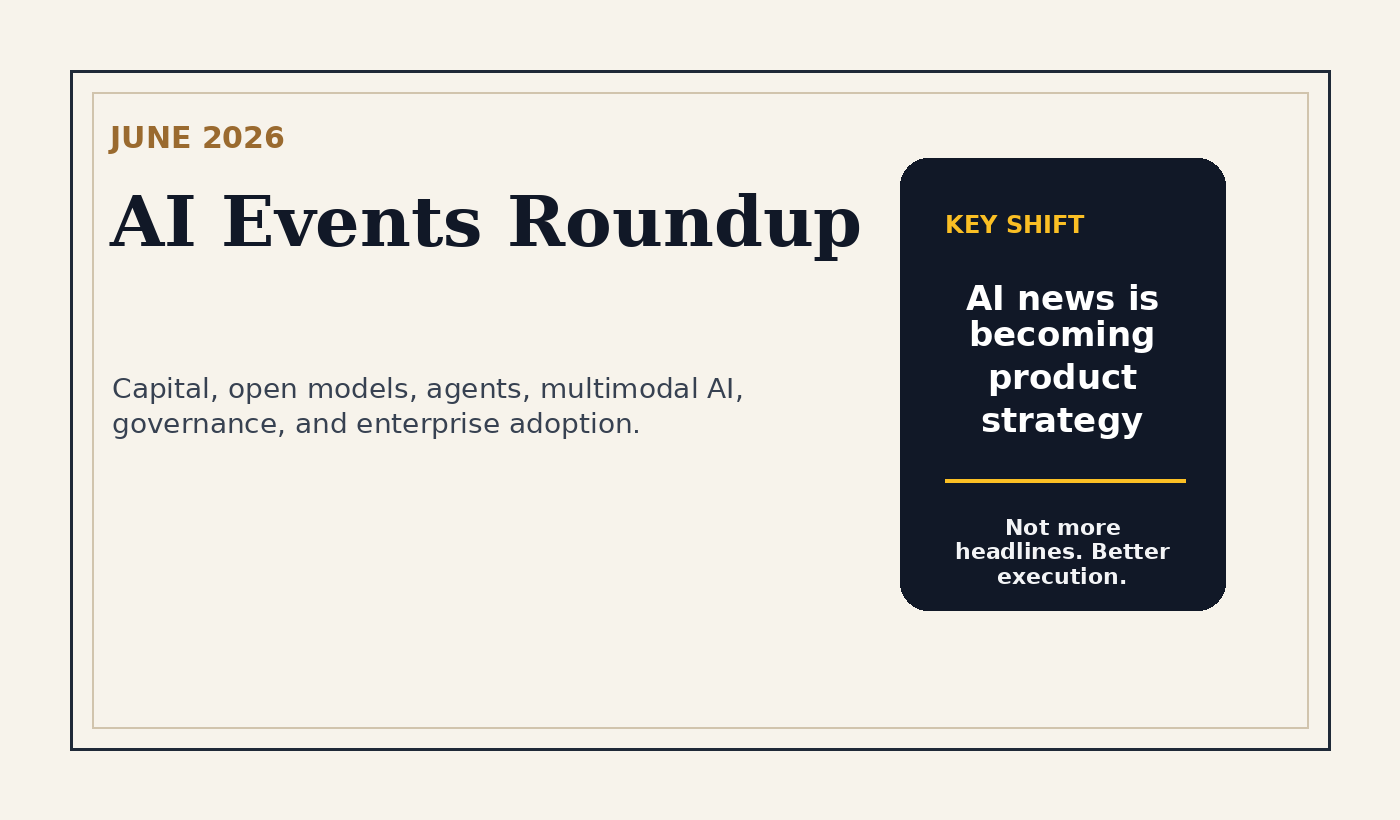
June 2026 was a dense month for artificial intelligence. Funding, open-source models, agents, embodied AI, multimodal systems, policy, and enterprise adoption all moved at the same time. On the surface, it looked like a month full of headlines. Underneath, it showed a more important shift: AI competition is moving from individual model capability toward system-level deployment.
The source article focused on DeepSeek funding, NVIDIA embodied AI research, Apple Siri and Apple Intelligence, multimodal model progress, Chinese AI policy, open-source model competition, and emerging technology reports. This rewrite turns that news flow into a practical question: what do these changes mean for developers, companies, and growth-focused teams?
1. Capital is concentrating around infrastructure
AI funding remains hot, but the meaning of that funding is changing. Large rounds are not only about marketing momentum. They support compute clusters, data engineering, inference optimization, developer tools, and ecosystem building.
• For model companies, funding becomes compute, talent, and ecosystem growth.
• For developers, stronger models lower the barrier to building useful products.
• For ordinary businesses, the key question is whether those capabilities become cheaper and more stable tools.
2. Open-source model competition benefits developers first
Open-source model competition is becoming more intense. DeepSeek, Qwen, Llama, Gemma, and other model families each emphasize different strengths: reasoning, Chinese-language capability, ecosystem maturity, lightweight deployment, and multimodal understanding.
Model direction | Main value | Best-fit scenarios |
Reasoning models | Complex task decomposition, coding, math, and decisions | Developer tools, agents, research analysis |
Chinese ecosystem models | Chinese understanding and local application fit | Enterprise knowledge bases, content, localized products |
Lightweight models | Lower deployment cost and faster response | Edge devices, private deployment, small teams |
Multimodal models | Unified understanding of text, image, audio, and video | Support, search, moderation, education, marketing |
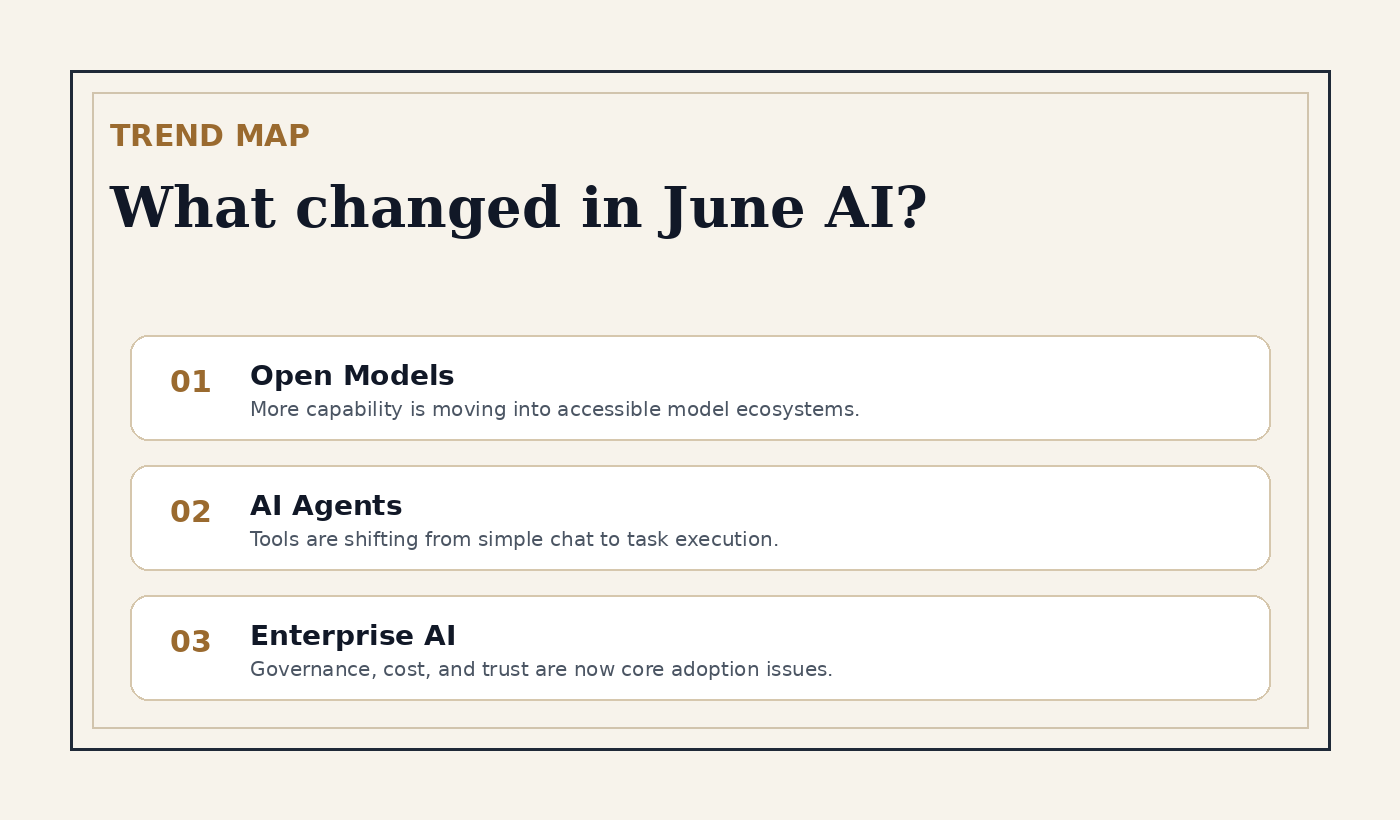
3. Agents and embodied AI: from saying to doing
Another important direction is the move from chat-based AI toward agents and embodied intelligence. AI systems are no longer only generating text, images, or code. They are entering experiments, robotics, automation flows, and real-world feedback loops.
The key question for embodied AI is not whether robots look more human. The real question is whether AI can perceive an environment, plan, act, learn from results, and remain safe and reliable in the physical world.
4. Multimodal AI changes content, search, and product experience
Multimodal AI is moving from stitched-together capability toward unified understanding. Instead of treating text, images, audio, and video as separate modules, more systems are beginning to understand and generate across modalities from the ground up.
This matters for websites and content. Users may discover information through images, video, voice, chat, or AI summaries. Companies need product pages, cases, FAQs, comparison pages, images, diagrams, and trustworthy references—not just keyword-stuffed articles.
5. Policy and governance are becoming part of AI infrastructure
As AI becomes more powerful, governance becomes more important. Policy conversations are moving beyond encouragement and into data quality, content labeling, industry adoption, compute infrastructure, risk management, and international cooperation.
Companies using AI should not only ask whether a workflow is faster. They also need to ask where the data comes from, whether outputs can be traced, whether privacy is protected, and whether the workflow fits industry requirements.
6. What this means for We0.ai and showcase websites
For We0.ai, monthly AI trend reports are not just news. They are opportunities to build content assets. AI search and AI assistants increasingly reward structured, credible, citeable content, which means a business website cannot stop at being a static page.
An effective showcase website should follow the full path: Build → Showcase → Grow → Leads. Build the website, showcase products, services, cases, and ideas, then use SEO/GEO, FAQs, comparison pages, and industry content to become understandable to search engines and AI systems.
7. Action plan for teams
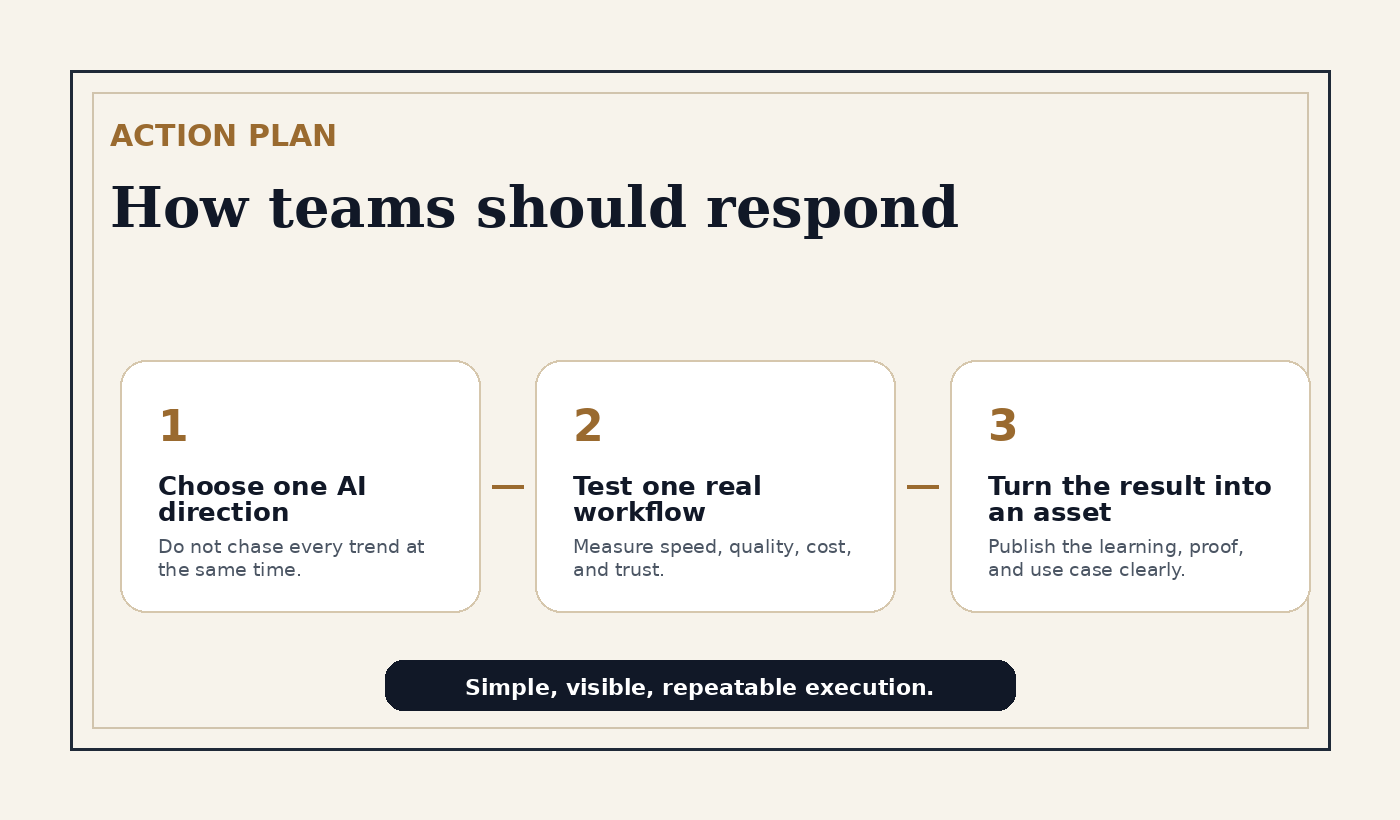
• Do not chase every headline. First identify which model, tool, or policy changes affect your product or customers.
• Turn AI news into content assets: product pages, case pages, FAQs, comparison pages, and industry trend pages.
• Validate value with a small experiment before expanding to more business scenarios.
• Create a repeatable update system because AI changes quickly and websites need to stay fresh.
The next advantage will not come from knowing more AI headlines. It will come from turning AI signals into products, content, workflows, and customer growth.
FAQ
What was the most important AI change in June 2026?
The important signal was not one event. It was the simultaneous movement of capital, open-source models, agents, multimodal AI, embodied intelligence, and governance.
Why does open-source model competition matter?
It gives developers more choices, lower costs, and more flexible technical paths across reasoning, local deployment, Chinese-language tasks, and multimodal products.
What is the difference between AI agents and embodied AI?
AI agents focus on planning and executing digital tasks. Embodied AI brings perception and action into the physical world.
How should companies respond to AI trends?
They should avoid chasing every headline, choose the most relevant business scenario, run a small experiment, and turn what works into a repeatable workflow.
How does this relate to We0.ai?
We0.ai helps turn AI trends, product value, cases, and ideas into searchable, showcase-ready website content that can support visibility and leads.
Related Tools
• DeepSeek
• Qwen
• Llama
• We0.ai
Sources
• World Economic Forum - Top 10 Emerging Technologies
• Embodied AI: From LLMs to World Models