Insta360 GO Ultra Adds Kira: An AI Voice Assistant Powered by Qwen and Gemini
Insta360 is preparing to turn the GO Ultra pocket camera into more than a hands-free recording device. The company has previewed Kira , a new AI voice assistant designed for the GO
Insta360 GO Ultra Adds Kira: An AI Voice Assistant Powered by Qwen and Gemini
Introduction
Insta360 is preparing to turn the GO Ultra pocket camera into more than a hands-free recording device.
The company has previewed Kira, a new AI voice assistant designed for the GO Ultra. Insta360’s official China website lists a “Hey, Kira” event for August 5, 2026 at 8:00 p.m., while its current GO Ultra product page already promotes voice question answering and real-time translation as part of the camera’s new AI travel features.
According to media reports citing people familiar with the project, the assistant will use different foundation models by region:
- Mainland China: Alibaba’s Qwen models.
- Hong Kong, Macau, Taiwan, and overseas markets: Google Gemini.
The reported system combines Insta360’s own voice-assistant technology with third-party multimodal models. Simple recognition and intent detection are said to happen on the device, while more complex tasks—including question answering, translation, and camera-mode changes—are handled through cloud services.
The translated response can then be played directly through the camera’s built-in speaker.
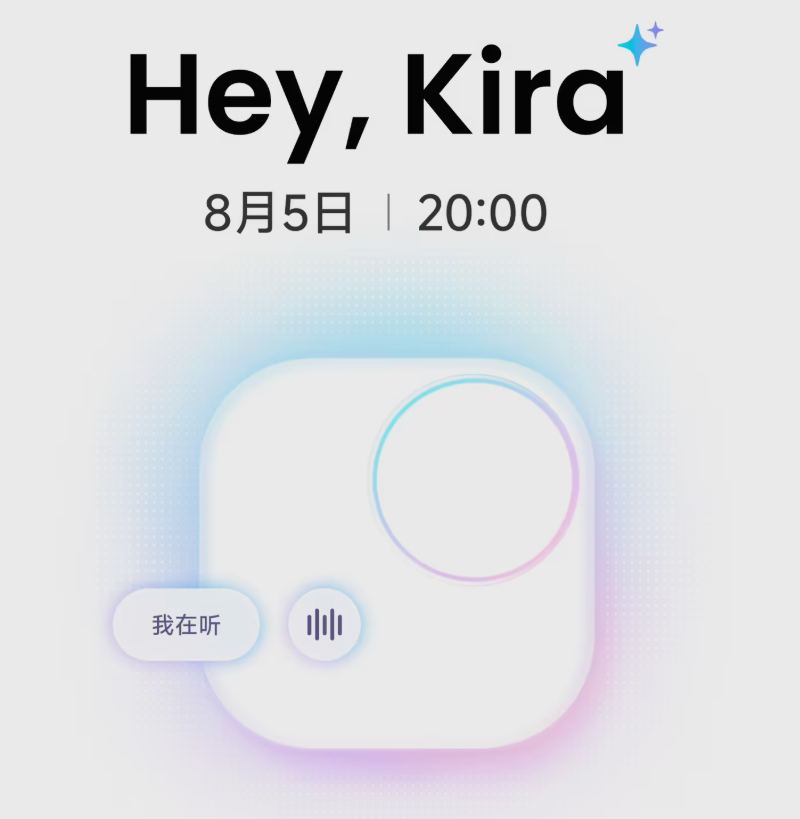
The broad Kira feature is now supported by Insta360’s official teaser and product page. The specific Qwen/Gemini routing and detailed on-device/cloud division still come primarily from media reporting; Insta360, Alibaba, and Google had not published a complete joint technical announcement when this article was prepared.
Kira Is Coming First to the GO Ultra
The GO Ultra is the first Insta360 product publicly associated with Kira.
Insta360 launched the camera globally on August 21, 2025 as the latest member of its small, wearable GO series. The standalone camera weighs 53 grams and is designed to be mounted magnetically on clothing, accessories, vehicles, or other surfaces.
Its official specifications include:
| GO Ultra Feature | Official Specification |
|---|---|
| Weight | 53g for the standalone camera |
| Maximum video resolution | 4K at 60fps |
| Sensor | 1/1.28-inch |
| Processor | 5nm AI chip |
| Maximum photo resolution | 50MP |
| Standalone runtime | Up to 70 minutes |
| Runtime with Action Pod | Up to 200 minutes |
| Fast charging | 0–80% in about 12 minutes |
| Storage | Removable microSD card, up to 2TB |
| Waterproofing | Standalone camera rated to 10m |
| Maximum field of view | 156° |
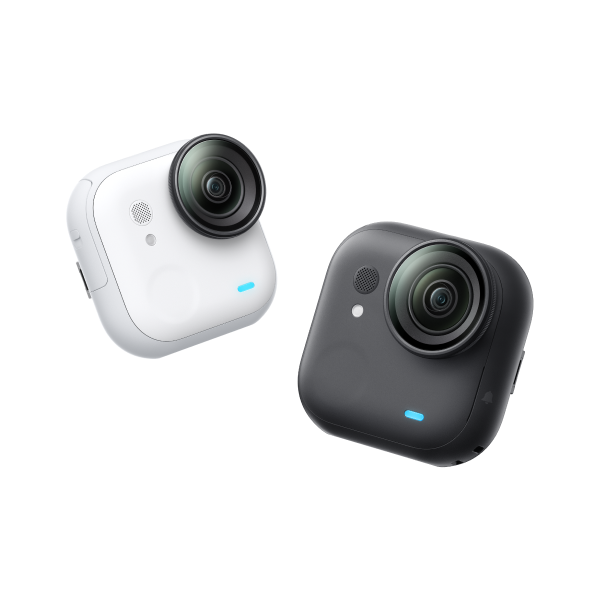
The original AIBase report states that the Standard Bundle sold for RMB 2,598 in mainland China. At the international launch, Insta360 listed the Standard Bundle at US$449.99. Current retail prices can differ by country, bundle, promotion, and date.
The camera already includes conventional voice control. Kira is intended to expand that interaction from a short list of fixed commands into a broader conversational assistant.
From Fixed Voice Commands to an AI Assistant
Before Kira, the GO Ultra’s official manual documented a conventional Voice Control feature.
It supports English, Chinese, and Japanese and recognizes commands such as:
Take a Photo
Start Recording
Stop Recording
Mark That
Shutdown Camera
That system is useful when the user’s hands are occupied, but it is command-based.
The camera listens for a known phrase and maps it to one predefined action.
Kira is presented as a different category of interaction.
Instead of only responding to fixed commands, the assistant is expected to support:
- Open-ended voice questions.
- Real-time translation.
- Spoken answers through the camera.
- More flexible camera operation.
- Context-aware requests during travel or filming.
Insta360’s current product page summarizes the experience as an AI travel buddy that can translate conversations and answer questions while the user is on the move.
This is closer to a multimodal AI assistant than an ordinary camera-control menu.
Real-Time Translation Through the Camera Speaker
Translation is the clearest confirmed Kira use case.
The workflow is designed to let the camera participate in a face-to-face conversation:
- The user activates the assistant.
- The camera captures spoken input.
- The request is recognized and interpreted.
- A cloud model produces the translation.
- The translated result is played through the camera’s speaker.
The camera therefore acts as both an input device and an output device.
A traveler would not necessarily need to:
- Take out a phone.
- Open a translation app.
- Hold the screen between two people.
- Copy text into another service.
- Pass a device back and forth.
The exact supported languages, latency, offline behavior, and conversation limits were not fully documented in the official materials reviewed for this article.
Those details should be checked after Insta360 publishes the final Kira support documentation.
Voice Question Answering on the Go
Insta360 also says the AI assistant can answer questions.
This creates a broader set of possible travel and recording scenarios.
A user might ask about:
- A location.
- An object in the environment.
- A translated phrase.
- A filming setting.
- A general travel question.
- The next camera action.
The original media report says the assistant uses multimodal model capabilities, but it does not provide enough technical detail to confirm exactly what visual context is sent to the model.
It is not yet clear whether Kira can always reason over:
- The live camera preview.
- A captured photo.
- Recent video.
- Audio only.
- Camera status and settings.
The phrase “multimodal” suggests that the system is designed to work with more than text, but the final input pipeline and privacy controls need official documentation.
Mainland China Reportedly Uses Alibaba Qwen
The regional deployment strategy is one of the most notable parts of the report.
For mainland China, Kira is expected to use Alibaba’s Qwen model family.
Qwen includes language, vision, audio, translation, coding, reasoning, and agent models. Alibaba provides both open-weight models and hosted APIs through its own platforms.
This makes Qwen a practical foundation for a camera assistant that may need to:
- Understand natural spoken requests.
- Interpret visual context.
- Translate languages.
- Produce concise answers.
- Trigger tools or camera functions.
The media report describes the cooperation as a combination of:
Insta360 self-developed assistant framework
+
Qwen multimodal model capabilities
That wording suggests Insta360 is not simply placing a generic Qwen chat interface inside the camera.
Instead, the company appears to be building its own product layer around the model, including:
- Wake-up and voice interaction.
- Device control.
- Intent routing.
- Camera-specific tools.
- Regional cloud access.
- Spoken output.
Alibaba had not published a detailed technical case study identifying the exact Qwen model used by Kira when this article was prepared.
It is therefore safer to say that the mainland version is reported to use Qwen, rather than naming a specific Qwen checkpoint or API.
Other Regions Reportedly Use Google Gemini
For Hong Kong, Macau, Taiwan, and international markets, media reports say Kira will use Google Gemini.
Gemini is Google’s multimodal model family and supports combinations of text, images, audio, video, and tools across Google’s consumer and developer products.
The regional split is understandable from an infrastructure perspective.
A global hardware company must account for:
- Model availability.
- Network access.
- Data residency.
- Latency.
- Language coverage.
- Regulatory requirements.
- Commercial agreements.
- Regional cloud infrastructure.
Using one model provider in mainland China and another in international markets can reduce availability and compliance problems.
However, the final model version, endpoint, data-handling policy, and regional coverage have not been published in a complete official Kira specification.
The report should not be read as confirmation that every overseas GO Ultra request is sent to one particular public Gemini model.
A Hybrid On-Device and Cloud Architecture
People familiar with the project describe Kira as a hybrid system.
Some work happens on the GO Ultra itself, while more demanding model tasks are sent to the cloud.
Reported On-Device Tasks
The report says the device handles:
- Voiceprint or speaker recognition.
- Initial intent detection.
- Local preprocessing of voice instructions.
Keeping early processing on the device can help with:
- Faster wake-up.
- Lower latency.
- Reduced unnecessary cloud requests.
- Basic identity or command filtering.
- Continued access to simple camera controls.
Reported Cloud Tasks
The cloud is said to handle:
- Open-ended question answering.
- More complex intent understanding.
- Camera-mode changes requiring agent logic.
- Translation.
- Multimodal model processing.
A cloud model has much more compute than a 53g camera.
It can support stronger language understanding and more complex reasoning without requiring a large local model to fit inside the device.
Why the Split Matters
A hybrid design balances several constraints:
| Constraint | On-Device Processing | Cloud Processing |
|---|---|---|
| Response latency | Better for simple tasks | Depends on network |
| Compute capacity | Limited | Much larger |
| Offline availability | Possible for selected features | Usually unavailable |
| Privacy | Data can stay local | Data may leave device |
| Model quality | Smaller local systems | Frontier multimodal models |
| Power use | Consumes camera battery | Shifts model compute to server |
The exact division remains reported rather than fully documented by Insta360.
Users should wait for the official privacy and support pages before assuming which audio, images, or device information stay local.
The Camera Becomes an AI Hardware Interface
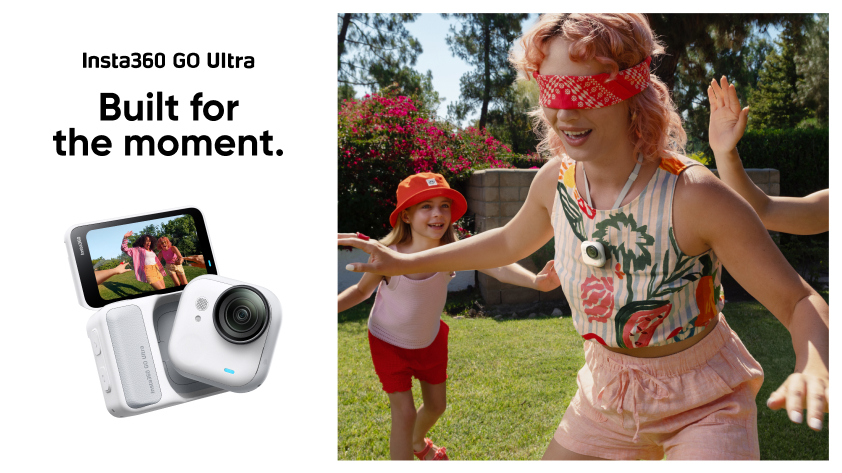
The GO Ultra was originally designed around hands-free image capture.
Its magnetic form factor makes it useful for situations in which the user cannot conveniently operate a phone or touchscreen:
- Cycling.
- Running.
- Hiking.
- Skiing.
- Family recording.
- Travel.
- First-person filming.
- Action sports.
Voice interaction fits that product shape.
A camera worn on the body already has:
- A view of the environment.
- Microphones.
- A speaker.
- A processor.
- A battery.
- A network connection through its ecosystem.
- Access to camera settings and recording modes.
Kira turns those components into an interface for an AI service.
The important change is not that the camera contains a full frontier model locally.
It is that the camera becomes a dedicated sensor-and-control endpoint for models running across the device and cloud.
Why a Camera Assistant Is Different From a Phone Assistant
A smartphone can already provide translation and voice Q&A.
Kira’s value depends on reducing friction in the specific moment when the camera is being used.
The User May Already Be Wearing the Camera
A GO Ultra can be attached to clothing or an accessory.
The user does not need to retrieve another device before speaking.
The Assistant Can Potentially Control Recording
A phone assistant may answer a question, but it does not automatically understand the camera’s current mode or recording state.
Kira is intended to connect AI reasoning with camera controls.
The Camera Is Already Pointed at the Scene
A wearable camera may have more useful visual context than a phone stored in a pocket.
Whether Kira uses that live context in every interaction has not yet been officially explained.
Spoken Output Keeps the Workflow Hands-Free
The built-in speaker can return an answer or translation without requiring the user to read a screen.
This can be useful during movement, although audio output may be less practical in noisy or private environments.
Kira Is Part of a Broader AI Upgrade
Insta360’s current GO Ultra product page presents the voice assistant alongside another AI feature called Moments Pro.
The page says the assistant can handle voice Q&A and translation, while Moments Pro can turn captured footage into a finished travel film.
This reflects two different uses of AI in camera hardware:
AI during capture
- Voice requests.
- Translation.
- Questions.
- Camera operation.
AI after capture
- Selecting clips.
- Editing.
- Creating highlight films.
- Organizing memories.
The GO Ultra already includes a 5nm AI chip for image processing and features such as PureVideo and automated editing in the Insta360 app.
Kira extends AI from image enhancement and post-production into real-time interaction.
What Is Officially Confirmed
The available information comes from several different levels of evidence.
| Claim | Current Status |
|---|---|
| Insta360 has previewed “Hey, Kira” for August 5 | Confirmed by official Insta360 materials |
| GO Ultra is the first product associated with the assistant | Confirmed by official teaser and product page |
| The assistant supports voice Q&A | Confirmed on the official product page |
| The assistant supports real-time translation | Confirmed on the official product page |
| Answers or translations can be played through the camera | Reported by media; consistent with the product design |
| Mainland China uses Alibaba Qwen | Reported by media and people familiar with the project |
| Other regions use Google Gemini | Reported by media and people familiar with the project |
| Voiceprint recognition and intent detection run locally | Reported by media |
| Complex Q&A, mode switching, and translation run in the cloud | Reported by media |
| A specific Qwen or Gemini model version has been named | Not confirmed |
| Kira works fully offline | Not confirmed |
| Kira processes the live camera feed for every question | Not confirmed |
| All Kira features are available in every region and language | Not confirmed |
Privacy and Connectivity Questions Still Need Answers
An AI camera assistant can process sensitive information.
Depending on the final design, Kira may interact with:
- Voice recordings.
- Speaker identity.
- Location-related questions.
- Visual scenes.
- Nearby people.
- Translation conversations.
- Camera settings.
- Account and device identifiers.
Before using the feature in sensitive environments, users should review Insta360’s final documentation on:
- Which data is uploaded.
- Whether audio is retained.
- Whether images or video frames are sent to the cloud.
- Which model provider receives the request.
- Regional storage.
- Account requirements.
- Deletion controls.
- Child and bystander privacy.
- Enterprise or professional-use restrictions.
A hybrid architecture can improve privacy when local processing filters unnecessary data, but “on-device” does not mean the complete interaction stays on the camera.
The reported design explicitly sends complex work to cloud models.
Existing Voice Control May Continue to Matter
Kira should not be confused with the camera’s existing fixed-command system.
Simple voice control can be useful because it may offer:
- Predictable commands.
- Lower latency.
- Less network dependence.
- A smaller privacy footprint.
- Easier operation in repeated filming workflows.
A cloud AI assistant provides more flexibility but introduces:
- Network delay.
- Connectivity requirements.
- Model uncertainty.
- Greater privacy considerations.
- Possible usage limits.
The ideal product may retain both layers:
fixed local command
→ immediate camera action

open-ended Kira request
→ AI interpretation and cloud processing
Insta360’s final release notes should clarify which commands remain local and how users switch between conventional voice control and Kira.
What to Check After the Official Launch
Because the AIBase article was published before the August 5 evening event, several practical details were still unavailable.
Users should check the final firmware and support pages for:
- Firmware version
- Supported regions
- Supported languages
- Account and app requirements
- Network requirements
- Activation phrase
- Translation limits
- Data and privacy controls
- Battery impact
- Supported camera modes
- Whether the standalone camera or Action Pod is required
- Availability on future Insta360 products
These details will determine whether Kira is a useful daily feature or mainly an early demonstration of AI-camera integration.
常见问题
What is Kira on the Insta360 GO Ultra?
Kira is an AI voice assistant being introduced for the GO Ultra pocket camera. Insta360 says it supports voice question answering and real-time translation, expanding beyond the camera’s existing fixed voice commands.
When is the Kira update launching?
Insta360’s official China website promoted a “Hey, Kira” event for August 5, 2026 at 8:00 p.m. The AIBase report was published earlier that morning, so final firmware details were not yet available in the source.
Does the GO Ultra use Alibaba Qwen?
Media reports say the mainland China version of Kira uses Alibaba’s Qwen multimodal model capabilities. Insta360 and Alibaba had not published a complete joint technical announcement naming the exact Qwen model when this article was prepared.
Does Kira use Google Gemini outside mainland China?
Reports say Hong Kong, Macau, Taiwan, and overseas versions use Google Gemini. The precise Gemini model, endpoint, and complete regional availability have not been officially documented.
Can the GO Ultra translate conversations aloud?
Insta360’s official product page promotes real-time translation, and media reports say translated results can be played through the camera speaker. Supported languages and operational limits should be checked in the final Kira documentation.
Is Kira the same as GO Ultra Voice Control?
No. Existing Voice Control recognizes a limited set of fixed commands in English, Chinese, and Japanese. Kira is intended to provide broader natural-language Q&A, translation, and more flexible assistant behavior.
Does Kira work without an internet connection?
The reported architecture performs some recognition and intent work on the device but sends complex tasks to the cloud. Full offline Kira operation has not been confirmed.
Which GO Ultra hardware supports Kira?
The source and official teaser identify the existing GO Ultra series as the first supported hardware. Users should verify the required firmware, region, app version, and Action Pod requirements after the final release.
相关工具
- Insta360 GO Ultra: The compact 4K60 pocket camera receiving the Kira AI voice assistant.
- Insta360 App: Insta360’s mobile application for camera connection, firmware updates, editing, and content management.
- Qwen: Alibaba’s multimodal AI model and assistant ecosystem reportedly used by Kira in mainland China.
- Qwen API Platform: Alibaba’s official API platform for building applications with Qwen models.
- Google Gemini: Google’s multimodal AI assistant and model ecosystem reportedly used by Kira in international markets.
- Google AI for Developers: Official Gemini API and developer documentation.
Related Links
- Insta360 GO Ultra Official Product Page: Current features, specifications, bundles, and the official AI travel-assistant description.
- Official GO Ultra Launch Article: Insta360’s original product announcement covering hardware, imaging, battery, storage, and launch pricing.
- GO Ultra Voice Control Documentation: Official supported languages and fixed voice commands before Kira.
- GO Ultra FAQ: Official operational guidance for the camera and Action Pod.
- Qwen Official Site: Alibaba’s official Qwen product and research portal.
- Qwen Multilingual Translation Overview: Official information about Qwen’s multilingual translation model family.
- Gemini API Documentation: Google’s official documentation for Gemini multimodal models and APIs.
Summary
Insta360 is bringing the Kira AI voice assistant to the GO Ultra, adding open-ended voice Q&A and real-time translation to a camera that previously relied mainly on fixed voice commands.
The official teaser and GO Ultra product page confirm the broad assistant experience. Media reports add a regional model strategy: Qwen in mainland China and Gemini in Hong Kong, Macau, Taiwan, and overseas markets.
The reported architecture combines Insta360’s own assistant framework with local recognition and cloud-based multimodal processing. That approach allows a 53g pocket camera to access stronger models without trying to run the entire assistant locally.
Important details remain pending, including model versions, supported languages, offline limits, data handling, and the exact camera controls available through Kira.
The key change is that GO Ultra is evolving from a camera controlled by voice commands into an AI hardware endpoint that can listen, translate, answer, and potentially operate the camera through natural conversation.