How to Build a Business Website That Actually Gets Customers | AI Website Builder, SEO, and Lead Generation Guide
How do you build a business website that actually gets customers? This guide is not just about launching a website. It explains how to turn your site into a business asset that showcases your products, services, case studies, and expertise, attracts traffic from search engines and AI recommendations, and converts visitors into leads and customers. It is especially useful for export businesses, small businesses, SaaS companies, consultants, and service providers. It also explains why We0.ai is building an AI showcase website growth platform rather than a basic AI website builder.
How to Build a Business Website That Actually Gets Customers
When people start building a website, the first thought is usually:
Just get it live first.
But that is not really the problem anymore. The real question now is: once your site goes live, will it actually bring you customers?
That gap is bigger than most people think.
A lot of websites get launched. The domain is connected. The design looks fine. And then three months later: no inquiries, no sign-ups, no leads, no meaningful organic traffic.
That happens all the time.
Especially for export businesses, small businesses, SaaS teams, and consultants, a website should not just be a digital storefront. It should be the part of your online funnel that speaks for you 24/7, filters intent, and catches demand while you are not there.
So the real question is not:
How do I build a website?
It is:
How do I build a website that explains what I do, showcases my value, and helps turn visitors into customers?
That is the real point.
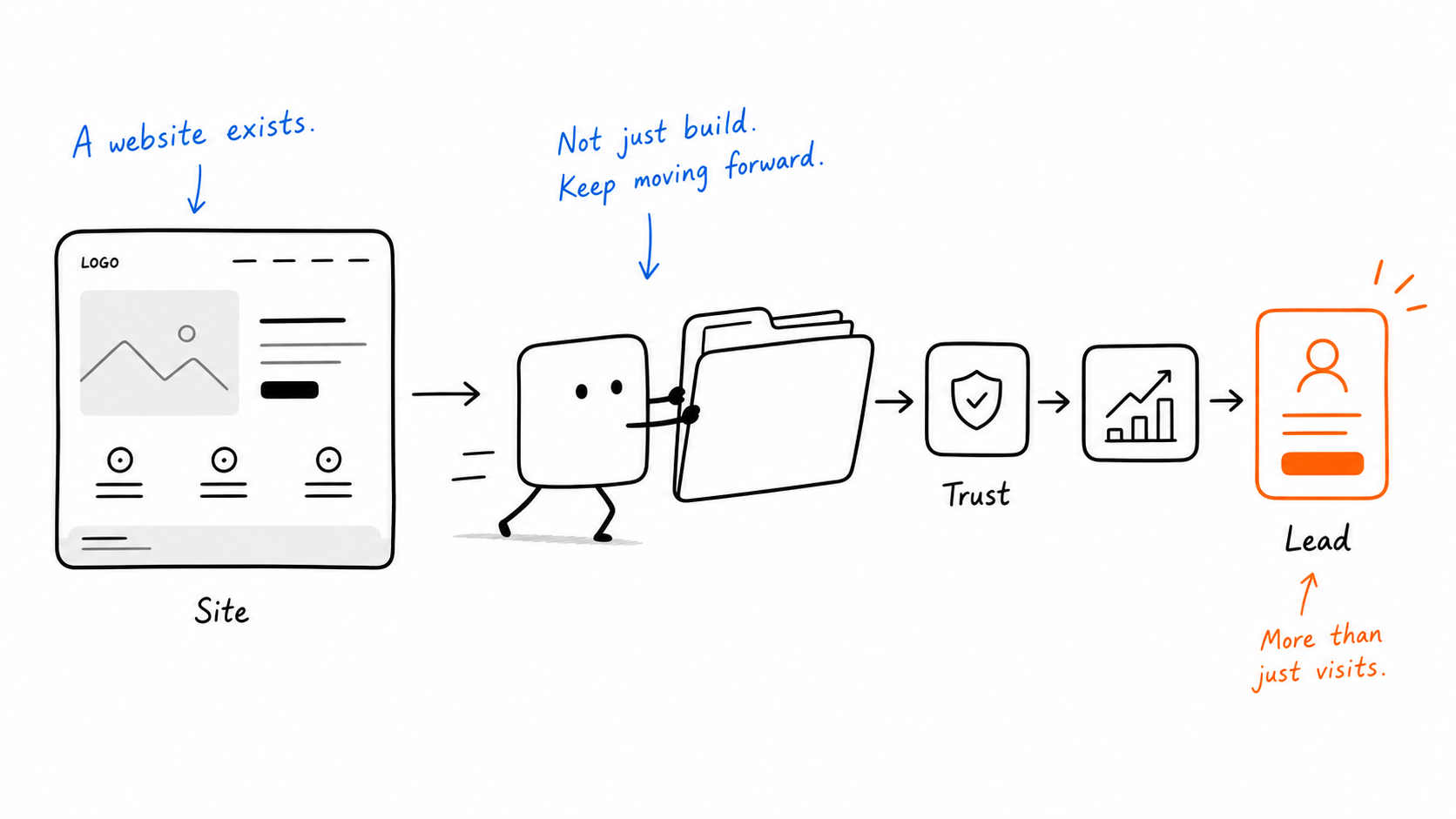
Figure 1: The problem is not whether a site is live. The problem is whether it starts working after it goes live.
The real answer: a customer-winning site is not a design project, it is a growth system
That sounds a bit blunt, but it is true.
Most weak websites do not fail because the tools are bad. They fail because from day one, they were treated like a design project, not a customer acquisition system.
Put simply:
Most people build website appearance, not website outcomes.
So the first conversations usually sound like this:
Which template should we use?
What visual style should we choose?
Should the homepage feel more premium?
Do we need stronger motion?
Should it look more global or polished?
None of that is useless. But honestly, none of it comes first.
Your visitors are not here to score your taste. They are here to decide one thing, very fast:
Are you worth paying attention to, asking about, or contacting?
If your site does not answer the basic questions clearly, even a beautiful design will struggle to convert:
Who are you?
What exactly do you offer?
Who is it for?
Why should I trust you?
What should I do next?
One of the biggest problems with business websites is this:
the visitor still has to guess.
And once people start guessing, conversion starts dropping.
That is also why We0.ai should not be understood as just another AI website builder.
For most businesses, the real need is not “generate a page a little faster.” And it is definitely not “make a homepage screenshot in 30 seconds.” What they actually need is the full chain:
Build -> Showcase -> Grow -> Leads
Which means:
Build the site
Show the product, service, work, or case clearly
Help search engines and AI understand and recommend it
Turn traffic into inquiries, sign-ups, and customers
That chain is what makes a business website valuable.
Why so many websites go live and still do nothing
Because they were never built around customer logic in the first place.
This happens all the time across export sites, SaaS sites, and consulting sites.
Common problem on export business websites
The homepage starts with company history, factory size, vision statements, and corporate language. That is not technically wrong. But for a first-time visitor, that is usually not what matters most.
What they want to know first is:
What do you sell?
What use cases fit?
Can you customize?
Do you have real examples?
How fast can you deliver?
How do I contact you?
Common problem on SaaS websites
Too many slogans. Too much abstract positioning. Too many lines about redefining productivity or transforming workflows.
It sounds impressive for a second, but after reading it, people still do not know:
What problem does this actually solve for me?
Common problem on consultant and service websites
They talk a lot about being experienced, strategic, or premium, but they still do not make the basics clear:
Who do you help?
What kind of problems are you best at?
How do you deliver the work?
What have you done before?
If I want to work with you, what happens next?
So when a website does not convert, it usually is not because the team lacks technical skill. It is because from the first screen onward, the site was not built around helping the customer understand and act.
It may not look bad. It may even look “professional.” But often that kind of professional is built for peers, not for customers.
A site that gets customers should make 5 things clear on the homepage
If you want to move fast and still get it right, do not overcomplicate it. If you get the homepage right, you avoid a lot of expensive mistakes.
A real business website should make these five things clear right away:
1. Who you are
Do not make it vague. Say clearly what you do and who you do it for.
2. What you offer
Is it a product, a service, a solution, a custom engagement, or a platform? Do not make the reader summarize it for themselves.
3. What problem you solve
This is not about listing features. It is about why someone would need you in the first place.
4. Why you are credible
Cases, clients, outcomes, proof, samples, delivery experience all work better than self-praise.
5. What the next step is
Should they book a demo, send an inquiry, contact you directly, or sign up? The action has to be clear.
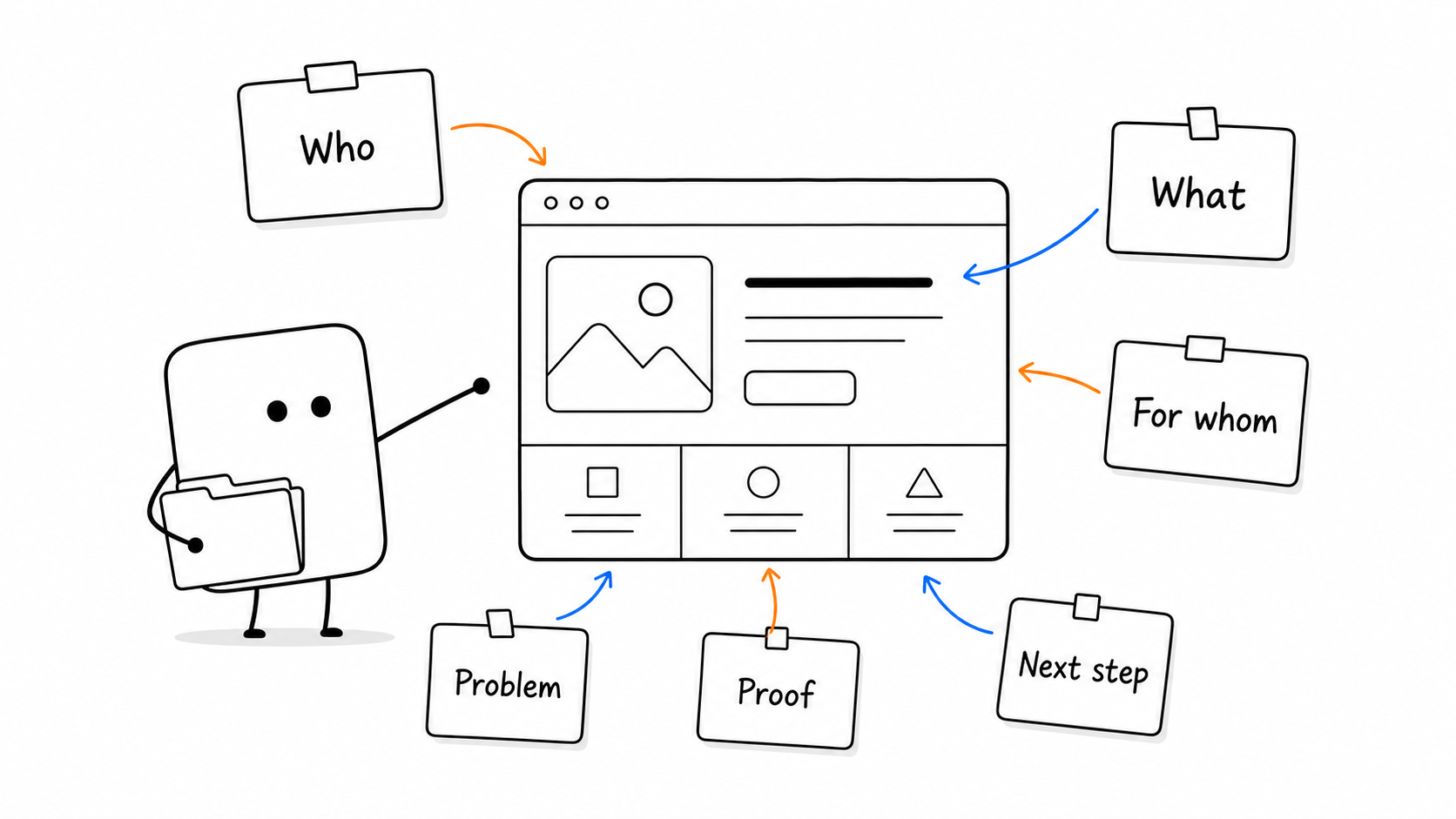
Figure 2: The most valuable thing on a homepage is not visual polish. It is clarity.
If the goal is customer acquisition, these are the pages you need to get right first
Do not start with 20 pages. Get the key pages right first.
Homepage
It has one job:
Make a stranger want to keep going.
Product or service page
This is not where you talk in circles. This page should answer:
What exactly do you provide?
Who is it for?
How does delivery work?
What makes it different?
Case study or showcase page
This page matters a lot.
Today, many businesses do not lack an introduction. They lack showcase.
What does that mean?
Show what you built
Show the end result
Show real scenarios
Show that you do not just talk well, you have actually done the work
That is also why We0.ai keeps emphasizing Showcase.
A lot of people do not need one more demo page. They need a site that can truly showcase their product, service, cases, work, and credibility.
That difference is huge.
A demo says: look, I can build this.A showcase says: look, I have done this, and I might be worth talking to.
FAQ
FAQ is not filler. A lot of the time, it is a conversion page.
It removes hesitation for users, and it also helps SEO, GEO, and AI search systems understand your site better.
About
Not for poetry. For trust.
Contact / CTA
You need to close with action. Otherwise, a lot of your message goes to waste.
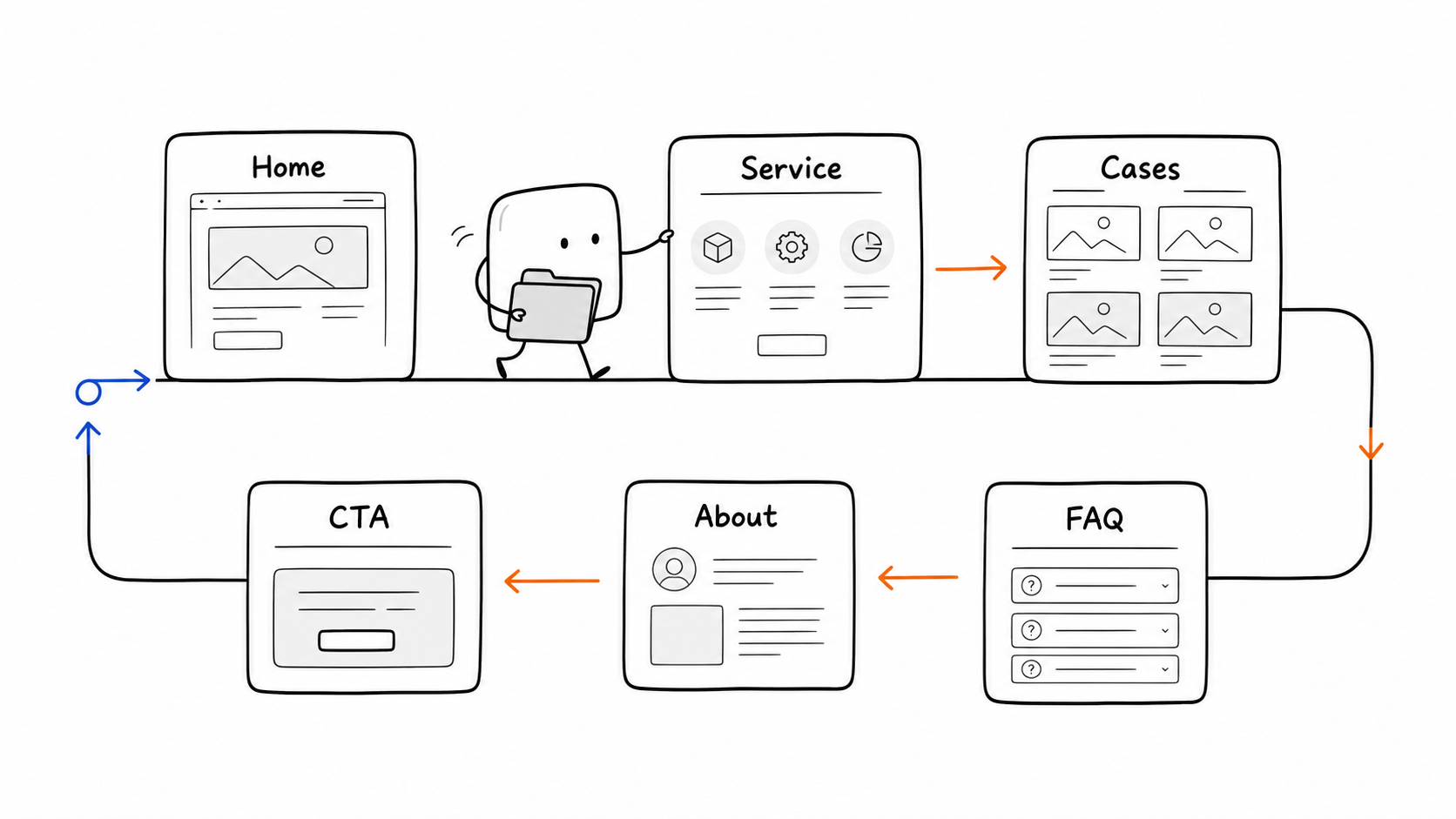
Figure 3: You do not need more pages first. You need the right pages to do the right jobs.
Put more directly: what matters more now is a We0-style “showcase + growth” website
This is where the tool philosophy starts to split.
Some tools are great at one thing:
They help you generate a page fast.
That is not useless. For testing an idea, spinning up a quick demo, or mocking a page fast, it can be great.
But if your goal is no longer “let me make something quickly,” and is now “I need this site to bring in customers, inquiries, partnerships, and growth,” the logic changes completely.
We0.ai makes this pretty clear on its website. It is not trying to stop at page generation. It is trying to cover a more business-ready stack:
AI Website Builder
Multi-Agent Collaboration
CMS Backend
Multi-Style Website Design
Domain Deployment
SEO and GEO Optimization
Online Preview
Editable Design Canvas
You can see what that stack is really saying:
not just build it, but keep using it, keep updating it, and keep growing traffic after it is built.
That part matters a lot.
Because founders, exporters, SaaS teams, small businesses, and consultants do not just need a temporary landing page. They need a website system that can go live today, be updated tomorrow, and keep earning search and AI visibility later.
Even the site metadata says this quite directly. We0 is not only talking about build speed. It talks about:
professional sites, landing pages, and workflows for traffic, leads, and revenue
In plain English:
not a website that simply exists, but a website that can connect to traffic, leads, and revenue.
That is a very different mindset.
Some tools are selling generation speed. We0 feels more like it is selling post-generation business readiness.
There is one detail on the We0 website that says a lot: Showcase is positioned up front
I actually think this is a strong signal.
A lot of AI website tools want to show how fast they can generate. But We0 gives Showcase visible weight, and even separates Professional Cases and User Cases.
That is not a small UX detail.
It reflects a deeper belief:
website building is not ultimately about how fast you type prompts. It is about whether the final thing is ready to be shown, shared, trusted, and used to win business.
And the examples on the site are not random either. Some lean brand-heavy, some feel institutional, some are clearly product showcase oriented.
That sends a message:
we are not only trying to help you generate a demo. We are trying to help you build something you can actually take to customers, partners, and the market.
And honestly, I think that judgment is right.
Because a lot of AI website content looks exciting on the surface, but what gets delivered in the end is still something that is nice to look at, but not necessarily built to sell.
For real businesses, looking good is not enough. Selling matters more.
That is why I keep coming back to this point:
what is more worth building today is not just any website, but a showcase website.
Because a demo says the thing works. A showcase website says:
This is who I am
This is what I offer
This is what I have done
This is why you can trust me
This is why you can contact me now
That is much closer to business reality.
Building a business website today is no longer just “building a website”
This is the part many people still underestimate.
It used to be enough to think:
We just need a website.
That is not enough anymore.
Now you need to think about at least four things at once:
Can it be built fast?
Can it explain the value clearly?
Can search engines and AI understand it?
Can it turn traffic into leads?
In other words, a real business website is no longer just a page-builder output.
It is a business chain.
And that is exactly the chain We0.ai is trying to cover.
Not just generating a page, but connecting these pieces together:
AI build
Showcase readiness
Content presentation
SEO / GEO
Ongoing CMS operations
Templates and case reuse
Lead conversion
That is why the positioning makes sense:
We0.ai = AI Showcase Website Growth Platform
Put simply:
It is not “make me a webpage.” It is “help me build a site that can showcase, get found, keep evolving, and keep moving toward leads and customers.”
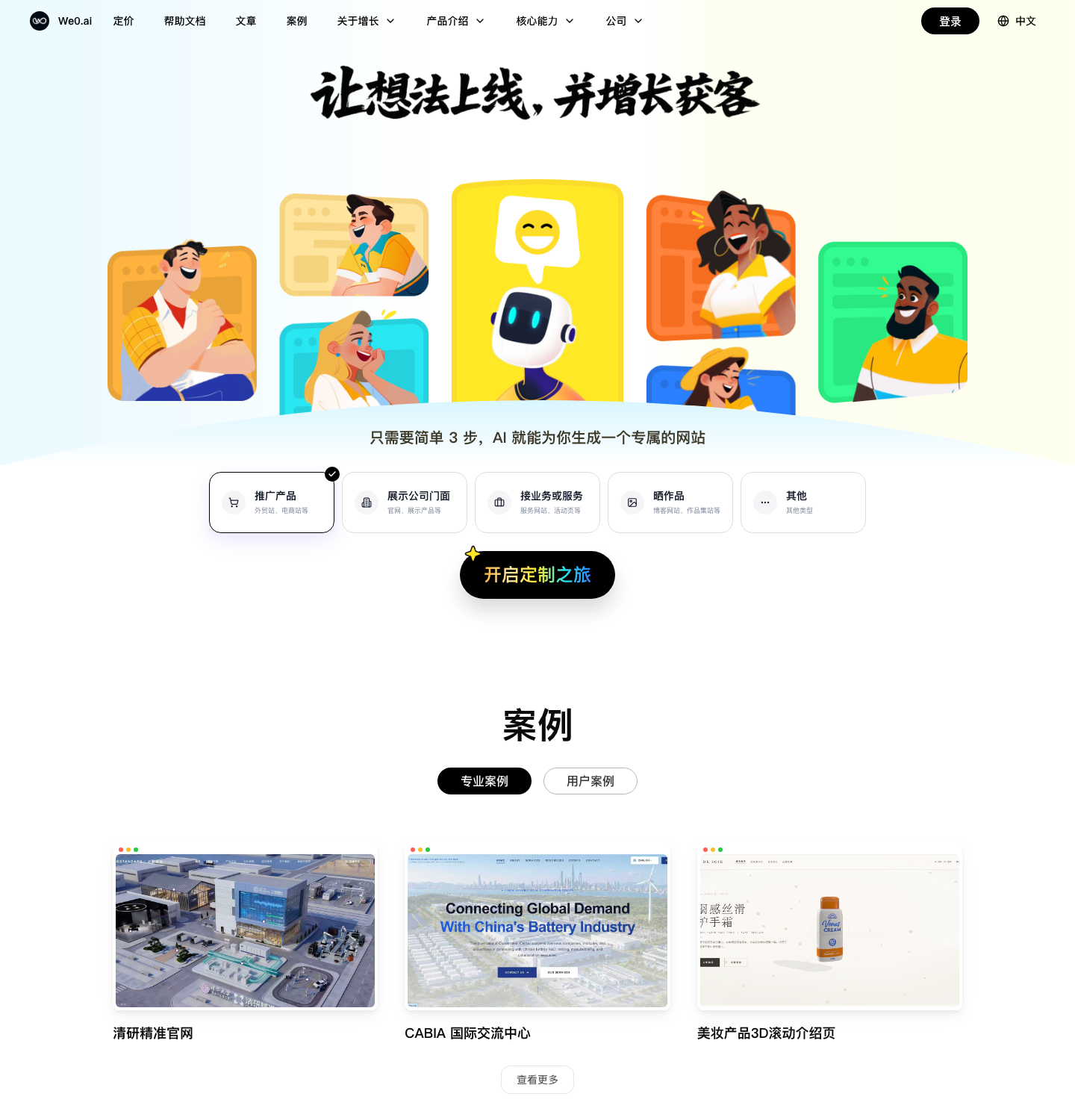
Figure 4: On the homepage, We0 places “launch ideas and grow customers” next to visible case sections. That already signals it is aiming for more than demo generation.
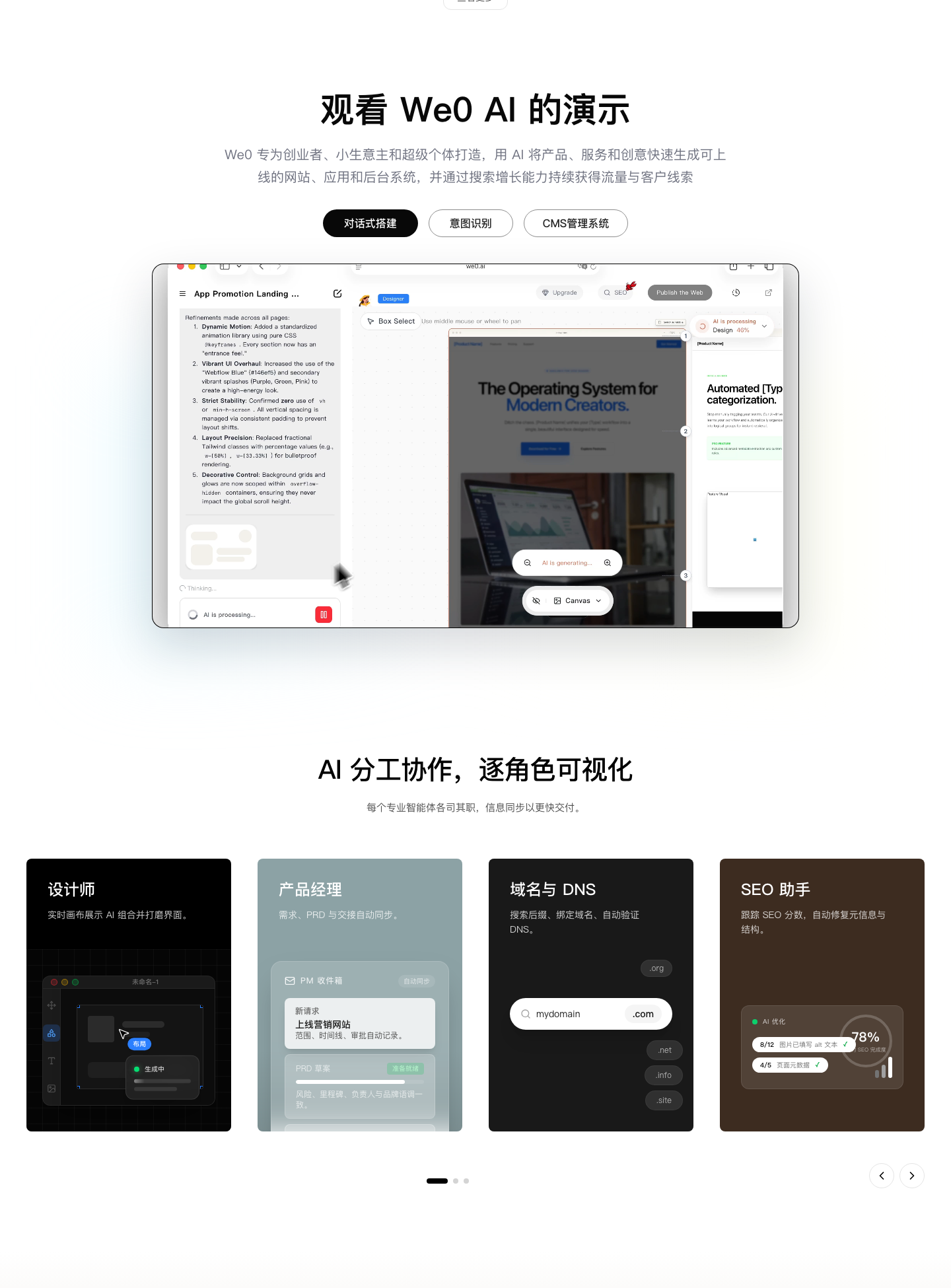
Figure 5: The mid-page product section shows demos, role-based AI collaboration, CMS management, and an SEO assistant. That feels much closer to a showcase-plus-growth system.
Why this matters even more now: in the AI era, your website is becoming an interpretation layer
Traffic sources are changing.
People do not just find you through Google anymore. They may first encounter you through AI search, AI recommendations, content platforms, or social channels.
That makes your website even more important.
It is not just a destination page. It is the place where people quickly decide whether they understand you, trust you, and want to move forward.
If the structure is messy, the message is vague, the proof is weak, the FAQ is missing, and the CTA is unclear, then even good traffic is hard to convert.
On the other hand, if the site is built around Showcase + Growth, it starts acting more like a long-term asset.
That is why I think what matters most now is not page count. It is clarity of message, strength of showcase, and readiness for growth.
If you want to move fast, this is the order I would use
Do not get lost in tools first. Lock the skeleton first.
Step 1: write the one-line core message
Say clearly:
Who do you help, how do you help them, and what problem do you solve?
Step 2: define the three core selling points
Keep it to three. More than that and the message starts to spread thin.
Step 3: prepare proof
Cases, work, results, examples. Without proof, trust is hard to build.
Step 4: add FAQ
Answer common hesitation early and conversion gets easier.
Step 5: tighten the CTA
Be explicit about the next action you want.
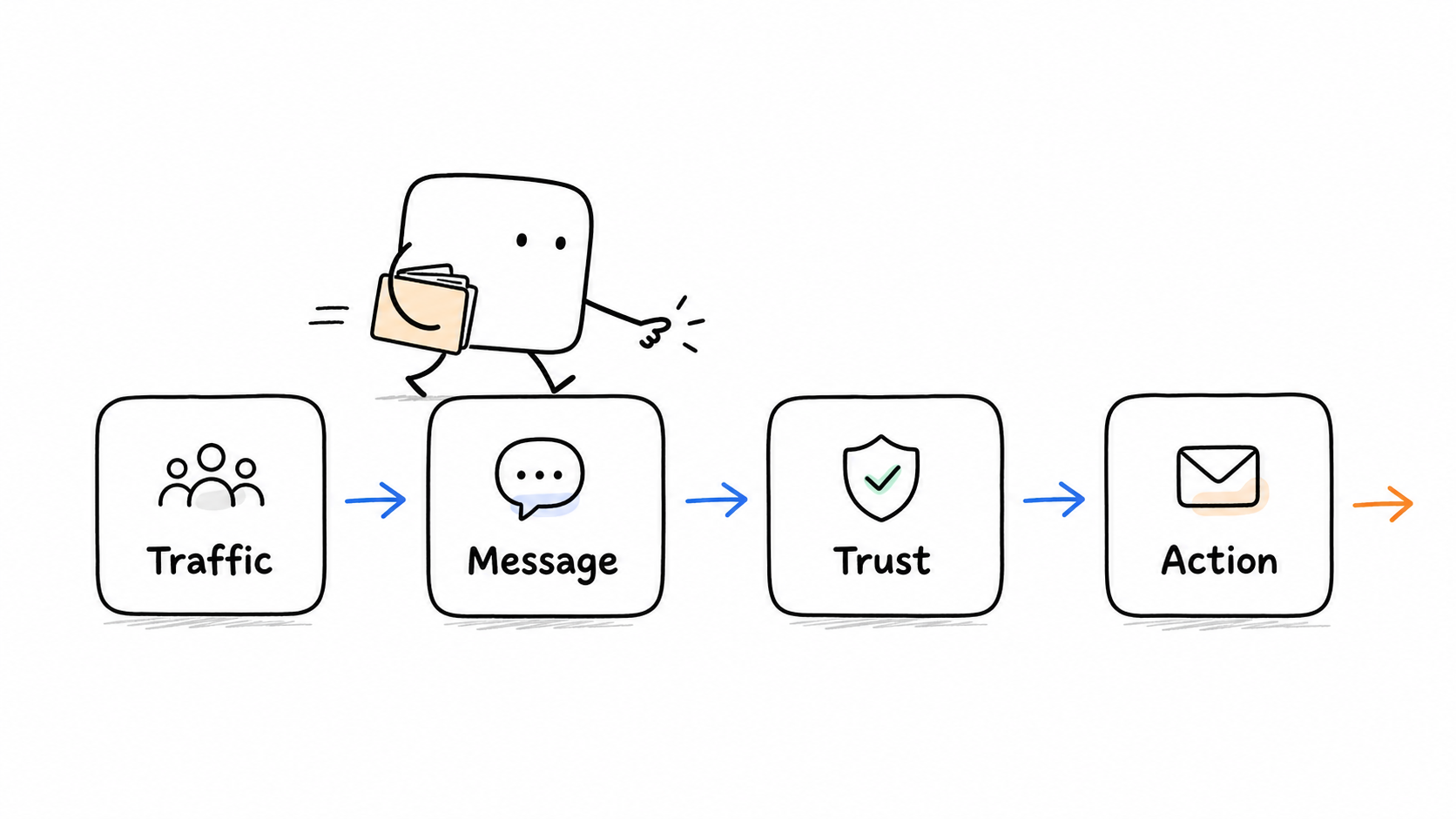
Figure 4: The point is not whether traffic exists. The point is whether your site can move that traffic toward action.
One last thing
If you are still asking:
How do I build a website fast?
I would suggest reframing it:
How do I build a website fast that can actually bring me customers?
Those are very different questions.
The first often leads to a site that is merely “live.” The second gives you a better shot at building something that showcases, converts, and keeps growing.
Many AI tools help you solve “how to make it.” But what We0 seems to be aiming at is:
once it is made, how do you make sure it actually brings results?
And honestly, that is probably the right problem to solve.
Tools
We0.ai:更适合做展示型官网、案例站、服务站,以及要承接 SEO / GEO 和线索转化的网站。
Webflow:适合偏视觉驱动的营销页和品牌官网。
Framer:适合快速做现代感 landing page 和轻量品牌站。
WordPress:适合内容型网站和可扩展性要求高的官网。
Wix:适合上手门槛更低、需求更轻的企业站。
Shopify:如果核心目标是卖货和电商运营,会更合适。