Will Users Directly Use Voice to Search for Services After GPT-Live Makes Human-Machine Voice Conversations More Natural? How Should the We0 AI Website Adapt?
GPT-Live pushes voice interaction from 'one question, one answer' to 'continuous conversation + search + reasoning'. Will this lead users to directly use voice to search for services? This article breaks down the changes and provides adaptation methods for the We0 AI website.
After GPT-Live makes human-machine voice conversations more natural, will users directly use voice to seek services? How should the We0 AI website adapt?
Let's state the conclusion first: Yes, and it's not "might happen later," it's already happening.
In the past, when people talked about "voice search," many envisioned:
- Speaking a sentence to their phone
- Getting a very short answer
- Then ending there
But GPT-Live changed that.
It's not just about making AI sound more human. What it truly changes is this: Search is evolving from keyword input into continuous conversation.
When users can speak, add context, interrupt, and ask follow-up questions, they won't necessarily type a string of keywords anymore.
They might just say directly:
"I want to build an AI product website, but I don't understand SEO and don't want to get stuck in lengthy discussions with an outsourcer."
This isn't just a chat anymore. This is essentially a service search.
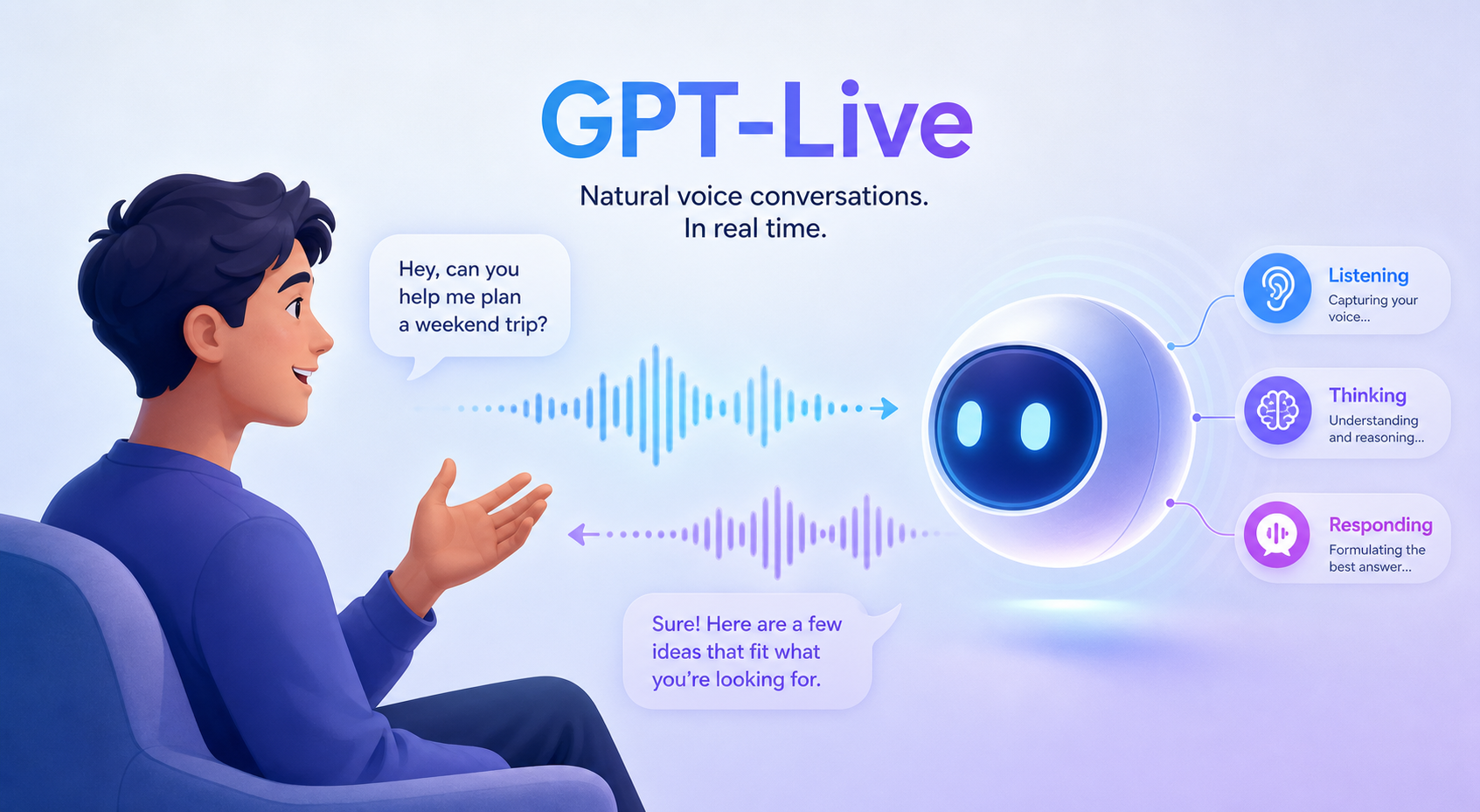
Why will GPT-Live push "finding services" towards voice interaction?
In its official release, OpenAI mentioned that GPT-Live is based on a full-duplex architecture, meaning it can listen and speak simultaneously without waiting for the user to finish speaking completely before responding. It can also hand off tasks requiring search, reasoning, or complex processing to backend models during the conversation and bring the results back into the current dialogue.
What does this mean?
It means voice is no longer just an input method but is becoming a complete decision-making interface.
Previously, users searching for services often went through these steps:
| Old Path | User Action |
|---|---|
| Step 1 | Search for a vague keyword |
| Step 2 | Click on a few articles or company websites |
| Step 3 | Search again for prices, cases, reviews |
| Step 4 | Finally decide who to contact |
In interactions like GPT-Live, these steps might be compressed into a single conversation.
Users might say things like:
- I want to build a website
- On a low budget
- But I need an English version
- Preferably with SEO included
- Not just a simple page; I want to acquire customers continuously afterward
You see, this isn't a keyword anymore; it's an entire scenario.
Traditional search excels at matching words.
Products like GPT-Live are becoming increasingly good at understanding "situations."
Will users really use voice to find services?
High probability, yes. But it won't explode for all services simultaneously; it will start with these categories first:
1. Services whose needs are inherently hard to express in one keyword
For example:
- Website building
- SEO managed services
- Local business customer acquisition
- SaaS product growth
- Building foreign trade inquiry websites
These types of services naturally suit multi-round clarification.
2. Services where users explore and think as they ask
Many users don't exactly know what to search for initially.
They aren't looking for "a keyword."
They are looking for "a reliable solution."
3. Services involving comparisons, budgets, timelines, and expected outcomes
Service decisions usually come with supplementary questions:
- How soon can it go live?
- Do you have case studies?
- Does it support multiple languages?
- Who will handle the SEO later?
- Is it just website building, or does it include growth as well?
These questions are perfectly suited for voice.
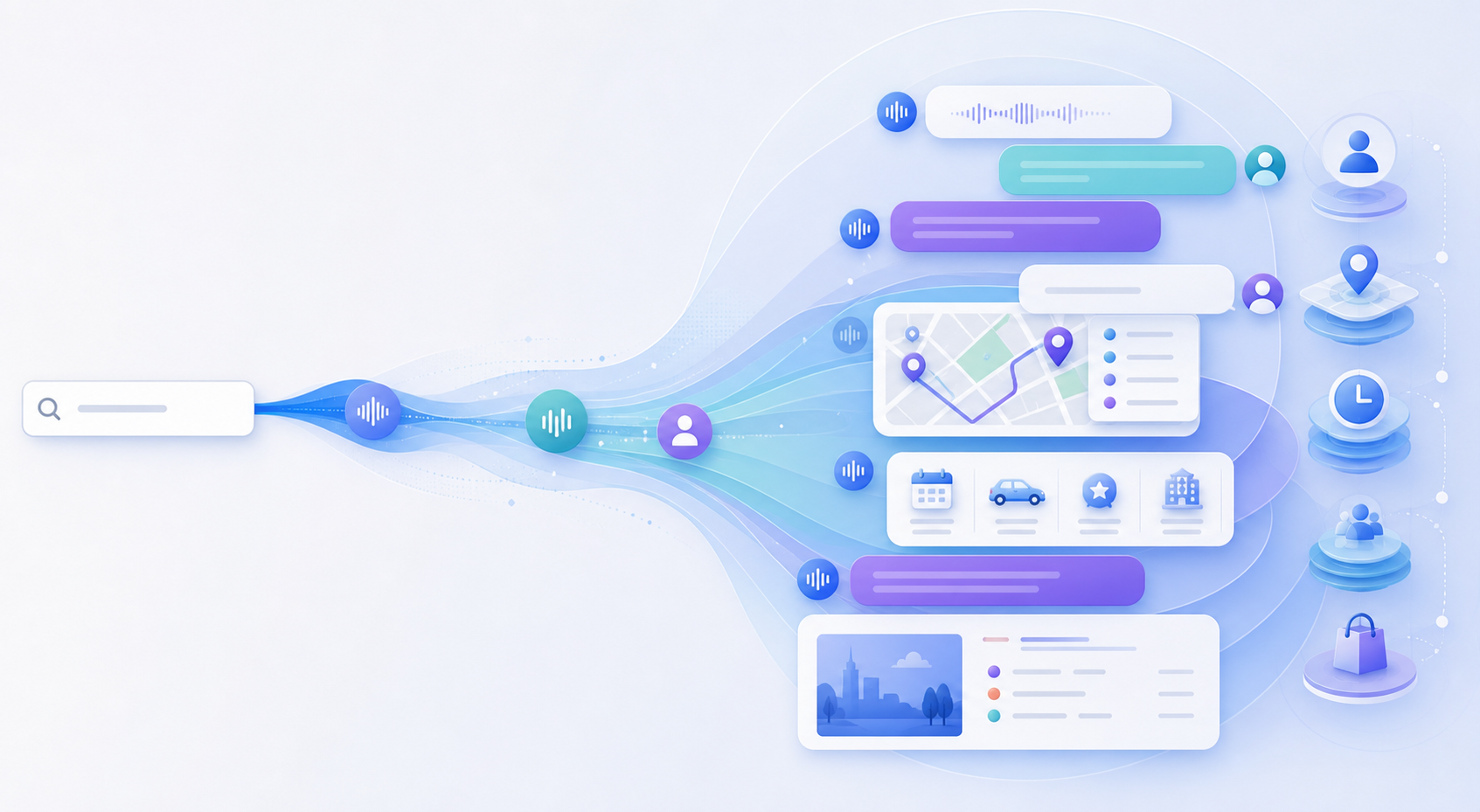
But here's a common misconception: It's not "Voice Search is coming," but "Conversational Service Discovery is coming"
The difference between these two is significant.
"Voice Search" sounds like an upgrade to a keyboard.
"Conversational Service Discovery" is closer to the real change.
Because users aren't just looking for an answer.
They want, within a conversation, to gradually figure out: Who am I? What do I want? What solution suits me? Who should I contact next?
This will directly change the role of a website.
In the past, a website was more like a terminal display point.
In the future, a website will be more like an intermediate node that can be understood by AI, invoked by AI, recommended by AI, and validated by users.
This point is particularly crucial.
The future website isn't just for humans to see; it needs to be "recountable" by AI
If users find services through products like GPT-Live, the AI will do one thing in the middle:
Understand the problem for the user, and then filter the answer for the user.
Therefore, whether a website can be better "recommended" in the future doesn't just depend on how beautiful it is, or even just on whether it ranks first.
More importantly:
- Is your service clearly explained?
- Is your page structured?
- Are your cases and capabilities quotable?
- Can your FAQ directly answer real questions?
- Is your site easy for AI to summarize?
Simply put:
The future website must possess the capability to "be understood, be compressed, be cited, and be paraphrased."
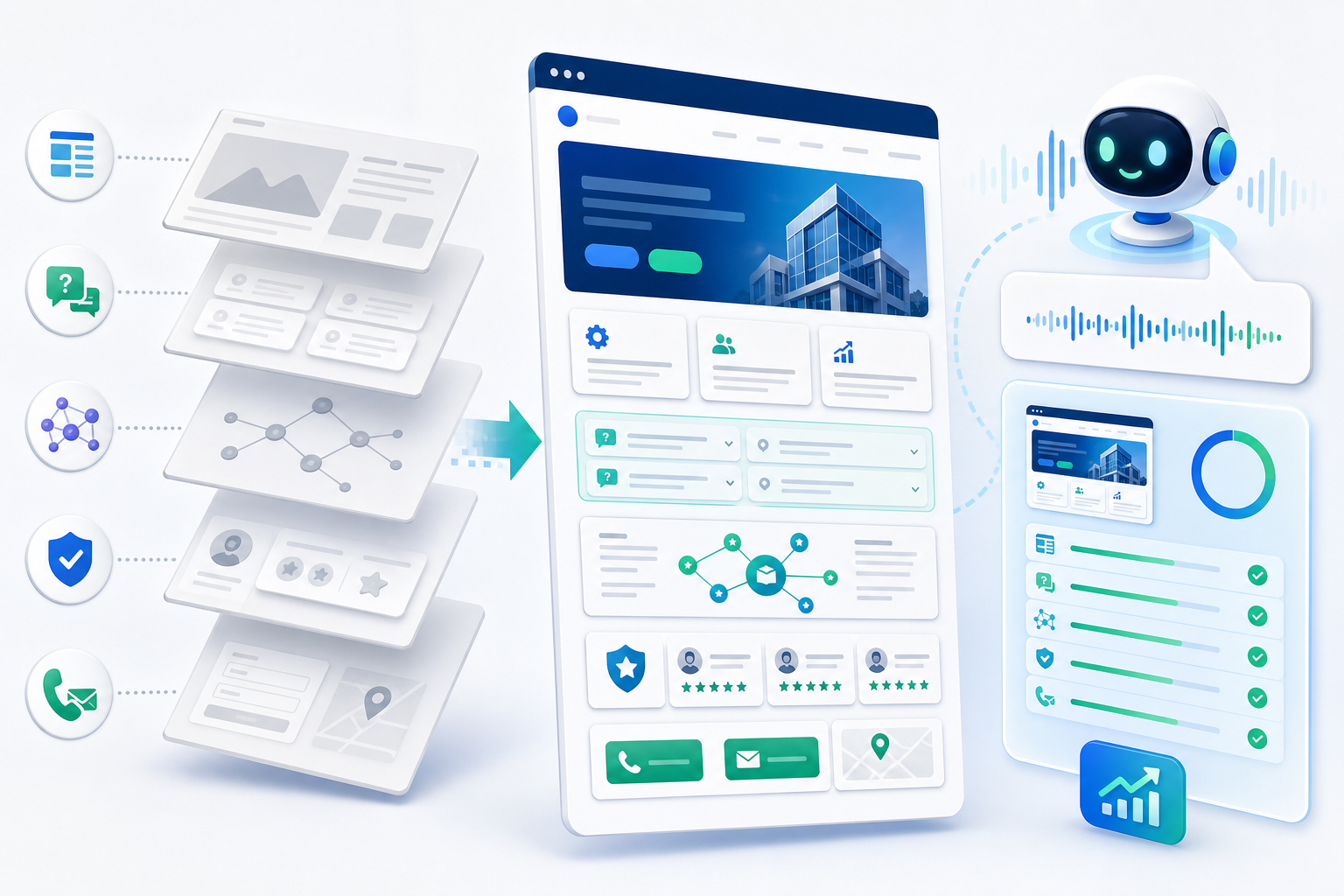
If you are the We0 AI website, the first thing to adapt isn't the style, but the information structure
Many teams' first reaction would be:
"Should I add a voice button then?"
Hold on.
What most websites need right now isn't a voice entry point, but rather a revamp of their underlying content structure.
Why?
Because voice-interactive products like GPT-Live, when helping users find services, don't need flashy interfaces first—they need clear, structured information.
A website suitable for AI understanding and citation typically needs at least these layers:
1. Clear Service Pages
Don't just say "We provide AI website-building solutions."
That's too vague.
Break it down clearly:
- Who is it for?
- What problem does it solve?
- What is the deliverable?
- How soon can it go live?
- Does it include ongoing SEO/GEO/content growth support?
- What results can it ultimately deliver?
2. A FAQ That Answers Real Questions
A FAQ isn't just a placeholder section.
It's for users, and it's also for AI to pull answers from.
For example, instead of writing:
- What is We0 AI?
It's more valuable to write:
- What types of websites is We0 AI suitable for?
- What's the difference between We0 AI and other AI website-building tools?
- Can We0 AI help me create an English homepage?
- Who will optimize SEO after the website is live?
- Can I still drive growth if I don't have a content team?
3. Clear Case Studies and Scenario Pages
When searching for services by voice, users often follow up with:
"Do you have a case similar to mine?"
If your website lacks clear case studies, AI will struggle to tell your story.
4. Verifiable Signals
This includes, but isn't limited to:
- Page update dates
- Author/team information
- Service process
- Client results
- Contact information
- Pricing logic or partnership models
These aren't decoration. They are trust structures.
What's the difference between a traditional SEO website and a GPT-Live-ready website?
There is a difference, and it's becoming more pronounced.
| Dimension | Traditional SEO Website | GPT-Live / Conversational Service Discovery Website |
|---|---|---|
| Core Goal | Ranking, clicks | Being understood, cited, recommended, and then converting |
| Content Organization | Keyword pages | Scenario pages, question pages, decision pages |
| FAQ Role | Aids SEO | Directly serves AI responses and multi-turn follow-ups |
| Page Value | Gets users to browse | Lets AI summarize, then users verify |
| Conversion Logic | Users navigate on their own | AI pre-screens, website catches high-intent users |
This doesn't mean SEO is no longer important.
Instead, SEO is shifting from "competing for clicks" to "competing to be chosen."
That's why building a website today isn't just about generating pages.
It's also about creating ongoing content, structure, growth, and signal building.
How should the We0 AI website adapt? Don't start by thinking "make a voice website." First, get these 6 things right.
One, Upgrade the website from an "introduction page" to a "decision page"
The problem with many websites isn't a lack of content,
but that the content stays at the level of self-introduction.
An effective future website should be designed around the user's decision-making journey:
- Where is the user stuck now?
- What will they ask next?
- Why are they hesitating?
- What evidence do they need to contact you?
Two, Change service descriptions from abstract capabilities to specific scenarios
Don't just write:
- AI website building
- SEO optimization
- Content growth
Write it as:
- Helping SaaS/AI product teams launch a lead-generating website faster.
- Helping indie developers create product showcase pages, launch pages, and waitlist pages.
- Helping foreign trade teams create multilingual websites and inquiry pages.
- Helping consultants, agencies, and creators build service-acceptance and content growth sites.
The more specific the scenario, the easier it is for AI to recommend.
Three, Make the FAQ [follow-up friendly]
Many FAQs still operate on a single question, single answer model.
But conversational service discovery looks more like this:
- Who is it for?
- Who is it not for?
- What's the difference from competitors?
- What if I have a limited budget?
- What if I don't have a content team?
- Is it just about building a site, or does it include ongoing growth?
This type of content is more likely to enter AI's answer chain than generic introductions.
Four, Make case study pages [re-tellable]
Don't just throw up a few images.
Let the case study answer these questions:
- What problem did the client originally face?
- Why didn't they choose a traditional solution?
- What page structure was used?
- What results were achieved after going live?
- Which type of user should this case study serve as a reference?
Five, Treat website content as a long-term, updatable asset
GPT-Live is connected to search, reasoning, and citation capabilities.
This means a static website is no longer enough.
You need to continuously have:
- Scenario articles
- Comparison articles
- Guide articles
- Expanded FAQ content
- Industry term explanations
- Product updates and case study reviews
A website that can be continuously updated is more likely to be continuously found.
Six, Keep conversion points light, but clear
When users come from voice interaction, AI has often already pre-screened them.
So, once they land on your website, they don't need to read a bunch of fluff.
They need to quickly know:
- What's the next step to contact you?
- Is this right for me?
- How do we collaborate?
- Can I see a case study or get a plan first?
At this point, a light consultation, a quick submission form, guided case studies, and a clear CTA are more important than piling on features.

Why does this actually highlight the value of We0 AI?
Because what We0 AI does shouldn't just be "generating a website."
If it were just about making a page, it would be easily replaceable.
But if it's about:
Website building + Showcase + SEO/GEO + Content + Growth + Lead Generation
Then it's different.
This aligns perfectly with the capabilities a website of the future truly needs.
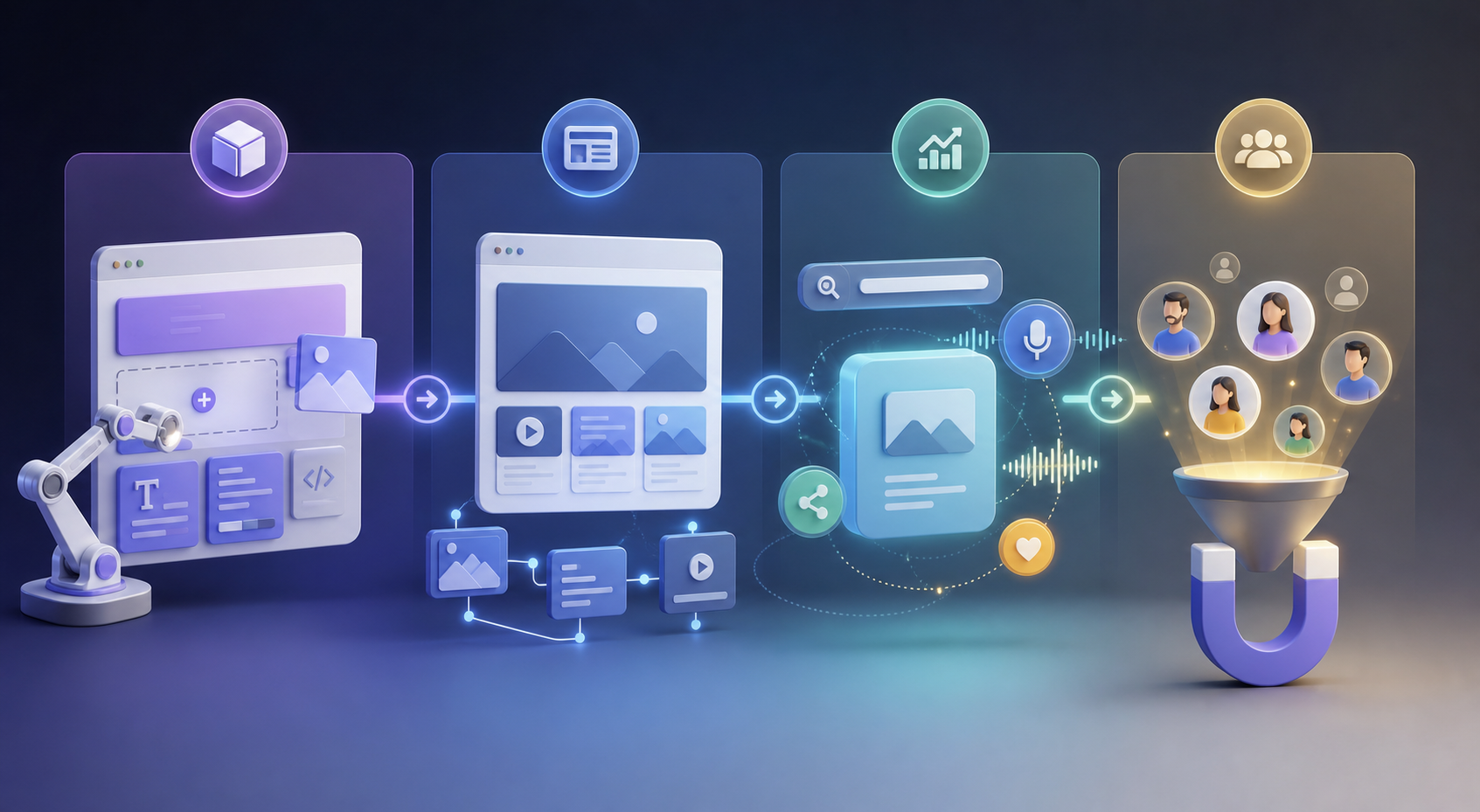
To put it in one sentence: What We0 AI is better suited for
It's not about helping you make a page faster.
It's about helping you make a website that can go live, be operated, grow sustainably, and generate leads continuously.
This is why, as service discovery becomes more conversational, a path like We0 AI's holds a greater advantage:
| Capability | Ordinary AI Website Builder | We0 AI |
|---|---|---|
| Fast page generation | Yes | Yes |
| Suitable for showcase websites | Average | Strong |
| Basic SEO/GEO setup | Weak or absent | Yes |
| Ongoing content growth | Usually none | Yes |
| Structuring case studies, services, scenarios | Unstable | More complete |
| Goal | Create a page | Turn the site into a lead-generating asset |
A More Realistic Assessment: In the short term, not all traffic will become voice traffic, but high-intent traffic will change first.
This is an important judgment.
It doesn't mean everyone will stop using browsers tomorrow.
It doesn't mean typed search will disappear immediately.
But the behavior of high-intent users is likely to change first.
Because high-intent users are naturally more willing to:
- Ask a few more questions
- Follow up on details
- Make comparisons
- Let the system help shorten their decision-making path
And GPT-Live is precisely strengthening this process.
So, in the future, the most vulnerable website isn't the one "without voice functionality."
but the official website that is hollow in content, loose in structure, and cannot be clearly paraphrased by AI.
Frequently Asked Questions
Will GPT-Live directly change how users find services?
Yes. Especially in areas like website building, SEO, SaaS growth, local services, and consulting, where multiple rounds of clarification are needed, voice will act more like a real-time consultant entry point.
What should We0 AI's official website prioritize for adaptation right now?
The priority is not to add a voice button, but to clearly structure service pages, scenario pages, FAQs, case studies, CTAs, and the basic SEO/GEO framework, making the website easier for AI to understand, summarize, and reference.
Will official websites become increasingly dependent on AEO in the future?
Yes. Because many users no longer find answers solely by clicking links, but instead receive condensed suggestions through AI. If official websites want to continue driving traffic and conversions, they must consider their ability to be selected and paraphrased by AI.
What type of websites is We0 AI suitable for?
It is more suitable for showcase websites, such as brand sites, product pages, service pages, case studies, portfolios, content sites, inquiry pages, launch pages, and waitlist pages—rather than just a temporary demo page.
Will voice-based service discovery render traditional SEO obsolete?
It won't become obsolete, but it will evolve. SEO is no longer just about ranking and clicks; it also involves being read, understood, condensed, and recommended by AI.
Related Tools
References
- 《Introducing GPT-Live》
- 《ChatGPT Voice Turns Search Conversational》
- 《We0 SEO Article Production AI Workflow Documentation.md》
Friendly Links / Related Reading / Internal Link Suggestions
- Can We0 AI replace traditional website building companies?
- What is a showcase website, and why is it more important than a "nice-looking site"?
- In the AEO/GEO era, how should the content structure of an official website be organized?
- How should AI product websites handle FAQs, case studies, and conversion pages?
Ready to Get Started?
If you already feel that a future official website is not just a page, but a growth asset that will be understood, recommended, and help you capture leads,
then stop focusing solely on the "build it" step.
We0 AI is for those who want to turn their official website into a long-term customer acquisition asset.
Summary
What products like GPT-Live truly change is not just the interaction experience.
They change the path users take to find information, evaluate solutions, and discover services.
In the future, users may not search by keywords first.
They might speak first.
And whether a website can ride this wave depends not on whether it has a voice button,
but on whether it is ready to be understood, paraphrased, and recommended by AI.
If not.
Then what you lose in the future may not just be a single click.
But an entire conversation that was meant to happen.