Google Search Console Now Tracks Social Media Content: Should Businesses Prioritize a Website or Short Videos? And Where Does We0 AI Fit In?
With the new platform attribute in Google Search Console, businesses can finally see how Instagram, TikTok, X, and YouTube perform in Google Search. What does this mean? Should you build your website or produce short videos first? This article offers a practical framework for decision-making and explains where We0 AI fits best.
Google Search Console Can Now Track Social Media Content: Should Businesses Prioritize a Website or Short Videos First? Where Does We0 AI Fit in?
In the past, many businesses viewed their website, SEO, short videos, and social media as four separate things.
Now, that approach is becoming outdated.
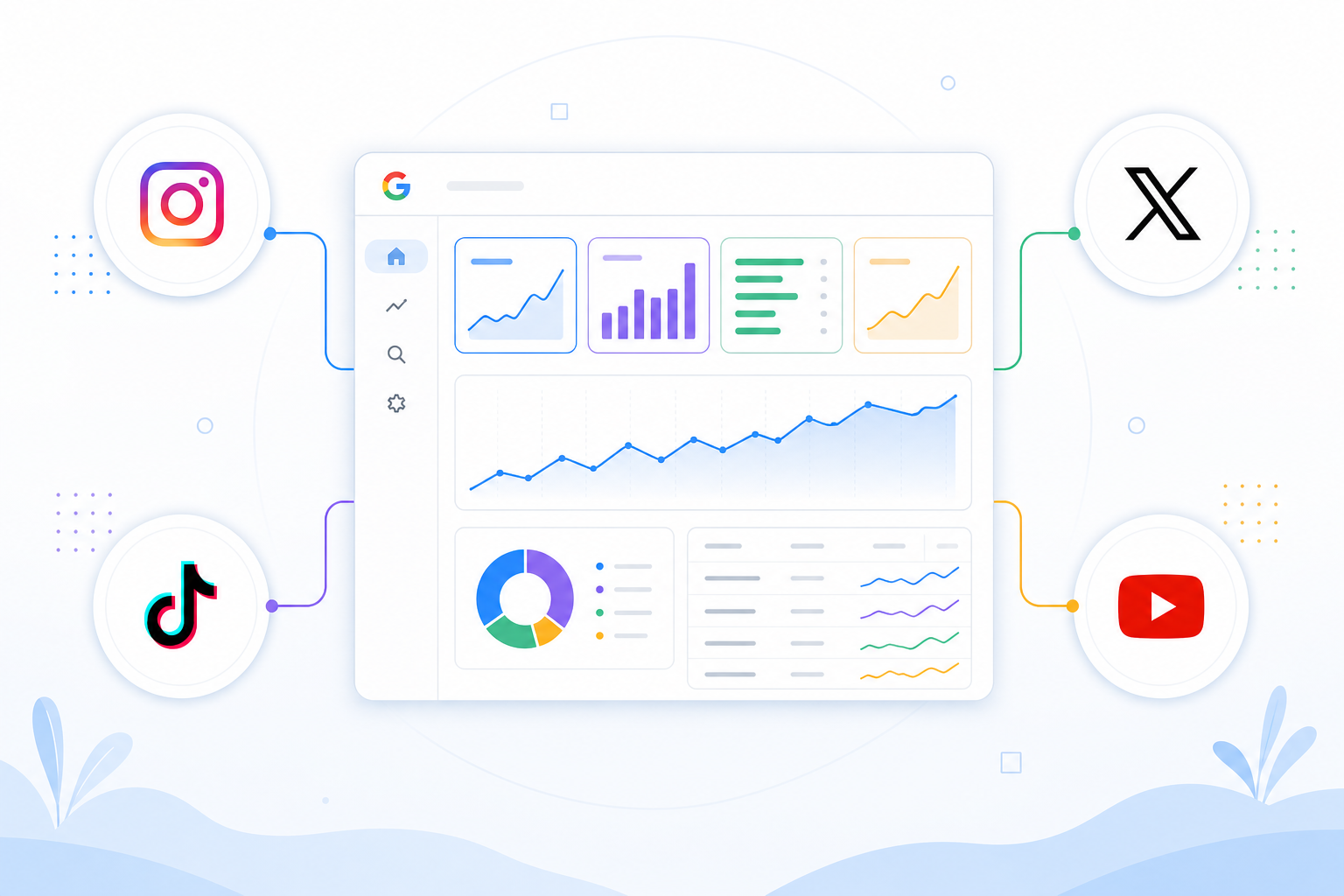
Google recently added a crucial new feature to Search Console: platform properties. Simply put, in addition to your website, Google now allows you to see how your Instagram, TikTok, X, and YouTube content performs in Google Search and Discover.
This is not a minor update.
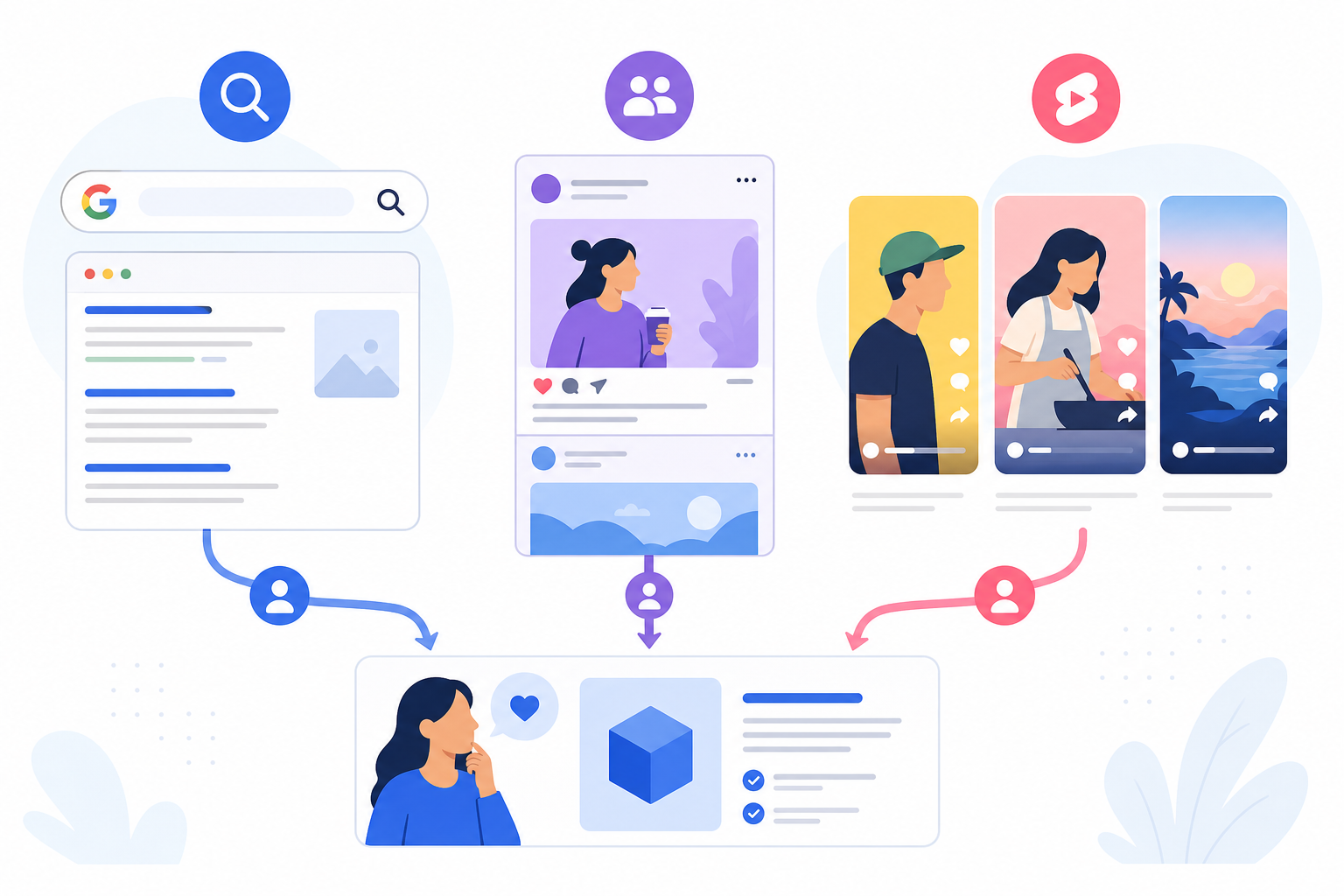
It signals that Google has implicitly acknowledged: a user's discovery path no longer occurs solely on your website; it also happens through social media content and short videos.
So, many businesses will immediately ask a more practical question:
Since Google is now tracking social media content,
Should we focus on making short videos first instead of rushing to build a website?
My assessment is straightforward:
Most businesses should not choose between a "website" and "short videos."
More precisely, you should first determine:
- Is your primary lack visibility,
- trustworthiness,
- or conversion capability?
Short videos excel at the first step.
Websites excel at the latter two steps.
And We0 AI's best fit isn't about "helping you post more videos." It's about building your backend capture chain:
Build → Showcase → Grow → Leads
That is:
Build the website → Clearly explain your products and services → Enable continuous content growth → Ultimately capture inquiries and customers.
The Real Significance of This Google Search Console Update Goes Beyond "Just a New Report"
According to Google's official blog, the new platform properties in Search Console allow creators and brands to add Instagram, TikTok, X, and YouTube as new property types. They can then view data for this content on Google, including:
- Clicks
- Impressions
- Queries
- Trend performance
- Top content
Source:
《See how content from social and video platforms performs on Google Search》
What does this mean?
It means Google no longer treats only "web pages" as optimizable entities.
Previously, SEO discussions implicitly referred to:
- Article pages
- Product pages
- Category pages
- Landing pages
But now, a user might first encounter:
- A TikTok explainer video
- An Instagram post
- A YouTube snippet
- A thread of opinions on X
Then they search for the brand name, product name, or solution term.
Search is becoming a "validation layer"; social media is increasingly the "pre-discovery layer."
This is why this update deserves the attention of anyone involved in growth.
The Common Mistake: Confusing "Traffic" with "Assets"
Can short videos generate traffic? Yes.
And in many stages, they might be faster than a website.
This is especially true when:
- A new brand is just starting.
- A novel category requires market education.
- The founder has a strong personal expression.
- The team can consistently produce content.
- The industry is naturally suited for demonstrations, comparisons, and case studies.
Here, the advantages of short videos are clear:
Fast volume growth, fast feedback, fast testing.
But the problem lies here too.
Short videos can easily generate "buzz," but not necessarily "accumulation."
If a business relies only on short videos without a website, several consequences often arise:
- Users are attracted but don't understand what you actually sell.
- They have some interest after watching content but lack a systematic page to learn more.
- The team chases trends every month, yet brand search equity barely accumulates.
- Data is scattered across multiple platforms, leading to fragmented inquiry paths.
- Once a platform's distribution algorithm fluctuates, overall traffic wobbles.
Traffic is not an asset. Content and pages that are reusable, searchable, capable of capturing leads, and continuously optimizable are closer to being true assets.
Website vs. Short Videos: Which Comes First? It Depends on Your Stage
Here's the conclusion:
Not every business should build a website first. Not every business should rush into short videos either.
A more practical way to decide is by business stage.
A Quick Guide: Prioritize Website or Short Videos?
| Business Stage | What to Prioritize | Reason | Risk Warning |
|---|---|---|---|
| No clear product/service expression | Build website foundation first | You must first clarify who you are, what you sell, and who it's for | Relying solely on short videos will make your message increasingly scattered |
| Product exists, but unknown to the market | Start with short videos + build website for capture simultaneously | Need faster attention, but also need a landing page | Content without conversion pages wastes traffic |
| Stable content creation capacity exists | Build website and produce short videos together | One handles distribution, the other handles accumulation | Not connecting both leads to data silos |
| B2B / service business relying on inquiry-based sales | Prioritize website | Clients need trust, case studies, solutions, FAQs, and contact info | Relying only on videos is difficult for complex decision-making |
| Strong personal IP / demonstration-heavy business | Short videos can lead initially, but website cannot be absent long-term | Build attention first, then reclaim brand equity | Over-reliance on platforms carries long-term risk |
My own assessment is:
For most SMEs, SaaS teams, service providers, and independent developers, building the website foundation first is usually the more stable path.
This isn't because a website is more "traditional," but because it handles responsibilities that short videos cannot replace.
Why a Website Isn't "a Page," But a Capture System
Many people understand a website as just a storefront.
But if you still view it that way today, you are likely underestimating its value.
A truly effective website should accomplish at least six things:
- Define Who You Are: Brand, product, service – no longer requiring verbal explanation.
- Explain the Problem You Solve: Allow users to quickly determine "Is this what I need?"
- Build Trust: Case studies, clients, testimonials, team, methodology, FAQs – all accumulated here.
- Capture Search Demand: Whether keyword or long-tail queries, pages are needed to capture them.
Capturing Social Media Traffic: After a video goes viral, users need a place to learn more about you.
6. Driving Conversions: Appointments, consultations, lead generation, trials, and quotes—these all need to happen on your site.
So the real question isn't:
Do you need a website?
It's:
Do you have a system that can turn external attention into internal conversions?

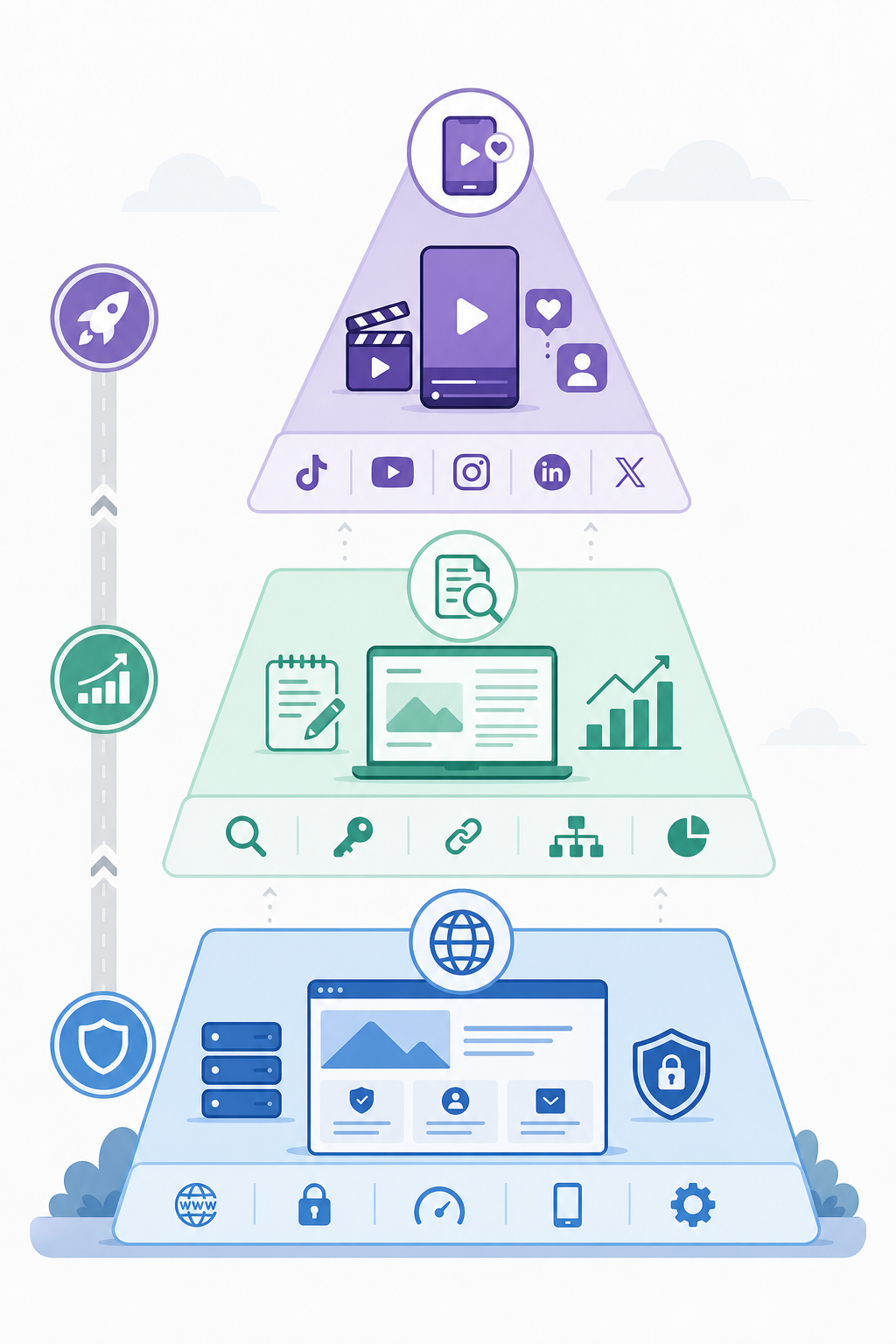
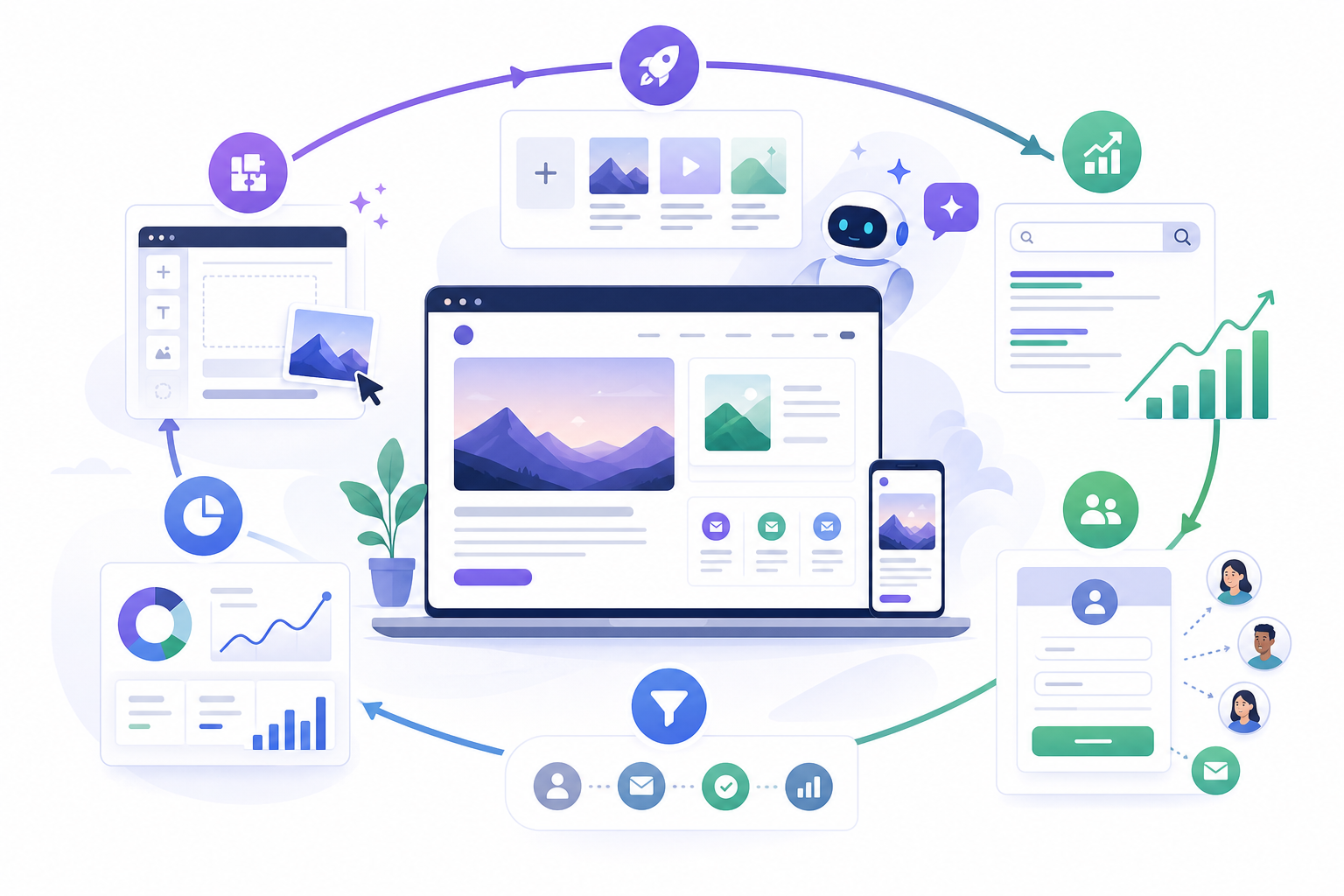
The image above corresponds to the core judgment of this article:
Short videos are responsible for bringing people to the door; the website is responsible for keeping them there.
If you don't have the latter, doing more of the former can sometimes just bring more people into an unprepared funnel.
This Google Update is Essentially a Reminder for Companies to Redivide Content Tasks
Many teams have been organized like this:
- The SEO team writes articles.
- The social media team posts on social platforms.
- The video team makes short videos.
- The sales team follows up on leads themselves.
It looks like everyone is working.
But a common situation arises:
Every team is trying hard, but the business hasn't formed a complete growth chain.
Now that Search Console has also included data from social media and video platforms, it's essentially signaling to the market:
Search and social media are no longer two completely separate systems.
A more sensible approach should be:
How Should the New Content Chain Be Built?
- First, test topics with short videos and social media.
- See what messaging drives clicks.
- See what angles spark searches.
- See what topics are more memorable for users.
- Then, solidify validated topics into your website content.
- Blog posts
- Solution pages
- Case study pages
- FAQ pages
- Comparison pages
- Next, feed the website content back into social media.
- Turn articles into short video scripts.
- Turn FAQs into carousel posts/posts.
- Turn case studies into before/after content.
- Finally, bring all the data together to analyze.
- Which videos drove brand searches?
- Which search terms drove website visits?
- Which pages captured inquiries?
Here, short videos and the website are no longer competing for the same budget.
They are working together to achieve one thing: from discovery to trust to conversion.
So, Where Does We0 AI Fit In?
Understanding We0 AI simply as an "AI website builder" would be a significant underestimation.
More accurately, We0 AI is best suited for the moment when:
Your content channels are multiplying, but your website's ability to capture leads, consolidate content, grow SEO, and track leads hasn't kept up.
In other words, it's ideal for these types of teams:
1. Teams with Content Traffic but a Weak Website
For example:
- They are doing well on Douyin / TikTok.
- They have exposure on Xiaohongshu / Instagram.
- They are getting search traffic from YouTube or WeChat Channels.
- The founder's personal account has thought leadership.
But their website might still be:
- A very old template site.
- Barely any content pages.
- No clear service structure.
- No case study or FAQ pages.
- No stable SEO plan.
In this case, the value of We0 AI is very direct:
It's not just about "building a site" for you, but about turning that site into a growth node.
2. Teams That Want to Do SEO but Lack the Resources for Ongoing Website Management
Many companies know SEO is useful.
But they get stuck here:
- No one to structure the website.
- No one to update content consistently.
- No one to monitor data.
- No one to optimize and review.
So the website just sits there online, barely growing.
This is where We0 AI is more suitable:
- Help you build the website structure.
- Help you complete display pages, service pages, and content pages.
- Help you with basic SEO / GEO setup.
- Help you with content production and publishing.
- Help you continuously optimize pages and growth paths.
This isn't a one-time delivery logic; it's a continuous growth logic.
3. Teams That Need "Website + Content + Inquiry Capture" to Run Together
Especially in these scenarios:
- SaaS / AI product websites
- Agency service showcase sites
- Consultant / Expert personal brand sites
- Multi-language trade show sites
- Indie developer project pages
- Case study pages, launch pages, waitlist pages
These businesses share a common trait:
They don't just need a good-looking page; they need a website that can be found, understood, and consulted over the long term.
A More Practical Decision Framework: Ask These 4 Questions First
If you are currently torn between building a website or prioritizing short videos, ask yourself these 4 questions first:
1. Where can users go next after they see you?
If the answer is:
- They can only send a private message.
- They can only browse your profile page.
- They can only talk to a salesperson one-on-one.
Then you most likely need to prioritize building a website to capture them.
2. What are you lacking more right now: exposure or trust?
- Lack of exposure: Short videos and social media can come first.
- Lack of trust: Prioritize the website.
3. Is your sales path complex?
If you are selling:
- B2B services
- High-ticket solutions
- Products requiring multi-step decisions
- Businesses that need case study proof
Then the website's weight is usually higher.
4. Can your content be accumulated?
If you are producing content daily, but this content:
- Cannot be searched.
- Cannot be archived.
- Cannot be reused multiple times.
- Cannot form brand keyword assets.
Then you are actually doing "content consumption," not "content accumulation."
Key Takeaways
Prioritizing short videos might let more people see you.
Prioritizing a website usually lets genuinely interested people understand you, trust you, and contact you.
The optimal solution isn't choosing one over the other; it's letting short videos handle discovery, the website handle capture, and SEO handle accumulation.
And We0 AI is best suited for the "capture + accumulation + growth" phase.
FAQ
Can Google Search Console really show social media content performance now?
Yes. According to the official Google blog, Search Console has launched new platform properties that allow you to see how your Instagram, TikTok, X, and YouTube content performs in Google
Performance in Search and Discover. Source: See how content from social and video platforms performs on Google Search: https://developers.google.com/search/blog/2026/07/search-console-social-video-platforms
Does this mean the official website is no longer important?
No. What it indicates is that the entry points for search have multiplied, not that the official website has become ineffective. Short-form videos and social media are better suited for initial discovery, but the official website remains the core hub for brand information, case studies, service descriptions, FAQs, inquiry entry points, and SEO accumulation.
Should B2B companies prioritize short-form videos or their official website first?
For most B2B companies, it is recommended to first solidify the foundation of the official website, and then leverage short-form videos to amplify exposure. This is because B2B users have slower, more complex decision-making processes and rely more on the official website to build trust and facilitate conversions.
Can short-form videos replace the official website?
They can partially replace the "exposure function" in the short term, but they can hardly replace the "systematic hosting function." This is especially true for high-ticket items, complex services, multilingual presentations, and case-study-driven businesses, where the official website remains crucial in the long run.
What stage is We0 AI more suitable for?
We0 AI is more suitable for the stage where you are already aware that the official website is indispensable, you already have content traffic entry points, and you aim to integrate display, SEO, content updates, growth optimization, and lead acquisition into a seamless process.
Related Tools
Reference Sources
- See how content from social and video platforms performs on Google Search
- Social Channel Insights In Search Console: What It Means For Social & Search
Friendly Links / Related Reading / Internal Link Suggestions
- Interpretation of New Google Search Console Features
- A Guide to Building Corporate Website SEO from Scratch
- How Short-Form Video Content Can Boost Official Website SEO
- Core Pages a SaaS Website Should Include
- How a Brand Website Can Handle AI and Social Media Traffic
Ready to Get Started?
If you have already started creating content, even short-form videos, but your official website remains in a "just good enough" state, what will most likely be wasted next is not your content budget.
But rather, the attention that could have been captured, consolidated, and converted.
We0 AI is designed not to help you throw together a page temporarily.
Instead, it helps you turn your official website into a true asset for long-term display, growth, and lead generation:
- With a clear structure
- With sustainable, updateable content
- With basic SEO/GEO configuration
- With data monitoring
- With room for continuous optimization
- With a path for inquiries and conversions
Summary
The fact that Google Search Console has started tracking content from social media and video platforms is not telling businesses that "the official website is no longer important."
On the contrary, it is telling you:
Today's search no longer only happens within website pages.
Users will discover you through short-form videos first, perceive you on social media, then verify you through search, and finally decide whether to contact you on your official website.
Therefore, a truly mature content strategy should not ask:
Which should I choose, the official website or short-form videos?
Instead, it should ask:
Have I connected the chain of "Discover – Understand – Trust – Convert"?
If you haven't, then the point where We0 AI is best suited to intervene is the most overlooked yet most valuable segment of that chain:
Official website hosting, content consolidation, SEO growth, and lead acquisition.