After ChatGPT Starts Selling Ads at Scale, How Can Businesses Use We0.ai to Build 'AI Ad Landing Pages'?
Bottom line: If conversational AI like ChatGPT keeps expanding its ad entry points, what businesses will lack most isn't "ad placements"—it's landing pages that can actually capture high-intent conversational traffic
Bottom line: If conversational AI like ChatGPT keeps expanding its ad entry points, what businesses will lack most isn't "ad placements"—it's landing pages that can actually capture high-intent conversational traffic.
Many teams are still using the playbook from a decade ago: run an ad, send everyone to the homepage; or duplicate a long event page and route all traffic to the same URL. The problem is that users coming from conversational AI aren't people who casually scroll past an ad.
They've often already asked:
- "What CRMs are good for a 20-person sales team?"
- "How do I reduce customer support costs for a North America standalone site?"
- "Are there product website solutions that can go live without development?"
This isn't cold traffic. This is traffic arriving with specific problems, specific scenarios, and even specific budget expectations.
So if ChatGPT and similar products further scale their ad capabilities, what really changes isn't "just another paid acquisition channel." It's that the demand expression before the ad click becomes more complete—and the landing page after the click must execute far more precisely.
The unit of AI advertising isn't impressions. It's intent.
This article doesn't overdramatize "ChatGPT has already started selling ads at scale" as a done deal. The specific ad formats, regions, and rollout timelines should defer to official platform announcements. But what businesses should prepare for right now is already clear: turn a single ad click into an owned asset that can showcase, grow, and generate leads.
And that's precisely not something "just generating a webpage" can solve.
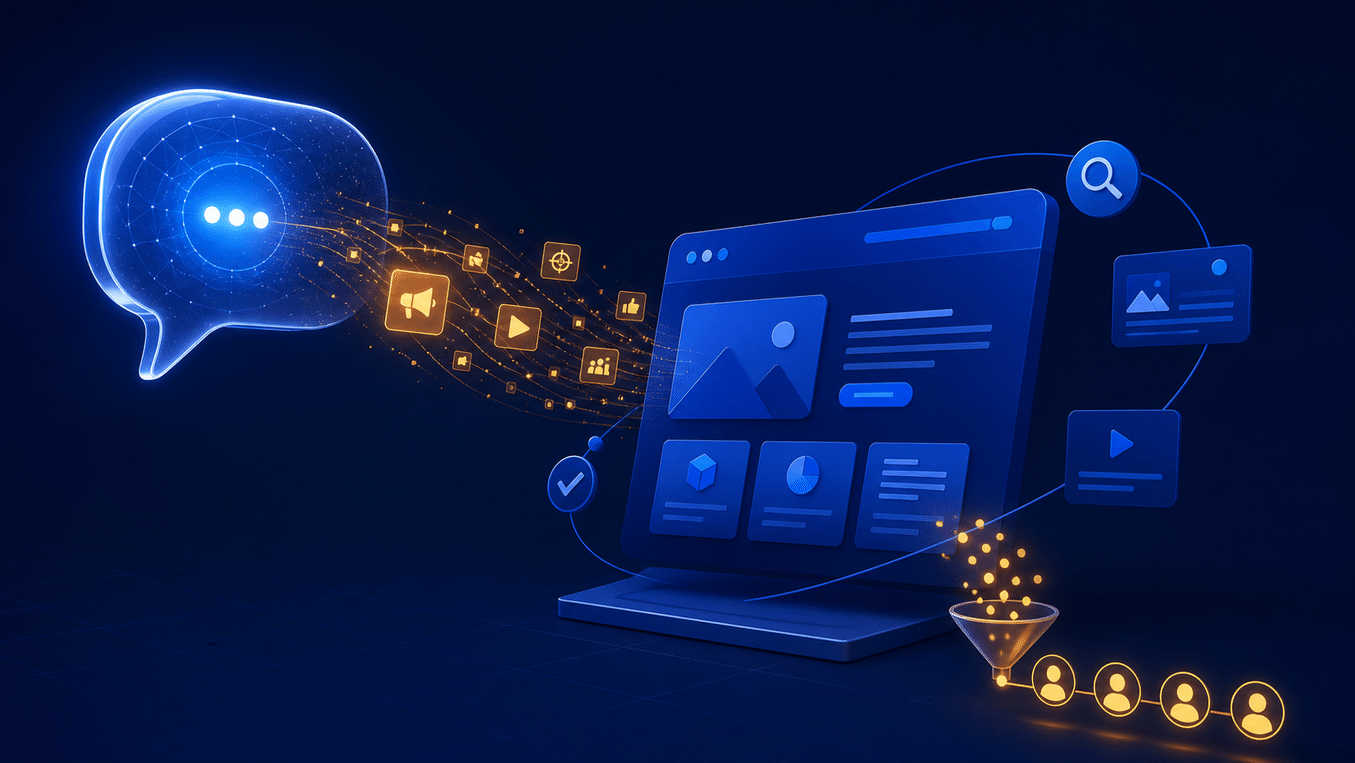
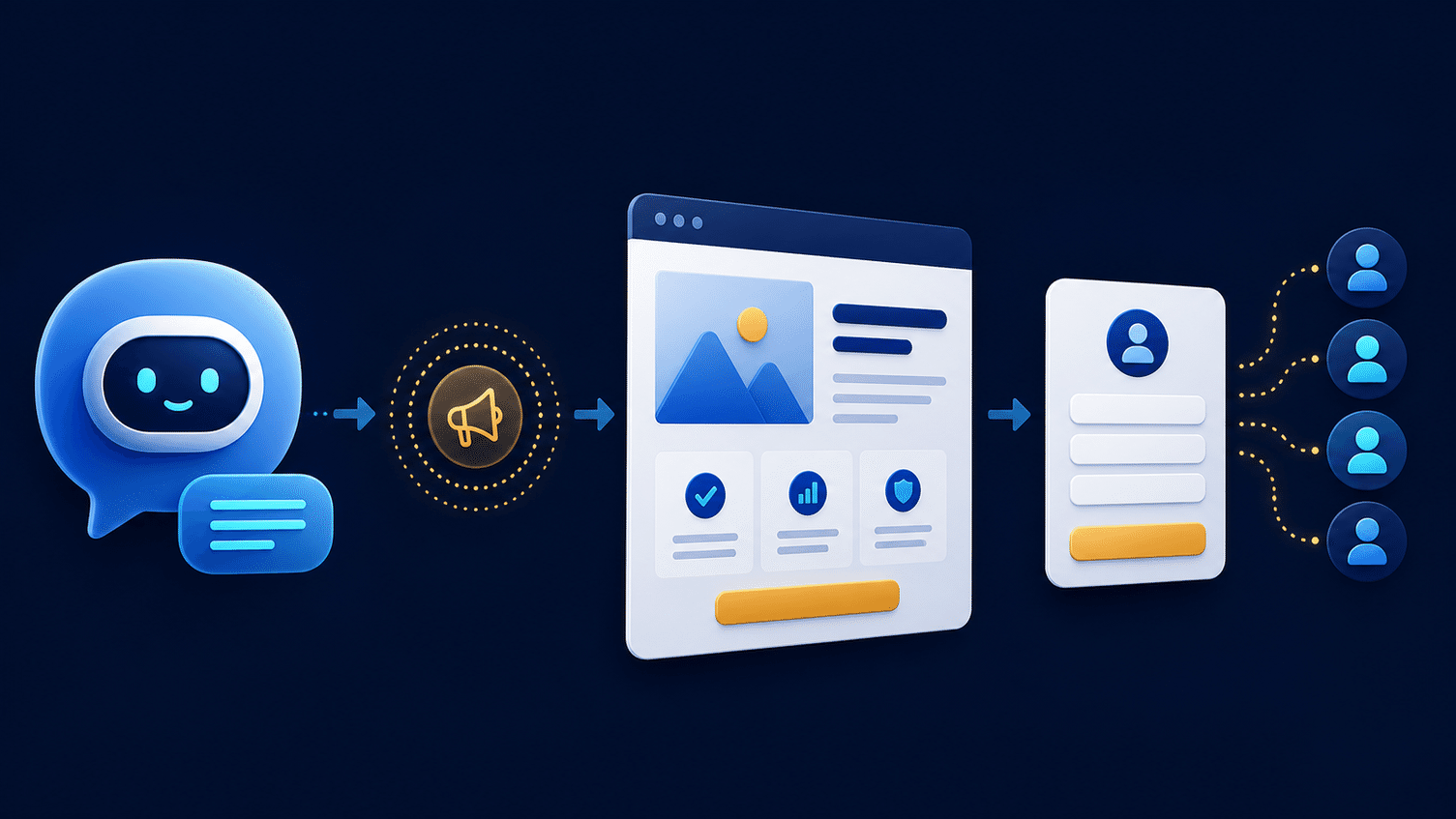
We0.ai's value lies in connecting Build → Showcase → Grow → Leads into one chain: build the page, communicate the product clearly, set up SEO/GEO and content, continuously observe and optimize—and ultimately turn visits into trackable leads.
Why AI Ads Suddenly Make Traditional Landing Pages Inadequate?
Keywords in traditional search ads are often fragmented: CRM software, website builder, B2B lead generation.
But a question typed into conversational AI reads more like a mini requirements document: industry, goal, constraints, use case—often all in the same sentence. When users click through, their patience is lower, but their expectations are far more specific.
| Traffic Source | What the User Knows Before Clicking | What the Landing Page Should Answer First | Common Mistake |
|---|---|---|---|
| Feed ads | The need may still be vague | "Who are you and what value do you offer" | Leading with feature dumps |
| Search ads | There's keyword intent | "What's the solution for this specific query" | Routing all keywords to the homepage |
| Conversational AI ads | Scenario and constraints already stated | "I understand your problem, here's the next step" | Using a generic brand page for high-intent clicks |
The biggest mismatch is users asking something very specific while the page answers very generically.
For example, a user asks in an AI conversation, "How do I build a product website for overseas SaaS that can earn organic traffic," then clicks through to a page that only says "AI smart website builder—quickly create beautiful sites." They'll immediately feel: this isn't what I'm looking for.
Not because the page isn't pretty, but because it doesn't carry the context.
First, Shift the Perspective: Ads Aren't the Destination—Landing Pages Are What Businesses Truly Own
Ad placements are rented. Platform rules change, bids change, attribution changes, and entry points change.
But a page built around real demand—with clear positioning, case studies, FAQ, content extensions, search visibility, and conversion paths—can be reused again and again.
It can capture AI ads, but also Google search, AI recommendations, social shares, sales outbound links, and branded search.
What you pay for is one visit; what you accumulate is a sustainable customer-acquisition asset.
This is why businesses shouldn't treat AI ad landing pages as one-off campaign pages—but as "intent pages."
What Is an AI Ad Landing Page?
It's not just throwing a few "AI" labels on a page.
It's a category of showcase-and-conversion pages built around the user's question intent:
- First, restate or directly address the problem the user is actively trying to solve;
- Then, reduce uncertainty with product mechanics, case studies, comparisons, and evidence;
- Offer a low-friction next step: trial, booking, viewing a proposal, getting a quote;
- After launch, keep iterating with content, SEO/GEO, and data feedback—rather than abandoning it once the campaign ends.
For We0.ai, this isn't just a single page-building task. It's the starting point of a growth site.
Before Building, Break Down the "Ad Intent" into Four Layers
Don't rush to write the Hero copy. First, break down the underlying intent behind the AI conversation.
| Intent Layer | The real question in the user's mind | What the page should provide | Recommended CTA |
|---|---|---|---|
| Problem Recognition | "Do I actually have this problem?" | Pain points, costs, common misconceptions | View solutions |
| Solution Comparison | "How are you different from other approaches?" | Comparison tables, boundaries, target audience | Compare solutions |
| Risk Validation | "Is this credible? Is it right for me?" | Case studies, process, FAQ, delivery model | View case studies / Book a consultation |
| Action Decision | "How do I get started right now?" | Clear steps, timeline expectations, forms | Start building / Get a plan |
Here's a simple example.
If a user asks: "We don't have a design and development team. How can we launch a product website for overseas customers and keep generating leads through content?"
This traffic should not land on a generic "AI website generator" page. It should go to a more specific page:
- Hero: Launch a lead-generating overseas product website even without a design or development team
- Explanation: From brand messaging, page planning, and launch, to basic SEO/GEO setup and content operations
- Proof: Specific scenarios for SaaS, cross-border trade, independent developers, or consultants
- Action: Get a website growth plan—not just "generate now"
The closer the page matches the question, the lower the conversion friction.
How should a page that catches AI-driven ads be structured?
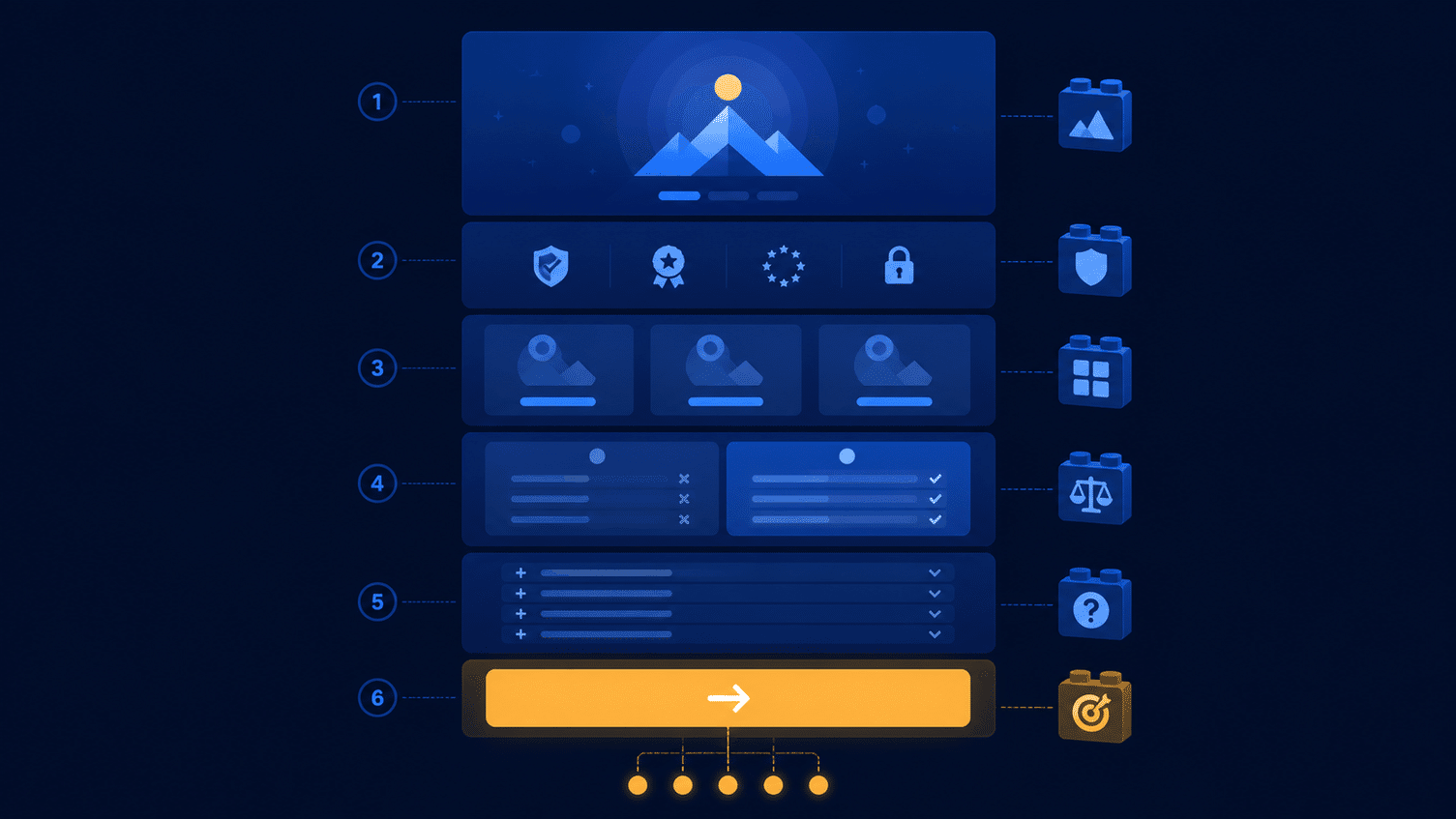
It's not about stretching out a feature list—it's about having each section solve one decision problem.
Recommended structure: from "I understand you" to "You can get started"
- Above the fold: lock in the scenario with one sentence, not a vague brand intro
Don't just say "the next-generation AI website builder." Be clear about "who, in what situation, gets what result." - Problems and costs: write out the concerns the user hasn't voiced
For example: the website keeps getting delayed, ad traffic is wasted, content can't be updated, no one is continuously handling SEO. - Solution mechanism: don't just talk features—show the delivery path
We0.ai can naturally walk through the entire process: brand messaging, page planning, AI building, manual refinement, launch configuration, and ongoing content and growth reviews. - Scenario proof: let different users quickly find themselves
SaaS teams look at product pages and case study pages; cross-border trade teams look at multilingual showcases and inquiries; consultants look at service pages and trust signals; independent developers look at launch pages and waitlists. - Comparison module: directly clarify the difference between "page generation" and "growth site"
| Just making a page | Building a growth landing page with We0.ai |
|---|---|
| Focuses on getting launched quickly | Focuses on whether it can showcase, grow, and generate leads after launch |
| Often leads to a one-off campaign page | Can evolve into product pages, scenario pages, case study pages, and content pages |
| Copy, structure, and SEO are often afterthoughts | SEO/GEO and content expansion are considered from page planning onward |
| Value drops quickly once ads stop | Ads, search, AI recommendations, and content distribution can all work together |
| Delivers a URL | Builds a continuously optimized lead-generation asset |
- Trust zone: replace vague promises with honest boundaries
State who it's for and who it's not for yet; state what you need from the client; state how optimization continues after launch. Honesty actually lowers the barrier to asking. - CTA: keep the action light
Instead of "Buy now," for B2B or complex services, "Get page structure recommendations," "Book a 20-minute website diagnosis," or "See a website plan that fits you" usually feels more natural.
How should companies implement We0.ai? It's not "one-click generation"—it's a four-step chain that captures demand
We0.ai shouldn't be understood as a tool that "spits out a webpage for you."
It's closer to an AI website-building platform + growth team for showcase sites: it helps companies build the site and also handles ongoing visibility, content, leads, and iteration.
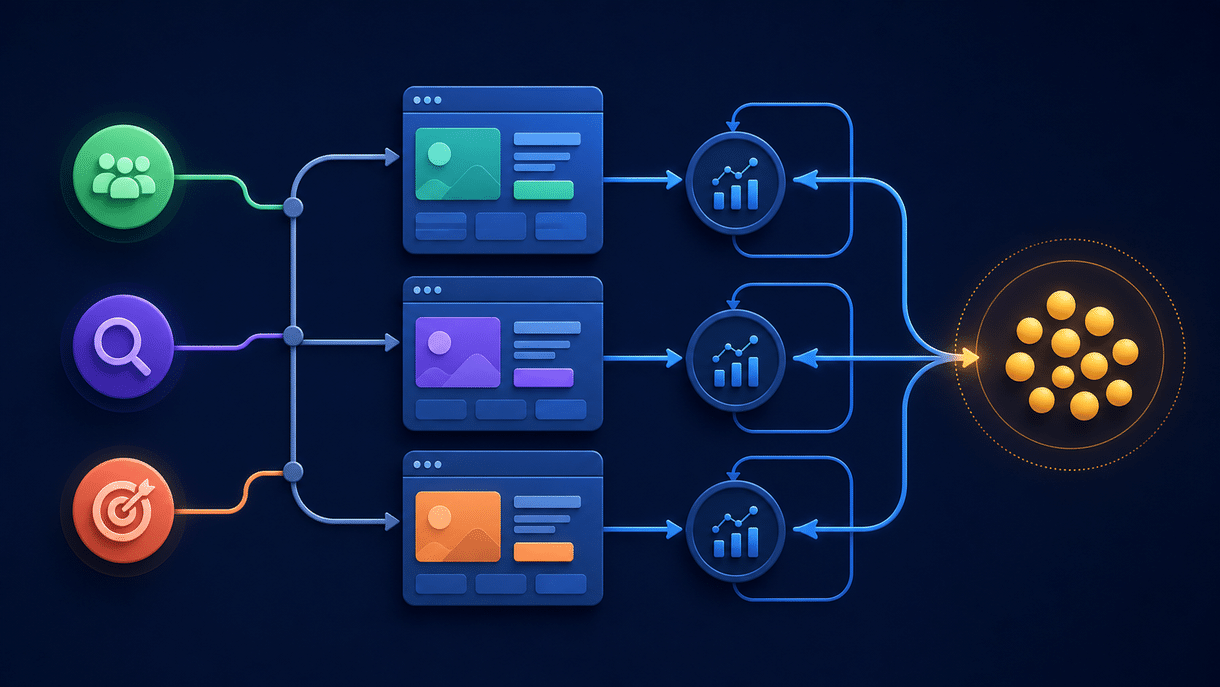
Step 1: Turn the ad theme into a "page brief"
Each ad group should correspond to at least one concise brief:
- Who is the user? What's their industry, role, and stage?
- How might they describe the problem in conversation?
- What matters most to them right now—speed, cost, results, compliance, or service?
- What single action does the page want them to take?
- What long-tail searches and content topics can this page also serve in the future?
Don't let one page serve ten intents at once. Pages can reuse the design system, but they can't reuse vague messaging.
Step 2: Build—launch a workable structure first, not a "pretty shell"
We0.ai can organize the website and landing page structure around the company's brand messaging, product logic, and target customers: product pages, scenario pages, service pages, case studies, FAQ, content pages, and inquiry entry points.
The point isn't "how fast the page is generated"—it's that the structure serves both display and conversion from the start.
When ads start testing, the team doesn't have to coordinate design, development, and content from scratch every time. Based on the same brand and content assets, you can quickly build pages for different intents:
- Comparison pages for "alternative solution comparisons";
- Solution pages for "industry pain points";
- Product feature pages for "feature validation";
- Case study and FAQ pages for "risk concerns."
Step 3: Showcase—replace "we're great" with "here's why you should trust us"
Users arriving from AI ads may have heard of your category before, but likely not your brand.
So the page needs to build trust quickly:
- Use one clear value proposition to state what problem you solve;
- Use specific scenarios and usage paths to show how you solve it;
- Use case studies, delivery process, comparisons, and FAQ to show why you're credible;
- Use a clear CTA to show that the next step isn't a risk but a low-cost action.
Showcaseing isn't decoration. It's compressing the user's cost of understanding.
Step 4: Grow → Leads—make the ad page outlive the ad budget
This is where many landing page projects fall apart.
When the ads stop, the page isn't updated; keywords aren't expanded; user questions aren't captured; no one looks at the data. In the end, it's just a leftover from one campaign.
We0.ai's growth logic is: continue generating value beyond launch through SEO, GEO, content updates, page performance monitoring, growth recommendations, and continuous optimization.
- Expand the frequent questions from the ads into FAQ pages and articles;
- Expand high-converting scenarios into dedicated scenario pages;
- Turn the comparison points customers care about most into content that can be found by search and understood by AI;
- Track visit and conversion paths to identify where users drop off;
- Review regularly so the page gets closer and closer to how real buyers actually talk.
Ads provide the launch speed; SEO/GEO and content provide the compounding returns. They don't conflict—they should be connected through the same set of page assets.
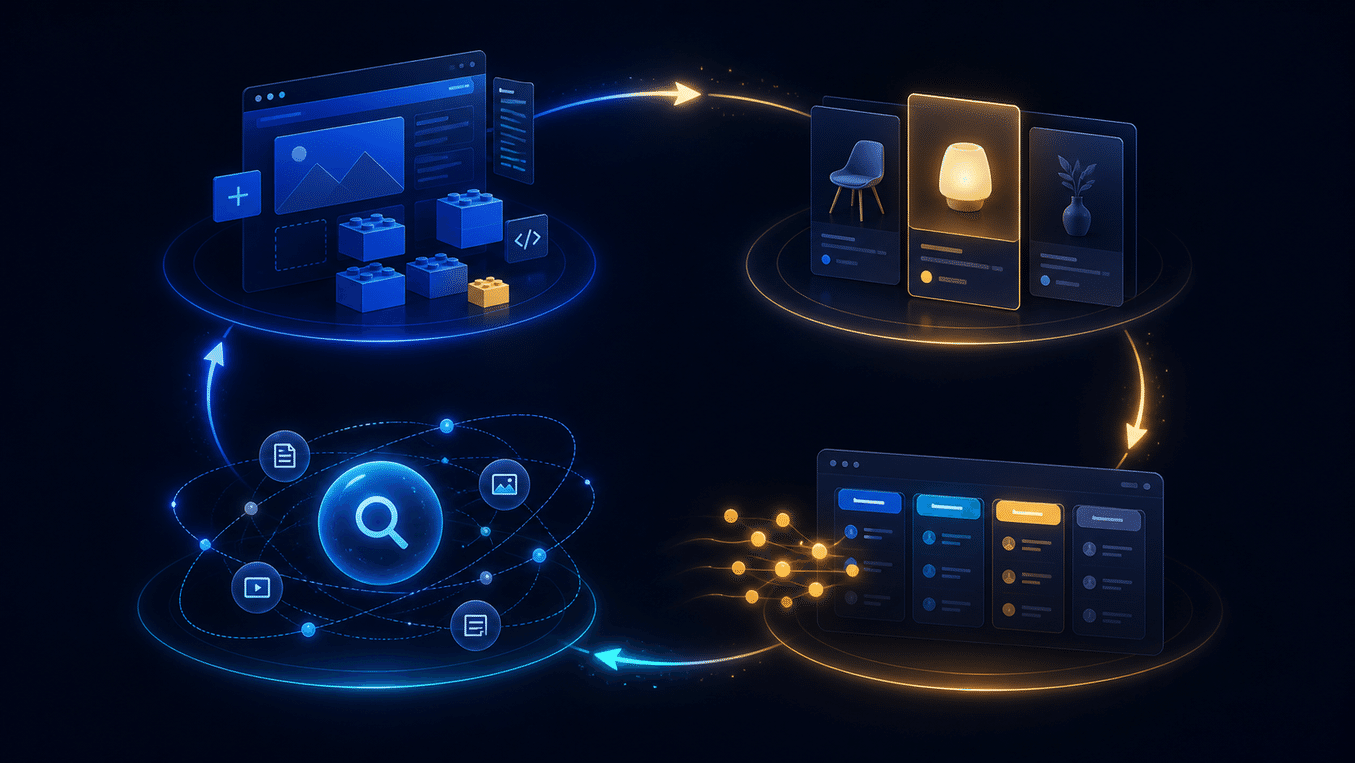
The left side shows material collection, including images, videos, text, and other assets; the middle shows material processing, presented as a blue ring; the right side shows material application, featuring products such as furniture and lighting; the bottom shows data analysis, including metrics like searches and clicks. This diagram relates to the content in the document under "Step 3: Showcase—Replace 'We're Great' with 'Why You Should Trust Me'" and visually presents the flow from material collection to application and data analysis.](https://we0-cms.oss-cn-beijing.aliyuncs.com/cms-assets/image/2026/08/de7369ef-3c8a-4b6d-b47b-2d5a20634fce-c183b2db-5d44-43a7-8069-463d3c5c2814.png)
3 AI Ad Landing Page Scenarios That Are Easier to Execute
Scenario 1: SaaS / AI Product Teams
Don't route all ads to your product homepage. Create scenario-specific pages around "what it replaces," "what workflow it solves," and "what team size it fits."
For example, for users interested in "customer service automation," the page should prioritize answering deployment process, data sources, human intervention boundaries, and ROI logic—rather than showcasing twenty feature icons upfront.
Scenario 2: Foreign Trade and Professional Service Firms
Users are likely asking "is there a reliable supplier in a given market" or "how do I compare certain types of services." These pages should strengthen category, region, credentials, delivery capability, case studies, and inquiry paths—while building a solid multilingual and searchable content foundation.
An ad click is an opportunity; trustworthy presentation is the prerequisite for closing a deal.
Scenario 3: Consultants, Agencies, and Independent Professionals
Services are not standard SKUs. What users are really buying is "can you solve my problem." So instead of a broad portfolio, organize pages around client problems: applicable situations, working methods, deliverables, case studies, FAQs, and booking entry points.
We0.ai helps these pages go beyond simply displaying work—they gradually become the search entry point and consultation gateway for your personal brand.
Don't Just Watch CTR: Which Metrics Should AI Ad Landing Pages Track?
CTR matters, but it only tells you whether your ad was clicked.
Whether the page actually captures conversational intent requires looking at downstream signals:
| Metric | What It Tells You | Optimization Actions |
|---|---|---|
| Scroll depth / dwell time after first screen | Whether users feel "this page is relevant to me" | Rewrite first-screen scenarios and value proposition |
| Scenario module clicks | Which solution path users care about | Add corresponding proof and deeper pages |
| FAQ expansion rate | Which risk concerns users are stuck on | Incorporate those questions into copy and ad creative |
| Form start rate vs. submission rate | Whether the CTA is unappealing or the form is too heavy | Reduce form friction, strengthen commitment messaging |
| Qualified lead rate | Whether the page attracts real customers | Narrow intent, reinforce filtering information |
| Organic / AI referral traffic share | Whether the page becomes a long-term asset | Continue expanding content, entities, and structured information |
What's truly worth optimizing isn't just "more clicks"—it's "fewer mismatched clicks."
A 14-Day Launch Checklist
If you don't want to scramble after the advertising channel matures, follow this pace:
- Days 1–2: Pick one high-value problem—don't start with a broad, generic category keyword;
- Days 3–4: Gather user verbatims, competitor messaging, and common sales objections;
- Days 5–7: Use We0.ai to complete the intent page structure, copy, case studies, and CTA;
- Days 8–10: Fill in FAQs, related content, search foundations, and lead tracking;
- Days 11–14: Test with a small budget or existing channels, observe page behavior, and make the first round of revisions.
Don't chase the "perfect page" from day one. Get real problems first, then turn those real problems into page assets.
FAQ
Are ChatGPT ads now fully rolled out?
The availability, product format, and rollout pace of advertising features may vary by region and platform strategy. Businesses should defer to official announcements from the relevant platforms and their own account capabilities. This article discusses: as conversational AI's commercial advertising entry points expand, how businesses can prepare their landing pages in advance.
What's the difference between AI ad landing pages and regular landing pages?
The core difference lies in intent granularity. Users in AI conversations have often already expressed a more complete scenario and set of constraints, so the page needs to more explicitly address the question, provide evidence, and offer a matching next step—rather than using generic brand copy.
Does each ad group need its own standalone landing page?
There's no need to mechanically follow "one page per ad group," but high-value intents with clear distinctions should have dedicated pages. You can share brand systems, case studies, and base modules while letting the first screen, scenarios, proof, FAQs, and CTA shift with the intent.
Is We0.ai only for rapidly generating pages?
No. We0.ai is built for the complete growth lifecycle of display websites: from brand and page structure, copy, and building, to post-launch SEO/GEO foundations, content updates, traffic monitoring, growth recommendations, and continuous optimization—with the goal of turning your website into a sustainable customer acquisition asset.
How can ad pages gain both SEO and GEO value?
Turn real user questions into clear page topics, and use understandable heading structures, FAQs, case studies, comparisons, service boundaries, and continuously updated content. Ad pages shouldn't just contain short-term campaign copy—they should also be understood, cited, and discovered by search engines and AI retrieval systems.
Related Tools
- We0.ai: Build a website that showcases, grows, and acquires customers
- Google Search Central: Content and website fundamentals for search
- Google Analytics: Understand user behavior and conversion paths
References
- OpenAI Newsroom: Follow official announcements on ChatGPT and OpenAI products and commercialization capabilities.
- OpenAI Official Website: Stay up to date on product features and usage policies.
- Google Search Central: Reference for website discoverability, content quality, and search technical practices.
Ready to Get Started?
If you're preparing landing pages for the next wave of AI search, conversational ads, or existing paid acquisition channels, don't ask "can we make one more page."
Ask this first: Can this page turn a single click into a reusable, discoverable, continuously optimizable growth asset?
We0.ai can help you start from brand and page structure to build the complete website pipeline for product showcasing, scenario conversion, content growth, and lead generation.
Start building your growth-driven landing page with We0.ai
Summary
The commercialization of conversational AI advertising won't automatically bring businesses more customers. It will only expose the problem of "traffic and page mismatch" faster.
Winners won't be those who bought ad inventory first—but those who translate user intent into pages, content, and long-term growth assets first.
Using We0.ai to build AI ad landing pages isn't about chasing a new channel; it's about building your own system that can showcase, grow, and capture leads—no matter where the traffic comes from.
seo_description: "As conversational AI advertising expands, businesses need more than another webpage. Learn how to build intent-led AI ad landing pages that compound through SEO, GEO, content, and lead generation with We0.ai."
seo_keywords: "ChatGPT ads, AI ad landing page, AI landing page, We0.ai, AI website builder, conversational AI advertising, GEO, SEO, ad conversion, B2B lead generation, landing page optimization"
seo_slug: "chatgpt-ads-ai-landing-pages-we0-ai"
seo_cover_brief: "On a dark-blue field, signals from a conversational AI ad flow into a modular brand landing page, then expand into search, content, and qualified leads."