Does Having Your Own Website Really Make You More Likely to Be Recommended by ChatGPT and Gemini?
Short answer: Yes, but it's not that having a website guarantees recommendations. More precisely, having your own website significantly increases the likelihood of being found, understood, cited, and referenced by AI tools like ChatGPT and Gemini.
First, the conclusion: Yes, but not "having an official website automatically means being recommended."
To be more precise, having your own official website significantly increases the probability that AI tools like ChatGPT and Gemini can find, understand, cite, and reference you. However, the prerequisite is that your website is one that can be "seen, understood, and trusted."
If your website is just a shell—few pages, shallow content, messy structure, no brand information—then its usefulness to AI is very limited. Conversely, if your website is complete, well-structured, with consistently updated content that clearly communicates who you are, what you do, and who you serve, it becomes more like "an entity AI can recognize."
This follows the same logic as traditional SEO, just with a different end goal.
Previously, you optimized for search engine rankings. Now you also need to consider: Will AI treat you as a credible source?
Why does an official website affect AI recommendations?
Let's break down the logic simply:
| Dimension | No Website / Social Media Only | Own Official Website |
|---|---|---|
| Credibility | Fragmented, weak | More complete, resembles a formal entity |
| Crawlability | Often restricted by platforms | Easier for search engines and AI to read |
| Information Consistency | Prone to inconsistencies | More unified branding, products, and services |
| Content Accumulation | Content is easily lost | Can be continuously built as an asset |
| Likelihood of Being Cited | Low | Relatively higher |
AI doesn't recommend based on "who shouts the loudest."
It tends to recommend those that:
- It can find
- It can understand
- It deems trustworthy
- It can directly use to answer user questions
So, the value of an official website isn't about "keeping up appearances"—it's about establishing an identity system that machines can understand.
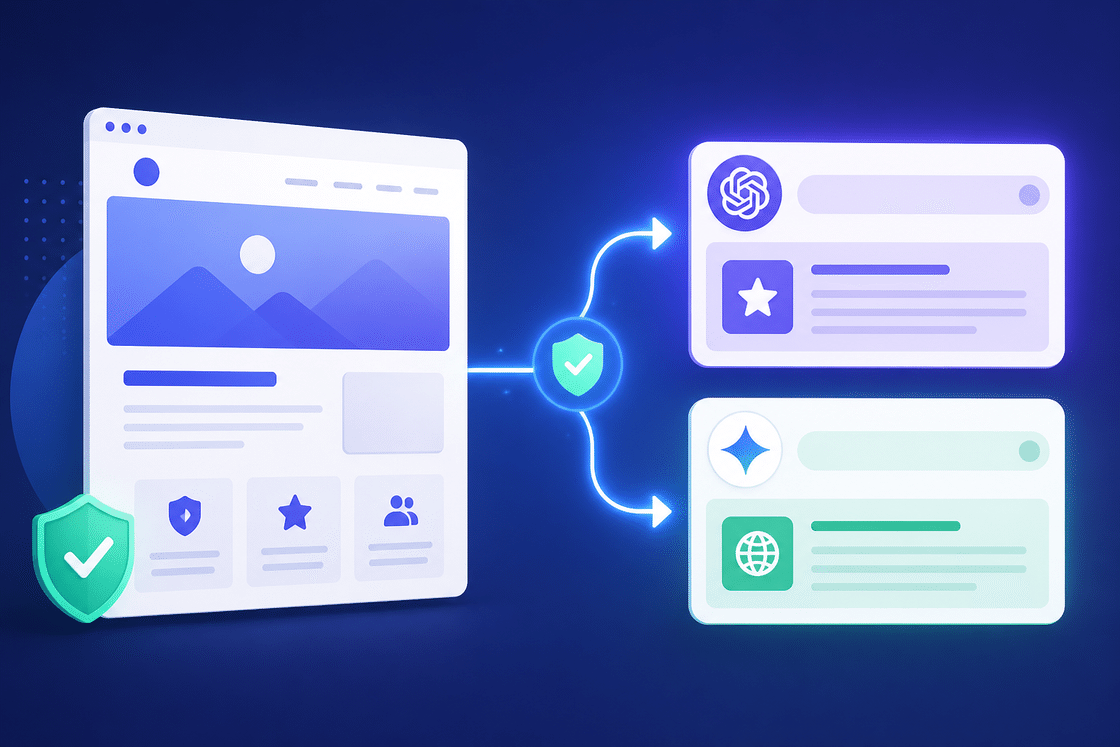
Do ChatGPT and Gemini look at the same things?
Not exactly.
For Gemini, Google has explicitly mentioned that Grounding with Google Search connects the model to real-time web content and provides verifiable sources and citations. This means: websites that are indexable by Google, crawlable, and have clear content structure are more likely to enter its scope.
For ChatGPT, OpenAI has also emphasized "sourced citations" in its web search capabilities. Simply put: it doesn't just fabricate an answer; it actively seeks out web sources to support its response.
This leads to a very practical outcome:
Having your own website isn't everything, but it's often the first hurdle to being consistently discoverable by AI.
What truly makes the difference isn't "whether you have a website," but what that website looks like
Many people misunderstand this.
They think AI recommendations are based on "whether you have a domain name."
That's not it.
What matters more are the following:
- Does your homepage clearly state who you are?
- Do your product/service pages directly answer user questions?
- Do you have essential pages like About, Case Studies, Pricing, FAQ, and Contact?
- Are your page titles, meta descriptions, and structure well-formatted?
- Is your content updated regularly, or does it stay static for a year?
- Do you have a clear layout of brand keywords, business keywords, and long-tail keywords?
- Do you have structured data, internal links, and highly readable body copy?
If none of these exist, your website merely "exists."
If all of these are in place, your website becomes an asset that AI can recommend.
A more direct metric: AI prefers to cite "credible-looking websites"
You can think of AI recommendations as an "information filtering" process.
It prioritizes pages that look like legitimate sources.
For example:
- Clear brand name
- Real business descriptions
- Well-organized navigation
- Case studies, services, FAQs
- Evidence of continuous updates
- Verifiable external presence
This is also why many independent sites, brand sites, and service provider websites are more likely to enter AI's answer pool compared to social media profiles alone.
Not because they're fancier, but because they're more complete.
So how should you build a website to be more easily recommended by AI?
If we're just talking direction, the answer is quite straightforward:
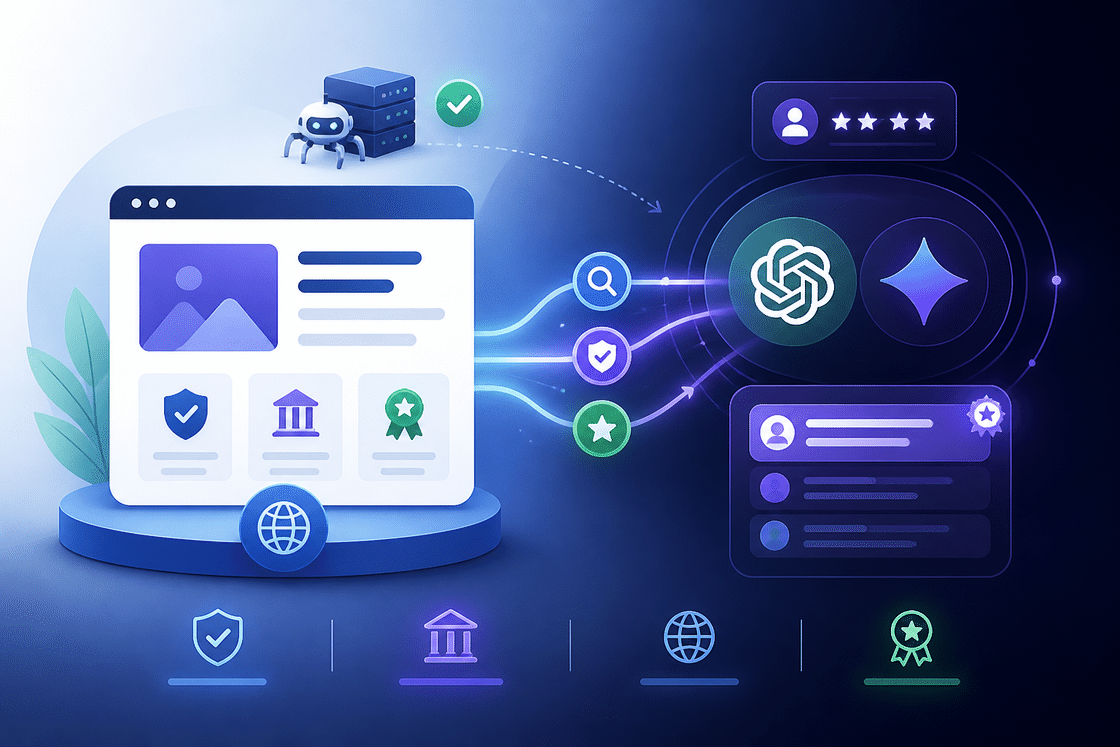
- Make AI find you: Ensure search engines can crawl your pages; don't block them
- Make AI understand you: Use clear structure, defined titles, and clean content
- Make AI trust you: Include real company info, case studies, contact details, and service descriptions
- Make AI see you as a source that answers questions: Write content around user queries, not just promotional fluff
- Make AI remember you: Keep your brand name, product names, and service terms consistent over time
This goes beyond "just building a website."
This is about building a long-term, operational lead-generation channel.
This is also what We0 focuses on
We0 isn't just about helping you create a page. It's more concerned with:
Build -> Showcase -> Grow -> Leads
In other words:
- First, set up your official website
- Then, clearly present your products, services, case studies, and work
- Next, work on SEO / GEO / content strategy
- Finally, turn traffic into leads and customers
So, if you ask, "Will having an official website make it easier to be recommended by ChatGPT and Gemini?" We0's answer is more down-to-earth:
Yes, but only if that website itself is one that can be showcased, understood, and grown.
Simply put, the role of an official website has changed
Previously, websites were mainly for "introducing the company."
Now, websites need to do three things:
- Let search engines recognize you
- Let AI understand you
- Let customers trust you
Only when you combine all three does a website become truly useful.
If you just want "a website to exist," that story ends quickly.
If you want "this website to continuously bring you exposure, inquiries, and customers," that's where its real value lies.
Conclusion
Having your own official website does indeed make it easier to be recommended by ChatGPT and Gemini.
But not because of the word "official website" itself—rather, because it's easier to become:
- Crawlable
- Understandable
- Citable
- Trustworthy
- Continuously updatable
What AI ultimately recommends isn't the number of websites, but the quality of websites.
And that's exactly what a showcase website should do.
It's not finished once it's launched.
Instead, after going live, it continues to grow content, traffic, and leads.
FAQ
1. Will having an official website alone guarantee recommendations from ChatGPT / Gemini?
No. An official website is merely one basic condition. Content quality, structure, authority, and crawlability are more important.
2. Can social media accounts replace an official website?
Not entirely. Social media is suitable for distribution, while an official website is better for accumulating, explaining, and building stable credibility.
3. What does Gemini value most?
It tends to favor verifiable sources, real-time web content, well-structured pages, and information that can be found via Google Search.
4. Will ChatGPT directly recommend official websites?
It prefers to cite source pages that support its answers, rather than simply recommending a homepage.
5.
What kinds of websites are easier for AI to understand?
Websites with clear titles, product/service pages, FAQs, case studies, About pages, and Contact pages—and content that is continuously updated.
Reference Sources
- We0.ai: AI Website Building & Official Site Growth
- Grounding with Google Search — Gemini API
- Web search — OpenAI API
- Introducing ChatGPT search — OpenAI
Ready to Get Started?
If you already have a business, product, or personal brand, the most important thing to do right now is not "publish another piece of content"—but to turn your official website into an asset that can be searched, understood by AI, and trusted by customers.
This is exactly what We0 focuses on:
taking websites from "showcase" to "growth."
Summary
Your website isn't the answer, but it's usually the first building block on the path AI recommends.
If the foundation is solid, your content, traffic, and conversions will have a chance to take off.