Alibaba Launches HappyShrimp 1.0, an AI Music Model Built for Natural-Language Song Creation
Alibaba has officially launched HappyShrimp 1.0, an AI music-generation model whose Chinese name is 快乐虾米.
Alibaba Launches HappyShrimp 1.0, an AI Music Model Built for Natural-Language Song Creation
Introduction
Alibaba has officially launched HappyShrimp 1.0, an AI music-generation model whose Chinese name is 快乐虾米.
The product is designed to lower the barrier to music creation by letting users describe what they want in ordinary language instead of relying mainly on specialized music-production tags.
According to the original AIBase report, HappyShrimp can handle the full creative process from lyrics and composition to arrangement and vocals, allowing users without professional music knowledge to create complete original songs from a natural-language description.
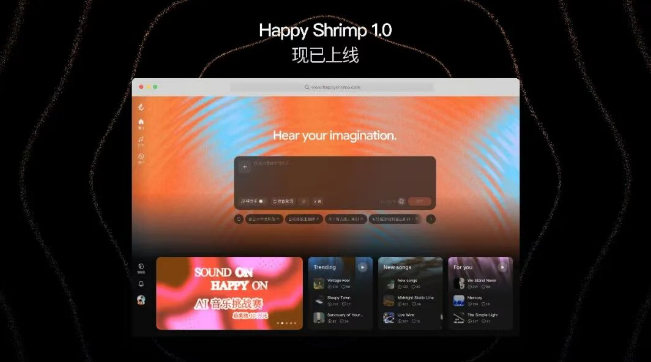
The official HappyShrimp website presents the same core idea in simple terms: describe the music you want to create, and the platform generates a complete song. The current beta interface supports both instrumental creation and smart lyrics.
From Tag-Based Prompts to Everyday Language
Many AI music tools rely heavily on prompt tags such as genre names, instrumentation, rhythm patterns, vocal types, or production terminology.
That workflow can be powerful, but it can also create a learning curve for users who do not know how to translate an idea into professional music vocabulary.
HappyShrimp takes a different approach.
The model is designed to understand descriptions that sound more like a story, mood, memory, or creative direction.
Instead of requiring a prompt built mainly from labels such as:
Lo-fi R&B, 808 drums, warm pads, female vocal
a user can describe the emotional or narrative result they want.
The original AIBase article gives an example along the lines of:
A monologue from the Phantom after being abandoned, generated as a sorrowful French musical-theater passage.
According to the report, HappyShrimp then constructed a complete piece around that request, including an organ-led atmosphere, a slow male-vocal narrative, and a more emotionally intense climax.
The important point is not the exact example itself. It shows the product’s intended interaction model: the user describes the desired scene or feeling, while the system handles more of the musical planning.
End-to-End Full-Song Generation
HappyShrimp uses an end-to-end full-song generation approach.
The original article contrasts this with systems that generate different components separately and then combine them afterward.
Alibaba’s stated goal is to treat music as a structured medium with its own syntax, semantics, and long-range context. Lyrics, melody, arrangement, vocals, and emotional progression are therefore planned as parts of one complete piece rather than as isolated modules.
This is intended to reduce common problems in AI-generated songs, such as:
- Lyrics and melody feeling poorly aligned
- Vocals sounding disconnected from the arrangement
- Abrupt transitions between sections
- Inconsistent musical structure
- Production elements that feel stitched together rather than composed as one track
The official international website describes HappyShrimp as an all-in-one AI music platform that can generate a full song with lyrics, vocals, and production included.
The Chinese site similarly describes the product as a one-stop AI music creation platform where a single sentence can become a complete song.
More Detailed Prompts Still Give More Control
Lowering the prompt barrier does not mean HappyShrimp only accepts simple prompts.
The original article says the model can also respond to more detailed combinations of era, genre, vocal characteristics, production texture, and emotional progression.
One test prompt asked for a sound built around:
1970s soul, Black male vocal, warm analog-recording texture
According to the AIBase report, the generated result quickly established a full-bodied vocal character and smooth melodic ornamentation.
Another example requested:
A racing-movie theme song with male-and-female rap exchanges
The reported output used progressive string arrangements and alternating male and female vocals to create a more cinematic sense of speed and tension.
These examples show that HappyShrimp is not trying to eliminate detailed prompting.
Instead, the product aims to support both ends of the spectrum:
- Casual users can describe an emotion or story in normal language.
- More experienced users can add genre, era, instrumentation, vocal, tempo, or production details when they want tighter control.
The Official Product Already Supports Multiple Creation Modes
HappyShrimp is currently available in beta through both Chinese and international websites.
The official interface includes:
- Instrumental generation
- Smart Lyrics
- Full-song creation from a text description
- Prompt input of up to 5,000 characters
- Public discovery sections such as trending and new songs
The Chinese website also states that HappyShrimp supports reference audio for timbre customization.
New users can currently receive free credits during the launch period, although credit amounts and promotional rules can change.
Because HappyShrimp is still in beta, users should treat feature availability, quotas, and commercial-use conditions as subject to change and check the official product terms before relying on generated music for business use.
HappyShrimp Partners With Taihe Music Group
On launch day, HappyShrimp also announced a strategic partnership with Taihe Music Group.
According to the original report, the two sides plan to explore areas including:
- Music-industry ecosystem development
- AI music-platform cooperation
- Co-creation with musicians
- New workflows around AI-assisted music production
Taihe Music Group is an established Chinese music-services company with businesses covering labels, copyright, artist services, distribution, live entertainment, and related music-industry operations.
The partnership suggests that HappyShrimp is not being positioned only as a consumer novelty.
Alibaba is also exploring how AI-generated music can connect with professional creators and the broader music industry.
HappyShrimp Will Appear at the 2026 Aranya Xiami Music Festival
HappyShrimp is also scheduled to appear at the 2026 Aranya Xiami Music Festival, which runs from August 28 to August 30.
According to the launch report, the project plans to present atmosphere music inspired by the festival itself.
That gives Alibaba a real-world showcase for a system whose central promise is translating scenes, memories, emotions, and narratives into music.
The festival connection is also notable because HappyShrimp’s Chinese name, 快乐虾米, deliberately evokes the Xiami music brand.
Available in China and Internationally
HappyShrimp has launched two official web entry points:
| Region | Official Website |
|---|---|
| China | https://www.happyshrimp.cn/ |
| International | https://www.happyshrimp.ai/ |
Both versions are currently labeled Beta.
The global site describes the product as an AI music generator that can create a complete song from a short description, while the Chinese version emphasizes one-sentence song creation and smart lyric generation.
The product is therefore already being positioned for both domestic and overseas users rather than launching as a China-only experiment.
Why Natural-Language Music Creation Matters
The most important idea behind HappyShrimp is not simply that it can generate music.
Text-to-music tools already exist.
The more interesting part is the attempt to make the input itself less technical.
A person may know exactly what a song should feel like without knowing the correct terms for the chord progression, production chain, vocal register, rhythmic subdivision, or instrumentation.
Natural-language control lets that person describe the creative intention first.
If the model can reliably translate that intention into musical structure, it reduces the gap between having an idea and being able to produce a listenable result.
That does not remove the role of professional musicians, arrangers, or producers. A generated song can still require editing, rights review, mixing decisions, or human artistic judgment.
But for demos, concept development, mood exploration, short-form content, or early-stage songwriting, a system that understands narrative language can make experimentation much faster.
常见问题
What is HappyShrimp 1.0?
HappyShrimp 1.0 is Alibaba’s AI music-generation model and platform, also known in Chinese as 快乐虾米. It can generate complete songs from natural-language prompts, including lyrics, vocals, arrangement, and production.
Do I need music-production knowledge to use HappyShrimp?
No. One of the product’s main goals is to let users describe music using everyday language rather than requiring professional prompt tags. More detailed musical terminology can still be added when finer control is needed.
Can HappyShrimp generate instrumental music?
Yes. The official beta interface includes an Instrumental creation mode in addition to song generation with lyrics and vocals.
Can HappyShrimp generate lyrics automatically?
Yes. The official interface includes a Smart Lyrics option, and the product is designed to generate lyrics as part of the full-song workflow.
Is HappyShrimp available outside China?
Yes. Alibaba has launched both a Chinese site at happyshrimp.cn and an international site at happyshrimp.ai.
Is HappyShrimp free?
The product is currently in beta and the official sites advertise free launch-period credits for new users. Credit amounts, limits, and future pricing may change, so current terms should be checked directly on the official site.
Can I use HappyShrimp music commercially?
Users should check HappyShrimp’s current terms before using generated music commercially. The source article does not provide a definitive commercial-use license, so commercial rights should not be assumed from the launch announcement alone.
How is HappyShrimp different from tag-based AI music generators?
HappyShrimp emphasizes natural-language understanding and end-to-end full-song generation. The goal is to let users describe moods, stories, memories, or scenes while the model handles more of the underlying composition, arrangement, lyrics, and vocal planning.
相关工具
- HappyShrimp: Alibaba’s international AI music-generation platform for creating full songs from natural-language prompts.
- HappyShrimp China: The Chinese version of HappyShrimp with smart lyrics, instrumental generation, and one-sentence song creation.
- Suno: A widely used AI music generator that creates complete songs from text or audio ideas.
- Udio: An AI music platform for generating, editing, and sharing music from text-based creative direction.
Related Links
- HappyShrimp International: Official international beta site for HappyShrimp.
- HappyShrimp China: Official Chinese beta site for 快乐虾米.
- HappyShrimp Example Song: An official HappyShrimp song page showing a prompt, generated lyrics, and a complete AI-created track.
- Taihe Music Group: Official English website for HappyShrimp’s launch-day strategic music-industry partner.
- Taihe Music Group China: Official Chinese website for Taihe Music Group.
- Aranya Xiami Music Festival on Apple Music: Apple Music’s curator page for the Aranya Xiami Music Festival.
Summary
HappyShrimp 1.0 is Alibaba’s attempt to make full-song AI generation easier to control with ordinary language.
Instead of requiring users to build prompts mostly from professional music tags, the product can interpret moods, stories, memories, genres, vocals, eras, and production ideas, then generate lyrics, composition, arrangement, and singing as one complete piece.
The product is already available in beta in China and internationally, and Alibaba is also connecting it with the professional music ecosystem through its Taihe Music Group partnership and upcoming Aranya Xiami Music Festival appearance.
HappyShrimp’s main idea is simple: let users describe the music they imagine in normal language, while the model handles more of the production work needed to turn that idea into a complete song.