AI searches increasingly prefer giving direct answers. What kind of corporate websites are more likely to be recommended? What problems can We0 AI solve?
AI search is changing how company websites win visibility. This article explains what kinds of websites are easier for AI to recommend, and how We0 AI helps businesses turn websites into showcase, growth, and lead-generation assets.
Chinese Title: AI searches increasingly prefer to give direct answers. What kind of corporate websites are more likely to be recommended? What problems can We0 AI solve?
AI searches increasingly prefer to give direct answers. What kind of corporate websites are more likely to be recommended? What problems can We0 AI solve?
In the past, when building a corporate website, many teams thought: First, launch a site that looks okay.
That's no longer enough.
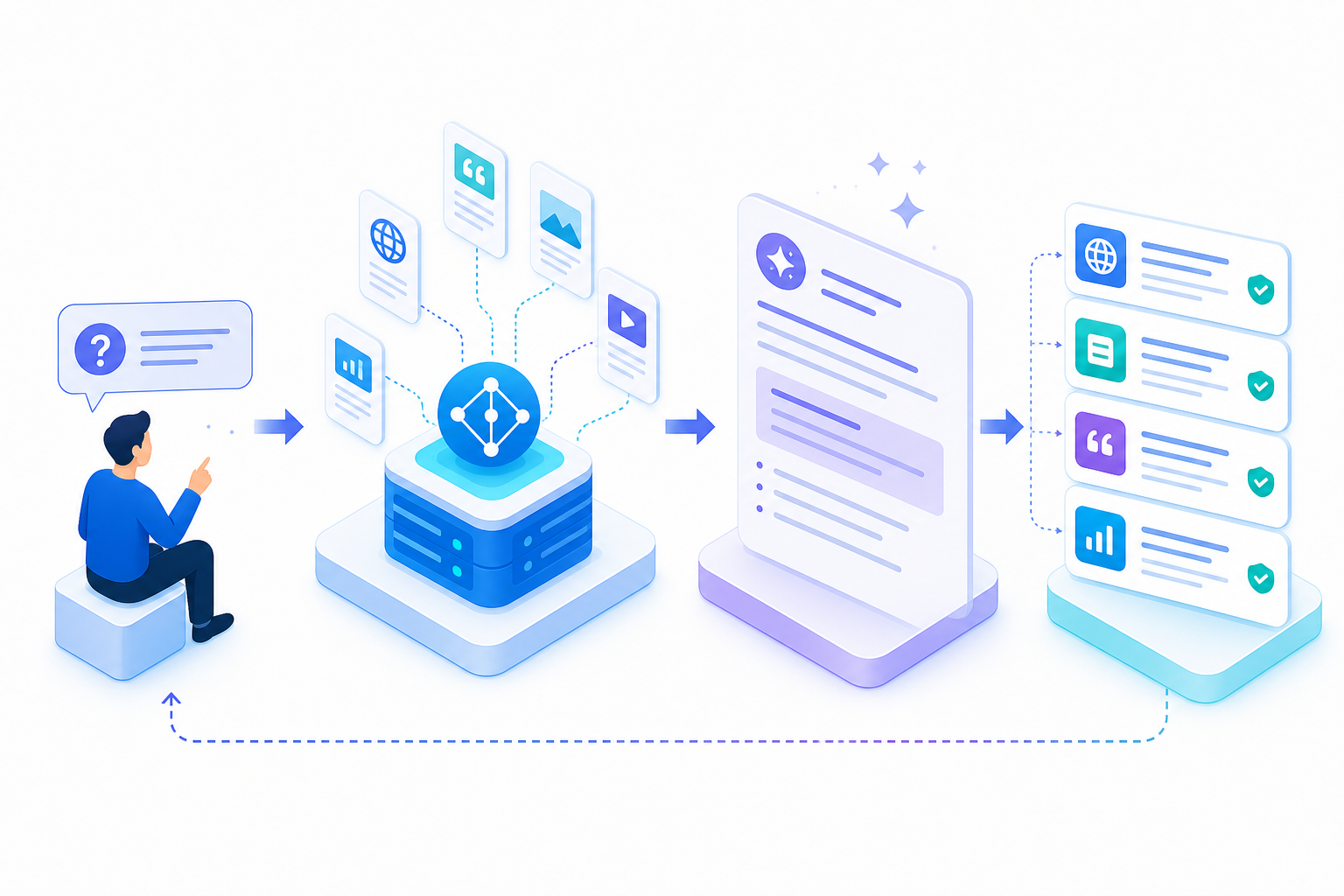
Because more and more users are not clicking through a dozen blue links to read slowly; instead, they directly ask ChatGPT, Gemini, Perplexity, or see AI Overviews in Google. The search entry point is becoming an "answer entry point."
The change this brings is very direct:
It's not about who builds the website that gets the opportunity.
It's about whose website is easier for AI to understand, extract, organize, and cite—that person is more likely to be recommended.
Let's start with the conclusion: What kind of websites does AI prefer?
If summarized in one sentence, it is:
AI prefers corporate websites that are "clearly structured, complete in information, explicit in expression, highly credible, and continuously updated."
It doesn't have to be the most dazzling website in the world in terms of design.
But it is often the website that is easiest for machines to read and best able to answer user questions.
This is exactly the opposite of how many companies used to build their websites.
The problem with many corporate websites is not "having no pages," but:
- The homepage is beautiful but doesn't tell you who they are
- Product pages are long but lack core answers
- Service pages are comprehensive but lack contextual expression
- Case study pages have images but no results
- The blog is updated but completely disconnected from the business
- The site is viewable, but cannot be stably cited by AI
Why does AI search favor this type of website?
Because AI gives answers, not based on "feelings."
It usually considers several levels:
- What is this page really about?
- Can this content directly answer the question?
- Is the information consistent throughout?
- Are there credible sources, facts, cases, and time information?
- Is the overall website structure stable and easy to crawl and understand?
Google Search Central also clearly mentions in its AI features documentation that to appear in AI-related search experiences, you must essentially follow high-quality content and SEO best practices, rather than relying on some "AI-specific trick."
In other words:
AI search does not overturn SEO.
Instead, it amplifies "content quality, structural quality, and site credibility."
What kind of corporate websites are more likely to be recommended by AI?
1. Clear page responsibilities, not relying on empty slogans across the site
AI dislikes vague expressions.
If your homepage says, "We drive the future with innovation," your product page says "Empowering enterprise digital transformation," and your service page says "Providing one-stop solutions," it looks like a company, but not like a citable answer source.
Websites that are more likely to be recommended usually clarify these questions:
- What do you do?
- Who do you serve?
- What problems do you solve?
- How do your products/services work?
- How do you differ from other solutions?
- What should the user do next to contact you or initiate an inquiry?
2. Content oriented towards questions, not just brand self-indulgence
AI search essentially feeds on "question-answer relationships."
So if a corporate site only has company introductions, visions, and press releases, its chances are slim.
What is truly more likely to be recommended is content like this:
- FAQ pages
- Scenario pages
- Industry solution pages
- Product comparison pages
- Pricing explanation pages
- Case study breakdown pages
- Tutorial and guide pages
- Terminology explanation pages
The website should be able to answer however the user asks.
3. Structured content, with paragraphs understandable on their own
This is particularly important.
The problem with many websites is not a lack of content, but that all the content is piled together.
For AI, a paragraph that cannot stand independently loses a lot of value.
Content more likely to be recommended usually has these characteristics:
- One paragraph covers only one question
- Headings indicate the direction of the answer
- Clear H2/H3 subheadings
- Lists, tables, and steps are clear
- Core definitions and core conclusions are placed first
- Short, directly quotable answers appear on the page
4. Consistent information on the site, without self-contradiction
AI is very averse to reading conflicting information.
For example:
- The homepage says it serves mid-to-large enterprises, while the blog is full of personal side hustle content
- The product page claims global market support, but the only contact information is a local WeChat account
- The page says "AI website building," but lacks any subsequent logic for operations, SEO, content, or inquiry handling
The problem with such sites is not that they can't be indexed.
It's that it's difficult to establish a stable recommendation signal.
5. Credibility signals, not just marketing jargon
What are credibility signals?
These include, but are not limited to:
- Clear company introduction
- Information about the real team or founder
- Customer case studies
- Industry experience
- Update dates
- Source citations
- Complete contact information
- Privacy policy / Terms of service / Basic compliance pages
Many corporate websites neglect this basic infrastructure, thinking "users might not look at it anyway."
But AI will.
Or, more accurately, AI will tend to use websites that look more like genuine business entities.
6. The website isn't finished when built; it's continuously updated
AI recommendations don't just look at static pages.
If a website hasn't been updated in 18 months, the blog stopped two years ago, there are only ever 3 case studies, and product pages show no signs of iteration, it will gradually lose its competitive edge, even if it was once well-built.
Continuous updating isn't about creating content for the sake of creating content.
It's about continuously supplementing:
- What users will search for
- How the industry is changing
- What's new with your products/services
- Which case studies best illustrate value
- Which pages are worth expanding for long-tail traffic
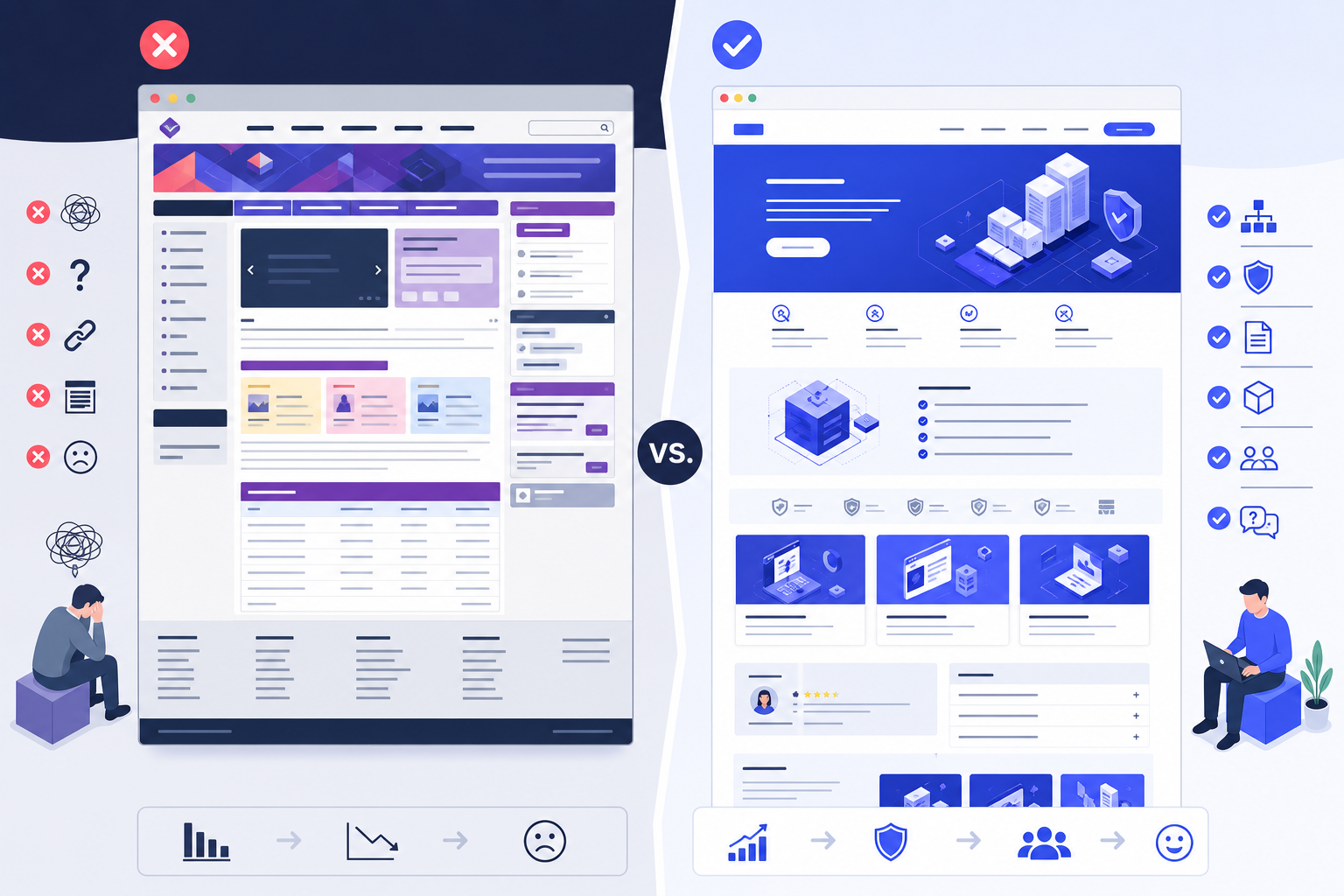
A quick table: AI-preferred websites vs. traditional makeshift corporate sites
| Dimension | Websites more likely to be recommended by AI |
Traditional "Just-Get-It-Done" Website |
|-|-|-|
| Core Message | Instantly understand what it does, who it's for, and what problem it solves | Lots of slogans, few answers |
| Content Structure | Clear H1/H2/H3, full set of FAQs, lists, tables | Large blocks of text, disorganized structure |
| Page Types | Complete product pages, scenario pages, case studies, and guides | Only homepage, about page, and contact page |
| Credibility | Includes cases, sources, team, updates, and compliance pages | Only marketing copy, no proof |
| Update Frequency | Continuously adds content and pages | Remains static after launch |
| Search Optimization | Considers SEO, GEO, and AEO simultaneously | Only focuses on “having a website” |
| Conversion Path | Clear CTAs and well-defined inquiry path | Users are left unsure what to do next |
The Most Common Mistake Companies Make Today: It’s Not Poor SEO, but an Outdated Website Strategy
Many people ask:
“So, is it enough if I just write more SEO articles?”
No, it’s not.
Because the issue today isn’t “whether there are articles,” but rather:
Whether your entire website can be seen as a trustworthy answer system.
If the site structure is fragmented, the content is scattered, the product value is unclear, pages lack clear relationships, and the conversion path is broken, the typical results are:
- Some pages are indexed, but there’s no brand accumulation
- Long-tail keywords bring a bit of traffic, but no conversions
- Content is being published, but it doesn’t drive leads
- The website is online, but your assets aren’t
That’s Also Why What We0 AI Solves Goes Beyond “Building a Website Faster”
Many AI website builders emphasize:
- Generating a site in one sentence
- Getting a page online in minutes
- Quickly creating a landing page
These capabilities are valuable.
But honestly, they only solve “getting the page built.”
What truly holds companies back is often these issues:
- How to plan the site structure so it’s easier to be found
- How to break down products, services, cases, and FAQs
- How to layout content in Chinese and English
- Which pages to prioritize and what content to update long-term
- How to do SEO/GEO after the site goes live
- How to turn the website from a display into a lead generation asset
What Is We0 AI More Like?
It’s not just a page builder.
It’s more like a “showcase website growth platform + AI site-building capabilities + ongoing operational optimization service.”
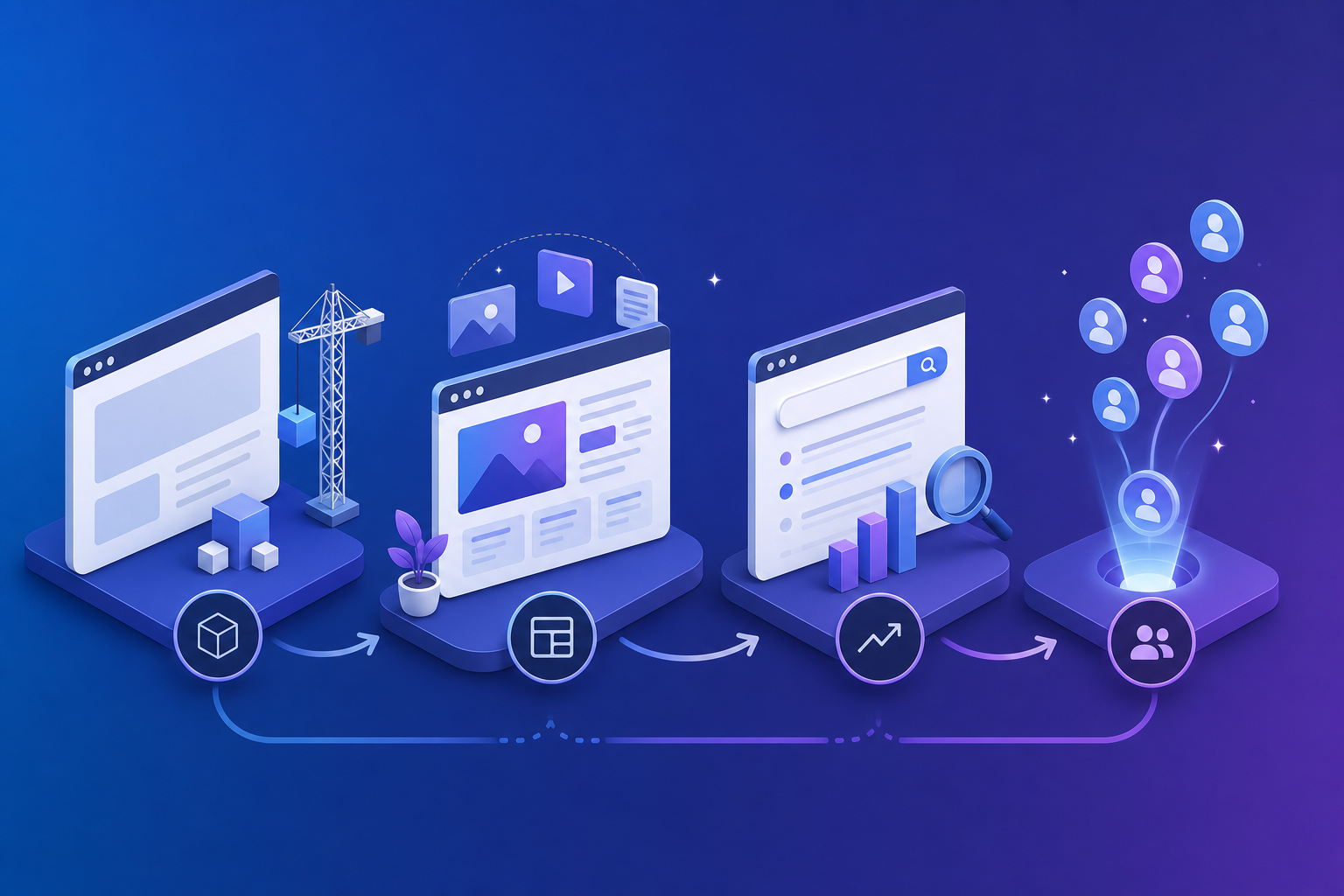
Its underlying logic doesn’t just help you create a page. It focuses on this entire chain:
Build -> Showcase -> Grow -> Leads
That means:
- Setting up the website
- Clearly presenting products/services/capabilities/cases
- Making content more suitable for SEO, GEO, AEO, and AI recommendations
- Gradually converting traffic into leads and customers
What Specific Problems Can We0 AI Solve?
This can be broken down into 4 layers:
1. Solving the “Don’t Know How to Structure” Problem
Not every company needs a designer.
What many lack is: someone who can structure the website’s information architecture correctly.
We0 AI is better suited for these showcase sites:
- Brand websites
- SaaS / AI product websites
- Service showcase pages
- Portfolios and case studies
- Multi-language foreign trade sites
- Consultant / Agency landing pages
- Creator / Independent personal brand sites
2. Solving the “Have a Website, but Can’t Articulate Value” Problem
Many sites aren’t lacking content, but have weak messaging.
We0 AI doesn’t just generate pages; it helps organize:
- What to talk about first
- Which pages are essential
- Which questions must be answered directly
- What content is suitable for expanding into long-tail traffic pages
- Which CTAs can better engage users
3. Solving the “No One Manages Growth After Launch” Problem
This is the most common pain point for most sites.
The website being built doesn’t mean growth has started.
Many teams are stuck here:
- No one updates content continuously
- No one checks which pages have traffic
- No one does SEO/GEO optimization
- No one reviews which content generates leads
The value of We0 AI lies precisely in not stopping at “delivering a website.” It emphasizes:
- Page launch
- Basic SEO/GEO configuration
- Content production and publishing
- Data monitoring
- Growth recommendations
- Continuous optimization and managed execution
4. Solving the “Website Is Not an Asset, Just a Facade” Problem
This is the most crucial point.
Many corporate websites are just online business cards.
What We0 AI aims to do is help turn your site into:
- Something discoverable via search
- Something understandable and quotable by AI
- A place for continuous content accumulation
- A source of gradually acquired leads
- A long-term, reusable growth asset
If You Are Currently Working on a Corporate Website, What Should You Prioritize?
Here’s a very practical priority checklist:
Priority One: Clearly State “Who You Are, What You Do, and Whose Problem You Solve”
This sounds basic.
But in reality, many official websites fail to do it.
Priority Two: Fill in High-Value Pages
At least add these as soon as possible:
- Product/Service pages
- Scenario/Solution pages
- FAQ pages
- Case study/Customer story pages
- About us/Trust pages
- Contact/Demo/Consultation entry page
Priority Three: Make Content Scannable and Quotable
This means:
- Clearer headings
- Shorter paragraphs
- Key conclusions placed upfront
- More tables, lists, and FAQs
- Clearer core definitions
- Smoother relationships between pages
Priority Four: Treat the Website as a Long-Term Growth Project, Not a One-Time Delivery
This is the biggest differentiator.
Websites recommended by AI are often not built perfectly in one go.
They are continuously optimized over time.
Key Takeaway
In the AI search era, competition for corporate websites is no longer just “who ranks higher.”
It’s “who looks more like an answer source that can be understood by machines, trusted by users, and cited by systems.”
Therefore, websites that are more easily recommended often share these common traits:
- Clear structure
- Specific messaging
- Complete pages
- Strong trust signals
- Continuously updated content
- Balancing SEO, GEO, AEO, and conversions
And that’s exactly where We0 AI’s value lies:
It’s not just about helping you build a website faster.
It’s about helping you turn your site into a long-term asset that integrates showcasing, growth, and lead generation.
Frequently Asked Questions
In the AI search era, do companies still need a website?
Yes, and even more so. Because when AI provides answers, it often needs to reference trustworthy sources. The official website remains the most core and controllable first-party asset for a brand.
Are AI-recommended websites and traditional SEO based on different logic?
Not entirely different. The foundation still requires quality content, clear structure, crawlability, and credibility. The difference is that AI search places a higher emphasis on “whether it can directly answer the question” and “whether it can be stably cited.”
What type of pages are most likely to be recommended by AI?
Typically, well-structured, question-oriented pages like FAQs, product pages, solution pages, case studies, tutorials, and comparison pages.
Who is We0 AI suitable for?
It is suitable for teams and individuals who need a showcase website and aim for long-term growth, such as SaaS/AI product teams, foreign trade companies, consultants, agencies, independent developers, creators, and local service businesses.
Related Tools
- Google Search Central AI Features
- Bing Webmaster Tools
- Ahrefs
- Semrush
- Google Search Console
- Screaming Frog SEO Spider
/com/search/docs/appearance/ai-features)
References
- Google Search Central: AI Features and Your Website
- Generative Engine Optimization Best Practices for 2026
- AI SEO / GEO Public Discussions (Chinese)
Related Reading / Internal Link Suggestions
- How should an AI-focused official website structure its content to be more easily cited?
- What are the differences between GEO and SEO, and which should a business prioritize first?
- How should a SaaS website lay out its FAQ, case studies, and pricing pages?
- How can multilingual content on an international website balance presentation and inquiry generation?
Ready to Get Started?
If you've already realized that the issue with today's corporate websites isn't just about "whether to build one," but whether it can consistently deliver visibility, search exposure, and leads after launch, then growth-oriented solutions like We0 AI are indeed worth a closer look.
Conclusion
The future website isn't just for people to see.
It must also be understandable by AI, callable by search systems, and quickly trusted by users.
And that is exactly where the new generation of corporate websites needs to be redesigned.