Southeast Asian Users Prefer Local Languages and Mobile Access to AI: Should You Build a Multi-language Site or Separate Country Sites?
You think you're targeting the "Southeast Asian market," but users may just see an English website that is complete but has little to do with them.
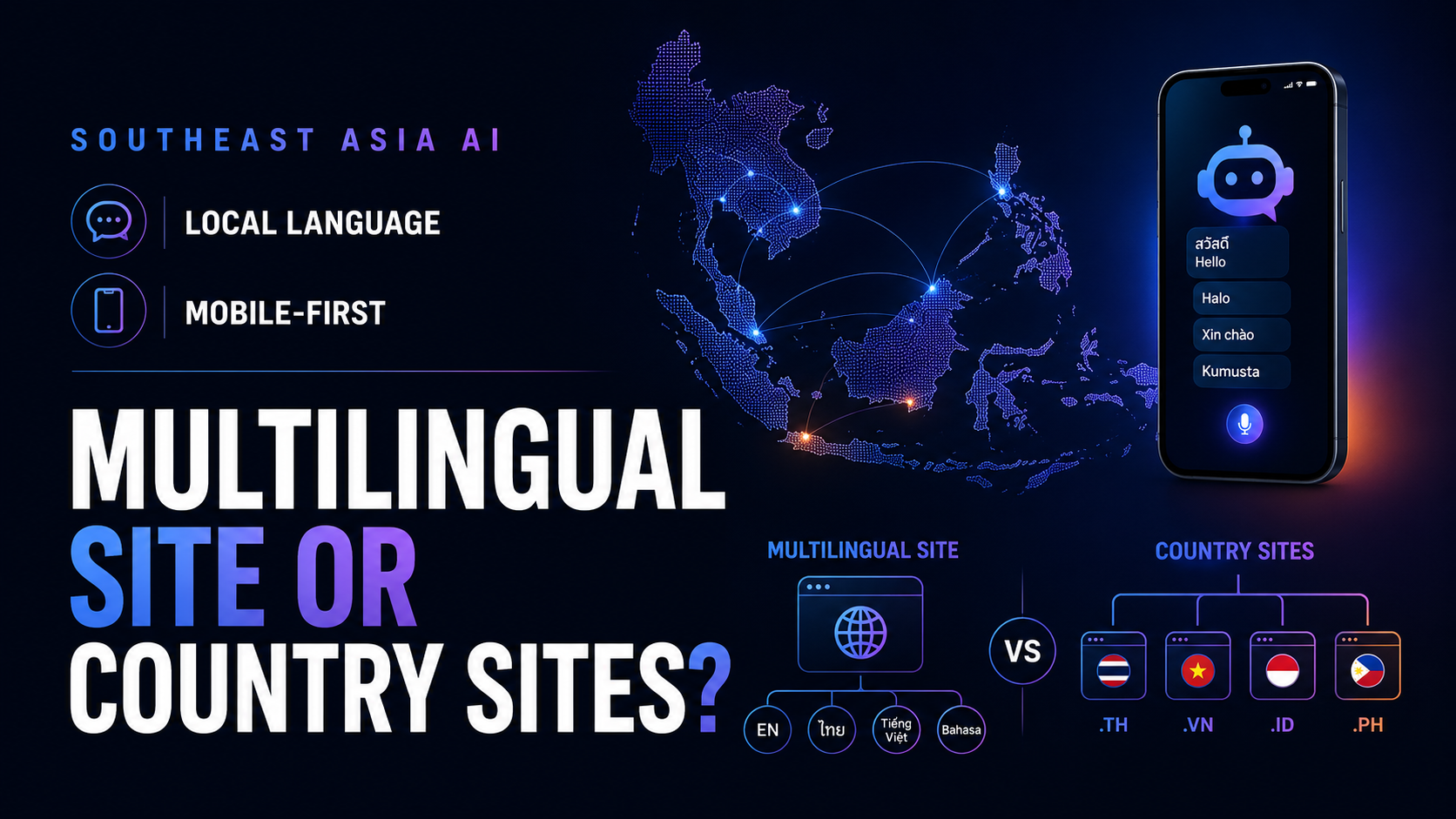
Southeast Asian Users Prefer Local Languages and Mobile Access to AI: Should You Build a Multi-language Site or Separate Country Sites?
You think you're targeting the "Southeast Asian market," but users may just see an English website that is complete but has little to do with them.
This is especially common with AI products today.
Teams put product capabilities, model parameters, and funding credentials into their English website, add a language switcher, and consider the job done. But people opening the site from Jakarta, Ho Chi Minh City, or Bangkok are often on their phones, with unstable internet, and very specific questions: Can this AI actually help me get things done? How much does it cost? Can I reach you in a way I'm familiar with?
So, let's cut to the chase. Here's the conclusion:
Most AI companies entering Southeast Asia should not start by building a separate site for each country. First, build a "scalable regional multilingual main site." Then, upgrade a market to a country site once it has proven demand, content differences, and conversion differences.
This isn't a compromise. Quite the opposite—it's putting resources where they matter most.
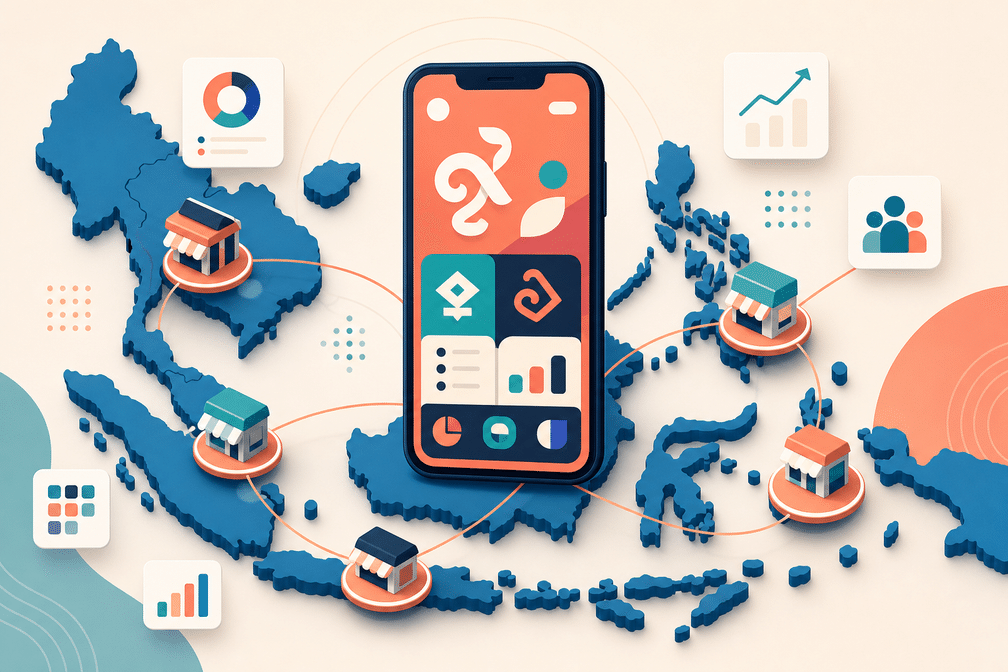
First, Let's Bust a Myth: Southeast Asia is Not One Market or One Language
The phrase "going into Southeast Asia" makes it too easy to take shortcuts.
Indonesia, Vietnam, Thailand, the Philippines, Singapore, and Malaysia all differ in language, purchasing power, payment habits, regulatory environments, channels, and sources of trust. English can reach some people, but that doesn't mean English is the best language for conversions.
Moreover, localization isn't just running your English homepage through a translation tool.
| Level | Common Approach (Just Translation) | True Localization That Impacts Conversions |
|---|---|---|
| Language | Translate buttons and paragraphs | Ensure terms, examples, tone, and CTAs match local expression |
| Content | Use the same case studies for all countries | Feature local industries, roles, and use cases |
| Transaction | Use uniform USD pricing and email contact | Provide clear local currency, trial options, sales, and contact paths |
| Trust | Show a wall of global client logos | Include local clients, partners, compliance notes, and understandable support methods |
| Device | Shrink the desktop version | Ensure users understand the value in three seconds and complete an action in one step on mobile |
DataReportal's Digital 2025: Indonesia shows that Indonesia had about 212 million internet users at the start of 2025. That scale alone is a reminder: growth in Southeast Asia won't happen just by putting an English page out there. You're facing a mobile-first, fragmented decision-making, and high-context communication environment.
As for the idea that "local language is more important," don't interpret it as everyone rejecting English. A more accurate way to put it is: When users are comparing prices, understanding complex features, assessing risk, or preparing to submit a lead, a familiar language significantly lowers the cost of comprehension. This is especially true for AI products—the features are already abstract, and English adds another layer of friction, making it easy for users to leave immediately.
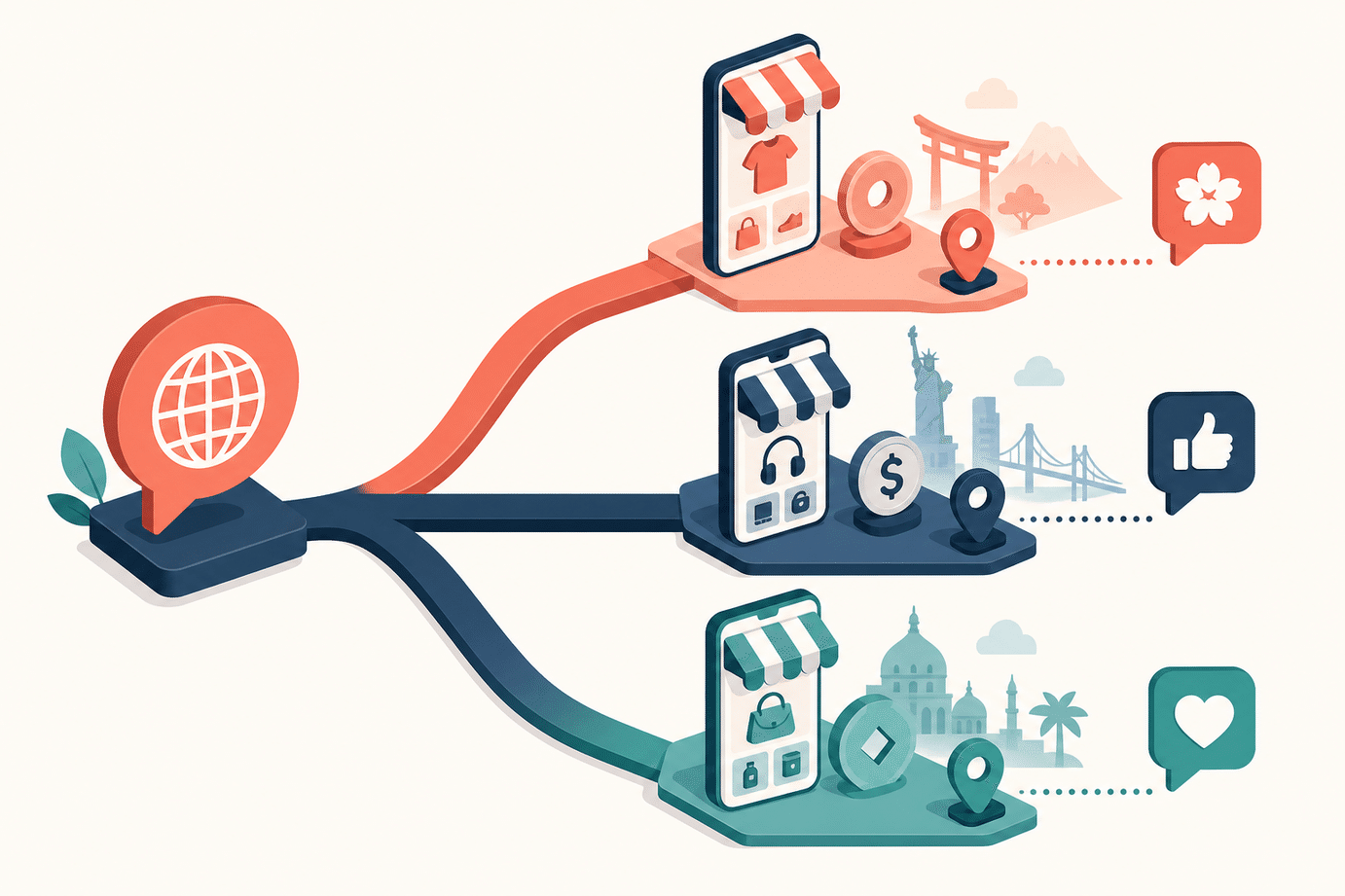
What's the Real Difference Between a "Multilingual Site" and a "Country Site"?
Many teams frame this as a URL question: /id/, /th/, or id.example.com, th.example.com?
URLs matter, but that's the second half.
First, you need to clarify: Are you serving the same need in different languages, or are you serving different businesses in different countries?
Multilingual Site: One Growth Hub, Multiple Language Entry Points
The typical structure is:
example.com/
example.com/id/
example.com/th/
example.com/vi/
example.com/en-sg/
This works best at a stage where the product is the same, pricing is largely consistent, the team is limited, markets are still being validated, and content assets are not yet deep.
The benefits are clear:
- Centralized brand, tech, content, and data, fast to launch, low maintenance cost;
- You can first test which language pages, keywords, and landing pages actually drive registrations and inquiries;
- SEO authority and content production aren't scattered too early;
- Later, if Indonesia gains traction, you can smoothly expand from
/id/into a deeper country-specific content system.
But it has a limit: Multilingual doesn't mean copying one English site five times. If the case studies, FAQ, pricing, CTAs, and keywords in every language directory are identical—just with different translations—you're only increasing maintenance work, not adding market understanding.
Country Site: A More Complete Business Unit for One Country
A country site doesn't necessarily need its own domain. It can be a sufficiently complete content and conversion system under /id/, or it can be a subdomain or separate domain. The key isn't the look, but that the market has a clear need for independent operations:
- Has a local team or channels;
- Pricing, currency, payment, or contracts are clearly different;
- Has local industry cases and high-frequency questions;
- Search terms, competitors, and compliance requirements differ;
- Leads need to be assigned to different sales processes;
- The market is validated and worth ongoing content and ad investment.
The cost of a country site isn't writing a few more pages of copy; it's your commitment to continuously operate in that country.
Without someone maintaining local content, handling local inquiries, and reviewing local data, a "country site" quickly becomes a display window with outdated information. It looks very international, but it actually undermines trust.
Use This Table to Decide—Don't Choose a Structure on Gut Feeling
| Your Current Situation | Recommendation | Reason |
|---|---|---|
| Starting to validate 2–5 SEA markets | Regional multilingual main site | Validate language, channels, and demand at lower cost first |
| Product, pricing, and trial process are similar across countries | Regional multilingual main site | Differences aren't enough to justify independent operations |
| Indonesia or Thailand already has stable organic traffic, ads, and sales follow-up | Upgrade that market to a country site | Content, conversion, and operations are worth deepening |
| One language covers multiple markets, but pricing/industries differ | Language page + country landing page | Same language doesn't mean same user task |
| Each country has a local team and content budget | Country site system | Organizational capacity can support ongoing operations |
| Just want to "look very global" | Don't split yet | Multiple sites won't automatically bring localization or rankings |
Language determines whether you can be smoothly understood; country determines whether you need to rebuild your business expression for one market.
This sentence is essentially the dividing line for the entire decision.
A More Solid Approach: Start with a "Regional Main Site with Expandable Country Layers"
If you're still early, don't think of it as a strict either/or. Instead, build an evolvable skeleton:
example.com/                 # Global / English main entry
example.com/id/              # Indonesian core product and content
example.com/th/              # Thai core product and content
example.com/vi/              # Vietnamese core product and content
example.com/solutions/ # Shared industry solutions
example.com/id/solutions/ # Indonesia: validate market before deepening
example.com/th/pricing/ # Thailand: set pricing independently after differentiation
Place the shared product truth at the core: product capabilities, brand assets, technical documentation, global case studies, and universal content guidelines.
Then, make the localization layer that drives conversion into independently evolvable modules:
- Value proposition on the homepage hero section;
- Industry and role-specific case studies;
- Pricing, currency, and payment details;
- FAQ, compliance, and data processing information;
- Contact, Demo, WhatsApp, LINE, and other call-to-action entry points;
- Content pages aligned with local search terms.
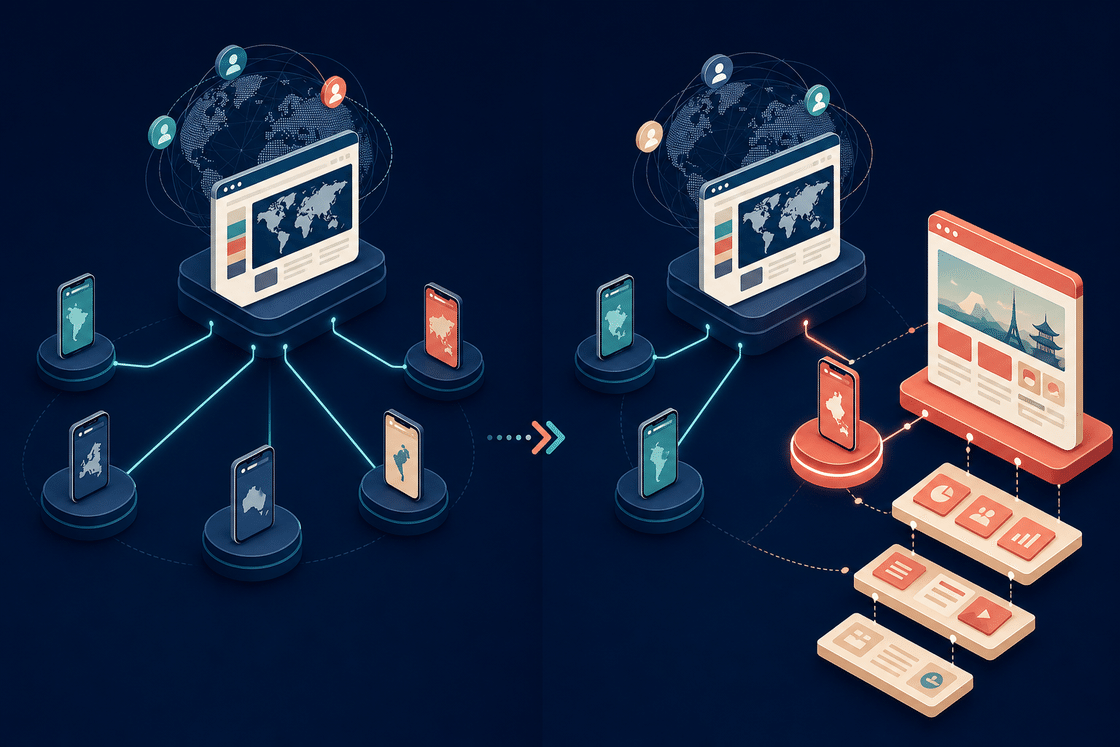
When should you “upgrade” a language directory to a country site? Look for four signals
Don’t split into a country site just because traffic from that country is high. High traffic might just mean content is being seen; a country site is for deeper operations and higher conversion.
If two or three of the following four conditions are met, it’s worth considering a dedicated site:
- Demand signal: The market consistently contributes registrations, demo requests, or high-quality leads, not just page views;
- Content signal: Generic pages no longer cover local users’ questions, requiring industry pages, case studies, and comparison pages;
- Business signal: Prices, plans, payments, contracts, partners, or sales processes need localization;
- Organizational signal: Someone is available to maintain content, follow up on leads, and analyze data over the long term.
Getting traffic doesn’t mean you should split the site; being able to convert traffic into sustainable leads is the real reason to split.
Mobile-first: Don’t just interpret it as “the page opens on a phone”
A large number of Southeast Asian users access products via mobile. The impact of this on AI companies goes far beyond making buttons a little bigger.
The mobile page should answer not “Is it responsive?” but “Can users understand and complete the next step with one hand, in a short time, and on a limited network?”
For AI product mobile landing pages, prioritize checking these 7 things:
- Lead with one clear sentence. Skip “leading multimodal intelligent platform” and say “helps sales teams automatically organize customer inquiries into actionable leads.”
- Keep only one primary action on the hero section. Register, book a demo, or try a trial—don’t let three buttons compete.
- Keep forms short. Don’t ask for company size if you can avoid it; don’t request a lot of information before allowing email-based continuation.
- Speed is part of trust. Large videos, heavy animations, and third-party scripts can kill interest on mobile networks.
- Local communication entry points should feel natural. If the sales process depends on WhatsApp, LINE, or Zalo, place them where users are ready to ask, not all over the page.
- Don’t hide pricing and trials. The cost of understanding an AI product is already high; the more complicated the purchase path, the more likely users will return to search results.
- Don’t force automatic language redirection. Prompting users to switch is fine; deciding for them is not. Google also recommends using different URLs for language versions and using signals like
hreflangto help search engines understand the relationships.

International SEO: Don’t let translated pages compete for rankings
A common disaster: English, Indonesian, and Thai pages are highly similar in content; have no language annotations; and are automatically redirected. Google ends up not knowing which page to rank, and users often land on the wrong version.
At a minimum, international SEO requires the following:
- Use stable, indexable, independent URLs for each language or region version;
- Indicate language/region relationships with
hreflang, e.g.,id-ID,th-TH,vi-VN, and include a defaultx-defaultpage; - Include self-references and mutual references for each version to avoid incomplete tags;
- Don’t just translate the body—localize the title, description, image alt text, FAQ, and structured data as well;
- Don’t force country names into every page. First, build a keyword bank around local search intent;
- Use Search Console to observe impressions, clicks, query terms, and landing pages per directory, then decide where to invest more.
Google Search Central’s core recommendation for multi-region, multilingual sites is clear: if you use different URLs for different language content, use hreflang to help Google direct search results to the appropriate language version.
This is why starting with one well-structured, language-expandable main site is usually more SEO-efficient than hastily replicating five independent sites.
What We0.ai can do: Not just “batch-translate five homepages”
The most dangerous state for a website expansion is when the homepage launch marks the end of effort.
What really matters is what comes next: What are users searching for in each country? Which language pages generate leads? Which case studies best explain the AI product? Where does the mobile experience drop off? What content needs to be added, and which pages need revision?
This is where We0.ai is better suited to step in.
We0.ai doesn’t just help you generate a page. It treats a showcase site as a growth asset: from brand and page structure planning to multilingual display; from SEO/GEO basics to content production, data monitoring, page optimization, and growth review.
In other words, you can first build a multi-language regional site that won’t require rework, then gradually deepen the content, case studies, and conversion paths for Indonesia, Thailand, or Vietnam based on real data. The path isn’t “build and done”—it’s:
Build → Showcase → Grow → Leads

Finally, a 30-day execution plan for you
If you’re preparing to enter Southeast Asia, don’t start five separate site projects right away. Do this:
Week 1: Choose markets, not “Southeast Asia.” Based on existing customers, organic traffic, channel partners, and sales languages, pick 2–3 priority countries.
Week 2: Build the main site and language layer.
Set up an English main entry and prioritized language directories. First complete: Homepage, Product page, Core Use Case page, Pricing/Trial page, FAQ page, and Contact page.
Week 3: Build the local conversion layer. Prepare at least one role/industry landing page, one case study or use-case page, and a mobile-friendly contact/consultation entry for each priority market.
Week 4: Use data to decide "double down" or "pause." Look at search terms, mobile engagement, free trials, demos, and inquiry quality — not just pageviews. Add more local content and conversion modules for countries showing the strongest signals.
Don't treat "multilingual" as a translation task. It is fundamentally a growth strategy. Don't treat "country site" as a domain name task. It is fundamentally a business commitment.
FAQ
Should an AI company entering Southeast Asia build an English site first?
Yes, keep English as a brand and global information hub. But don't rely solely on an English site to serve all markets. Prioritize countries where you already have leads, traffic, or channel partners, and provide core product pages and conversion pages in their local languages.
Will having a multilingual site hurt SEO?
Not if the structure is clear. Creating separate URLs for each language and correctly configuring hreflang, canonical tags, and sitemaps — while providing differentiated local content — actually helps search engines understand the audience each page serves.
Can Indonesia and Malaysia share the same language version?
Not entirely, just because some users can read the same language. You need to check whether search terms, pricing, industry cases, payment methods, and sales activities are consistent. Shared basic content is fine, but high-intent landing pages should often be split by country.
When should I use a standalone country domain?
When your local branding, compliance, team, content, and sales system are already relatively independent. Early on, most teams benefit from using a country/language directory under the same main domain to consolidate authority and maintenance resources.
Where should I start with mobile-first optimization?
Start with the above-the-fold value proposition, number of CTAs, form length, loading performance, and local contact entry points. Don't spend a lot of time on flashy animations first.
Related Tools
- We0.ai: Build and scale showcase websites
- Google Search Central: Managing multi-regional and multilingual sites
- Google Search Central: Localized pages and hreflang
Sources
- DataReportal — Digital 2025: Indonesia
- Google Search Central — Managing Multi-Regional and Multilingual Sites
- GSMA — The Mobile Economy Asia Pacific 2025
Ready to Build?
If you've decided to enter Southeast Asia, the next step isn't to rush into buying a bunch of country domains.
First, organize your product, target markets, priority languages, and conversion paths into a live, testable, and scalable site structure. We0.ai can help you start with a multilingual showcase site, then use SEO, content, data, and page optimization to turn high-signal markets into real customer acquisition channels.
Conclusion
Multilingual site or country sites?
The answer is not a binary choice, but a matter of sequence: First, build a scalable regional multilingual main site. Then, let proven countries earn deeper independent content, conversions, and operational focus.
Users accessing AI on their phones in their local language aren't asking you to translate your site more. They are asking you to be faster, clearer, and to feel more like someone who understands their local business.
And that is where going global truly begins.
lazy assumption: Southeast Asia is not one market, or one language
“Going into Southeast Asia” is a phrase that makes teams careless.
Indonesia, Vietnam, Thailand, the Philippines, Singapore, and Malaysia differ in language, purchasing power, payment habits, regulations, acquisition channels, and what makes buyers trust a new vendor. English may be understood by part of the audience. That does not make it the best language for conversion.
And localization is not feeding an English homepage through a translation engine.
| Layer | What translation-only teams do | What actually changes conversion |
|---|---|---|
| Language | Translate buttons and body copy | Localize terminology, examples, tone, and CTAs |
| Content | Reuse one case study everywhere | Show local industries, roles, and use cases |
| Purchase path | Use USD and email for everyone | Clarify currency, trials, sales flow, and contact options |
| Trust | Show a global logo wall | Add relevant proof, partners, compliance, and support cues |
| Device | Shrink the desktop page | Make the value and next action obvious on a phone |
DataReportal’s Digital 2025: Indonesia reported roughly 212 million internet users in Indonesia at the start of 2025. The point is not just scale. It is that regional growth does not happen because an English page is technically accessible. It happens when the page fits a mobile, fast-decision, high-context buying moment.
The local-language point needs nuance too. It is not that every user refuses English. A better way to say it is this: when people compare prices, try to understand a complex feature, assess risk, or prepare to contact sales, familiar language reduces friction. For AI products, that matters even more. The product can already feel abstract; English adds another layer of effort.
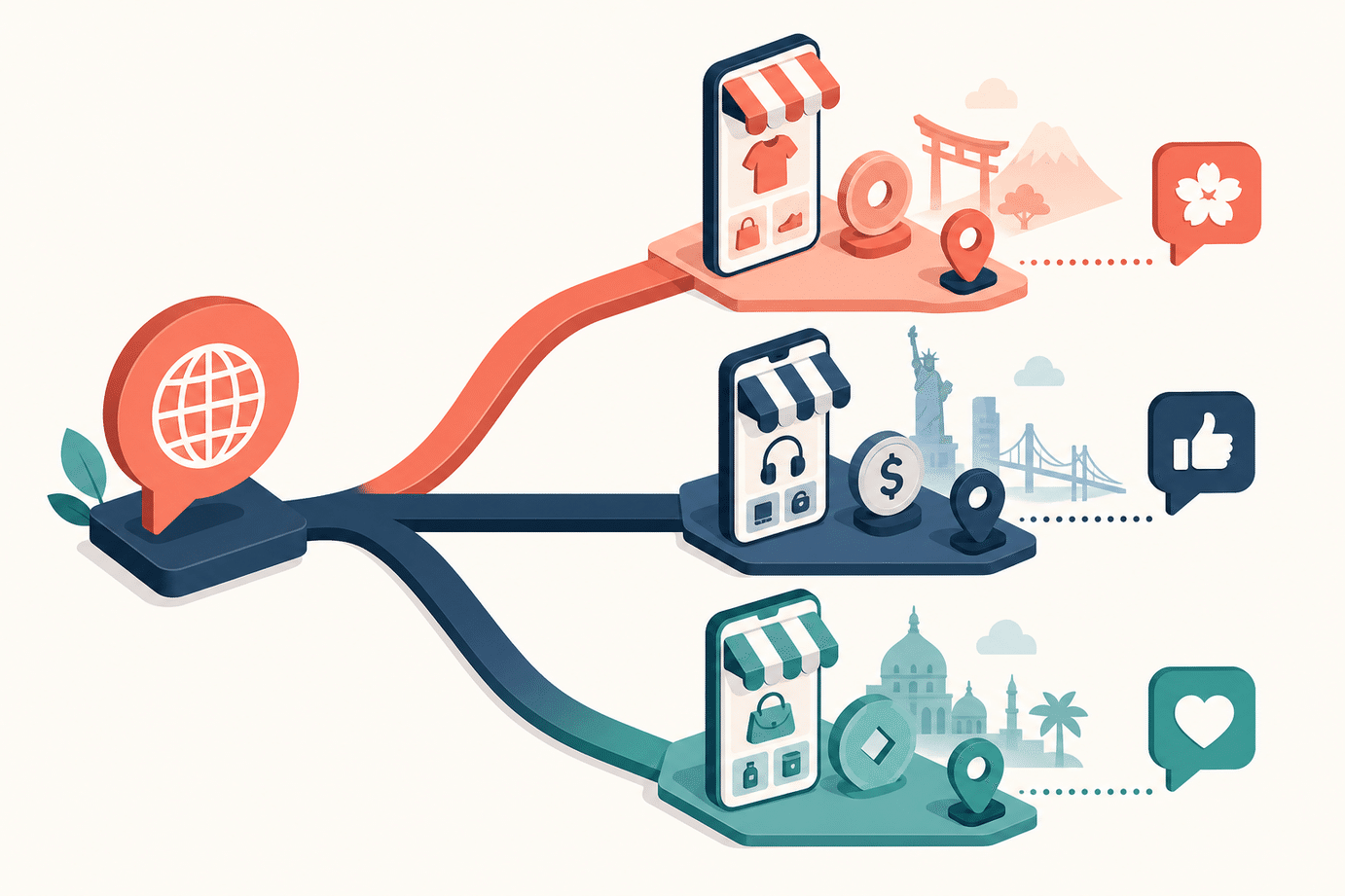
What is the real difference between a multilingual site and a country site?
Many teams turn this into a URL debate: /id/ and /th/, or id.example.com and th.example.com?
URLs matter. But they come later.
The earlier question is: Are you serving the same demand in different languages, or are you operating a different business proposition in each country?
A multilingual site: one growth hub, several language entrances
A typical structure looks like this:
example.com/
example.com/id/
example.com/th/
example.com/vi/
example.com/en-sg/
It is a good fit when the product is the same, pricing is broadly similar, the team is lean, markets are still being validated, and content depth is limited.
The advantages are very practical:
- Brand, technology, content, and data stay together, so you ship faster and maintain less.
- You can test which language pages, keywords, and landing pages actually produce sign-ups and leads.
- SEO authority and editorial effort are not fragmented too early.
- If Indonesia starts to work,
/id/can grow into a deeper country content system without a painful restart.
But there is a boundary: multilingual does not mean cloning an English site
five times.** If every language folder has identical case studies, FAQs, pricing, CTAs, and keywords—just translated—you have created maintenance work, not market understanding.
A country site: a fuller operating unit for one market
A country site does not have to mean a separate domain. It can be a substantially localized system under /id/, or it can become a subdomain or local domain later. The key is not its address. The key is whether the market needs its own operating depth:
- A local team or channel partner exists;
- Pricing, currency, payments, or contracts differ;
- Local industry examples and recurring questions are emerging;
- Search terms, competitors, or compliance requirements differ;
- Leads need a distinct sales workflow;
- The market has been validated and deserves ongoing content and media investment.
The cost of a country site is not a few extra pages. It is a promise to keep operating that country.
Without someone to maintain local content, respond to local leads, and review local data, a "country site" quickly becomes an outdated showroom. It looks international. It feels less trustworthy.
Use this table before you choose an architecture
| Your situation | Best move | Why |
|---|---|---|
| You are validating 2–5 Southeast Asian markets | Regional multilingual site | Test language, channel, and demand with lower overhead |
| Product, price, and trial flow are largely the same | Regional multilingual site | Differences do not yet justify separate operations |
| Indonesia or Thailand already produces steady organic traffic, paid results, and sales follow-up | Upgrade that market into a country site | It is worth deepening content, conversion, and operations |
| One language spans several markets, but pricing or industries differ | Language pages + country landing pages | Shared language does not mean the same buyer job |
| Every country has a local team and an editorial budget | Country-site system | The organization can sustain local operations |
| You only want to "look global" | Do not split yet | More sites do not automatically create localization or rankings |
Language decides whether people can understand you smoothly. Country decides whether you need to rebuild the commercial story for that market.
That is the dividing line.
A safer approach: a regional hub with country layers you can split out later
If you are early, do not force a binary choice. Build an architecture that can evolve:
example.com/                 # Global / English entry point
example.com/id/              # Indonesian core product and content
example.com/th/              # Thai core product and content
example.com/vi/              # Vietnamese core product and content
example.com/solutions/       # Shared industry solutions
example.com/id/solutions/    # Go deeper after Indonesia is validated
example.com/th/pricing/      # Separate when Thai pricing and buying flow diverge
Keep shared product facts in the hub: product capabilities, brand assets, technical docs, global proof, and common editorial standards.
Then make the conversion layers that must be local modular and
independently expandable:
- The homepage value proposition
- Industry- and role-specific proof
- Pricing, currency, and payment explanations
- FAQs, compliance, and data-processing information
- Demo, contact, WhatsApp, LINE, or other relevant action paths
- Content pages mapped to local search intent
[Image: A visual comparison between multilingual sites and country-specific sites in Southeast Asia. On the left, a global map interface connects to multiple phones representing a multilingual site, each phone displaying a different country icon. On the right, phones connect to a single country map interface, with localized content modules below (e.g., download, share, comments), representing a country-specific site. This image relates to the discussion about Southeast Asian users preferring to access AI in their local language and via mobile, and whether to build a multilingual site or separate country sites, visually illustrating the difference between the two approaches.]
When should a language folder become a deeper country site? Watch four signals
Do not split simply because a country has high traffic. Traffic may only mean that a page was seen. A country site is for deeper operations and stronger conversion.
If two or three of these signals are true, it is time to plan the upgrade:
- Demand signal: the market consistently produces sign-ups, demo requests, or qualified leads—not just page views
- Content signal: general pages no longer answer local questions; you need industry pages, case studies, and comparison pages
- Commercial signal: prices, plans, payments, contracts, partners, or sales flows need local treatment
- Operating signal: someone can continuously own content, lead response, and data reviews
Being able to attract traffic is not a reason to split. Being able to turn that traffic into repeatable leads is.
Mobile-first does not mean “the page opens on a phone”
A large share of Southeast Asian users discover products on mobile. For AI companies, that changes more than button size.
A mobile page should not merely answer “Is it responsive?” It should answer: Can someone understand the value and take the next step quickly, one-handed, on a limited connection?
For an AI product landing page, check these seven things first:
- Say it in human language above the fold. Instead of “an advanced multimodal intelligence platform,” say “turn customer inquiries into organized, follow-up-ready leads.”
- Keep one primary action. Sign up, book a demo, or start a trial. Do not make three CTAs fight each other.
- Shorten forms. If you do not need company size to start a conversation, do not ask for it first.
- Treat speed as a trust signal. Heavy video, oversized animation, and third-party scripts can drain intent on mobile networks.
- Use local contact paths naturally. If your sales motion genuinely depends on WhatsApp, LINE, or Zalo, place it where a user is ready to ask—not everywhere on the page.
- Do not hide pricing or trials. AI products already take effort to understand. A confusing purchase path sends people back to search.
- Do not force automatic language redirects. You can suggest a relevant version, but do not decide for the visitor. Google also recommends separate URLs for language versions and
hreflangsignals to clarify their relationship.
[Image: A hand holding a smartphone displaying an interface with graphics, alongside a computer screen showing charts and data. The background is light-colored with cloud-like decorative elements.]
The image relates to the content in the document about Southeast Asian users preferring to access AI in their local language and via mobile devices. It visually demonstrates the importance of mobile phones in how Southeast Asian users engage with AI products, aligning with the "Mobile-first" concept emphasized in the document.](https://we0-cms.oss-cn-beijing.aliyuncs.com/cms-assets/image/2026/07/f8c7c62c-dd91-4aa9-8483-f57aa2376fec-dac8eab4-ce7d-46e4-92a1-74902b21e77b.png)

International SEO: Do Not Let Translated Pages Compete with Each Other
Here is a familiar mess: English, Indonesian, and Thai pages are nearly identical; language annotations are missing; users are automatically redirected. Google is unsure which version to rank, and visitors keep landing on the wrong one.
At a minimum, international SEO should include:
- Stable, indexable URLs for every language or regional version;
hreflangannotations for language/region pairs such asid-ID,th-TH, andvi-VN, plus anx-defaultpage;- Self-referencing and reciprocal annotations, not partial tags;
- Localization of titles, descriptions, image alt text, FAQs, and structured data—not body copy only;
- Keyword research based on real local intent, not country names stuffed into every page;
- Search Console reporting by folder, so you can compare impressions, clicks, queries, landing pages, and conversions before investing further.
Google Search Central is clear on the central point: when you use different URLs for different languages, use hreflang to help Google connect searchers with the right language version.
That is why a clean, extensible multilingual hub is usually more SEO-efficient than rushing to clone five separate sites.
What We0.ai Helps You Do Is Not "Translate Five Homepages at Scale"
The riskiest moment in international website work is the moment after launch—when nothing happens next.
The real questions come later: What is each market searching for? Which language page generates leads? What proof makes the AI product understandable? Where does mobile traffic drop off? What content should be added? Which page needs to change?
That is where We0.ai fits.
We0.ai is not just a tool for generating a page. It combines AI website building with the work needed to turn a showcase website into a growth asset: brand and page-structure planning, multilingual presentation, SEO/GEO foundations, content production, data monitoring, page iteration, and growth reviews.
In practical terms, you can build a regional multilingual site that will not need to be thrown away later. Then, using real data, deepen Indonesian, Thai, or Vietnamese content, proof, and conversion paths where the signal is strongest. The path is not "build and stop." It is:
Build → Showcase → Grow → Leads

A 30-Day Version You Can Actually Execute
If you are preparing to enter Southeast Asia, do not begin with five country-site projects. Do this instead:
Week 1: Choose Markets, Not "Southeast Asia." Use existing customers, organic traffic, channel partners, and sales
language to select two or three priority countries.
Week 2: build the hub and language layer. Launch the English entry point plus priority language folders. Start with the homepage, product page, core use-case page, pricing/trial page, FAQ, and contact page.
Week 3: add the local conversion layer. For each priority market, create at least one role- or industry-specific landing page, one local proof/use-case page, and a mobile-friendly contact path.
Week 4: use data to decide whether to deepen or pause. Look at queries, mobile engagement, trials, demos, and lead quality—not pageviews alone. Add local content and conversion modules to the country with the clearest signal.
Do not treat multilingual as a translation task. It is a growth strategy. And do not treat a country site as a domain task. It is an operating commitment.
FAQ
Should an AI company entering Southeast Asia start with an English site?
Keep English as the global brand and information hub, but do not expect an English-only site to carry every market. Start localizing core product and conversion pages for countries where you already have leads, traffic, or channel evidence.
Will a multilingual site hurt SEO?
Not if it is structured clearly. Give every language its own URL, implement hreflang, canonical tags, and sitemaps correctly, and publish genuinely useful localized content. That helps search engines understand who each page is for.
Can Indonesia and Malaysia share one language version?
Do not fully share a version simply because some users understand the same language. Check search intent, price, industry proof, payment methods, and sales actions. Foundational content can be shared; high-intent landing pages often need country-specific treatment.
When should we use separate country domains?
A local domain makes more sense when brand operations, compliance, team ownership, content, and sales systems are already fairly independent. Early-stage teams usually benefit more from country/language folders under one primary domain.
What should we fix first for mobile-first conversion?
Start with the above-the-fold message, CTA count, form length, load performance, and local contact options. Do not begin with decorative animation.
Related Tools
- We0.ai — Build showcase websites that can keep growing
- Google Search Central — Managing Multi-Regional and Multilingual Sites
- Google Search Central — Localized Versions of Your Pages
Sources
- DataReportal — Digital 2025: Indonesia
- Google Search Central — Managing Multi-Regional and Multilingual Sites
- GSMA — The Mobile Economy Asia Pacific 2025
Ready to Build?
If Southeast Asia is your next market, do not start by buying a pile of country domains.
Start by
Transforming your product, priority markets, languages, and conversion paths into a website architecture that can launch, learn, and keep growing. We0.ai can help you begin with a multilingual showcase site, then use SEO, content, data, and page optimization to turn the markets with real signal into genuine lead-generation engines.
Conclusion
Multilingual site or country site?
This is not really an either-or question. It is an order-of-operations question: build an expandable regional multilingual hub first, then give validated countries their own depth in content, conversion, and operations.
When users access AI in local languages and on mobile, they are not merely asking for more translated pages. They are asking you to be faster, clearer, and closer to how business is actually done there.
That is where an international website truly begins.