AI 编程 Agent 已经能完成复杂开发,为什么 We0.ai 官网上线前仍然需要人工验收?
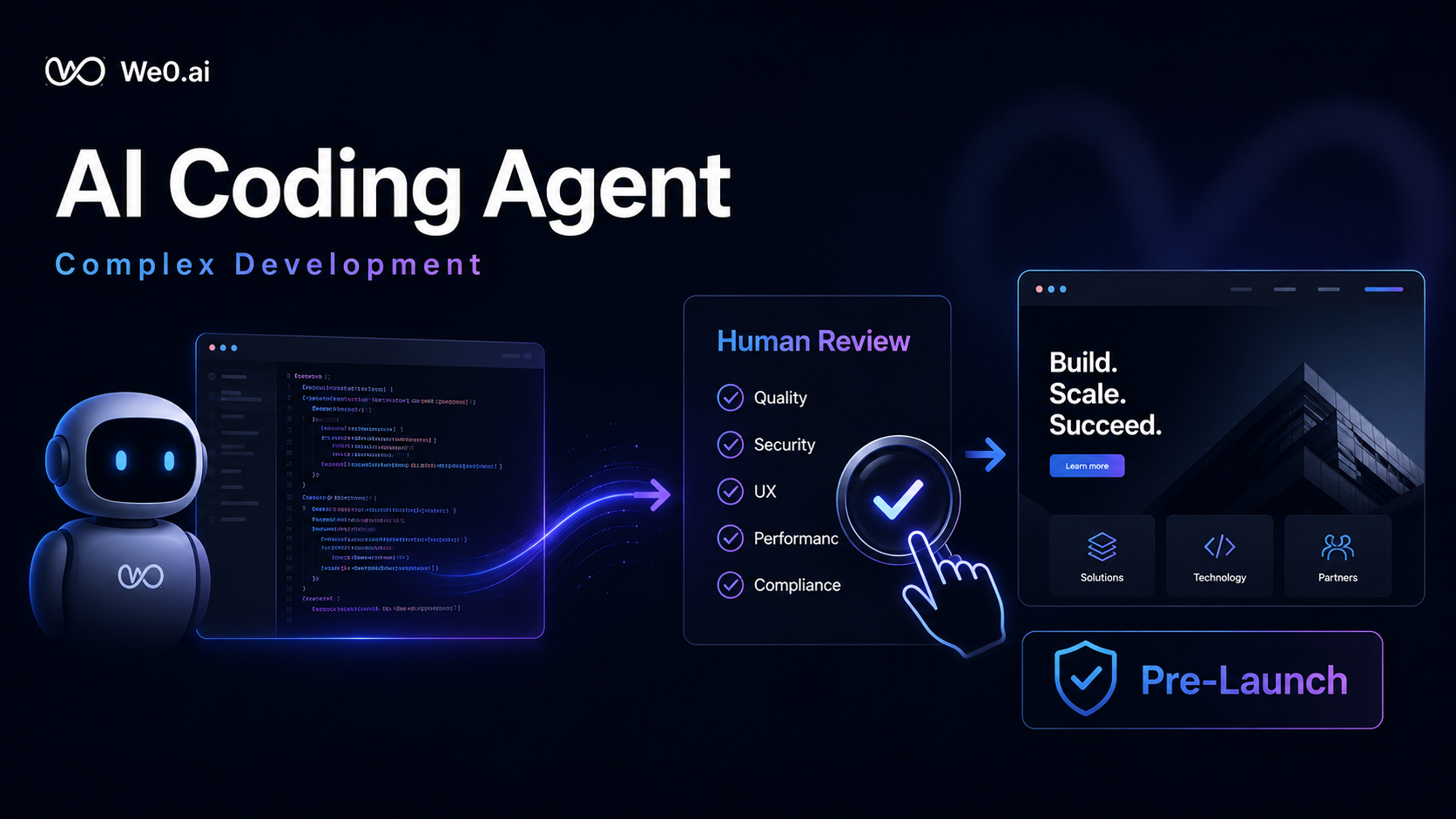
AI 编程 Agent 已能完成复杂开发,但官网正式上线仍需人工验收品牌表达、内容准确性、合规安全、性能体验和转化路径。
AI 编程 Agent 已经能完成复杂开发,为什么 We0.ai 官网上线前仍然需要人工验收?
AI 编程 Agent 已经不是“帮你补几行代码”的工具了。
它能读代码库、拆任务、写组件、联调接口、修 Bug,甚至把一个展示型官网从 0 推到可预览状态。速度很惊人。于是一个问题也越来越常见:既然 Agent 都能完成复杂开发,为什么 We0.ai 在官网上线前,还要保留人工验收?
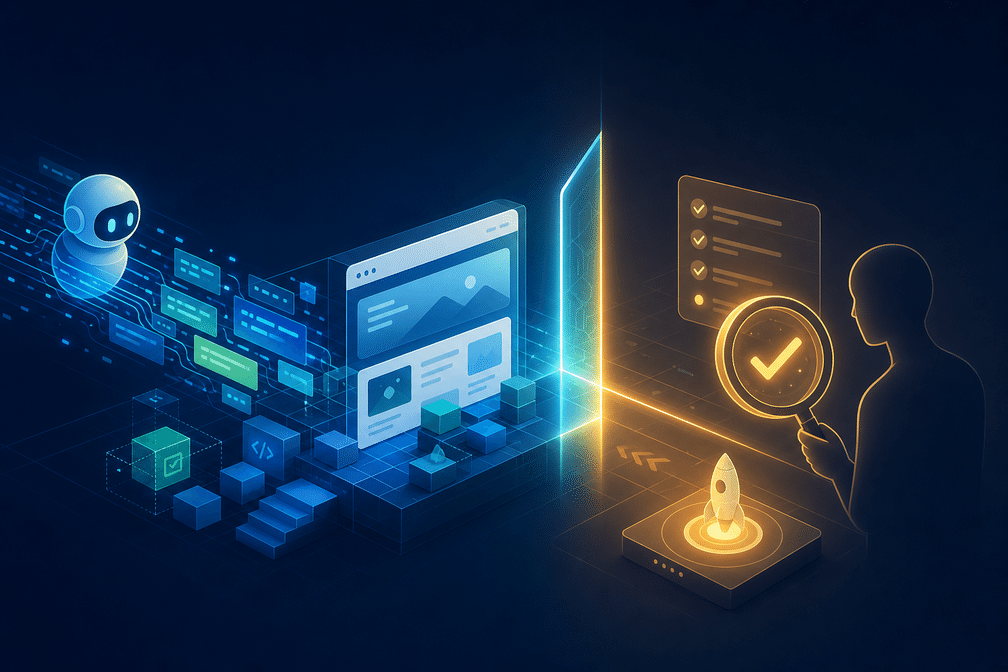
答案很直接:Agent 交付的是“一个已完成的实现”,人工验收确认的是“这是不是一个该上线的业务资产”。
这两件事,看起来只差最后一步,实际差着品牌信任、搜索可见性和客户转化。
代码能运行,不代表客户会理解;页面能打开,也不代表它值得被投放、被搜索、被信任。
Agent 解决“怎么做”,人工验收解决“做得对不对”
复杂开发中,AI Agent 的优势是真实存在的:它不累、执行快、能在大量重复工作里保持节奏。对于官网而言,它可以快速完成页面骨架、响应式布局、内容模块、表单和基础交互。
但官网不是一个只有“通过 / 不通过”的工程任务。它也是品牌的第一张脸,是销售接待台,是 SEO/GEO 内容入口,还是未来持续沉淀询盘的资产。
| 维度 | AI 编程 Agent 擅长 | 人工验收必须确认 |
|---|---|---|
| 开发 | 组件、样式、逻辑、页面拼装 | 是否符合真实业务优先级 |
| 内容 | 根据输入生成结构化文案 | 是否说人话、有没有承诺过头 |
| 品牌 | 保持指定视觉风格 | 是否真像这个品牌,而非“泛 AI 网站” |
| SEO / GEO | 补齐基础字段和页面结构 | 关键词、页面意图与可引用信息是否成立 |
| 转化 | 放置 CTA、表单和入口 | 客户是否知道下一步该做什么 |
| 上线 | 构建、部署、基础检查 | 域名、埋点、权限、合规与风险是否可接受 |
AI 很会把答案做得完整;人要判断问题有没有问对。
例如,Agent 可以把“我们是一家创新型 AI 公司”放在首屏。但人工会追问:客户在 5 秒内到底能不能看懂你卖什么?服务谁?和替代方案有什么不同?如果不能,页面再精致也只是一个漂亮的误会。
“能跑”与“能上线”之间,藏着四道门
1. 业务语境:需求里没写的,往往最重要
AI 只能根据上下文工作。可真实业务的上下文,常常散在创始人的表达、销售电话、老客户反馈、竞品页面和一堆没有写进需求文档的取舍里。
人工验收不是把按钮点一遍。它是在做一件更难的事:用目标客户的眼睛,重新读一遍这家公司的官网。
首屏是否把产品说清楚?案例是否足够可信?CTA 是“预约演示”还是“获取方案”?不同选择背后,是完全不同的获客路径。Agent 可以提出选项,但不能替业务负责人承担判断。
2. 品牌与信任:相似的页面,最容易消耗信任
今天的 AI 能很快做出“看起来不错”的网站。这恰恰提高了验收的重要性。
因为大量页面都不错时,用户对细节更敏感:一句夸张的承诺、一张不匹配的配图、一个没有解释清楚的价格入口,都可能让人离开。特别是 SaaS、顾问、外贸和专业服务网站,信任不是靠炫技建立的,是靠每一个小地方都不别扭。
We0.ai 保留人工验收,不是为了把 AI 的速度再拖慢,而是要在最后一公里把“模板感”拿掉。品牌信息、页面叙事、案例排序、语气强弱,这些往往决定一个站像不像你。
3. SEO / GEO:字段齐全,不等于能被找到、被引用
SEO 不只是 title、description 和 sitemap;GEO 也不只是多写几篇 AI 相关内容。
真正的搜索与 AI 推荐可见性,依赖的是页面是否解决了清楚的问题、有没有可验证的信息、内容结构是否利于理解,以及页面之间有没有形成主题关系。
人工验收会检查:
- 这个页面承接的到底是哪类搜索意图?
- 标题是否只是堆关键词,还是回答了用户的问题?
- 服务、案例、FAQ 是否能互相支撑,而不是各写各的?
- 页面里的主张有没有证据,是否会因为过度承诺损伤信任?
- 后续是否有内容更新、数据监控和优化的路径?
网站不是上线那天才开始工作。它应该从上线那天起,开始为搜索、推荐和询盘积累复利。
这正是 We0.ai 的 Build → Showcase → Grow → Leads 逻辑:先搭建,再展示,再增长,最后形成线索。只生成页面,链路只完成了第一步。
4. 风险与责任:上线按钮背后,不能只有“它测试过了”
自动化测试很重要,但它只能覆盖被定义出来的范围。真实上线还涉及表单数据去向、第三方脚本、分析埋点、权限配置、文案合规、移动端关键路径,以及出错时谁来处理。
OWASP 的 GenAI Security Project 持续强调,生成式 AI 与自主 Agent 进入关键业务流程后,会带来传统应用安全实践未完全覆盖的新风险。换句话说,自动化越强,越要把“谁对最终发布负责”说清楚。
人工验收不是对 Agent 不信任,而是对用户、品牌和业务结果负责。
We0.ai 的人工验收,验的不是“代码作业”
在 We0.ai,看起来像最后一步的人工验收,其实是把网站从“AI 生成结果”推进到“可持续获客资产”的关键环节。
一份更接近真实上线的验收清单,通常包括:
- 信息是否清楚:用户 5 秒内能否理解业务、对象和价值。
- 品牌是否一致:视觉、语气、主张和案例是否统一。
- 转化是否顺畅:每个关键页面是否有合理的下一步,表单与联系入口是否可用。
- 搜索基础是否扎实:页面层级、元信息、内链、内容主题和可持续更新方向是否明确。
- 数据与风险是否可控:埋点、域名、基础性能、权限、隐私提示和第三方服务是否检查到位。
这不是“AI 做完了,人再随便看看”。更准确地说,是AI 把大量制作工作压缩掉,人把精力留给那些真正影响成交和长期增长的决定。
真正成熟的人机协作,不是二选一
有人把这件事理解成:要么相信 AI,要么坚持人工。
其实不是。
低效的人工,是把 AI 已经做好的重复工作重新做一遍。低效的 AI,是在没有验收标准的情况下直接替你承担商业决策。
成熟的分工应该是:
- 让 Agent 处理高频、可拆解、可验证的生产工作;
- 让人处理定位、判断、边界、信任与最终责任;
- 让数据在上线后继续反馈,推动内容和页面持续优化。
对需要官网获客的 Owner、独立开发者、顾问、Agency 或出海团队而言,这种分工尤其实际。你不缺一个“看起来能用”的页面;你缺的是一个能讲清价值、承接搜索、收集线索,并且能随着业务一起变好的站。
FAQ
AI 编程 Agent 能不能独立完成官网开发?
能。对于页面搭建、组件开发、基础交互和常见集成,Agent 已经能承担大量工作。但独立完成开发,不等于独立完成品牌、转化、搜索策略和上线责任。
人工验收会不会拖慢网站上线?
如果把人工放在重复制作上,会慢;如果把人工聚焦在关键判断和上线清单上,反而能减少返工、错误承诺和后续转化损失。验收不是加流程,是减少昂贵的返工。
We0.ai 和普通 AI 建站工具有什么不同?
We0.ai 不只帮助生成展示型网站,还围绕 SEO/GEO、内容、数据监控、页面优化和线索获取提供持续增长路径。目标不是“有一个站”,而是“有一个持续拿流量和客户的站”。
Related Tools
Sources
- OWASP GenAI Security Project:生成式 AI 与 Agent 的安全、治理和评估资源
- OWASP Agentic App Security:自主 Agent 与多步骤工作流的安全议题
- 大规模人机协作 Pull Request 研究(OpenReview)
Ready to Build?
如果你想要的不是一个临时上线的页面,而是一套能展示、能增长、能获客的官网资产,We0.ai 可以把 AI 的制作效率和人工的关键判断放在同一条链路里。
从 Build 开始,但别停在 Build。
Conclusion
AI 编程 Agent 会越来越强,这几乎没有悬念。
但官网上线的标准也会随之提高。因为当“做出一个页面”越来越容易,真正稀缺的就变成了:它是否清楚、可信、可搜索、可转化、可持续优化。
所以 We0.ai 保留人工验收,不是因为 AI 还不够强。
恰恰是因为 AI 已经足够强,我们才更应该把人的判断留在最该出现的地方:上线之前,和增长开始之前。
title: "AI Coding Agents Can Build Complex Products. Why Does We0.ai Still Require Human Acceptance Before Launch?"
chinese_title: "AI 编程 Agent 已经能完成复杂开发,为什么 We0.ai 官网上线前仍然需要人工验收?"
seo_title: "AI Coding Agents Can Build Complex Products—Why Human Acceptance Still Matters Before Website Launch | We0.ai"
seo_description: "AI coding agents can now handle complex development. But working code is not automatically a launch-ready business asset. Learn why We0.ai keeps human acceptance in the loop for brand, conversion, SEO/GEO, and growth."
seo_keywords: "AI coding agent, human acceptance testing, AI website builder, website launch checklist, AI website development, SEO, GEO, website conversion, We0.ai"
seo_slug: "why-human-acceptance-still-matters-for-ai-agent-built-websites"
AI Coding Agents Can Build Complex Products. Why Does We0.ai Still Require Human Acceptance Before Launch?
AI coding agents are no longer just autocomplete with better manners.
They can read a codebase, break down work, build components, connect APIs, fix bugs, and push a showcase website from zero to previewable. The speed is real. So a fair question keeps coming up: if an agent can handle complex development, why does We0.ai still keep human acceptance before a website goes live?
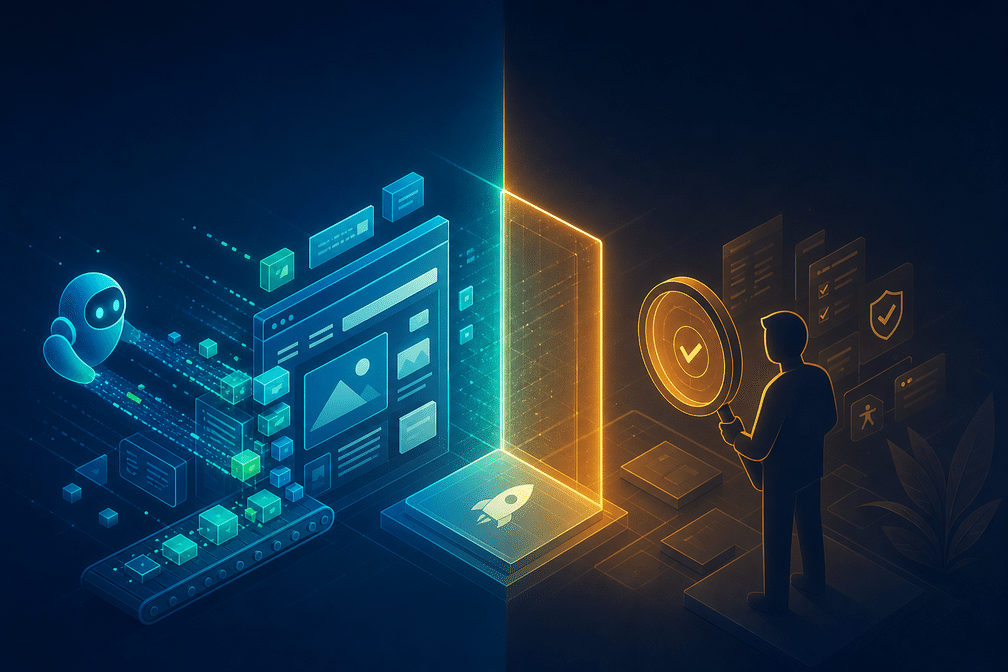
The short answer: an agent delivers a completed implementation. Human acceptance decides whether that implementation is a business asset ready to face the world.
Those sound close. In practice, the gap contains brand trust, search visibility, and conversion.
Code can run without making sense to a customer. A page can load without being ready to earn trust, traffic, or leads.
Agents solve “how to build it.” Humans decide whether it is the right thing to launch.
The strengths of AI coding agents are very real. They do not get tired, move quickly, and stay useful across a lot of repetitive execution. For a website, that means rapid page structures, responsive layouts, content sections, forms, and baseline interactions.
But a website is not a pass/fail engineering ticket. It is your brand’s first handshake, a sales conversation starter, an SEO/GEO entry point, and an asset that should keep collecting opportunities over time.
| Area | What an AI coding agent does well | What human acceptance must confirm |
|---|---|---|
| Development | Components, styling, logic, page assembly | The real priority of the business |
| Content | Structured copy from supplied context | Whether it sounds human and makes defensible promises |
| Brand | Following a visual direction | Whether it actually feels like this brand, not a generic AI site |
| SEO / GEO | Baseline metadata and page structure | Whether keywords, intent, and cite-worthy information hold up |
| Conversion | CTAs, forms, and navigation paths | Whether customers know exactly what to do next |
| Launch | Build, deployment, basic checks | Whether domains, analytics, access, compliance, and risks are acceptable |
AI is increasingly good at completing an answer. People still have to decide whether the question was framed correctly.
An agent can place “We are an innovative AI company” in the hero. A human reviewer should ask a harder question: can the right customer understand what you sell, who it is for, and why it is different in five seconds? If not, the site may be polished—but it is still a polished misunderstanding.
Four gates sit between “it works” and “it is ready to launch”
1. Business context: the most important things are often not written down
AI works from context. Real business context, however, is usually scattered across founder language, sales calls, customer feedback, competitor positioning, and a long list of trade-offs that never made it into the brief.
Human acceptance is not simply clicking every button. It is doing something harder: reading the website through the eyes of the customer you want to win.
Does the hero explain the offer? Do the case studies feel credible? Should the CTA say “Book a demo” or “Get a tailored plan”? That choice creates a very different lead path. An agent can surface options. It cannot own the commercial judgment.
2. Brand and trust: when every site looks decent, details matter more
AI can now create a site that looks pretty good—very quickly. That makes the acceptance step more important, not less.
When so many pages look decent, people become sensitive to small mismatches: an exaggerated claim, an image that does not belong, a pricing route that feels unexplained. For SaaS companies, consultants, exporters, and professional services firms, trust is rarely built through spectacle. It is built when nothing feels off.
We0.ai keeps a human review step not to slow AI down, but to remove the last-mile “template feeling.” Brand facts, page narrative, case-study order, and the strength of each claim often decide whether the site feels like yours.
3. SEO / GEO: complete fields do not mean you will be found or cited
SEO is more than a title, description, and sitemap. GEO is more than publishing a few pages that mention AI.
Real search and AI-recommendation visibility depend on whether a page answers a clear question, provides verifiable information, is structured for understanding, and connects to a coherent topic system.
Human acceptance checks things like:
- What search intent does this page actually serve?
- Does the headline answer a real question, or just stack keywords?
- Do services, cases, and FAQs reinforce one another?
- Does every important claim have enough support—or does it overpromise?
- Is there a path for ongoing content, measurement, and improvement?
A website should not start working on launch day. It should start compounding for search, recommendations, and leads on launch day.
That is the We0.ai logic: Build → Showcase → Grow → Leads. Build the site, show the value, grow the visibility, and turn that visibility into opportunities. Generating a page only completes the first step.
4. Risk and ownership: “the agent tested it” is not a launch decision
Automation matters, but it only covers the scope someone defined. A real launch also involves form-data handling, third-party scripts, analytics, permissions, copy compliance, mobile conversion paths, and who responds when something breaks.
The OWASP GenAI Security Project continues to document how generative AI and autonomous agents in business-critical workflows introduce risks that traditional application-security practices do not fully cover. Put simply: the more powerful automation becomes, the more clearly you need to define who owns the final release decision.
Human acceptance is not distrust of the agent. It is responsibility to users, the brand, and the business outcome.
What We0.ai reviews is not a “code assignment”
At We0.ai, human acceptance may look like the last step. It is actually the moment when an AI-generated result becomes a website built to keep generating value.
A practical launch acceptance checklist includes:
- Clarity: Can a visitor understand the business, audience, and value within five seconds?
- Consistency: Do visual design, voice, claims, and case studies tell one coherent brand story?
- Conversion: Does every key page offer a sensible next step? Do forms and contact paths work?
- Search foundation: Are hierarchy, metadata, internal links, content themes, and the next content moves clear?
- Data and risk: Have analytics, domains, baseline performance, permissions, privacy notices, and third-party services been checked?
This is not “the AI finished, so a person takes a quick look.” It is better described this way: AI compresses the production work. Humans reserve their attention for the decisions that affect revenue and long-term growth.
Mature human–AI collaboration is not an either/or choice
Some people frame this as a choice: trust AI or insist on humans.
That is the wrong frame.
Inefficient human work repeats production tasks AI has already done. Inefficient AI takes on commercial decisions without a clear acceptance standard.
A stronger division of work looks like this:
- Let agents handle high-frequency, decomposable, verifiable production tasks.
- Let people own positioning, judgment, boundaries, trust, and final accountability.
- Let live data keep feeding content and page improvements after launch.
For owners, indie builders, consultants, agencies, and cross-border teams that need a website to generate demand, this is especially practical. You do not need another page that merely looks usable. You need a site that explains value, captures search demand, collects leads, and gets better with the business.
FAQ
Can an AI coding agent build a website independently?
Yes. Agents can already handle a substantial share of page creation, component work, baseline interactions, and common integrations. But finishing development is not the same as owning brand, conversion, search strategy, and launch accountability.
Does human acceptance slow down website launch?
It does if people spend their time rebuilding repetitive work. It does not if review focuses on the few judgments that matter most. Acceptance is not an extra layer of process; it prevents expensive rework.
How is We0.ai different from a standard AI website builder?
We0.ai does more than generate a showcase website. It connects website creation with SEO/GEO, content, monitoring, page optimization, and lead generation. The goal is not simply to have a site, but to have one that keeps attracting traffic and customers.
Related Tools
- We0.ai: Build, grow, and turn your website into a lead asset
- Google Search Console: understand search performance
- PageSpeed Insights: check page experience
Sources
- OWASP GenAI Security Project: security, governance, and evaluation resources for generative AI
- OWASP Agentic App Security: security topics for autonomous agents and multi-step workflows
- A Large-Scale Study of Human–Agent Collaboration in Pull Requests (OpenReview)
Ready to Build?
If you need more than a page that is merely online—if you need a website asset that can showcase, grow, and generate leads—We0.ai brings AI production speed and human judgment into the same workflow.
Start with Build. Do not stop at Build.
Conclusion
AI coding agents will keep getting stronger. That much is not in doubt.
But the standard for a website launch will rise with them. When making a page becomes easy, what becomes scarce is whether that page is clear, credible, discoverable, convertible, and continuously improvable.
That is why We0.ai keeps human acceptance in the loop. Not because AI is not powerful enough.
Because AI is powerful enough that human judgment needs to stay exactly where it matters most: just before launch, and just before growth begins.