Zero-Click Search as the New Normal: How Brands Should Build for AI Search Visibility
Zero-click search is becoming the default search experience. This article explains why clicks are shrinking, why visibility still matters, and how brands can build a website that supports SEO, GEO, content growth, and lead generation with We0 AI.
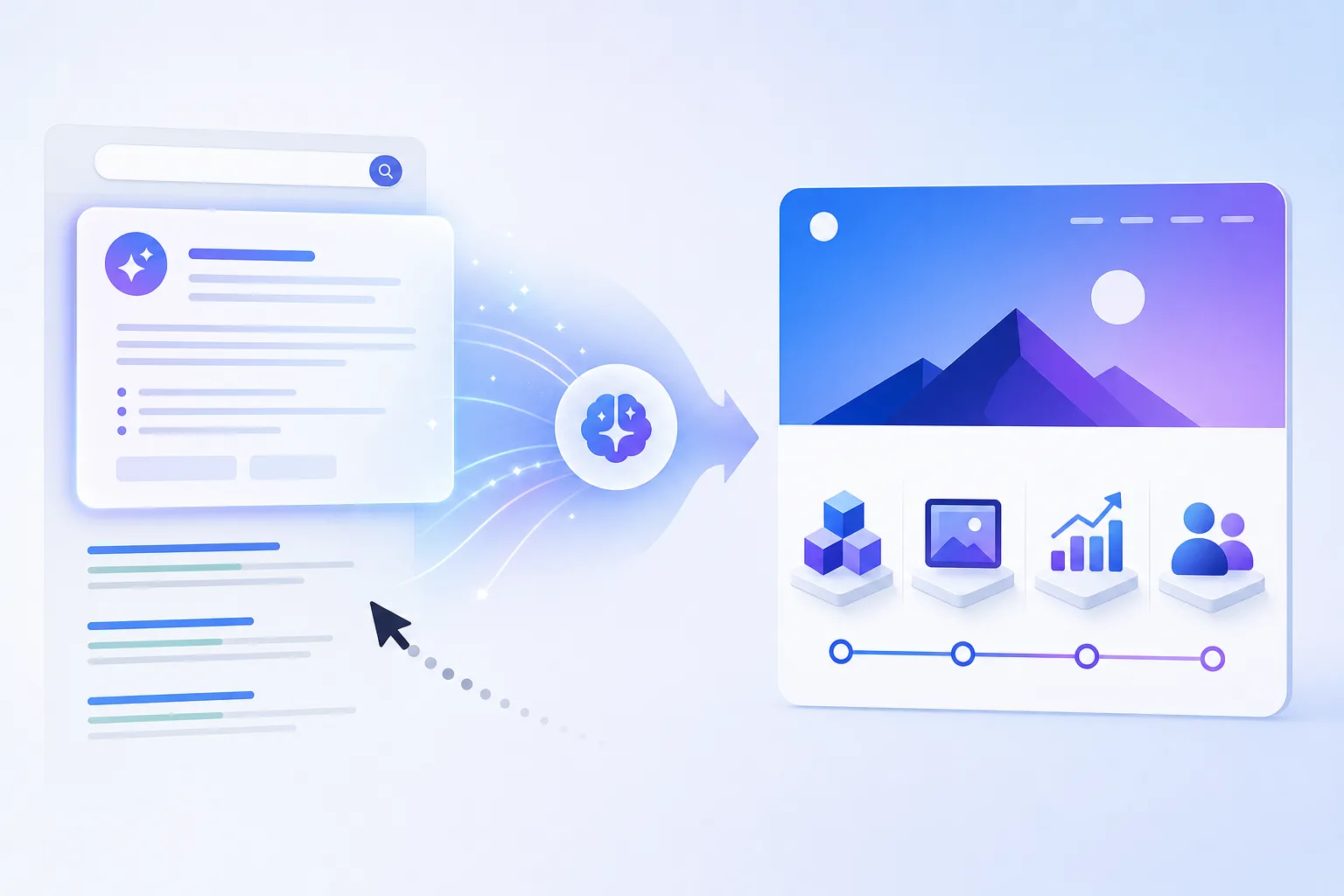
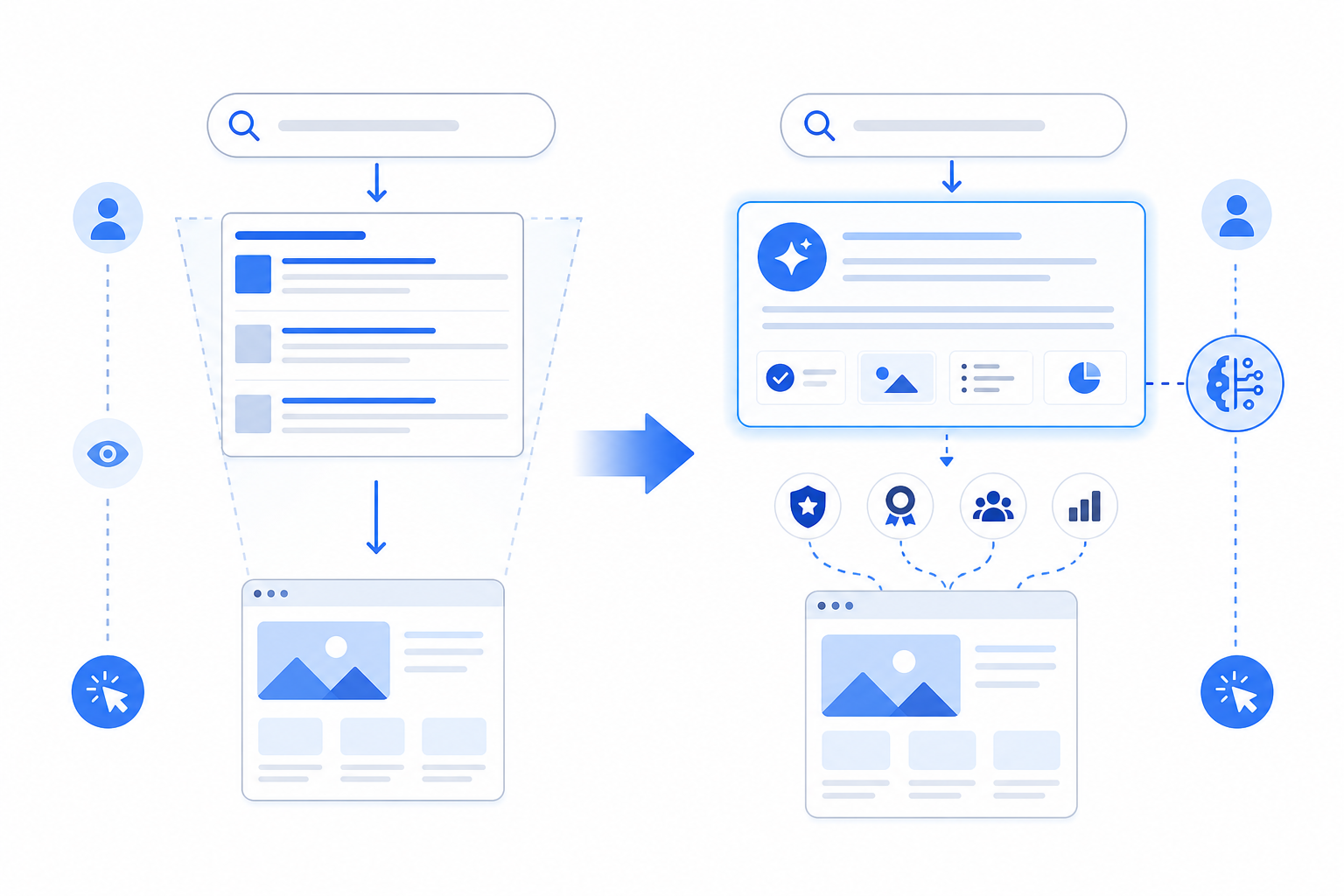
You’ve probably felt it already.
SEO used to be simple, at least on the surface.
You ranked higher. You got more clicks. More clicks meant more traffic. More traffic meant more chances to convert.
Now? Not always.
Your content can show up inside Google’s AI Overview. It can influence what a user sees. It can even shape the answer.
But the user may never click.
That’s not an edge case anymore.
Zero-click search is becoming the new normal.
More searches now end inside the search results page, AI summaries, knowledge panels, maps, local packs, video cards, Reddit threads, YouTube results, and other platform-native surfaces.
The user gets the answer.
The website gets no visit.
Sounds bad. And yes, for many sites, it is painful.
But this does not mean “SEO is dead.”
It means the old scoreboard is no longer enough.
We used to ask:
Can we get more organic traffic?
Now we also need to ask:
When users don’t click, can our brand still be seen, trusted, cited, searched, and converted later?
That is the real shift behind Zero-Click Search as the New Normal.
The short version: fewer clicks does not mean websites matter less
A lot of people see zero-click search and jump to a very fast conclusion:
“If users don’t click anymore, why even build a website?”
That’s too simple.
The more useful answer is this:
A website is moving from being only a traffic destination to becoming a source of trust and an AI-readable brand asset.
AI search systems, Google AI Overviews, ChatGPT, Perplexity, Gemini — they don’t create every answer from thin air.
They need sources. They need structured information. They need consistent brand signals. They need product pages, case studies, FAQ pages, documentation, reviews, author information, and external mentions.
In other words:
The user may not click you. But search and AI systems still need to understand you.
If you don’t have a clear, credible, updated website, it becomes much harder to enter that answer chain.
This is why We0 AI does not frame website building as “generate a page and you’re done.”
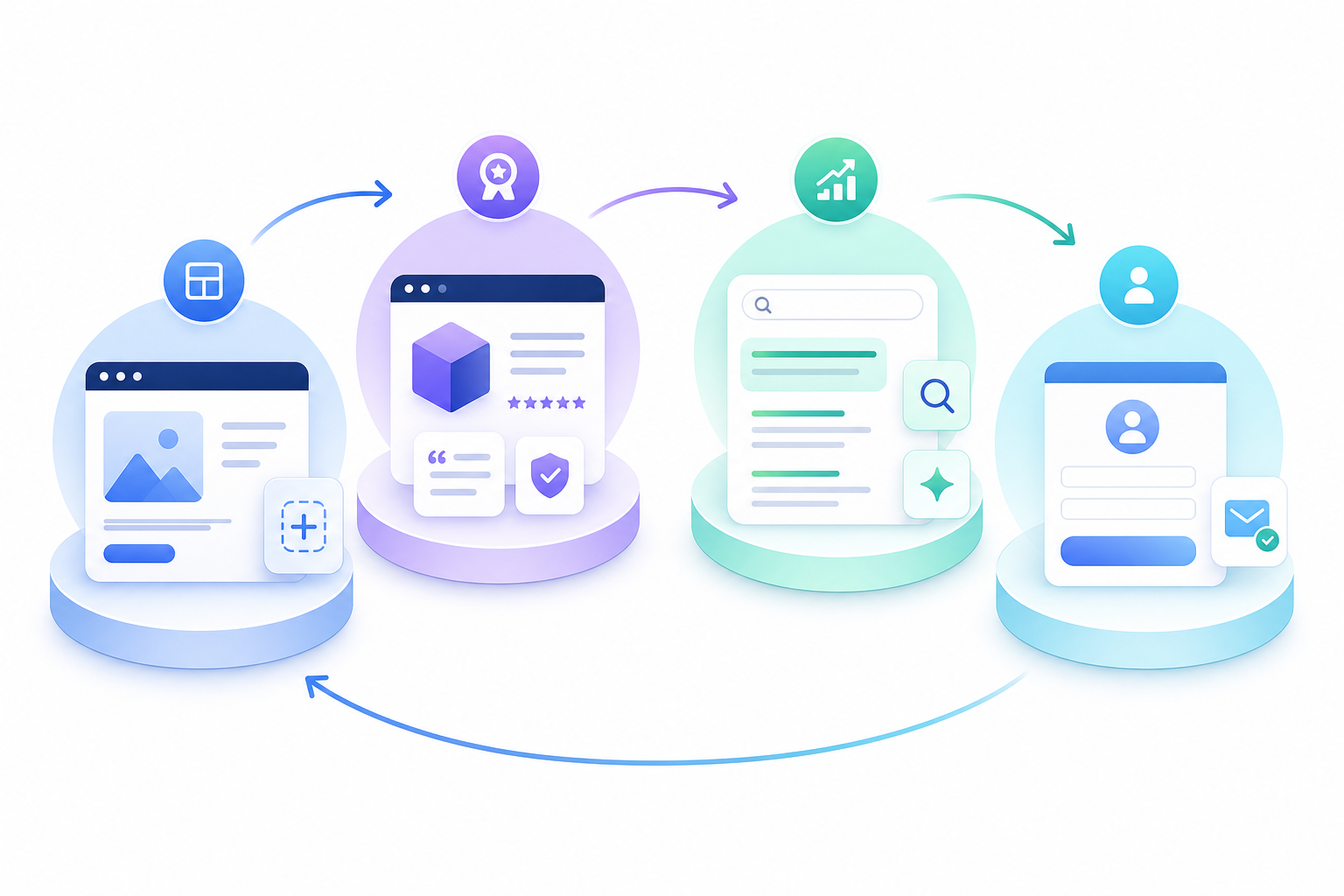
The real loop is:
Build -> Showcase -> Grow -> Leads
Stage | Old assumption | What matters now |
|---|---|---|
Build | Put a page online | Build a clear, credible, operable website |
Showcase | Show products and services | Show brand, proof, cases, capability, and differentiation |
Grow | Do SEO for traffic | Work on SEO + GEO + content growth |
Leads | Wait for inquiries | Design conversion paths and lead capture |
In the zero-click era, your website is not useless. It becomes a brand database that search systems can understand.
Why zero-click search keeps growing
The reason is not complicated.
Search engines and AI tools are trying to do one thing: give users answers faster.
In the old search experience, a user searched a question, opened three links, compared the information, and built their own summary.
Now the search results page often gives them the answer directly.
Answer A. Answer B. Answer C. A few cited sources on the side.
Of course users click less.
That is not a user problem. That is a product experience problem.
Pew Research Center’s 2025 analysis found that Google users were less likely to click external results when an AI summary appeared. When an AI summary was present, users clicked a traditional search result in 8% of visits. Without an AI summary, that number was close to 15%. Clicks on sources inside the AI summary itself were just 1%.
SparkToro / Similarweb’s 2026 research also reported that 68.01% of U.S. Google searches ended without a click.
You don’t need to obsess over every single percentage point.
The direction is obvious:
Search results are changing from navigation pages into answer pages.
That affects content sites, media sites, tools, SaaS websites, service businesses, and creators.
Especially for informational searches like:
what is zero-click search
how to optimize for AI Overviews
best website structure for SaaS SEO
how to build a product landing page
SEO vs GEO difference
These are exactly the kinds of queries AI summaries can answer quickly.
So if your entire growth strategy still depends on “rank higher, get more clicks,” you’re going to feel more pressure.
Old SEO is not dead. It is missing a layer.
Let’s be clear.
SEO still matters.
But old SEO looked like this:
Ranking -> Click -> Visit -> Conversion
Now there is another layer in the middle:
Ranking / content signals -> AI summary / search visibility -> brand memory -> branded search / direct visit / conversion
That is a different game.
Before, you could focus heavily on titles, descriptions, keyword targeting, backlinks, internal links, and page speed.
Now you also need to ask:
Can AI systems cite this content correctly?
Is our brand information consistent?
Is our product positioning clear?
Does the page answer real user questions?
Do we have useful case studies, reviews, FAQ pages, and comparison pages?
If the user does not click today, will they remember us later?
SEO is still here. But it is no longer only about winning the click. It is also about earning presence inside the answer.
That is where GEO comes in — Generative Engine Optimization.
A simple way to say it:
SEO helps search engines find you. GEO helps AI answers understand, cite, and recommend you.
Which websites lose the most in a zero-click world?
Not every website is hurt in the same way.
The most exposed sites are usually these:
Website type | Why it is vulnerable |
|---|---|
Generic educational content sites | AI can summarize the answer directly |
Sites with no clear brand differentiation | Even if they appear, people don’t remember them |
Sites with no product or service path | Visibility does not turn into action |
Thin business websites | Neither users nor AI systems can judge credibility |
Stale websites | Outdated content is harder to trust |
The classic example is generic encyclopedia-style content.
If you publish an article called “What Is Zero-Click Search?” and it only explains the definition, lists a few causes, and adds generic trends, AI can do that for you.
Why would a user click?
But if your page includes:
your own point of view
data sources and interpretation
real examples
actionable checklists
product context
your own framework
a clear next step
Then it becomes different.
AI can summarize generic answers. It cannot easily replace your specific experience, proof, and brand difference.
That is why showcase websites matter more, not less.
Showcase websites become the core asset in a zero-click era
Here is the part many teams miss.
Zero-click does not mean users stop buying, comparing, researching, or contacting vendors.
It only means the first answer often happens inside search or AI tools.
When users get closer to making a decision, they still do things like:
search your brand name
visit your website
read your case studies
check whether you look credible
review your services
look for pricing, process, and FAQ
find a contact form, demo request, or booking link
So the real question is not “Will users ever click?”
The real question is:
When a user is finally ready to learn more, do you have a place that can receive and convert them?
That is where We0 AI fits.
Not as a simple page generator.
But as an AI website building and growth platform for showcase websites — especially for Owners, Independents, Creators, SaaS teams, agencies, export businesses, and local service providers.
We0 AI helps you:
clarify brand information and website structure
place products, services, cases, portfolio, FAQ, and conversion paths in the right places
set up SEO / GEO foundations
publish content continuously
monitor website data
improve pages based on search and conversion signals
A website is not a one-time deliverable. It is a growth asset.
That sentence matters even more in the zero-click era.
How to redesign your website for zero-click search
Don’t only ask, “How do we get more clicks?”
Ask this instead:
If users and AI systems only give us 10 seconds, can our website explain who we are, what problem we solve, why we are credible, and what to do next?
Start with these seven changes.
1. Make your homepage a brand index, not just a pretty front door
Many homepages look nice but say very little.
A big headline. Some gradient cards. A few lines like “empower your business.”
The problem is simple: AI doesn’t understand you. Users don’t either.
Your homepage should clearly explain:
who you serve
what problem you solve
how you are different from alternatives
what your core product or service is
why you are credible
what the next step is
Your homepage is not a poster. It is your brand index.
2. Give every core use case its own page
If you are a SaaS product, don’t rely on one homepage.
You probably need:
feature pages
use case pages
industry pages
pricing pages
case studies
comparison pages
FAQ pages
integration pages
If you are a consultant or agency, the same logic applies.
You need service pages, case pages, client-type pages, process pages, and booking pages.
AI search prefers clear, specific, citable content.
A vague homepage cannot cover long-tail demand.
3. Treat FAQ as a GEO entry point
A lot of teams treat FAQ as an afterthought.
In AI search, FAQ can become very important.
Users now ask full questions:
how much does it cost to build a SaaS website
how to make my website appear in AI search
what should a service business website include
is SEO still worth it after AI Overviews
Pew’s analysis also found that question-style and longer searches were more likely to trigger AI summaries.
So FAQ should answer real search questions, not fake internal questions.
4. Write case studies as evidence, not decoration
AI systems and users both need proof.
But many case pages only show logos, screenshots, and a few compliments.
That is not enough.
A stronger case study includes:
customer background
original problem
solution
website structure
content strategy
results after launch
data or qualitative feedback
reusable lessons
A case study is not decoration. It is trust evidence.
5. Move content from generic knowledge to point of view + method + context
Generic knowledge gets intercepted first in a zero-click world.
So don’t only write:
What is X?
Also write:
What does X mean for this type of business?
What should you change?
Which common tactics are no longer enough?
How should the actual page be redesigned?
That kind of content creates stronger brand memory.
6. Expand measurement from clicks to influence
Organic traffic still matters.
But don’t stop there.
Also track:
Metric | Why it matters |
|---|---|
Branded search volume | Users may see you elsewhere, then search your name later |
Direct visits | Brand memory may be getting stronger |
Lead quality | Less traffic but better leads can still be a win |
AI/search citations | Shows whether content is entering answer systems |
Page conversion rate | When traffic is harder to earn, conversion matters more |
Content coverage | Shows whether you cover core questions and long-tail scenarios |
Traffic is not the only outcome. Being remembered, searched, and contacted also counts.
7. Keep the website alive after launch
AI search favors content that is current, clear, and credible.
A website that has not been updated for two years does not inspire much trust.
Especially in AI, SaaS, export, services, and fast-changing categories.
This is where We0 AI’s value becomes clearer. It is not only about building the site. It is about continuing to improve it through SEO, GEO, content, data, reviews, and growth recommendations.
Zero-click is not a one-page problem. It is a long-term content operations problem.
A more realistic growth model: less “chasing clicks,” more “building assets”
Old content marketing often followed this logic:
Publish article -> Rank -> Get clicks -> Convert
A more realistic model now looks like this:
Build website assets -> Become understandable to search systems -> Get cited or surfaced in AI/search -> Create brand memory -> User returns through branded search or direct visit -> Convert
This chain is longer.
It is also harder to attribute.
But it is closer to how people actually decide.
Especially for B2B, SaaS, consultants, agencies, indie products, and export businesses. Users rarely read one article and buy immediately.
They compare. They save. They ask AI. They check Reddit. They watch YouTube. They search your brand a few days later.
So your website has to do more than one job.
It has four jobs:
Help search and AI systems understand you
Help users trust you quickly
Cover long-tail questions over time
Help high-intent visitors become leads
That is why We0 AI’s Build -> Showcase -> Grow -> Leads logic fits this moment.
It is not about finishing a page.
It is about turning your website into a system for visibility, trust, growth, and leads.
FAQ
1. What is zero-click search?
Zero-click search happens when users get what they need directly on the search results page, in an AI summary, knowledge panel, map result, local pack, or other search feature, without clicking through to an external website.
2. Does zero-click search make SEO useless?
No. SEO still matters. But the goal is no longer only to win clicks. Your content also needs to become a trusted source that search engines and AI systems can understand, cite, and surface.
3. What is the difference between SEO and GEO?
SEO focuses on search visibility, indexing, rankings, keywords, and organic traffic. GEO focuses on being understandable, credible, and citable inside generative AI search experiences.
4. Do businesses still need websites?
Yes, arguably more than before. A website becomes the central asset for brand information, product details, case studies, FAQ, conversion paths, and AI-readable content. Without it, your brand is harder to understand systematically.
5. What kind of websites is We0 AI best for?
We0 AI is especially suitable for showcase websites: SaaS websites, product launch pages, service pages, case study pages, portfolios, content sites, export inquiry pages, local service booking pages, and personal brand websites.