Google AI Mode 更容易展示什么样的网站?用 We0 AI 建站能提升 AI 搜索曝光吗?
Google AI Mode 不是随便抓几个网站来展示。真正更容易被引用、被链接、被推荐的网站,往往有清晰结构、可抓取内容、真实观点和持续更新能力。本文结合 Google 官方文档,聊清楚 AI 搜索更偏爱什么样的网站,以及用 We0 AI 建站,到底能不能提升 AI 搜索曝光。
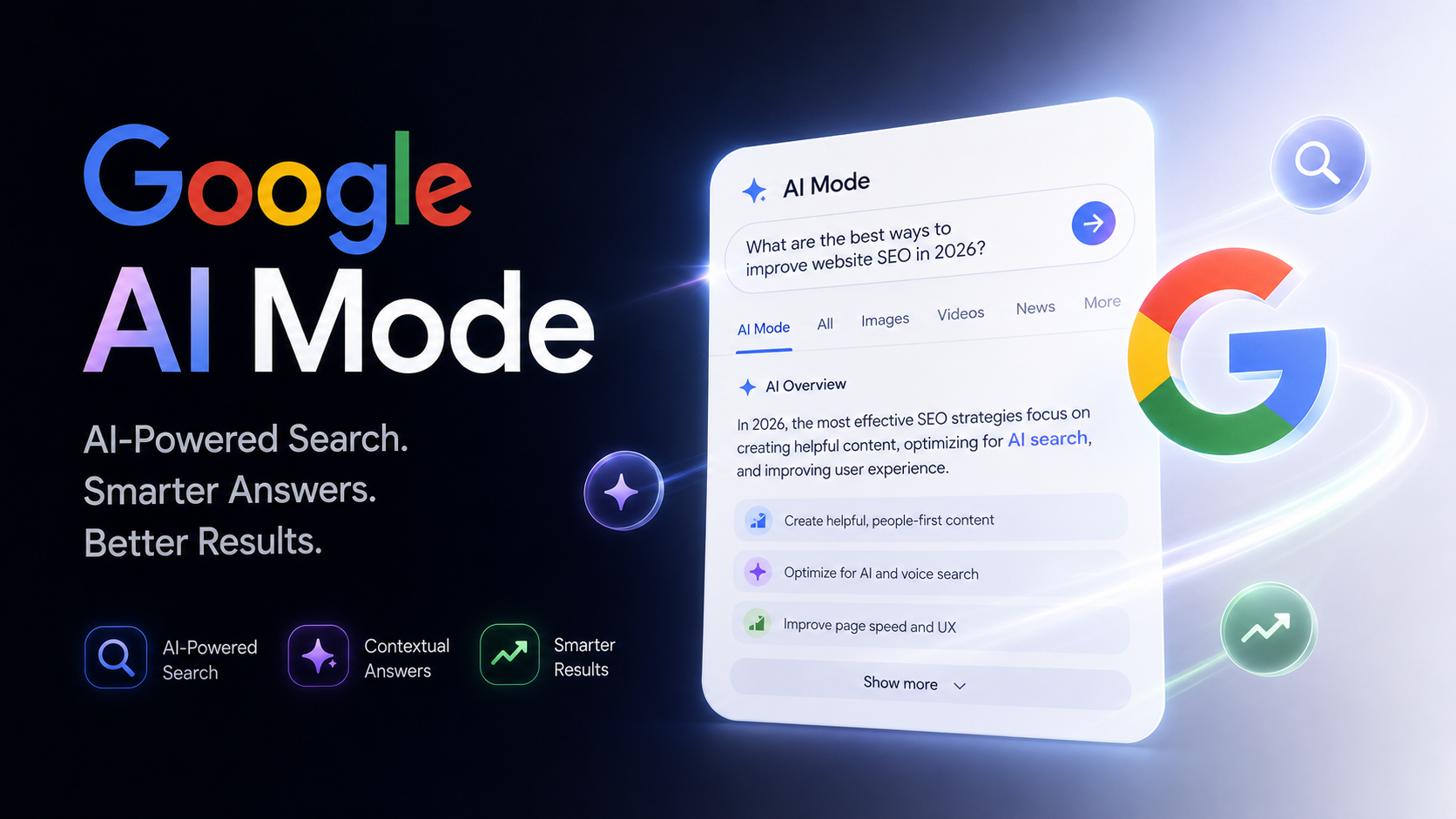
Google AI Mode 更容易展示什么样的网站?用 We0 AI 建站能提升 AI 搜索曝光吗?

Google AI Mode 更容易展示什么样的网站?用 We0 AI 建站能提升 AI 搜索曝光吗?
先说结论。
Google AI Mode 不是更喜欢“会写 SEO 的网站”,而是更容易展示“更容易被理解、被抓取、被验证、被引用的网站”。
这两个概念,看起来很像。
但差得其实很大。
很多人还在用老思路看 AI 搜索:
- 多发点文章
- 多堆点关键词
- 页面多做几个
- 再补点 schema
然后期待 AI Mode 自动给你流量。
现实通常没这么简单。
因为 AI Mode 的任务,不只是“找一个页面排上来”。
它更像是在一堆网页里,快速拼出一个靠谱答案,然后给出支撑这个答案的链接。
这时候,网站能不能被展示,取决于的就不只是传统排名,还有你的网站是否足够清楚、足够可读、足够有用、足够像一个真实可信的业务资产。
而这件事,恰好也是很多普通建站工具没有真正解决的地方。
先看 Google 官方怎么说
Google 在官方文档《AI Features and Your Website》里讲得很直接:
- AI Overviews 和 AI Mode 都会展示相关链接,帮助用户继续探索内容
- AI Mode 特别适合需要推理、比较、进一步探索的复杂问题
- 这类功能会使用 query fan-out,也就是围绕一个问题自动扩展出多个相关搜索,再去找支持页面
- Google 还明确说,AI features 会带来更宽、更丰富、更多样的网站曝光机会
换句话说,AI Mode 不是只盯着头部站点。
只要你的网站足够适合被当成“支撑信息源”,你就有机会进场。
另一个更关键的官方文档是《Google's Guide to Optimizing for Generative AI Features on Google Search》。这里面有几个点,几乎可以当成这篇文章的底层判断:
SEO 依然有用,而且仍然是基础。
Google generative AI features 仍然建立在 Search 的 ranking 和 quality systems 上。
Google 明确强调要做 helpful, reliable, people-first 的内容。
Google 特别强调 unique point of view 和 non-commodity content。
页面想进入 AI features,前提仍然是:可抓取、可索引、能展示 snippet。
Google 还专门辟谣了一堆“AI SEO 偏方”,比如:
- 不需要专门做 llms.txt 才能出现在 Google AI 搜索里
- 不需要为了 AI 把内容硬切成碎片
- 不需要为了 AI 重写成一种奇怪文风
- 不需要追求假的 mentions
这其实已经很清楚了。
Google AI Mode 更容易展示的,不是“长得像 AI 优化过的网站”。
而是:本来就对用户有帮助,同时对 Google 理解起来也很顺的网站。
Google AI Mode 更容易展示什么样的网站?
下面我直接给判断,不绕。
1. 结构清楚的网站
AI Mode 要从网页里抽信息、对比信息、组合信息。
如果你的网站结构很乱:
- 页面层级混乱
- 重要内容藏得很深
- 内链弱
- H1/H2/H3 没逻辑
- 一屏全是视觉,没有清晰文本
那它不是完全没机会。
但它会更难被理解。
Google 在官方文档里也明确提到:
- 内容要能通过内部链接被轻松找到
- 重要内容要以文本形式存在
- 页面结构要清楚,方便人读,也方便系统理解
所以 AI Mode 更容易展示的网站,第一类就是:
信息架构清楚、页面层级合理、主题边界明确的网站。
这也是为什么很多“做得很好看但说不清自己是谁”的网站,在 AI 搜索里不一定占便宜。
2. 有真实观点的网站
这个点特别重要。
Google 在 generative AI optimization guide 里反复强调:
unique point of view 和 non-commodity content。
翻成大白话就是:
别再写那种谁都能写、AI 随手也能拼出来的内容了。
比如:
- “什么是 AI 建站”
- “SEO 很重要的 7 个原因”
- “如何提高网站转化率”
这些内容不是不能写。
但如果你只是把网上已有观点重新排版一遍,AI Mode 不一定需要你。
因为它已经能从一堆相似内容里抽摘要了。
真正更容易被展示的,通常是这些内容:
- 一手经验
- 真实案例
- 对比测试
- 行业观察
- 带判断的拆解
- 某类客户场景下的具体方法
AI 更愿意引用“有信息增量”的网页。
不是因为它喜欢有态度。
而是因为这种页面,更可能成为回答复杂问题时的支撑材料。
3. 可抓取、可索引、可展示 snippet 的网站
这个反而是最基础,也最容易被忽略的。
Google 官方写得很明白:
想成为 AI Overviews 或 AI Mode 的 supporting link,页面必须先被索引,并且能在 Google Search 里以 snippet 形式出现。
注意这句话的潜台词。
不是你“上线了一个网站”,你就 automatically 进入 AI 搜索候选池。
前提是:
- robots.txt 没乱拦
- CDN / hosting 没误封爬虫
- 页面不是纯前端空壳
- 重要文本不是全做在图里
- noindex、nosnippet 这类控制没误配
- 页面能被 Google 正常抓取、渲染、索引
很多站的问题,不在内容。
而在于搜索引擎根本就没顺利吃进去。
4. 页面体验稳定的网站
Google 在 AI features 官方说明里没有说什么神秘的新指标。
它还是在强调老老实实的基本功:
- good page experience
- 跨设备可读
- 低延迟
- 主内容清楚
- 用户访问后愿意停留
这也很合理。
因为 AI Mode 带过去的点击,往往不是随便逛逛型流量。
而是带着更复杂问题来的高意图流量。
Google 官方甚至提到,来自 AI features 的点击,往往质量更高,用户更可能在站内停留更久。
所以,如果页面很慢、很乱、CTA 断裂、主信息模糊,用户点进去就走。
那你即使被展示一次,也很难形成稳定正反馈。
5. 能覆盖复杂问题的网站
AI Mode 特别适合处理复杂比较、细分判断、延伸探索。
这意味着什么?
意味着更容易被展示的网站,往往不是只靠一个首页。
而是它有一整套内容和页面体系,能承接不同层次的问题,比如:
- 解释概念的页面
- 做方案比较的页面
- 展示案例的页面
- 回答FAQ的页面
- 讲具体场景打法的页面
- 承接转化的服务页 / 产品页
AI Mode 喜欢能“顺着问下去”也接得住的网站。
这也是 query fan-out 机制背后的现实意义。
用户问一个问题,系统可能同时拆出多个子问题。
而你的网站,如果刚好在这些子问题上都有清晰内容,就更容易被多点命中。
哪些网站不容易被 AI Mode 持续展示?
这个也可以反过来看。
下面这些站,不一定完全没机会,但通常不稳定:
| 网站类型 | 常见问题 | 在 AI Mode 里的风险 |
|---|---|---|
| 纯视觉官网 | 好看,但文本信息少 | 难理解,难抽取核心信息 |
| 模板拼装站 | 页面像有很多,实际内容很薄 | 信息密度低,缺少独特性 |
| 关键词堆砌博客 | 标题很多,观点重复 | 容易被判定为 commodity content |
| 纯采集/洗稿站 | 没有原创判断 | 缺少可信支撑,很难长期被引用 |
| 技术配置不稳定的站 | 抓取、渲染、索引异常 | 连候选资格都可能受影响 |
| 只做首页不做内容体系的站 | 无法承接复杂问题 | query fan-out 下覆盖面不足 |
一句话总结:
AI Mode 不只是看你“有没有网站”。
它更看你这个网站,能不能成为某个问题的可靠支撑页。
那用 We0 AI 建站,能提升 AI 搜索曝光吗?
先给一个不讨好的答案。
能提升,但不是因为“你用了 We0 AI 这个名字”,而是因为你更有机会把网站做成 AI 搜索更容易理解和引用的样子。
也就是说。
We0 AI 不是魔法按钮。
它不能保证你一上线就被 Google AI Mode 引用。
但它确实可以在几个关键环节上,提高你做对这件事的概率。
We0 AI 真正有帮助的,不是“一句话生成页面”
如果只是生成一个页面,那意义其实有限。
真正影响 AI 搜索曝光的,是下面这条链路:
Build -> Showcase -> Grow -> Leads
也就是:
- 把网站搭起来
- 把产品/服务/案例讲清楚
- 持续做 SEO / GEO / 内容增长
- 最后把曝光变成询盘和客户
这恰好就是 We0 AI 更值得看的地方。
它不是只解决“我今天能不能把网站发出来”。
它更接近在解决:
这个网站发出来以后,能不能持续被看见,持续被理解,持续带来业务线索。
We0 AI 能提升 AI 搜索曝光的 6 个现实点
1. 更容易把网站结构做清楚
很多 AI 搜索表现差的网站,不是品牌不行。
是网站表达太乱。
We0 AI 如果能帮助用户把这些内容搭好:
- 首页定位
- 产品页
- 服务页
- 场景页
- 案例页
- FAQ
- 博客内容
- 联系/询盘页
那它至少先解决了一个大问题:
让网站不是“一个页面”,而是“一个可以被搜索系统理解的内容结构”。
2. 更适合做展示型网站,而不是 demo 型网站
这点很关键。
很多 builder 生成的是一个“像网站的页面”。
但它不一定是一个适合长期运营、长期增长、长期获客的网站。
We0 AI 如果更偏向展示型网站增长平台,那它对 AI 搜索的意义就更大。
因为 AI Mode 更容易展示的,往往不是一次性活动页。
而是:
- 有品牌信息
- 有服务说明
- 有案例支撑
- 有内容沉淀
- 有持续更新能力
的站。
3. 更利于内容持续扩展
AI Mode 对复杂问题更友好。
那你的网站就不能只停在一个 landing page。
如果 We0 AI 能帮助用户持续新增:
- 行业文章
- 场景文章
- 对比文章
- 教程
- FAQ
- 发布页
那你就更有机会覆盖 query fan-out 带来的多种子问题。
覆盖的问题面越广,被 AI 选中的入口就越多。
4. 更容易把重要内容做成文本而不是纯视觉
这听起来很土,但特别重要。
Google 官方已经说了,重要内容应该以文本形式存在。
如果一个网站太依赖大图、动效、截图式内容,系统能拿到的信息就会变少。
而 We0 AI 如果本身更重视可读页面、文字结构、模块化内容表达,那它天然更适合 AI 搜索。
5. 更容易配合 SEO 基础配置
Google 明确说过,AI features 没有额外神秘技术门槛。
但搜索的技术基础必须成立。
所以一个真正有价值的建站方案,应该能让你更容易处理这些:
- crawlability
- indexability
- 内链
- 页面标题与描述
- 结构清晰
- 图片合理使用
- 数据监控
这类工作做得越稳,AI 搜索曝光的底盘就越稳。
6. 更有机会把“曝光”接成“询盘”
这一点,很多人在聊 AI 搜索时会忘掉。
被 AI Mode 展示,不是终点。
被点击以后,用户有没有继续看、有没有理解你的服务、有没有留下线索,才是业务上的终点。
We0 AI 如果不仅帮你建站,还能继续优化页面、监控数据、做内容、做增长复盘,那它对 AI 搜索真正的价值就不只是“更容易被看到”。
而是:
更容易把被看到,变成被咨询。
但也别神化:用 We0 AI 建站,不等于自动拿到 AI 搜索流量
这点必须说清楚。
建站工具能提高你“做对”的效率,但不能替你生成真实竞争力。
如果你的网站存在这些问题:
- 内容空
- 页面薄
- 没有独特观点
- 没有案例
- 没有持续更新
- 品牌信息模糊
- 用户来了也不知道下一步干嘛
那你换任何工具,都不会自动变成 AI Mode 的优先引用对象。
所以更准确的说法应该是:
We0 AI 能提升的,不是“玄学曝光率”,而是你把网站做成 AI 搜索友好型资产的成功率。
这个差别,非常大。
一张表看懂:Google AI Mode 更偏爱什么,We0 AI 能补什么
| 维度 | Google AI Mode 更看重什么 | We0 AI 能补的地方 |
|---|---|---|
| 技术基础 | 可抓取、可索引、可展示 snippet | 更容易做好建站底层与页面发布 |
| 页面结构 | 清晰的信息架构、文本可读性、内链 | 更容易搭出完整页面体系 |
| 内容质量 | helpful, reliable, people-first,且有独特观点 | 更方便持续产出场景页、案例页、博客页 |
| 问题覆盖 | 能承接复杂问题与子问题 | 更容易扩展多页面、多内容入口 |
| 展示能力 | 品牌、服务、案例表达清楚 | 更适合做展示型官网而非单页 demo |
| 转化能力 | 用户点进来后愿意继续看、继续联系 | 更容易把流量接成询盘与线索 |
如果你现在就想为 AI 搜索做准备,优先做这 7 件事
别先焦虑什么 GEO、AEO、llms.txt。
先把这 7 件事做好。
1. 确保网站真的能被抓、被收、被展示
先检查 robots、noindex、nosnippet、CDN 拦截、JS 渲染问题。
2. 把首页和核心页面讲人话
让 Google 和用户都能快速知道:
你是谁、你做什么、你服务谁、你和别人有什么不同。
3. 把重要信息做成文本
不要只放在图里、视频里、轮播里、截图里。
4. 做真实的场景页和案例页
AI 更爱引用有具体场景、有真实细节的页面。
5. 做一批能承接复杂问题的内容
比如对比、指南、FAQ、误区、案例拆解,而不是只有空泛博客。
6. 建立页面之间的逻辑连接
让首页、服务页、博客页、案例页互相能走通。
7. 用 Search Console 看数据,不要靠感觉
Google 官方已经给了 Generative AI performance report,能看就看。
一个更实际的判断
如果你问我:
“Google AI Mode 更容易展示什么样的网站?”
我的回答是:
更容易展示那些能被 Google 快速理解、能给用户真实帮助、还能承接复杂问题的网站。
如果你再问:
“用 We0 AI 建站,能提升 AI 搜索曝光吗?”
我的回答是:
能,但前提不是你用了 AI 建站,而是你借助 We0 AI,把网站真正做成了一个可展示、可增长、可获客的长期资产。
这才是重点。
不是“AI 建站”四个字本身有价值。
而是你有没有借这个工具,把网站从一个静态页面,做成一个能持续被理解、持续被引用、持续带来线索的系统。
FAQ
Google AI Mode 和传统 Google 搜索最大的差别是什么?
Google AI Mode 更偏向处理复杂问题、对比型问题和需要进一步探索的问题。它不只是返回蓝链,而是会生成一个综合回答,并给出支持这个回答的网站链接。
想进入 Google AI Mode,需要额外做一套 AI SEO 吗?
不一定。根据 Google 官方文档,核心仍然是传统 SEO 基础:可抓取、可索引、内容有帮助、结构清楚、页面体验好。并没有一套独立于 Google Search 的神秘优化规则。
llms.txt 对 Google AI Mode 有帮助吗?
根据 Google 官方说法,不需要。Google 明确表示,不需要专门创建 llms.txt 或其他特殊 AI 文本文件,才能出现在其 generative AI features 中。
为什么有些好看的网站,AI 搜索反而不容易展示?
因为好看不等于好理解。如果页面文本弱、结构乱、信息模糊、重要内容藏在图片或动效里,AI 和搜索系统都更难准确理解这个网站到底在讲什么。
We0 AI 适合哪类站点做 AI 搜索曝光?
更适合展示型网站,比如品牌官网、产品官网、服务页、案例页、内容站、作品集、询盘页、多语言展示站。这类站点更容易形成持续内容资产和长期搜索入口。
Related Tools
- We0 AI:更适合做展示型网站、SEO 内容承接和增长获客的一体化平台
- Google Search Console:查看索引、抓取、表现和 Generative AI 流量
- Google Search Central SEO Starter Guide:打好基础 SEO
Sources
- 《AI Features and Your Website》
- 《Google's Guide to Optimizing for Generative AI Features on Google Search》
- 《We0 SEO 文章生产 AI 工作流文档.md》
相关阅读 / 内链建议
- AI 搜索时代,企业官网为什么要从“页面”升级成“增长资产”?
- GEO 和 SEO 到底是什么关系?
- 为什么展示型网站,比一次性 landing page 更适合长期获客?
- AI 建站工具很多,为什么真正有价值的是“上线后还能持续增长”的能力?
Ready to Build?
如果你准备做的不只是一个“能打开”的网站,而是一个能展示业务、能承接搜索、能持续增长、还能慢慢带来询盘的网站,We0 AI 会是一个更合适的起点。
它不是只帮你把页面发出来。
它更像是在帮你把官网,做成一个长期可运营的增长资产。
Conclusion
Google AI Mode 更容易展示的,不是最会喊 AI SEO 口号的网站。
而是那些:
- 结构清楚
- 内容真实
- 信息可抓取
- 页面体验稳定
- 能承接复杂问题
的网站。
而 We0 AI 的价值,也不在“更快生成一个页面”。
它真正有价值的地方,在于更有机会帮你把网站做成:
可上线、可展示、可增长、可获客。
这四件事连起来,AI 搜索曝光才更有意义。
What Kinds of Websites Are More Likely to Show Up in Google AI Mode? Can Building with We0 AI Improve AI Search Visibility?

What Kinds of Websites Are More Likely to Show Up in Google AI Mode? Can Building with We0 AI Improve AI Search Visibility?
Let’s start with the short answer.
Google AI Mode doesn’t reward websites just because they “do SEO.” It’s more likely to surface websites that are easier to understand, crawl, verify, and cite.
Those two things sound close.
They’re not.
A lot of people are still looking at AI search with an old SEO mindset:
- publish more articles
- add more keywords
- create more pages
- throw in some schema
And then hope AI Mode sends traffic.
Usually, it doesn’t work like that.
Because AI Mode is not only trying to rank one page.
It’s trying to assemble a reliable answer from multiple pages, then attach supporting links.
That changes the game.
Whether your website gets surfaced is no longer just about classic rankings. It’s also about whether your site is clear enough, readable enough, useful enough, and credible enough to function like a real business asset on the web.
And honestly, that’s exactly where many ordinary website builders stop short.
What Google says, officially
Google makes this pretty clear in AI Features and Your Website:
- AI Overviews and AI Mode surface relevant links to help users explore further
- AI Mode is especially helpful for reasoning, comparison, and deeper exploration
- These systems may use query fan-out, meaning Google expands one query into multiple related searches across subtopics
- Google also says AI features create opportunities for a wider and more diverse set of helpful links to appear
That matters.
AI Mode is not only reserved for giant authority sites.
If your website is a good supporting source for a nuanced question, you have a real chance to appear.
The second key document is Google's Guide to Optimizing for Generative AI Features on Google Search. A few points from that guide shape the whole argument here:
SEO still matters. A lot.
Google’s generative AI features still rely on core Search ranking and quality systems.
Google explicitly emphasizes helpful, reliable, people-first content.
Google puts special weight on unique points of view and non-commodity content.
To appear in AI features, your page still needs to be indexed, crawlable, and eligible to show a snippet.
Google also debunks a lot of AI search myths:
- you do not need llms.txt to appear in Google AI search
- you do not need to break content into artificial “chunks”
- you do not need to rewrite your site in some weird AI-friendly style
- you do not need fake mentions across the web
That’s the core takeaway.
Google AI Mode is not looking for websites that merely look optimized for AI.
It’s more likely to surface websites that are already genuinely useful to people and easy for Google to interpret.
What kinds of websites are more likely to show up in Google AI Mode?
Here’s the direct answer.
1. Websites with clear structure
AI Mode has to extract, compare, and assemble information.
If your site is messy—
- confusing page hierarchy
- key information buried too deep
- weak internal linking
- no clear H1/H2/H3 logic
- lots of visuals, but very little usable text
—then it may still appear sometimes.
But it becomes harder to understand.
Google’s official docs directly mention:
- content should be easy to find through internal links
- important content should exist in text form
- page structure should be clear for readers and systems alike
So the first kind of website AI Mode is more likely to surface is:
A website with clear information architecture, logical page hierarchy, and well-defined topical structure.
That’s also why some beautiful websites still struggle in AI search. They may look polished, but they don’t explain themselves clearly.
2. Websites with a real point of view
This is a big one.
Google’s generative AI optimization guide keeps stressing unique point of view and non-commodity content.
In plain English:
Stop publishing content that anyone—or any model—could produce in five minutes.
For example:
- “What is AI website building?”
- “7 reasons SEO matters”
- “How to improve website conversions”
Those topics are not useless.
But if you’re simply reformatting what already exists everywhere else, AI Mode may have no strong reason to surface you.
Because it can already synthesize that kind of generic material.
The pages more likely to get surfaced tend to include:
- first-hand experience
- real case studies
- comparison tests
- sharp industry observations
- opinionated breakdowns
- concrete methods for specific business scenarios
AI is more likely to cite pages that add information, not just repeat it.
3. Websites that are crawlable, indexable, and snippet-eligible
This sounds basic, but it’s foundational.
Google says it very clearly:
To be shown as a supporting link in AI Overviews or AI Mode, a page must be indexed and eligible to appear in Google Search with a snippet.
There’s an important implication here.
Launching a website does not automatically put you into the AI search candidate pool.
You still need the basics to be right:
- robots.txt isn’t blocking what matters
- your CDN or hosting setup isn’t accidentally blocking crawlers
- the page is not an empty JavaScript shell
- key information isn’t trapped inside images
- noindex or nosnippet isn’t misconfigured
- Google can actually crawl, render, and index the page properly
A lot of websites don’t fail because of content.
They fail because Search never fully gets the content in the first place.
4. Websites with stable page experience
Google isn’t introducing some mysterious new AI-only score here.
It still points back to the fundamentals:
- good page experience
- readable across devices
- lower latency
- clear main content
- a site people actually want to stay on
That makes sense.
Traffic from AI Mode often isn’t casual browsing traffic.
It tends to come from users with more complex, higher-intent questions.
Google even notes that clicks from AI features are often higher quality, meaning users may spend more time on the site.
So if your page is slow, cluttered, unclear, or disconnected from the next step, people bounce.
And even if you do get surfaced once, that doesn’t turn into durable visibility.
5. Websites that can cover complex questions
AI Mode is especially useful for comparisons, layered questions, and follow-up exploration.
That means the sites more likely to appear are usually not relying on a homepage alone.
They tend to have a real content and page system behind them, such as:
- concept pages
- comparison pages
- case study pages
- FAQ pages
- scenario-specific pages
- service pages or product pages that convert intent
AI Mode tends to favor websites that can keep answering once the user keeps asking.
That’s the practical meaning of query fan-out.
Google may break one question into multiple sub-questions.
If your site has strong pages across those subtopics, you have more entry points to get surfaced.
What kinds of websites struggle to get surfaced consistently?
You can look at this from the other side too.
These sites may still appear occasionally, but usually not in a stable way:
| Website type | Common issue | Risk in AI Mode |
|---|---|---|
| Visual-first brand sites | Looks polished, but offers little usable text | Hard for systems to interpret and extract |
| Template-stacked sites | Many pages, but thin substance | Low information density, weak uniqueness |
| Keyword-heavy blogs | Repetitive angles, little real insight | Easily treated as commodity content |
| Scraped or rewritten sites | No authentic perspective | Weak credibility, hard to cite long term |
| Technically unstable sites | Crawl, render, or index issues | May fail eligibility before ranking even matters |
| Sites with only a homepage | No depth for complex questions | Poor coverage under query fan-out |
The short version:
AI Mode is not only asking whether you have a website.
It’s asking whether your site can serve as a reliable supporting source for a specific question.
So, can building with We0 AI improve AI search visibility?
Here’s the honest answer.
Yes—but not because the name “We0 AI” magically boosts you. It helps because it can make it easier to build the kind of site AI search is more likely to understand and cite.
That’s a very different claim.
We0 AI is not a magic button.
It cannot guarantee that Google AI Mode will cite you the moment your site goes live.
But it can improve the odds that your site gets built in the right direction.
The real value is not “one prompt, one page”
If all a tool does is generate a page, the value is limited.
What actually affects AI search visibility is this chain:
Build -> Showcase -> Grow -> Leads
In practice, that means:
- build the website
- clearly present your product, service, or work
- keep expanding through SEO, GEO, and content growth
- turn visibility into leads and customers
That’s where We0 AI becomes more interesting.
It doesn’t only help you publish a website.
It’s closer to solving a bigger problem:
Can this website keep getting discovered, understood, and converted into business over time?
6 practical ways We0 AI can help
1. It can make site structure easier to get right
A lot of sites underperform in AI search not because the business is weak, but because the website explains itself badly.
If We0 AI helps you build:
- a clear homepage
- product pages
- service pages
- use-case pages
- case study pages
- FAQ pages
- blog content
- contact or inquiry pages
then it solves a major issue first:
Your site becomes more than a page. It becomes a structure that search systems can understand.
2. It’s better suited to showcase websites than demo websites
This matters.
Many builders generate something that looks like a website.
That’s not the same as a site built for long-term growth, operation, and lead generation.
If We0 AI is truly oriented toward showcase website growth, that matters more for AI search.
Because the kinds of sites AI Mode is more likely to surface are usually not disposable launch pages.
They are sites with:
- clear brand identity
- well-explained services
- supporting proof or case studies
- content depth
- ongoing update potential
3. It supports ongoing content expansion
AI Mode works well for complex questions.
That means your site cannot stop at one landing page.
If We0 AI helps users keep adding:
- industry articles
- scenario pages
- comparison pages
- tutorials
- FAQs
- launch pages
then the site is more likely to cover the subtopics created by query fan-out.
The broader your useful coverage, the more chances you have to be surfaced.
4. It makes it easier to present key information as text, not just visuals
This sounds unglamorous, but it matters a lot.
Google explicitly says important content should be available in text form.
If a site relies too heavily on hero images, animations, or screenshot-based sections, there’s less usable information for Search systems to work with.
If We0 AI emphasizes readable layouts, textual structure, and modular content blocks, that naturally fits AI search better.
5. It works better with SEO fundamentals
Google has made it clear: AI features do not require some secret technical layer.
But the technical SEO foundation still has to be solid.
A genuinely useful website-building workflow should make it easier to handle:
- crawlability
- indexability
- internal linking
- page titles and descriptions
- clearer structure
- sensible image usage
- data monitoring
The more stable these basics are, the stronger your AI search foundation becomes.
6. It gives you a better shot at turning visibility into inquiries
This is the part many people forget.
Showing up in AI Mode is not the finish line.
What happens after the click matters more.
Do users keep reading?
Do they understand what you offer?
Do they contact you?
If We0 AI helps beyond publishing—through page optimization, monitoring, content production, and growth iteration—its value in AI search is not only that you become easier to discover.
It’s that you become more likely to turn discovery into demand.
But don’t over-romanticize it: building with We0 AI does not automatically win AI search traffic
This part matters.
A website builder can improve your odds of doing the right things. It cannot manufacture real competitiveness for you.
If your site still has these issues—
- thin content
- weak pages
- no unique viewpoint
- no proof or case studies
- no ongoing updates
- fuzzy brand positioning
- no clear next step for visitors
—then no tool will magically turn it into a preferred AI Mode source.
So the more accurate statement is this:
What We0 AI can improve is not some vague “AI visibility rate,” but your success rate at building a website that behaves like an AI-search-friendly business asset.
That distinction matters a lot.
One table to summarize it
| Dimension | What Google AI Mode tends to value | What We0 AI can help with |
|---|---|---|
| Technical foundation | Crawlability, indexability, snippet eligibility | A better path to publish cleaner, search-ready pages |
| Page structure | Clear information architecture, readable text, internal links | Easier to build a complete page system |
| Content quality | Helpful, reliable, people-first, with real perspective | Easier to keep producing scenario pages, case studies, and blog content |
| Question coverage | Ability to support complex and follow-up questions | Easier to expand into multi-page content coverage |
| Showcase strength | Clear brand, service, and proof presentation | Better suited to showcase websites than one-off demo pages |
| Conversion ability | Visitors keep reading, understand the offer, and reach out | Better chance to turn traffic into inquiries and leads |
If you want to prepare for AI search now, do these 7 things first
Don’t start with GEO panic.
Don’t start with llms.txt.
Start here.
1. Make sure your site can actually be crawled, indexed, and surfaced
Check robots, noindex, nosnippet, CDN blocking, and rendering issues.
2. Make your homepage and core pages speak plainly
Both users and Google should quickly understand:
who you are, what you do, who you serve, and what makes you different.
3. Put important information in text
Not only in images, videos, sliders, or screenshots.
4. Publish real scenario pages and case studies
AI is more likely to cite pages with concrete use cases and actual detail.
5. Build content that can support complex questions
Comparisons, guides, FAQs, misconceptions, and case breakdowns tend to be more useful than vague blog filler.
6. Create logical connections between pages
Your homepage, service pages, blog posts, and case studies should reinforce one another.
7. Use Search Console, not intuition
Google already provides reporting for generative AI visibility. Use data, not vibes.
A more practical conclusion
If you ask me:
“What kinds of websites are more likely to show up in Google AI Mode?”
My answer is:
Websites that Google can understand quickly, that genuinely help users, and that can support complex questions.
And if you ask:
“Can building with We0 AI improve AI search visibility?”
My answer is:
Yes—but only if We0 AI helps you turn your site into a long-term asset that can showcase, grow, and generate leads.
That’s the real point.
The phrase “AI website builder” is not valuable by itself.
What matters is whether the tool helps you transform a static site into a system that can be understood, cited, and converted over time.
FAQ
What’s the biggest difference between Google AI Mode and traditional Google Search?
Google AI Mode is more focused on complex questions, comparisons, and follow-up exploration. Instead of simply returning blue links, it generates a synthesized response and includes supporting website links.
Do I need a separate AI SEO strategy to appear in Google AI Mode?
Not necessarily. Based on Google’s official documentation, the core still comes back to SEO fundamentals: crawlability, indexability, helpful content, clear structure, and strong page experience. There is no mysterious second rulebook.
Does llms.txt help with Google AI Mode?
According to Google, no. Google explicitly says you do not need llms.txt or other special AI text files to appear in its generative AI features.
Why do some beautiful websites struggle to appear in AI search?
Because looking good is not the same as being easy to understand. If the page has weak text, messy structure, vague information, or hides important details inside images and motion effects, both AI systems and search systems have a harder time interpreting it correctly.
What types of websites is We0 AI best suited for if the goal is AI search visibility?
It is better suited to showcase-style websites: brand sites, product sites, service pages, case study pages, content hubs, portfolios, inquiry pages, and multilingual presentation sites. These are better positioned to become long-term content assets and sustainable search entry points.
Related Tools
- We0 AI: a better fit for showcase websites, SEO content growth, and lead-oriented site building
- Google Search Console: track indexing, crawling, performance, and generative AI visibility
- Google Search Central SEO Starter Guide: strengthen your SEO foundation
Sources
- AI Features and Your Website
- Google's Guide to Optimizing for Generative AI Features on Google Search
- We0 SEO 文章生产 AI 工作流文档.md
Related Reading / Internal Link Suggestions
- Why company websites need to become growth assets in the AI search era
- What’s the relationship between GEO and SEO, really?
- Why showcase websites often outperform one-off landing pages for long-term lead generation
- Why the real value of AI website building is not speed, but post-launch growth
Ready to Build?
If you’re not trying to launch just any website—but a site that can showcase your business, capture search intent, keep growing, and gradually generate inquiries—We0 AI is a stronger starting point.
It doesn’t only help you get pages online.
It helps you move toward a website that can operate as a long-term growth asset.
Conclusion
The websites more likely to show up in Google AI Mode are not the ones shouting the loudest about AI SEO.
They’re the ones that are:
- structurally clear
- substantive and trustworthy
- crawlable and indexable
- stable in user experience
- able to support complex questions
And the value of We0 AI is not that it can generate a page faster.
Its real value is that it can help you build a site that is:
launchable, presentable, growable, and lead-generating.
When those four things connect, AI search visibility actually starts to matter.